37781054008552


Status: Stock


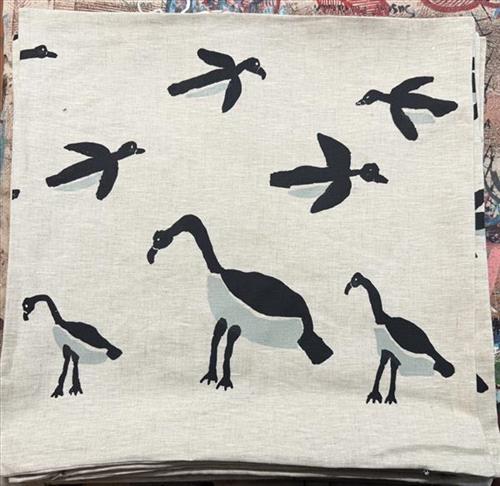
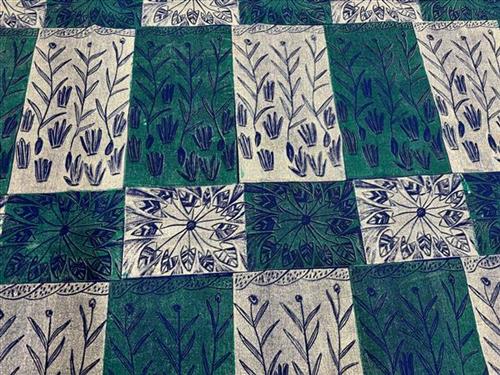
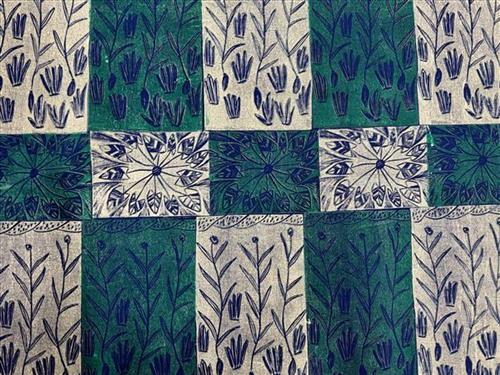
Bab Cushion Cover – Hand printed – Linen

Unique hand printed designs on a 100% linen cushion cover. 

50cm x 50cm 

These cushion covers are printed in Maningrida as a way for women to generate income whilst sharing their ancestral stories. The sale of this item helps to support the operational of Babbarra Women’s Centre as well as providing income to local employees and income to the designer’s family. 

37781054004775


Status: Stock


Kabono (river story) – $130 p/m

‘The freshwater birds are looking for manme (food), they’re down the river at Benembenemdi.The birds in my design are kurrubirlah, mandjangarli, barrak-barrak & ngalkordow. My dad told me about this story, he taught me how to do painting on the rock country and bark painting and hollow log. When I was 12 and 13 I started to paint freshwater birds that I saw at my country. My father painted lots of animals like kangaroo, bolong (rainbow serpent), bird, all kind of animal. He was a really good artist. This animal is from my country, place called Benembenemdi, that place is rock country with lots of sand and river.’ – Jay Jurrupula Rostron 2024. 

Freshwater birds showcased in this design:

‘kurrubirlah’ – bush stone-curlew (Burhinus grallarius). Some Kune speakers have a variant pronunciation ‘kurruburlah’

‘mandjangarli’ – darter, (Anhinga melanogaster novaehollandiae).

‘barrak-barrak’ – little pied cormorant (Phalacrocax melanoleucas)

‘ngalkordow’ – brolga (Antigone rubicunda)


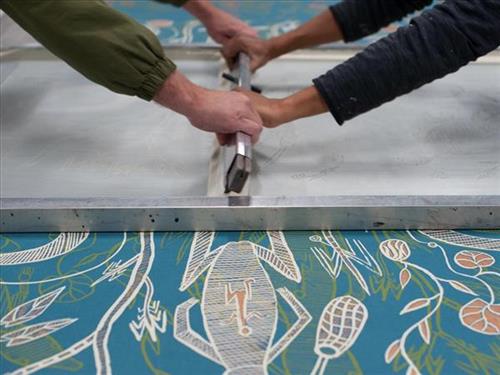
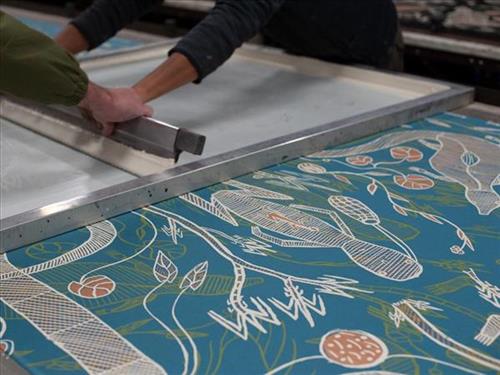
Design printed by Publisher Textiles in Sydney NSW

Thank you to the Bininj Kunwok Language Centre for assisting Babbarra Women’s with correct spelling and definitions of the freshwater birds showcased in Jay’s design. 

37781054001857


Status: Stock


Cotton linen – $130 per meter

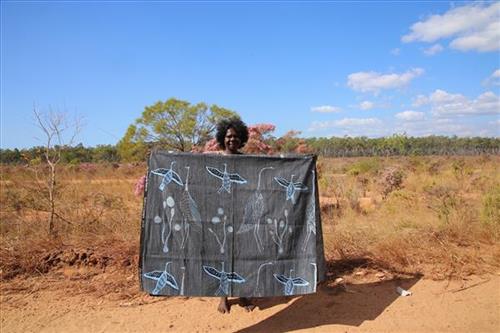
A screen print design developed in 2022 by Abigail Namundja and her late mother, the senior artist Jennifer Kamanj Wurrkidj. 

Kalawan (goanna) Common name: Gould’s Sand Monitor

Kalawan (goanna) is a secret ceremony story. This design also depicts Buluwana (female ancestor) and Ngalyod (rainbow serpent).

At the time of making this work, Abigail did not feel comfortable to discuss the artwork. Senior artist, Janet Kalidjan Marawarr stepped in to say:

“Kalawan stays in mud surrounded by stone. Kalawan is active during the wet season but may hibernate underground during the yekke time – the colder, drier months of  May – August. When people go into the spear grass country to collect pandanus to make mandjabu (fish trap) and marebu (floor mats) they may encounter Kalawan. People respect his place.” Janet Kalidjan Marawarr in conversation with Jessica Stalenberg 04.06.25

377810582380968


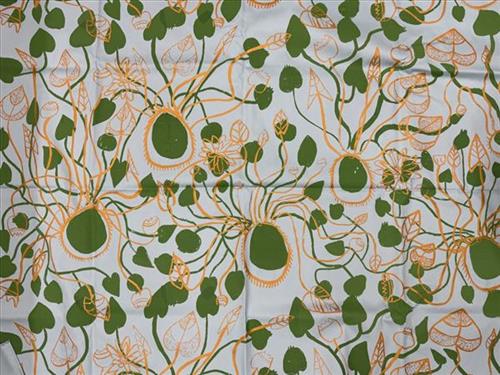
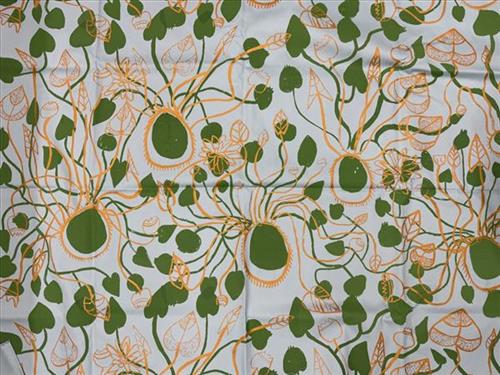
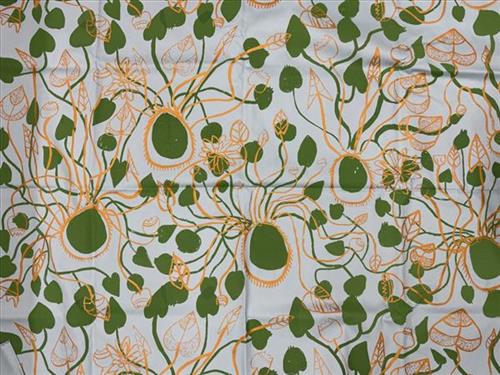
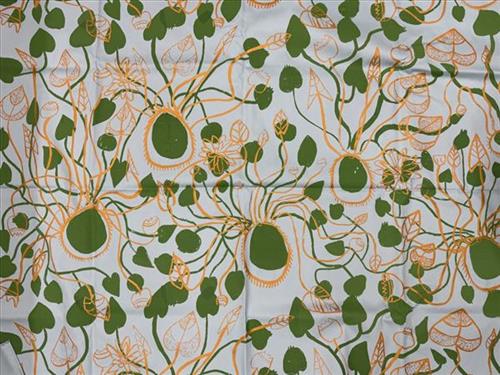
Wayuk – Roseanna Bonson

‘I always follow the footpath of my grandmother. I have too many stories of my grandmother. We went to the bush and ate bushtucker like yam, yabbie, barra, catfish and magpie goose. We didn’t come into town often, we were staying at Barrihdjowkkeng outstation. I learned how the old people used to live. I always think about my family out there and I keep going. My grandmother asked me to work with her for many years. I watched her making lino and screen printing. That’s why I stay in this job and I’m for the women’s centre’.  Roseanna Bonson 2021

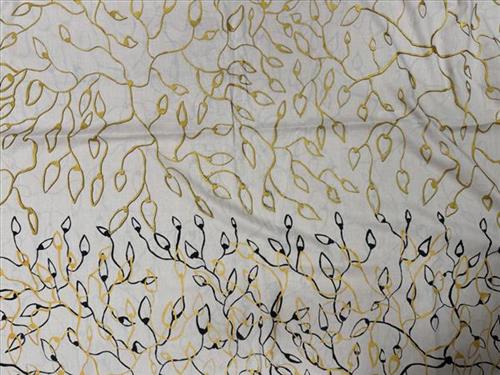
Roseanna’s first design is a 2 colour waterlily design. Wayuk (waterlily) *kuninjki grow in the swamps around Barrihdjowkkeng.

‘The flowers of the waterlily are white and yellow and I like that kind of colour.’ Roseanna Bonson 2021

377810582380967


Wayuk – Roseanna Bonson

‘I always follow the footpath of my grandmother. I have too many stories of my grandmother. We went to the bush and ate bushtucker like yam, yabbie, barra, catfish and magpie goose. We didn’t come into town often, we were staying at Barrihdjowkkeng outstation. I learned how the old people used to live. I always think about my family out there and I keep going. My grandmother asked me to work with her for many years. I watched her making lino and screen printing. That’s why I stay in this job and I’m for the women’s centre’.  Roseanna Bonson 2021

Roseanna’s first design is a 2 colour waterlily design. Wayuk (waterlily) *kuninjki grow in the swamps around Barrihdjowkkeng.

‘The flowers of the waterlily are white and yellow and I like that kind of colour.’ Roseanna Bonson 2021

377810582380966


Wayuk – Roseanna Bonson

‘I always follow the footpath of my grandmother. I have too many stories of my grandmother. We went to the bush and ate bushtucker like yam, yabbie, barra, catfish and magpie goose. We didn’t come into town often, we were staying at Barrihdjowkkeng outstation. I learned how the old people used to live. I always think about my family out there and I keep going. My grandmother asked me to work with her for many years. I watched her making lino and screen printing. That’s why I stay in this job and I’m for the women’s centre’.  Roseanna Bonson 2021

Roseanna’s first design is a 2 colour waterlily design. Wayuk (waterlily) *kuninjki grow in the swamps around Barrihdjowkkeng.

‘The flowers of the waterlily are white and yellow and I like that kind of colour.’ Roseanna Bonson 2021

377810582380964


Wayuk – Roseanna Bonson

‘I always follow the footpath of my grandmother. I have too many stories of my grandmother. We went to the bush and ate bushtucker like yam, yabbie, barra, catfish and magpie goose. We didn’t come into town often, we were staying at Barrihdjowkkeng outstation. I learned how the old people used to live. I always think about my family out there and I keep going. My grandmother asked me to work with her for many years. I watched her making lino and screen printing. That’s why I stay in this job and I’m for the women’s centre’.  Roseanna Bonson 2021

Roseanna’s first design is a 2 colour waterlily design. Wayuk (waterlily) *kuninjki grow in the swamps around Barrihdjowkkeng.

‘The flowers of the waterlily are white and yellow and I like that kind of colour.’ Roseanna Bonson 2021

377810582380960


Yam dasies

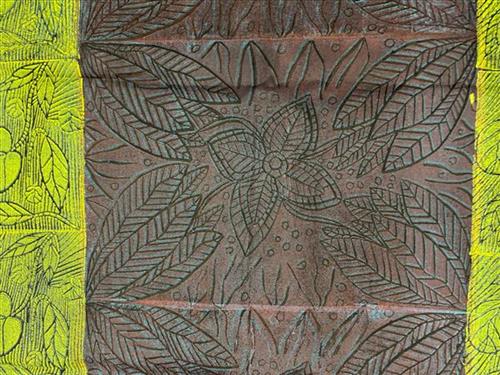
This fabric was created using the linocut printing technique. The lino tile has been carved by the artist in Maningrida, and has been printed by hand using a variety of colours and layers. The linocut technique ensures each textile piece is a one-off, limited edition piece. Bábbarra Women’s Centre supports the economic independence of Indigenous women in the Arnhem Land community of Maningrida, Northern Territory, Australia. Designs created by the women at Bábbarra reflect strong cultural knowledge, which is passed down to younger generations through their textile design practice.

377810582380959


Wayuk

This fabric was created using the linocut printing technique. The lino tile has been carved by the artist in Maningrida, and has been printed by hand using a variety of colours and layers. The linocut technique ensures each textile piece is a one-off, limited edition piece. Bábbarra Women’s Centre supports the economic independence of Indigenous women in the Arnhem Land community of Maningrida, Northern Territory, Australia. Designs created by the women at Bábbarra reflect strong cultural knowledge, which is passed down to younger generations through their textile design practice.

377810582380889


Mankotbe (Bush Onion)

Mankotbe (bush onion) grows under the ground, we follow the vine to dig it up. It is brown on the outside and white inside and we cook it on the fire, just like a potato. All the old people used to eat Mankotbe on my homeland. My grandmother showed me how to find that plant and the first time I ate so much my mouth got sore! You can’t be too greedy.

This design brings back good memories for me. I used to eat Mankotbe when I was young and living at my homeland Buluhkaduru. In those old times, my house was made of paper bark and sticks. If we wanted to come into town we had to walk, and it’s a long walk, so we would fill our dilly bags with sugar bag honey, Mankotbe and long yams to eat on the way. They were good times for me.

You can find Mankotbe any time of the year- the plant has big black leaves. When you find one onion, you know there is big mob around- they are always connected by a big long vine underground