377810582369927


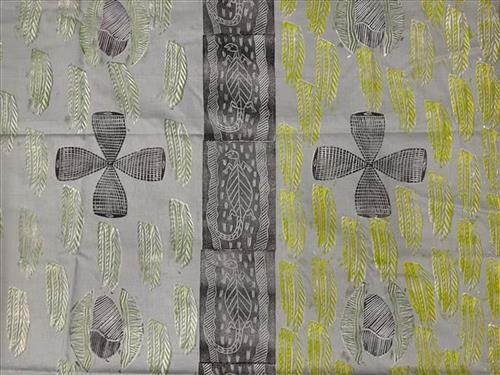
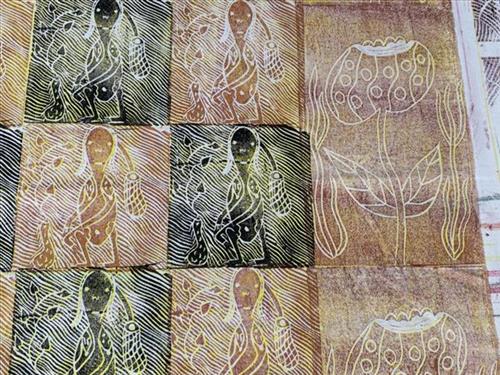
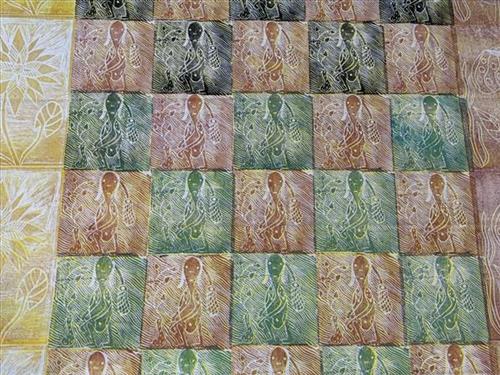
Kalawan (Goanna)

Kalawan (goanna) is a secret (ceremony) story. 

:Kalawan stays in mud surrounded by stone. Kalawan is active during the wet season but may hibernate underground during the yekke time – the colder, drier months of  May – August. 

When people go into the spear grass country to collect pandanus to make mandjabu (fish trap) and marebu (floor mats) they may encounter Kalawan. People respect his place.”

Janet Kalidjan Marawarr in conversation with Jessica Stalenberg 04.06.25

Common name: Gould’s Sand Monitor.

377810582368434


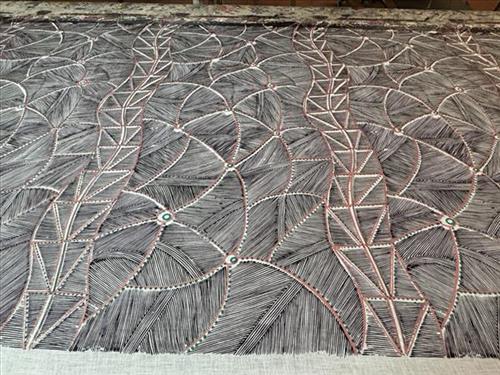
Kunkurra (Spiral Wind)

‘My designs, they are all alive living up in my head’- Janet Marawarr

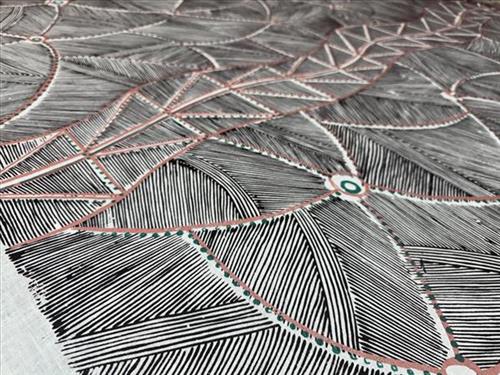
Janet Marawarr has depicted kunkurra, the spiralling wind associated with several sites in the Kardbam clan. On one level, this design can be interpreted as a depiction of the kinds of mini-cyclones common during the wet season in Arnhem Land, where the artist lives. Kunkurra also relates specifically to a site called Bilwoyinj, near Mankorlod, on the artist’s clan estate.

At this site, two of the most important Kuninjku creation beings, a father and son known as na-korrkko, are believed to have hunted and eaten a goanna. They left some of the goanna fat behind at the site, which turned into the rock that still stands there today.

Bilwoyinj site is also a ceremonial ground for a ceremony called Yabbaduruwa, a major ceremony owned by the Yirridja patrimoiety. The Yabbaduruwa ceremony is primarily concerned with initiation, land ownership and promoting the cyclical regeneration of the human and natural worlds.

This print is three colours on white linen. Dark brown, metallic rose and emerald green. Due to the handmade nature of the print, there are some small missprints. We have provided a 10% discount. 


377810582368995


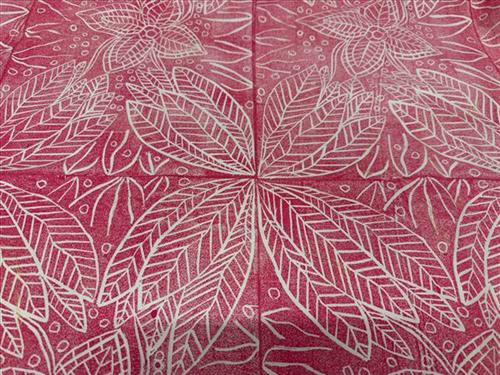
Wayuk (Waterlily)

Wayuk (Waterlily) Nymphaea violacea. 

The stem of wayuk is a popular bushfood and the beautiful flower is enjoyed across Arnhem Land. 

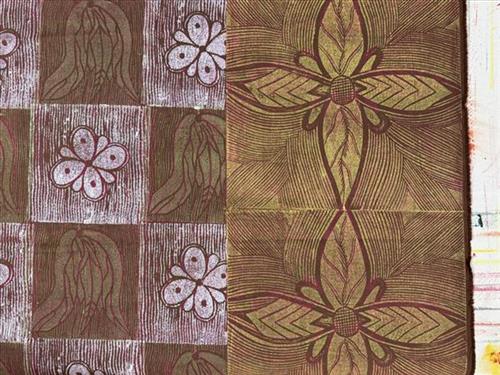
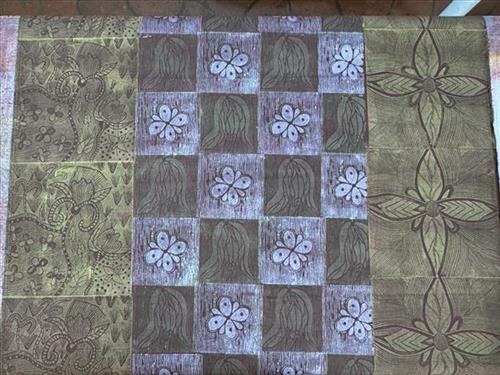
This fabric was created using the linocut printing technique. The lino tile has been carved by the artist in Maningrida, and has been printed by hand using a variety of colours and layers. The linocut technique ensures each textile piece is a one-off, limited edition piece. Bábbarra Women’s Centre supports the economic independence of Indigenous women in the Arnhem Land community of Maningrida, Northern Territory, Australia. Designs created by the women at Bábbarra reflect strong cultural knowledge, which is passed down to younger generations through their textile design practice.

377810582367952


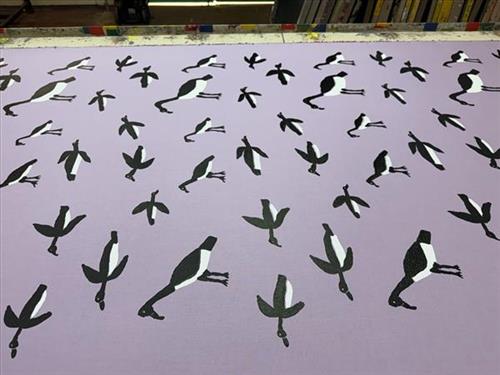
Murnubbarr Karrolkan (Flying Magpie Geese)

Murnubbarr (magpie geese) are a waterbird found in abundance in the wetland areas of Kakadu and western Arnhem Land. Murnubbarr are a sustainably hunted and enjoyed manme (bush food). They are known to fly long distances, particularly in the wet season.

377810582367939


Lorrkkon (Funeral Logs) Marilyn James

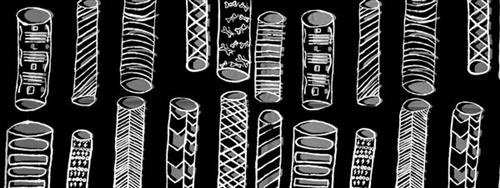
Marilyn’s first screen print design depicts the story of lorrkkon (hollow funeral logs). This the story of her great, great grandfather and grandmother who were bark painters, as well as also sacred lorrkkon painters.

When designing this screen print, Marilyn was remembering her childhood living in a small house on Liverpool river Ngar-wunja (Thompson hole) with other families.

Through the painting process, Marilyn remembered and relived the times when people still lived permanently on remote homelands, living off the land before balanda (non-indigenous people) arrived.

Marilyn recalls “it makes me think back, we did lots of things, some people was hunting, some was weaving, some was painting barks and lorrkkon. As my great, great grandfather and grandmother was painters, I painted this my story for them.”

377810582367922


Man-ngarre (Native Grasses)

Designed 2007

Elizabeth had a distinctive artistic style, depicting the natural world with loose, organic strokes. Her style was evident in her key designs Kun-ngol (clouds), showing the cloud formations over her floodplain country after the wet season, and the fine detail of Kun-kirh (mud ripples) depicting cracked mud in the sun during dry season. Elizabeth was close family with Janet Marawarr, Lucy Yarawanga and Raylene Bonson, leading artists at Bábbarra.

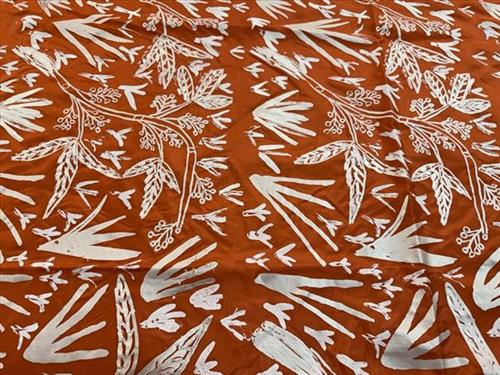
This design celebrates the grasses of Arnhem land, the spear grass, Sorghum intransthat grows in the wet season and dies off or is burnt during the dry season.

377810582366994


Ngaldjorlhbo (Mother of Everything)

Ngaldjorlhbo is a powerful woman who created the spiritual and tangible world for the Aboriginal people in Western Arnhem Land. In creating the land and environment, she endowed Kuninjku people with the ability to create art, and with their culture, to share with future generations. Ngaldjorlhbo gives women the cultural knowledge and deep links to country, identity and ancestor spirits. 

‘Ngaldjorlhbo created daluk (women) When she started walking she started talking and telling stories. She create, came together as one. She was walking, thinking and writing with her hand creating all the animals and trees.  Creating mountains and rivers. Came together and made a beautiful flowing wind and river to the coming of the land. From fresh water to the salt water river, all the fish, all kinds of fish she created.

From little bird, big bird she created. She came all the way from east, west, north and south. 

She knows all the places from this land. She was speaking, she was telling, she was creating the country, this world. 

She was carrying kunmadj and digging stick and she created yawkyawk.

So that’s the story about Ngaldjorlhbo.’

Janet Marawarr 2022


377810582366993


Manbirrbbirr (small bush flowers)

In Kuninjku the name manbirrbbirr is used for a number of densely flowering shrubs and small trees including Verticordia cunninghamii, yellow flowering Austromyrtus species and also Acacia platycarpa which also has dense white. 


377810582367084


Ka-milemarnbun (Weaving story)

The Kuninjku term ka-milemarnbun refers to the weaving and production of goods from pandanus leaves and natural fibres. This design specifically depicts the fish trap, basket and pandanus mat.

These three objects and ancestral spirits are significant to the artist as together they relate to her djang (dreaming). Fish traps are woven by hand using the milirl (burney vine, Trophis scandens) from the jungle, which is soaked overnight to make it soft. Fish traps are used by both saltwater and freshwater hunters.

Baskets and pandanus mats are made from pandanus leaves, which are collected using long hooks, stripped, dried, boiled in natural dye, then woven.

377810582367079


Sea Shells and Dilly Bags

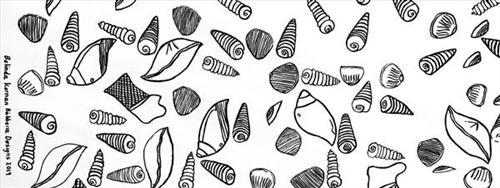
‘Sometimes when we go down to the beach in Maningrida we pick all these shells up. Some family make necklaces and earrings. In the olden days they used to collect shells and put them in the dilly bags. The old people used to carry dilly bags when they went hunting. They used the dilly bag for bush food. My design shows mud muscle and long bum and cockles.’ Belinda Kernan 2022

Belinda’s mother is from Eastern Arrernte country near Alice Springs, the community of Ltyentye Apurte (Santa Teresa), and her father’s country is Maningrida. Belinda speaks languages from both sides of her family, as well as various languages belonging to Central Arnhem Land. She lives in Maningrida and prints lino at the women centre. Belinda is also a strong leader for young people in her community.