Dilly Bag
This is the same dilly bag that we all make. Pandanus dilly bag. – Joy 2025

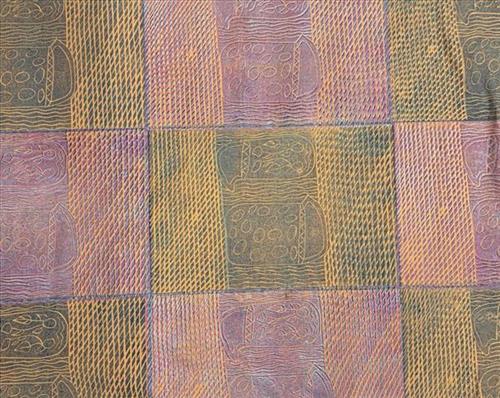
This is the same dilly bag that we all make. Pandanus dilly bag. – Joy 2025

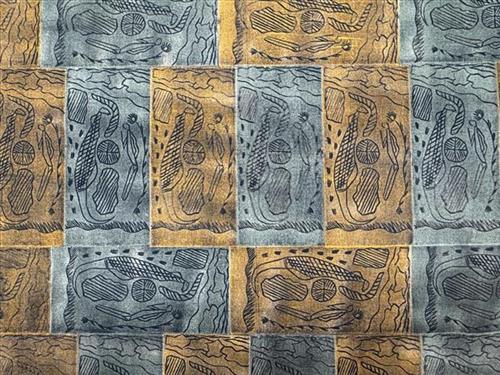
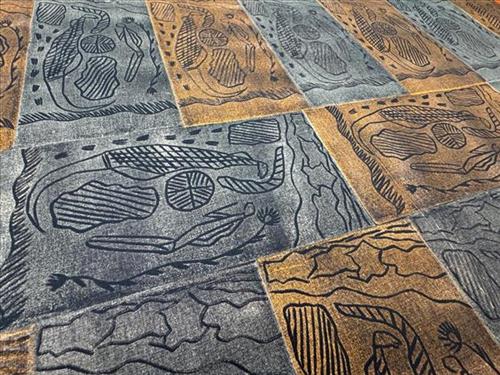
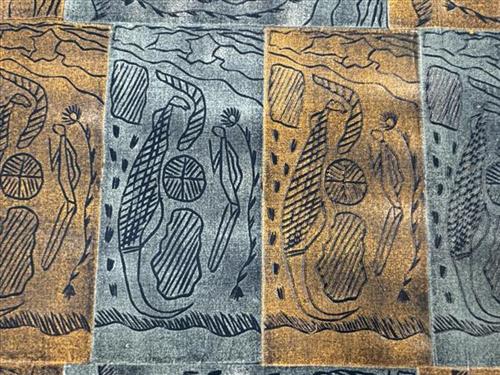
That is the story about Ngalyod, rainbow serpent and that short leg mimih. This story is from Kunwarrde (rock) country in a place called Djileba (sp) near Yikarakal Outstation. It’s the story we all tell including that old man who passed away.

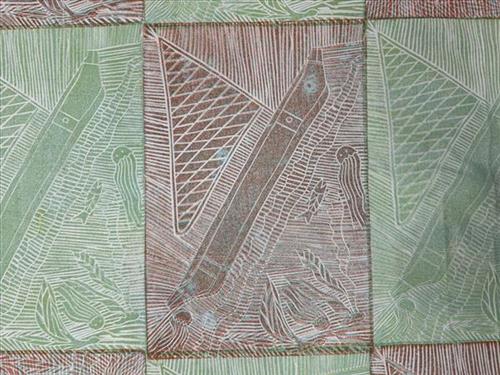
“Wubbunj is our traditional canoe. This design is the old history story of how people came to live in this place we call Maningrida. Two old people were staying on the other side of the saltwater, in Narlarrambarr area. The old people slept in a paper bark shelter and hunted on the water using their canoe.
A long time ago our people carved these canoes from the big paperbark trees. They had paddles with one person at the front, one at back, and other kids and passengers in the middle. Kunkot (paper bark) was used to make the sails which they would stand up and catch the wind.
One day these old people saw a new boat in their waters, which belonged to the Makassans (Indonesians). Those two old men saw the big Makassan boat coming in, and decided to paddle their canoe from Narlarrambarr to the other side (modern day Maningrida). We were scared of the Makassans, they gave us tobacco and tea, but they took many of our women.
When those two old people tasted that water at Maningrida from the Djomi spring, it was sweet freshwater and they decided to stay here. People here had no clothes in those time, we were just wearing string morkoi (loin cloths). Seven tribes were here then, but now in Maningrida there are lots more languages.” – Raylene Bonson

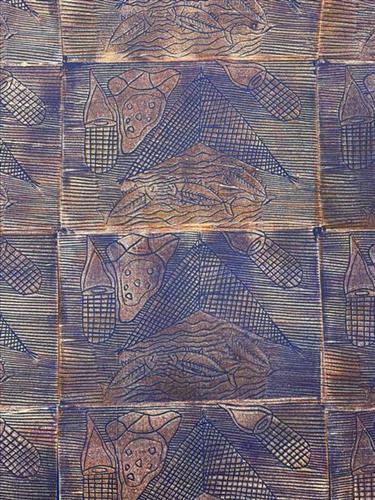
*Ndjébbana
A small fishing net or butterfly net of a traditional triangular design.

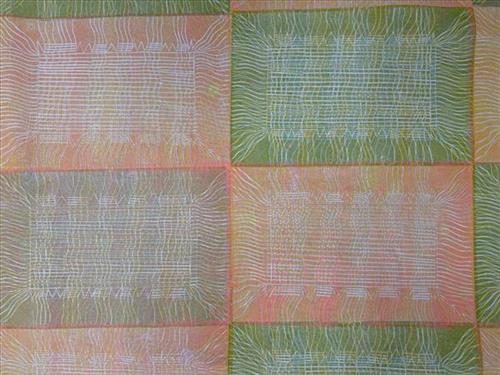

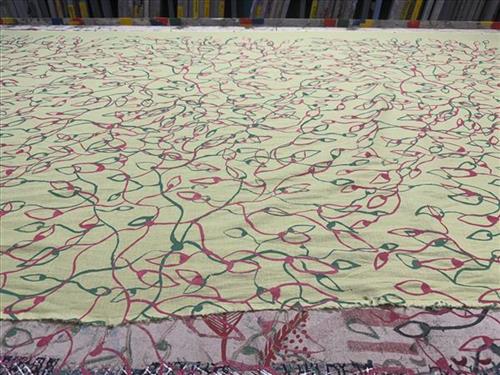
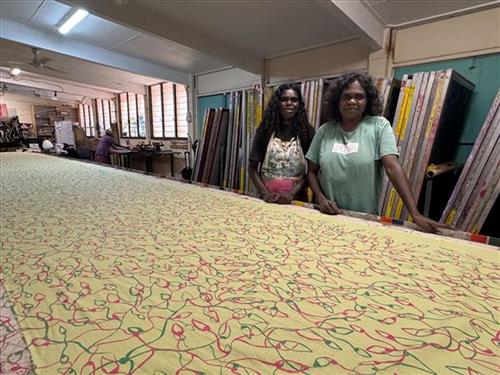
Mankotbe (bush onion) grows under the ground, we follow the vine to dig it up. It is brown on the outside and white inside and we cook it on the fire, just like a potato. All the old people used to eat Mankotbe on my homeland. My grandmother showed me how to find that plant and the first time I ate so much my mouth got sore! You can’t be too greedy.
This design brings back good memories for me. I used to eat Mankotbe when I was young and living at my homeland Buluhkaduru. In those old times, my house was made of paper bark and sticks. If we wanted to come into town we had to walk, and it’s a long walk, so we would fill our dilly bags with sugar bag honey, Mankotbe and long yams to eat on the way. They were good times for me.
You can find Mankotbe any time of the year- the plant has big black leaves. When you find one onion, you know there is big mob around- they are always connected by a big long vine underground

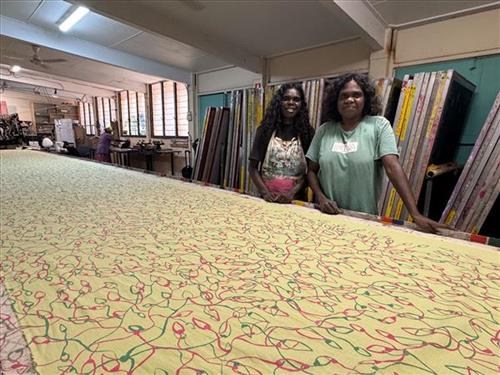

Mankotbe (bush onion) grows under the ground, we follow the vine to dig it up. It is brown on the outside and white inside and we cook it on the fire, just like a potato. All the old people used to eat Mankotbe on my homeland. My grandmother showed me how to find that plant and the first time I ate so much my mouth got sore! You can’t be too greedy.
This design brings back good memories for me. I used to eat Mankotbe when I was young and living at my homeland Buluhkaduru. In those old times, my house was made of paper bark and sticks. If we wanted to come into town we had to walk, and it’s a long walk, so we would fill our dilly bags with sugar bag honey, Mankotbe and long yams to eat on the way. They were good times for me.
You can find Mankotbe any time of the year- the plant has big black leaves. When you find one onion, you know there is big mob around- they are always connected by a big long vine underground

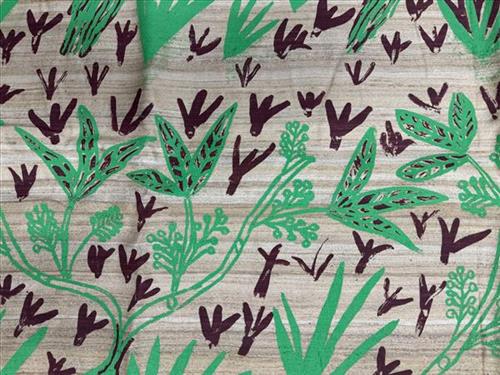
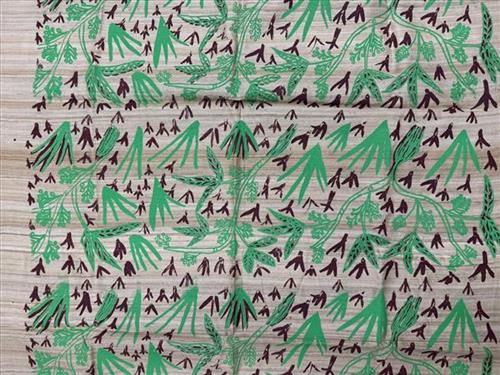
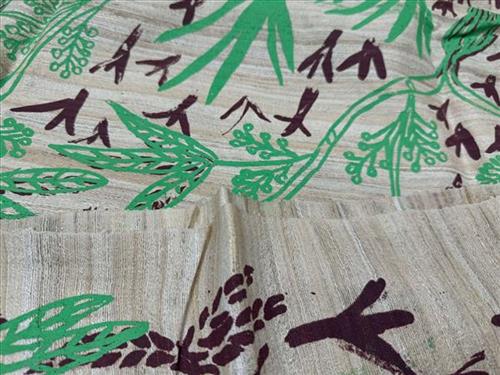
Designed 2007
Elizabeth had a distinctive artistic style, depicting the natural world with loose, organic strokes. Her style was evident in her key designs Kun-ngol (clouds), showing the cloud formations over her floodplain country after the wet season, and the fine detail of Kun-kirh (mud ripples) depicting cracked mud in the sun during dry season. Elizabeth was close family with Janet Marawarr, Lucy Yarawanga and Raylene Bonson, leading artists at Bábbarra.
This design celebrates the grasses of Arnhem land, the spear grass, Sorghum intransthat grows in the wet season and dies off or is burnt during the dry season.



“My country is called Mankorlod. It is near the rock country. My dreaming is komrdawh (long neck turtle), the one I painted in my design. I like to eat komrdaw, it tastes really nice. We catch them in dry and wet season near Mankorlod. This is my first ever design, and I only have one design. I painted it with brush at Babbarra Women’s Centre and I feel proud when people print my design.” Margot Gurawiliwili
The vines depicted in this artwork are used by women to weave and create fibre sculpture. They grow naturally on the floodplains in Arnhem Land. The long-necked turtle and freshwater sword fish depicted are popular bush food.

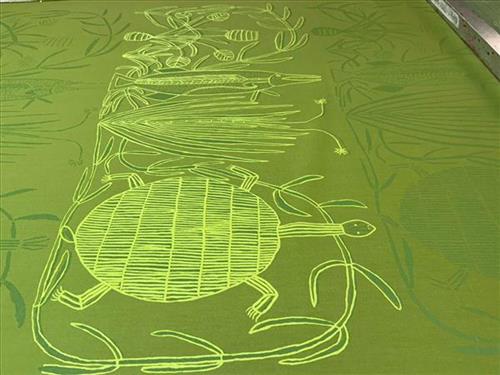
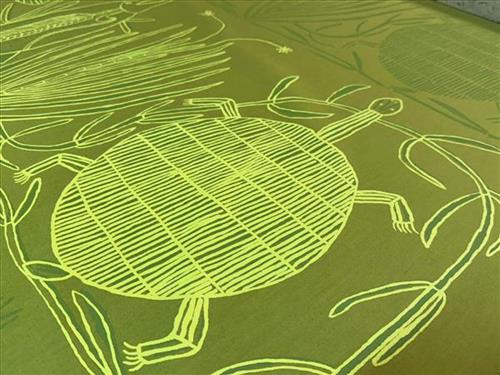
“My country is called Mankorlod. It is near the rock country. My dreaming is komrdawh (long neck turtle), the one I painted in my design. I like to eat komrdaw, it tastes really nice. We catch them in dry and wet season near Mankorlod. This is my first ever design, and I only have one design. I painted it with brush at Babbarra Women’s Centre and I feel proud when people print my design.” Margot Gurawiliwili
The vines depicted in this artwork are used by women to weave and create fibre sculpture. They grow naturally on the floodplains in Arnhem Land. The long-necked turtle and freshwater sword fish depicted are popular bush food.