377810582350639


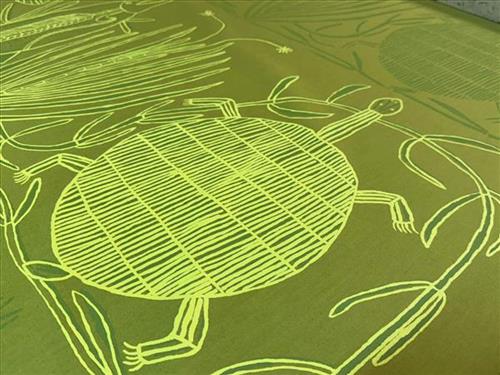
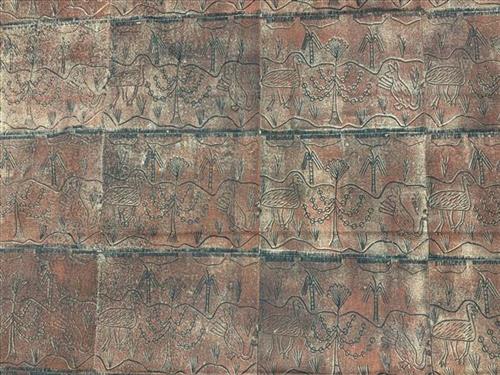
Djenj dja Komrdawh (Swordfish and Turtle)

“My country is called Mankorlod. It is near the rock country. My dreaming is komrdawh (long neck turtle), the one I painted in my design. I like to eat komrdaw, it tastes really nice. We catch them in dry and wet season near Mankorlod. This is my first ever design, and I only have one design. I painted it with brush at Babbarra Women’s Centre and I feel proud when people print my design.” Margot Gurawiliwili

The vines depicted in this artwork are used by women to weave and create fibre sculpture. They grow naturally on the floodplains in Arnhem Land. The long-necked turtle and freshwater sword fish depicted are popular bush food.

377810582350599


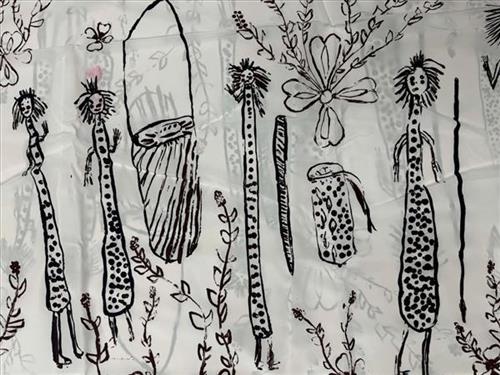
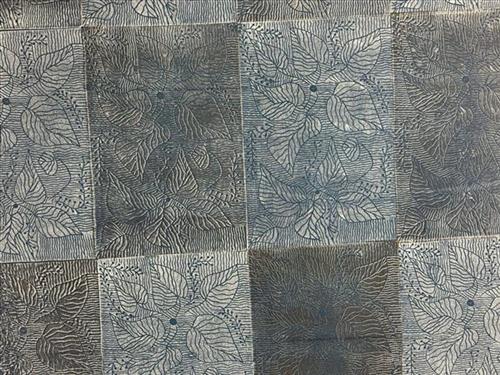
Bawáliba and Bush Flower

This new design from workshops held in 2022 depicting Bawáliba (stone country mimihs) and dilly bags against a background of loosely placed bush flowers. Lucy has depicted her Bawáliba with werrkno (skin) textures. 

‘Bawáliba is the djang (Dreaming) of my mother and my uncles. They are good spirits, they protect us and they recognise families. They are really tall- just like human beings, like us. They dance late at night and have a lot of hair.

In olden times, long long long time ago Bawáliba were here, before people were on the land. Bawáliba used to go out hunting and care for country. They hunt carrying fish traps and digging sticks, near the homeland Djinkarr. They go out hunting on the floodplains with dilly bags and digging sticks. They collect a lot of bush foods, and sleep together with one bark shelter.
Sometimes now they still come alive when we sleep, they might come to our houses and peep through the window. At night, they cover themselves with white clay and red cloth tied around their waist. If we hear them, we jump out of bed and get up to look -but they have disappeared, they’re just too quick. Bawáliba might knock on the window to remind us they are there looking out for us.If you listen deeply you can hear them whisper, sometimes they talk about us and might say, ‘why are those people making camp here?’ then they realise ‘Oh they are family from here, it’s ok, they are just sleeping here for the night’.

During the day they always turn into stone and they sleep. We still know that green rock covered in moss near Djinkarr, that’s Bawáliba sleeping.
Some of my ancestors used to speak the same language as the Bawaliba, but all those old people are passed away now. It’s a little bit sad for us, because no one now can speak that Bawaliba language anymore.’ Lucy Yarawanga 2019

377810582349654


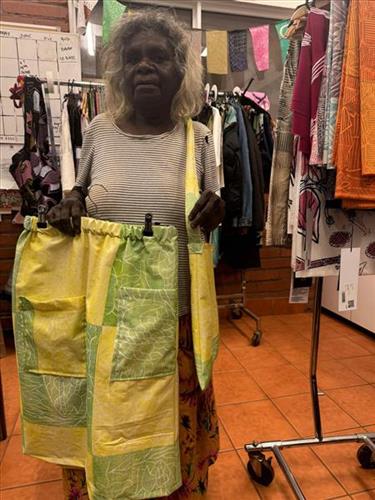
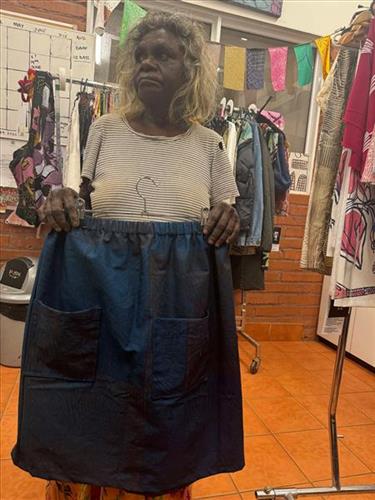
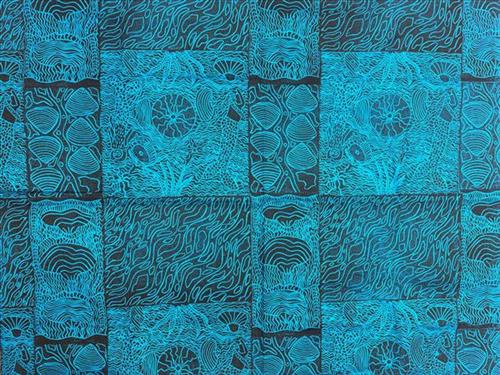
Makéddja (Turtle) Skirt (M)

Makéddja is the generic word for turtle in the Ndjébbana language of the Kunibidji people of Maningrida.


377810582349653


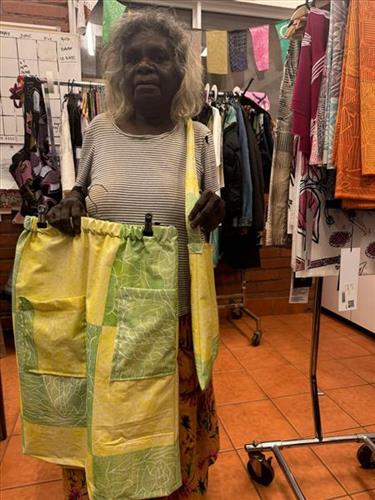
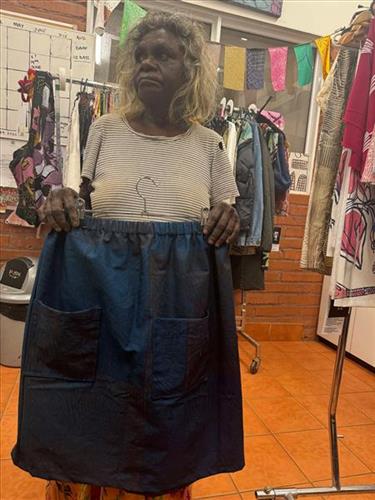
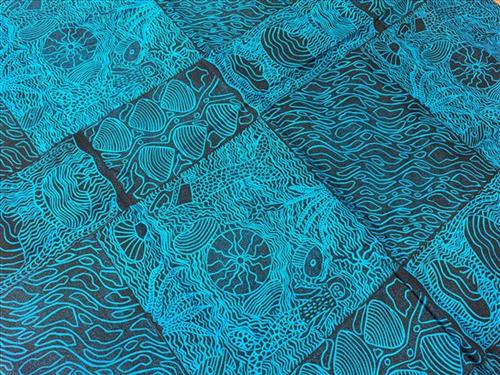
Makéddja (Turtle) Skirt M

Makéddja is the generic word for turtle in the Ndjébbana language of the Kunibidji people of Maningrida.


377810582349503


Jin-merduwa (mermaid)

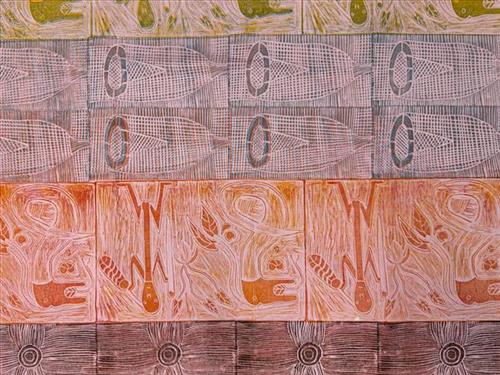
A beautiful, one-off, linocut, hand printed design by Elizabeth Wullunmingu depicting the story of Jin-merduwa.  Sometimes she also includes her Garriwa turtle print. 

My niece, Stephanie James, is singing a song called Diyama, and it is about Jin-merduwa. She is in the Ripple Effect Band. They are now famous in Maningrida and everywhere. Her great grandmother told her about the Jin-merduwa living at Gupanga.  I heard the story before Stephanie.  Now I hear her singing the story about that place.  I am very proud of her. We have the same country.  Our stories match.  She is singing the story, and I am making artwork about the story. 

My lino print shows the Jin-merduwa who live at Gupanga. Gupanga is located at the mouth of the Blyth River.  It is a saltwater place.  There must be more than one Jin-merduwa living there?  They eat fish, shellfish and seaweed.  Sometimes they travel to the end of the river to find food in the ocean, but they don’t go far and always swim back to their home.

Gupanga is a beautiful place.  The sand is golden, there are mangroves, and the water is cloudy.  It is good hunting in that area.  When we lived there, we got lots of barramundi, mud crabs, shellfish, everything!

This is a bit of a dangerous story.  I can’t say too much about this sacred place. The Rangers help to look after this place, but they also know they must be careful.   

Kuninjku people call mermaids yawkyawk.  Yawkyawk are freshwater.  In my language, Burarra, we call mermaids Jin-merduwa.  Jin-merduwa are a bit different to yawkyawk but are also a type of mermaid.

I love to make lino print fabric showing Jin-merduwa. I like using bright colours, but sometimes I print using black and white.

Ripple Effect Band – Diyama Song

 https://rippleeffectband.bandcamp.com/track/diyama

This song was written by Stephanie James in her language of Burarra. It is about the mermaids that live in the river in her country of Kupanga.


Her father sings the Kun-borrk traditional music from the Diyama song cycle to link his daughter’s music to the past.

Credits

from Wárrwarra, released July 5, 2018
Written by Stephanie James, D. Maxwell (father for Stephanie)
Produced by Paul Mac, Jodie Kell, Clint Bracknell
Audio Engineer: Campbell Barnes
Guitar: Jodie Kell, Jolene Lawrence
Bass guitar: Tara Rostron
Drums: Jolene Lawrence
Keys: Patricia Gibson
Lead Vocals: Stephanie James
Back up Vocals: Jodie Kell
Diyama vocals: D. Maxwell