377815582383519


Untitled

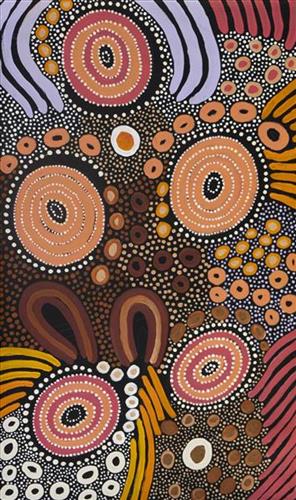
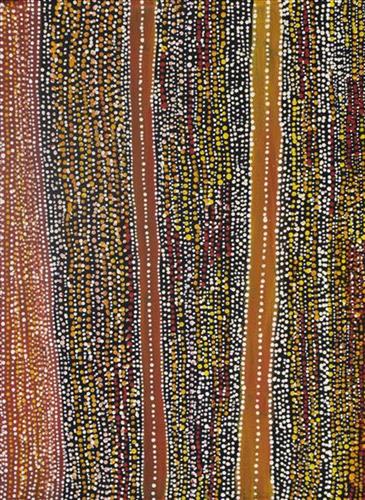
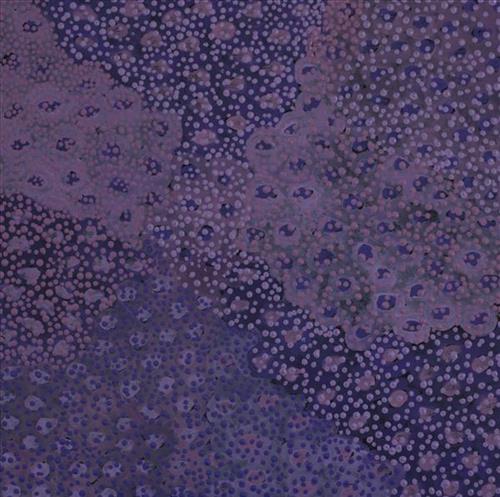
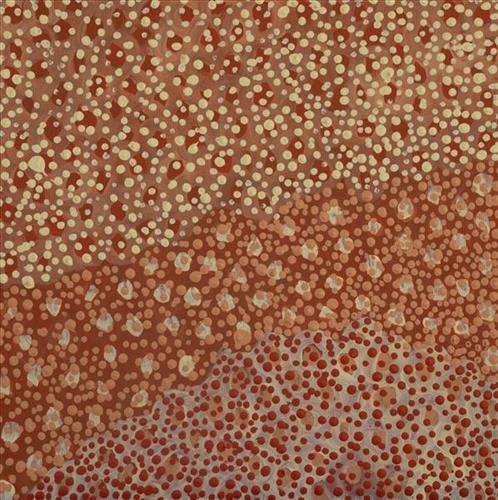
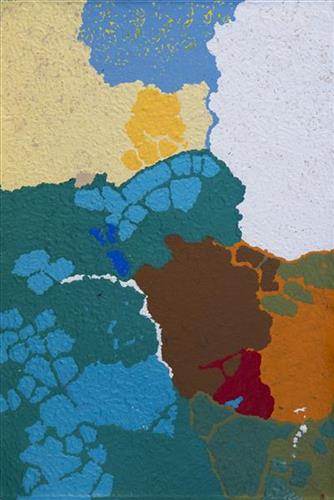
 This artwork showcases the artist’s skillful use of colour, texture, and technique, reflecting a deep connection to their environment and culture. Each detail embodies the unique identity of Bidyadanga Artists, where the original five language groups—Nyangumarta, Mangala, Yulparija, Juwaliny, and Karrajarri—come together to create art that speaks to the heart of Country. Over time, the community and Art Centre has grown to include people from other Kimberley tribes, fostering a space where diverse cultural knowledge and practices come together. Situated where the desert meets the sea, artists draw inspiration from their ancestral Country and personal journeys. The artist captures the vibrant beauty of both desert and coastal landscapes, blending earthy reds, deep blues, and intricate patterns distinctive to their cultural heritage. The themes and composition invite viewers into the artist’s world, offering a glimpse of the rich, intertwined histories and the enduring connection to land and spirit that define the Bidyadanga community.
377815582383504


Untitled

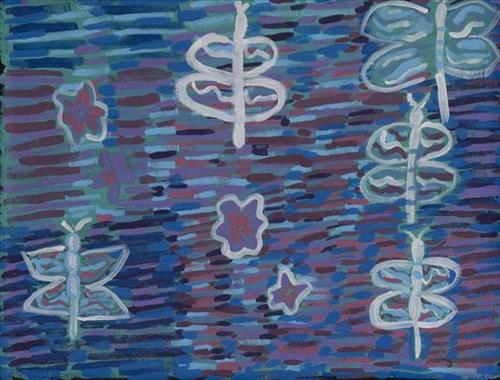
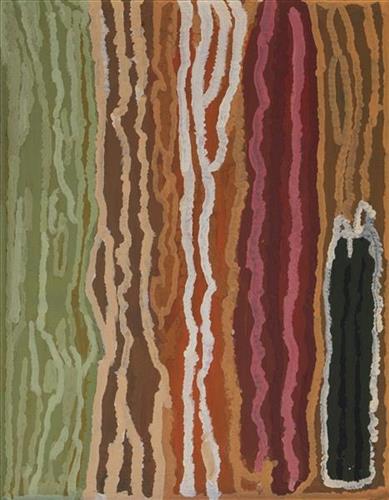
 This artwork showcases the artist’s skillful use of colour, texture, and technique, reflecting a deep connection to their environment and culture. Each detail embodies the unique identity of Bidyadanga Artists, where the original five language groups—Nyangumarta, Mangala, Yulparija, Juwaliny, and Karrajarri—come together to create art that speaks to the heart of Country. Over time, the community and Art Centre has grown to include people from other Kimberley tribes, fostering a space where diverse cultural knowledge and practices come together. Situated where the desert meets the sea, artists draw inspiration from their ancestral Country and personal journeys. The artist captures the vibrant beauty of both desert and coastal landscapes, blending earthy reds, deep blues, and intricate patterns distinctive to their cultural heritage. The themes and composition invite viewers into the artist’s world, offering a glimpse of the rich, intertwined histories and the enduring connection to land and spirit that define the Bidyadanga community.
377815582383503


Feeding Season

“Bardi people learn to live off the land and the sea. We use certain plants to indicate which animals are good for eating. For example, the wattle flower tells us the mullet are good to eat; their fat and their eggs are best when the wattle is flowering. We need to know which plants create spears and which roots paralyse the fish so we can catch them. We use the land to help us hunt the sea. My paintings are all about how we use the land to hunt the sea. All the colours I use have meaning.”

377815582380182


Untitled

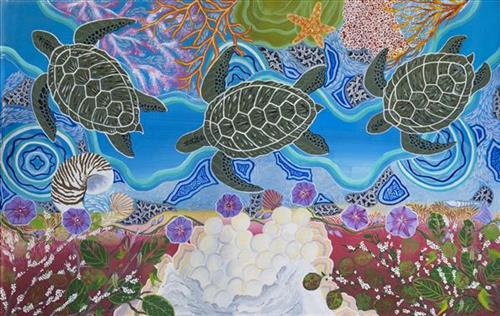
 This artwork showcases the artist’s skillful use of colour, texture, and technique, reflecting a deep connection to their environment and culture. Each detail embodies the unique identity of Bidyadanga Artists, where the original five language groups—Nyangumarta, Mangala, Yulparija, Juwaliny, and Karrajarri—come together to create art that speaks to the heart of Country. Over time, the community and Art Centre has grown to include people from other Kimberley tribes, fostering a space where diverse cultural knowledge and practices come together. Situated where the desert meets the sea, artists draw inspiration from their ancestral Country and personal journeys. The artist captures the vibrant beauty of both desert and coastal landscapes, blending earthy reds, deep blues, and intricate patterns distinctive to their cultural heritage. The themes and composition invite viewers into the artist’s world, offering a glimpse of the rich, intertwined histories and the enduring connection to land and spirit that define the Bidyadanga community.
377815582372986


Red Sand and Hills

This painting is about the red desert sand in The Great Sandy Desert and the hills. I love the colours of the desert.

This painting shows the Artists Grandfathers country where they used to walk around in circles searching for bush tucker and water from the waterholes. When our ancestors came out from the Canning Stock route, they used to see big mob of sand dunes and flowers.

377815582372974


Nyurnma (burnt country)

This painting is about the landscape, bushfire (waru), and bush foods. Seeing the difference after the waru burns, it leaves some patches on the ground, and when the regrowth of the bush plants come back to life, it leaves a mark.

Well, I learnt that story from my grandmother—going out bush, learning about the different sides of burning. Talking about before burning and after burning, and how people go hunting after burning, looking for goanna. Teaching the younger generation where and when to hunt for goanna.

I learnt painting from my grandmother (Nola Taylor) and my grandfathers (Muuki Taylor, Wokka Taylor) by going out on Country, sharing stories, and learning from them about bush plants and bush food. I painted before, but going to Parnngurr and being around old people really opened my mind—seeing them paint and the colours they used. My daughter started painting with the old people too, and now she watches me paint their stories. I’d like to be an inspiration to her and to young people.

377815582371587


Kulyakartu

This painting is about all the rocks and kurru (creeks) all around Kulyakartu and Kirriwirri.

We went camping there for to two weeks, we went to Wirnpa first and then to Kirriwirri. We camped in the nice flat ground in the open when we got to Kulyakartu. We visited the waterholes and soaks, cleaned them out, and made sure there were no dead animals. It was typical ranger work—making sure the animals and Country were surviving. We listened to Muuki and my grandfather talk about how they walked around trying to find waterholes, how my grandfather finally came to Bidyadanga, and how he met my grandmother.


I painted these paintings at home in Bidyadanga, near the ocean. The paintings are of Kulyakartu, which is in the Great Sandy Desert. There is a lot of spinifex, sandhills, wildlife, and little flowers like frangipanis—blue, red, and pink flowers just along the road when you’re driving.

When I’m not in the desert, I feel like I want to paint about it, and painting makes me feel like I want to be there. I think about Muuki and his brothers’ wishes for us to see the Country and be there. It’s important to paint about the Country because our Elders looked after the Country long before us.

When you look out of a plane, you can see lots of different colours, but I chose blues and greens because that’s how I want to express how I see the landscape.

When people see my paintings, they might say, “That could be the ocean,” but I say, “No, that’s Kulyakartu, the desert.” Blues and greens make me feel comfortable. For me, I like to keep colours separate and not mix them together.

377815582371584


Kulyakartu

This painting is about all the rocks and kurru (creeks) all around Kulyakartu and Kirriwirri.

We went camping there for to two weeks, we went to Wirnpa first and then to Kirriwirri. We camped in the nice flat ground in the open when we got to Kulyakartu. We visited the waterholes and soaks, cleaned them out, and made sure there were no dead animals. It was typical ranger work—making sure the animals and Country were surviving. We listened to Muuki and my grandfather talk about how they walked around trying to find waterholes, how my grandfather finally came to Bidyadanga, and how he met my grandmother.


I painted these paintings at home in Bidyadanga, near the ocean. The paintings are of Kulyakartu, which is in the Great Sandy Desert. There is a lot of spinifex, sandhills, wildlife, and little flowers like frangipanis—blue, red, and pink flowers just along the road when you’re driving.

When I’m not in the desert, I feel like I want to paint about it, and painting makes me feel like I want to be there. I think about Muuki and his brothers’ wishes for us to see the Country and be there. It’s important to paint about the Country because our Elders looked after the Country long before us.

When you look out of a plane, you can see lots of different colours, but I chose blues and greens because that’s how I want to express how I see the landscape.

When people see my paintings, they might say, “That could be the ocean,” but I say, “No, that’s Kulyakartu, the desert.” Blues and greens make me feel comfortable. For me, I like to keep colours separate and not mix them together.

377815582371582


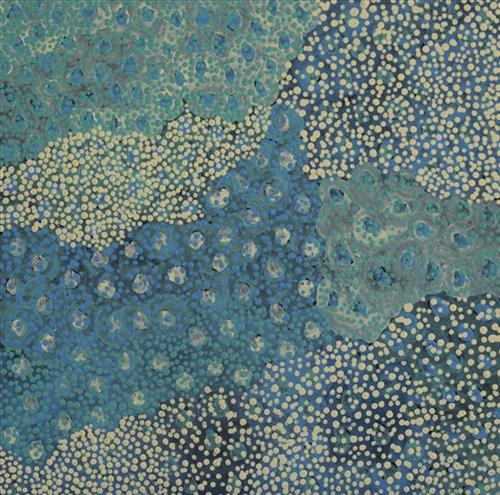
Kulyakartu

This painting is about all the rocks and kurru (creeks) all around Kulyakartu and Kirriwirri.

We went camping there for to two weeks, we went to Wirnpa first and then to Kirriwirri. We camped in the nice flat ground in the open when we got to Kulyakartu. We visited the waterholes and soaks, cleaned them out, and made sure there were no dead animals. It was typical ranger work—making sure the animals and Country were surviving. We listened to Muuki and my grandfather talk about how they walked around trying to find waterholes, how my grandfather finally came to Bidyadanga, and how he met my grandmother.


I painted these paintings at home in Bidyadanga, near the ocean. The paintings are of Kulyakartu, which is in the Great Sandy Desert. There is a lot of spinifex, sandhills, wildlife, and little flowers like frangipanis—blue, red, and pink flowers just along the road when you’re driving.

When I’m not in the desert, I feel like I want to paint about it, and painting makes me feel like I want to be there. I think about Muuki and his brothers’ wishes for us to see the Country and be there. It’s important to paint about the Country because our Elders looked after the Country long before us.

When you look out of a plane, you can see lots of different colours, but I chose blues and greens because that’s how I want to express how I see the landscape.

When people see my paintings, they might say, “That could be the ocean,” but I say, “No, that’s Kulyakartu, the desert.” Blues and greens make me feel comfortable. For me, I like to keep colours separate and not mix them together.