377815582405467


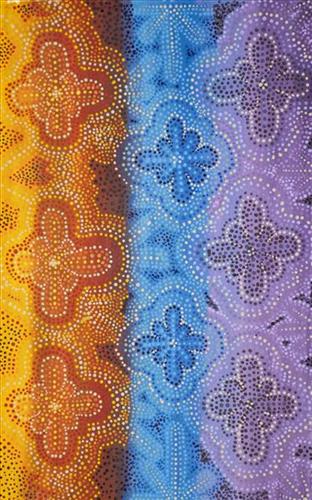
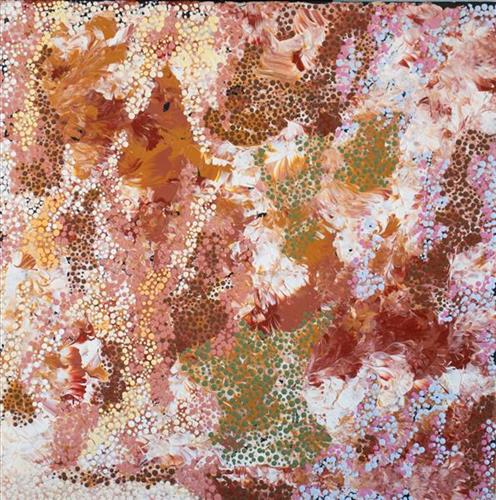
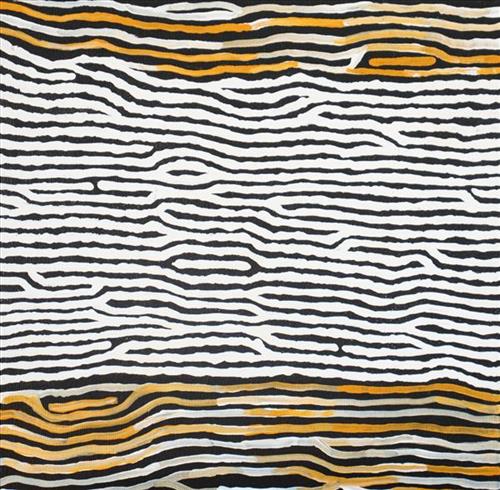
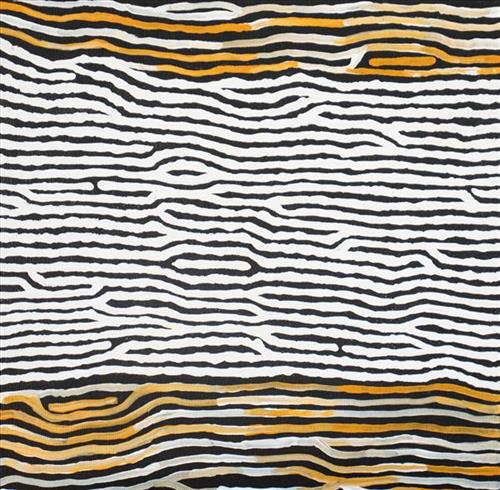
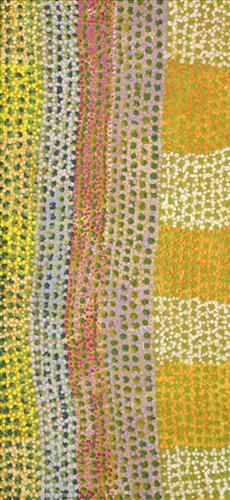
Wildflowers at Kulyakartu

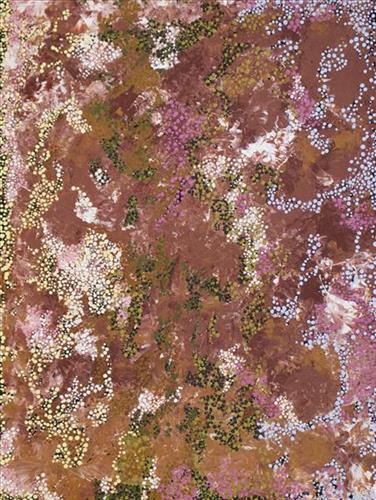
“Kulyakartu is my ancestor ngurra (home) through my grandmother and my great-great-grandfather and grandmother. Going out on Country with Nola and Muuki and hearing their stories of Kulyakartu touched my heart — listening to them talk about travelling through Kulyakartu with their mum and dad.

It was an experience for me to see the Country for the first time and to listen to their stories about travelling through the Great Sandy Desert. When I paint about Kulyakartu, it’s like an image in my mind from when I went there. That’s what I paint — the colours and the surrounding sand dunes around Kulyakartu.

I went on a chopper with Muuki, and now I picture the landscape from the air.”
 – Jenny Butt

This artwork shares the story of Kulyakartu, a vast and peaceful area north-east of the community, on the edge of Nyangumarta and Martu Country. Kulyakartu is a place of wide open skies, long claypans, sandhills and soft grasses that come alive after rain.

Families remember camping there, visiting waterholes, looking for goanna and bush foods, watching birds, and travelling with old people who knew every dune, track and soak. The painting celebrates the beauty and calm of Kulyakartu, often shown through soft lines and dots that follow the movement of water and sand. It honours the knowledge of where to find water, how to move across Country, and the deep belonging felt when returning to ancestral places.

Through this work, the artist invites viewers to feel that stillness and connection — the strength of Country, memory and family.
377815582405470


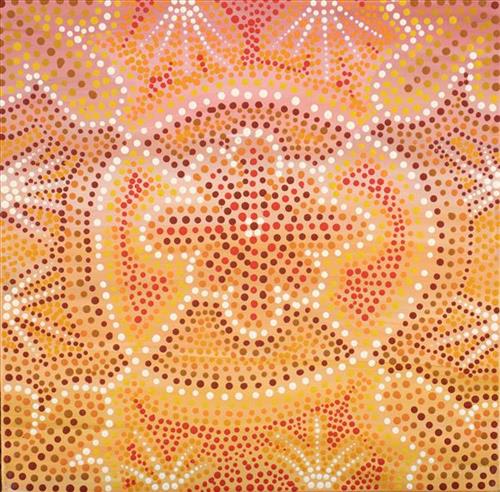
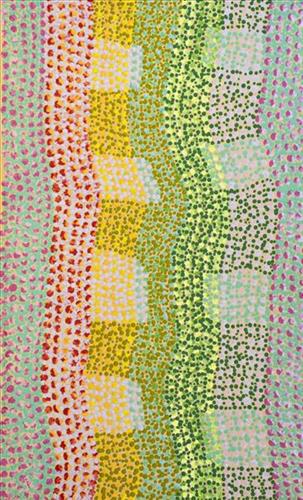
Country

“My mother’s, my great-grandmother’s and my grandfather’s Country. When we go out on Country, you can feel Country — and Country feels you. I feel blessed for such a beautiful Country. It’s emotional, hearing stories about my old people.

I love painting desert colours because that’s where our old people were walking around and were born — hunting and camping. I feel good painting Country. I like hearing the stories and painting about it.”
– Jessica Jadai

This artwork shares the story of Kulyakartu, a vast and peaceful area north-east of the community, on the edge of Nyangumarta and Martu Country. Kulyakartu is a place of wide open skies, long claypans, sandhills and soft grasses that come alive after rain.

Families remember camping there, visiting waterholes, looking for goanna and bush foods, watching birds, and travelling with old people who knew every dune, track and soak. The painting celebrates the beauty and calm of Kulyakartu, often shown through soft lines and dots that follow the movement of water and sand. It honours the knowledge of where to find water, how to move across Country, and the deep belonging felt when returning to ancestral places.

Through this work, the artist invites viewers to feel that stillness and connection — the strength of Country, memory and family.
This artwork honours Mangala Country and the families who carry its stories — walking, camping, hunting and gathering across desert edges, river systems and claypans. It remembers old people moving between soaks and sandhills, and later travelling to La Grange Mission (now Bidyadanga), keeping language, law and family strong.

Patterns trace tracks of animals and people; dots and lines follow water after rain; maps, camps, soaks and sandhills. The work also reflects the way caring for Country continues today — through ranger work and community leadership that bring together cultural knowledge and science to look after land and water.

377815582407029


Seasons

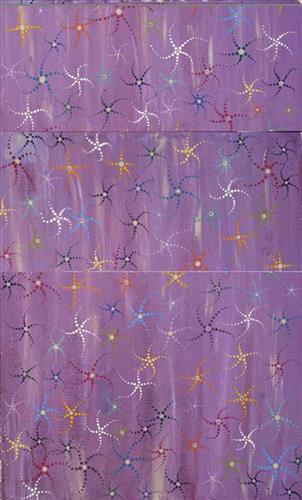
“Rain, dry, hot, cold.
In the wet season everything goes green. When we were young we would go hunting for goanna and turkey. You go fishing in the river — you can catch barramundi when the river is running from the rain. They call it Warrampa, in Luma side.

Dry season, Lulga season. Hot season. After the water has settled you can go swimming. Catch the same thing. And Jarrumpa (cherabin, freshwater prawn).

The flowers come out after the rain, between the hot and cold.”
– Rose (Glenys) Butt

This artwork reflects the changing seasons across Country, showing how life shifts with the dry and wet. In Bidyadanga and the surrounding desert and coastal lands, the rhythm of the year guides movement, gathering, hunting, and time spent with family on Country.

As the dry season arrives, the land opens up again — red dunes, salt flats, and long beaches shining in the heat. Winds change, tides get bigger, and rangers burn Country to look after it, clearing grass, making space for new growth, and keeping the land healthy. Bush turkeys, goannas, fish, stingray, turtle, and shellfish are hunted, and families camp, share stories, and travel between desert and coast.

When the wet season return, big clouds roll in, storms build over the sea, and lightning cracks across the land. Country comes alive — water fills the waterholes and claypans, flowers and grasses grow, and birds, bush foods, and animals become abundant.

Through colour, pattern, and rhythm, the artist captures the cycle of seasons and the knowledge passed down — knowing when to gather certain foods, when animals are fat, when storms are coming, and how to care for Country through fire and everyday living. The work celebrates the constant relationship between people, weather, land, and sea, honouring the strength and continuity of cultural life.

377815582407025


Seasons

 “Rain, dry, hot, cold.
In the wet season everything goes green. When we were young we would go hunting for goanna and turkey. You go fishing in the river — you can catch barramundi when the river is running from the rain. They call it Warrampa, in Luma side.

Dry season, Lulga season. Hot season. After the water has settled you can go swimming. Catch the same thing. And Jarrumpa (cherabin, freshwater prawn).

The flowers come out after the rain, between the hot and cold.”
– Rose (Glenys) Butt

This artwork reflects the changing seasons across Country, showing how life shifts with the dry and wet. In Bidyadanga and the surrounding desert and coastal lands, the rhythm of the year guides movement, gathering, hunting, and time spent with family on Country.

As the dry season arrives, the land opens up again — red dunes, salt flats, and long beaches shining in the heat. Winds change, tides get bigger, and rangers burn Country to look after it, clearing grass, making space for new growth, and keeping the land healthy. Bush turkeys, goannas, fish, stingray, turtle, and shellfish are hunted, and families camp, share stories, and travel between desert and coast.

When the wet season return, big clouds roll in, storms build over the sea, and lightning cracks across the land. Country comes alive — water fills the waterholes and claypans, flowers and grasses grow, and birds, bush foods, and animals become abundant.

Through colour, pattern, and rhythm, the artist captures the cycle of seasons and the knowledge passed down — knowing when to gather certain foods, when animals are fat, when storms are coming, and how to care for Country through fire and everyday living. The work celebrates the constant relationship between people, weather, land, and sea, honouring the strength and continuity of cultural life.

377815582407049


Seasons


“Rain, dry, hot, cold.
In the wet season everything goes green. When we were young we would go hunting for goanna and turkey. You go fishing in the river — you can catch barramundi when the river is running from the rain. They call it Warrampa, in Luma side.

Dry season, Lulga season. Hot season. After the water has settled you can go swimming. Catch the same thing. And Jarrumpa (cherabin, freshwater prawn).

The flowers come out after the rain, between the hot and cold.”
– Rose (Glenys) Butt

This artwork reflects the changing seasons across Country, showing how life shifts with the dry and wet. In Bidyadanga and the surrounding desert and coastal lands, the rhythm of the year guides movement, gathering, hunting, and time spent with family on Country.

As the dry season arrives, the land opens up again — red dunes, salt flats, and long beaches shining in the heat. Winds change, tides get bigger, and rangers burn Country to look after it, clearing grass, making space for new growth, and keeping the land healthy. Bush turkeys, goannas, fish, stingray, turtle, and shellfish are hunted, and families camp, share stories, and travel between desert and coast.

When the wet season return, big clouds roll in, storms build over the sea, and lightning cracks across the land. Country comes alive — water fills the waterholes and claypans, flowers and grasses grow, and birds, bush foods, and animals become abundant.

Through colour, pattern, and rhythm, the artist captures the cycle of seasons and the knowledge passed down — knowing when to gather certain foods, when animals are fat, when storms are coming, and how to care for Country through fire and everyday living. The work celebrates the constant relationship between people, weather, land, and sea, honouring the strength and continuity of cultural life.

377815582407035


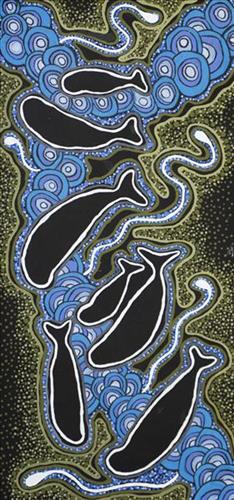
Dugong Family

“This painting represents family networks — mothers and fathers with their young.
The blue represents the ocean and warm waters.
The white represents the lifeline and purity.
The green represents the food.”

— Anthia Matsumoto


This artwork invites the viewer into the world of salt-water Country — the sea animals, the tides, the reefs, the mangroves, the hunting, the gathering, and the guardianship of coast and sea. The artist portrays fish, turtles, rays, dolphins, dugongs, sharks, crustaceans and shellfish, weaving together the patterns of sea-grass, coral, tidal flats, beach and reef.

It tells of families fishing off the beach, children diving in shallow waves, spear hunting, crabbing and catching prawns. It also speaks of wildlife protection — respectful harvesting, ensuring sea animals remain healthy, sea-ranger work and cultural practice.

With flowing patterns, deep blues and turquoise, shell shapes, wave forms and animal tracks, the work echoes the movement of water, tides and life beneath the waves. The artist invites us to listen to the tide, recognise the connection between land, sea, animal and people, and remember that to harvest is also to care — leaving Country strong for those who come next.

377815582407063


Country

“My mother’s, my great-grandmother’s and my grandfather’s Country. When we go out on Country, you can feel Country — and Country feels you. I feel blessed for such a beautiful Country. It’s emotional, hearing stories about my old people.

I love painting desert colours because that’s where our old people were walking around and were born — hunting and camping. I feel good painting Country. I like hearing the stories and painting about it.”
– Jessica Jadai

This artwork shares the story of Kulyakartu, a vast and peaceful area north-east of the community, on the edge of Nyangumarta and Martu Country. Kulyakartu is a place of wide open skies, long claypans, sandhills and soft grasses that come alive after rain.

Families remember camping there, visiting waterholes, looking for goanna and bush foods, watching birds, and travelling with old people who knew every dune, track and soak. The painting celebrates the beauty and calm of Kulyakartu, often shown through soft lines and dots that follow the movement of water and sand. It honours the knowledge of where to find water, how to move across Country, and the deep belonging felt when returning to ancestral places.

Through this work, the artist invites viewers to feel that stillness and connection — the strength of Country, memory and family.
This artwork honours Mangala Country and the families who carry its stories — walking, camping, hunting and gathering across desert edges, river systems and claypans. It remembers old people moving between soaks and sandhills, and later travelling to La Grange Mission (now Bidyadanga), keeping language, law and family strong.

Patterns trace tracks of animals and people; dots and lines follow water after rain; maps, camps, soaks and sandhills. The work also reflects the way caring for Country continues today — through ranger work and community leadership that bring together cultural knowledge and science to look after land and water.

377815582407056


Mangala Country

“Mangala Country is in the Great Sandy Desert area, stretching to the river near and along the Liveringa River, and into the other part of the Martuwarra, near Udialla. The white in the painting represents the sacredness of my Mangala Country. I never met my grandfather, Mr Jadai — my mother’s father — but I’ve heard many stories of him. Even though he’s not with us in the physical, I can feel him and all my Mangala family when I go out on Country and when I paint our Mangala Country.”
 – Nuriah Jadai

This artwork honours Mangala Country and the families who carry its stories — walking, camping, hunting and gathering across desert edges, river systems and claypans. It remembers old people moving between soaks and sandhills, and later travelling to La Grange Mission (now Bidyadanga), keeping language, law and family strong.

Patterns trace tracks of animals and people; dots and lines follow water after rain; maps, camps, soaks and sandhills. The work also reflects the way caring for Country continues today — through ranger work and community leadership that bring together cultural knowledge and science to look after land and water.

377815582407055


Mangala Country

“Mangala Country is in the Great Sandy Desert area, stretching to the river near and along the Liveringa River, and into the other part of the Martuwarra, near Udialla. The white in the painting represents the sacredness of my Mangala Country. I never met my grandfather, Mr Jadai — my mother’s father — but I’ve heard many stories of him. Even though he’s not with us in the physical, I can feel him and all my Mangala family when I go out on Country and when I paint our Mangala Country.”
 – Nuriah Jadai

This artwork honours Mangala Country and the families who carry its stories — walking, camping, hunting and gathering across desert edges, river systems and claypans. It remembers old people moving between soaks and sandhills, and later travelling to La Grange Mission (now Bidyadanga), keeping language, law and family strong.

Patterns trace tracks of animals and people; dots and lines follow water after rain; maps, camps, soaks and sandhills. The work also reflects the way caring for Country continues today — through ranger work and community leadership that bring together cultural knowledge and science to look after land and water.

377815582407034


Kulyakartu

“Kulyakartu is my ancestor ngurra (home) through my grandmother and my great-great-grandfather and grandmother. Going out on Country with Nola and Muuki and hearing their stories of Kulyakartu touched my heart — listening to them talk about travelling through Kulyakartu with their mum and dad.

It was an experience for me to see the Country for the first time and to listen to their stories about travelling through the Great Sandy Desert. When I paint about Kulyakartu, it’s like an image in my mind from when I went there. That’s what I paint — the colours and the surrounding sand dunes around Kulyakartu.

I went on a chopper with Muuki, and now I picture the landscape from the air.”
 – Jenny Butt

This artwork shares the story of Kulyakartu, a vast and peaceful area north-east of the community, on the edge of Nyangumarta and Martu Country. Kulyakartu is a place of wide open skies, long claypans, sandhills and soft grasses that come alive after rain.

Families remember camping there, visiting waterholes, looking for goanna and bush foods, watching birds, and travelling with old people who knew every dune, track and soak. The painting celebrates the beauty and calm of Kulyakartu, often shown through soft lines and dots that follow the movement of water and sand. It honours the knowledge of where to find water, how to move across Country, and the deep belonging felt when returning to ancestral places.

Through this work, the artist invites viewers to feel that stillness and connection — the strength of Country, memory and family.