Status: Stock
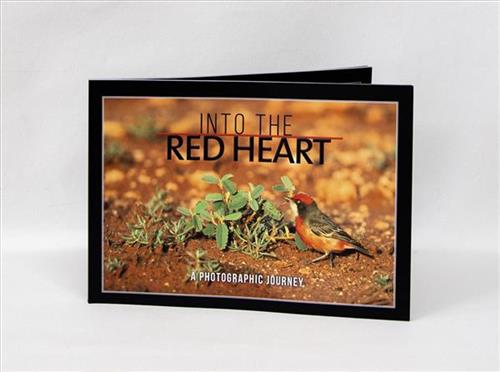
Into the Red Heart: A Photographic Journey
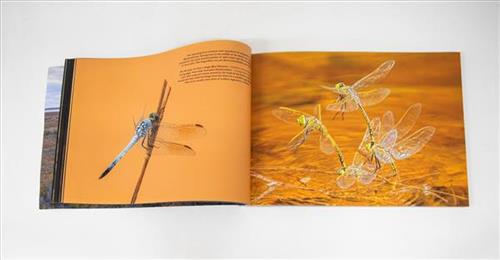
A photographic journey of 18 months spent on the APY Lands following the seasons and the flora and fauna residents of the Central Desert.
Greg Cramond
Status: Stock
A photographic journey of 18 months spent on the APY Lands following the seasons and the flora and fauna residents of the Central Desert.
Greg Cramond
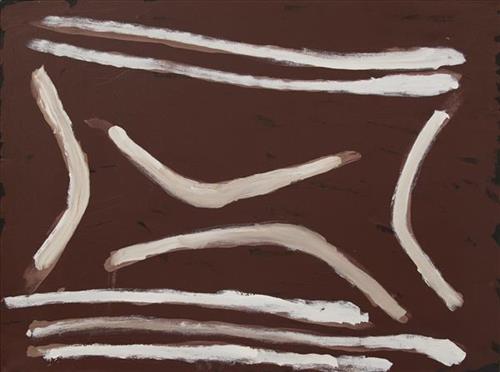
My father told me this story, it’s a dream he had. There was a man who was travelling for a long time. He was travelling with kulata (spear) and kali (boomerang) because someone was waiting there for fighting.
In the middle of the way someone came making problems and trouble. All the kulata gone, all the kali gone. That place is still there and the kangaroo and emu are still drinking there at that waterhole.
This is tjukurpa wiru – a good story. There are some stories I can’t tell you.
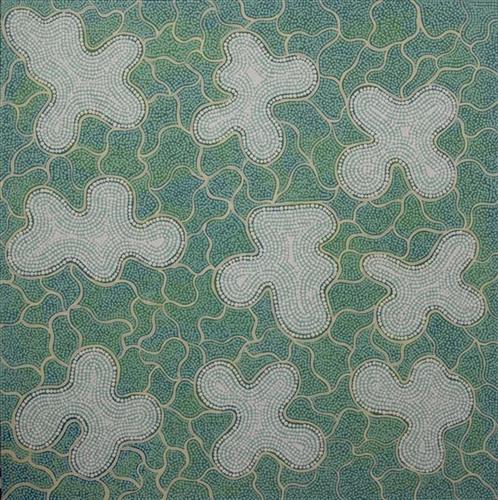
For the Pitjantjatjara people living in the desert, knowledge of their water sources was critical to their survival. This resulted in an intimate understanding of the landscape which continues today. Water is an essential element in the desert. These rock holes were particularly important during the dry season when most of the water holes and creeks dried up. Deep familiarity with the topography of their country and the way rain would interact with the land ensured constant sources of water could be found. Knowledge of rock hole sites is passed on from generation to generation and revered by all Anangu (people).
Tjukula means rock-holes, which are found with surprising frequency in the Musgrave Ranges and country around Ernabella. Between visits, Anangu would use a construction of rocks and spinifex to guard these important water sources from spoilage by feral and stock animals such as cattle, camels, horses and donkeys.
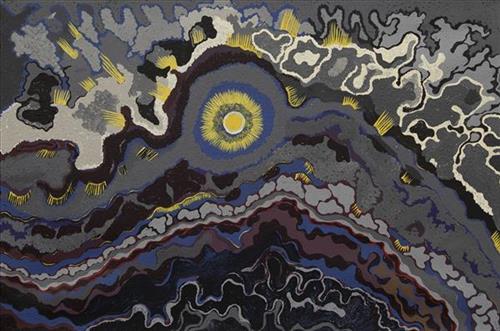
This painting is the sun shining through the clouds.
‘Cloudy, raining, but the sun is shining through the clouds. The sun is going through the clouds. The clouds are trying to cover the sun, thunder coming, but the sun still coming through’.
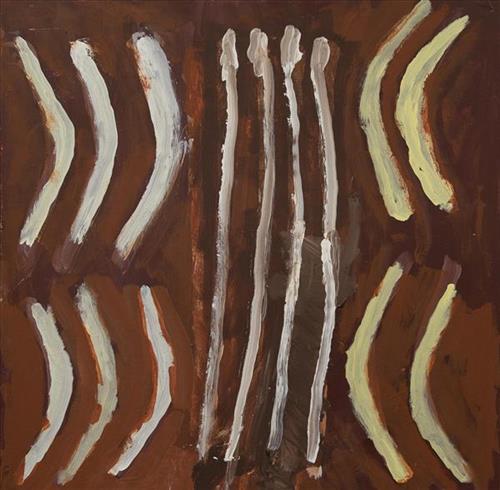
My father told me this story, it’s a dream he had. There was a man who was travelling for a long time. He was travelling with kulata (spear) and kali (boomerang) because someone was waiting there for fighting.
In the middle of the way someone came making problems and trouble. All the kulata gone, all the kali gone. That place is still there and the kangaroo and emu are still drinking there at that waterhole.
This is tjukurpa wiru – a good story. There are some stories I can’t tell you.
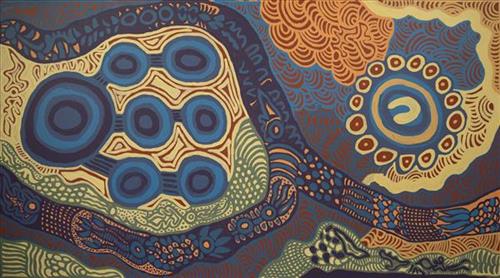
Kungkarangkalpa means the Seven Sisters. This is an extensive creation story that relates to the Pleiades constellation in the southern hemisphere. The story traverses Australia taking on different forms, however local women are privy to the part of the story which takes place in the country near Ernabella. For this part of the story, the man called Nyiru is chasing the sisters as he wants to sleep with the oldest sister. All the younger sisters are deeply afraid of him. As Nyiru is chasing the sisters, he tries to catch them by using magic to turn himself into the most tempting bush tomatoes for the sisters to eat and the most beautiful ili (fig) tree for the sisters to camp under. However, the sisters are aware of his magic and go hungry and run through the night rather than be caught by Nyiru. Eventually, to escape Nyiru, the sisters fly into the sky where they turn into stars and form the constellation.
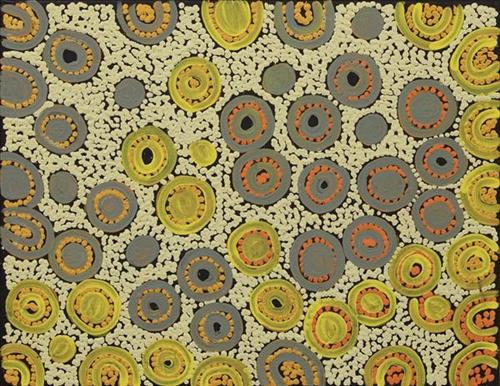
There is a story of deep significance to women which contains metaphorical references to female cycles. It tells of two women travelling north. The pair meet with a group of women, including Kutungu, who are caring for a man who then passes away. They then travel to the area known as Mantaruta, near Uluru, where they chase a curious wanampi (serpent) deep into the ground while trying to catch him. They burn their body hair to attract him and hit him on the head and run away. From afar they throw a manguri/traditional head-ring for carrying which also hits him. He then comes and hits the women who travel on bleeding and hurt.
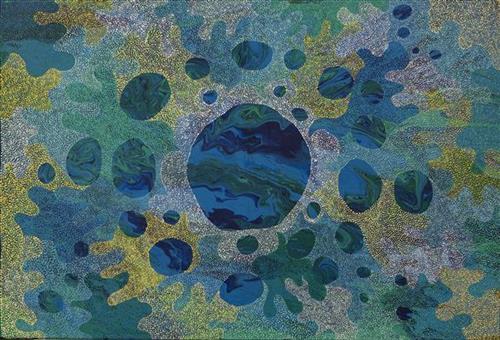
This is a story of a woman named Maalila travelling south to west. She stopped near Kanpi area to look for a place to stay, her ngura (country). She was digging a hole to hide, she was scared of the wati (men). Maalila was with her daughter, they all lived in the underground cave hiding. They went out to gather bush food to take back to the cave. They dig for rabbits, kuka (meat) and they take kuka and mai (food) and they save for later in the cave. They have something to eat.
Story told by Teresa Baker
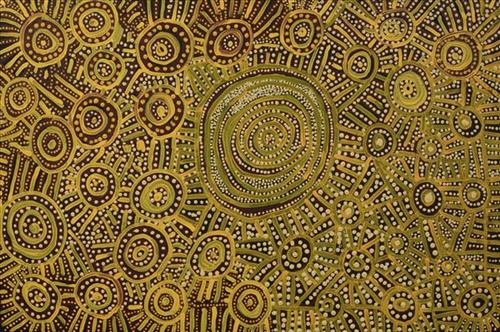
Artists use this title when they are depicting their Country. It might be a representation of a particular place or of different aspects of that area. The artist uses a combination of colour and design to indicate variations in the landscape. Inspiration is drawn from all elements of Country and might include bush tucker, water holes, meeting places, rock formation, birds or animals.
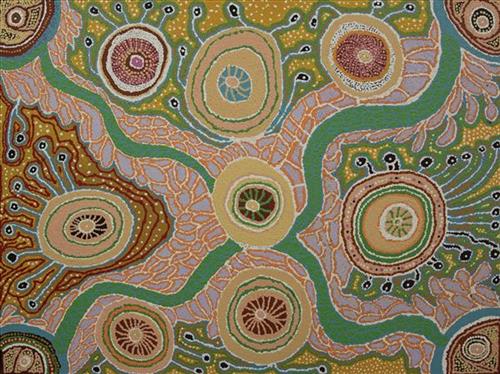
Imuna paints the Country that stretches from Mutitjulu to Kunytjanu, close to Pipalyatjara in the far west of the Aṉangu Pitjantjatjara Yankunytjatjara (APY) Lands. The ancestral figure known as Wati Wanampi (male water snake) lived at a waterhole site called Malara. The Wanampi gathered a group of men together to go out hunting for kuka (meat).
While they were out looking for meat, another group of male water snakes known as the Wal Mala (an army of soldier snakes who came from Mutitjulu) recruited them into their army. The group joined forces and travelled to a site known as Kuntyjanu, where they engaged in a battle with Wati Tjakura (an edible skink lizard). They speared Wati Tjakura and killed him. The group then returned to Malara, where they rest today at the waterhole.