221282371873


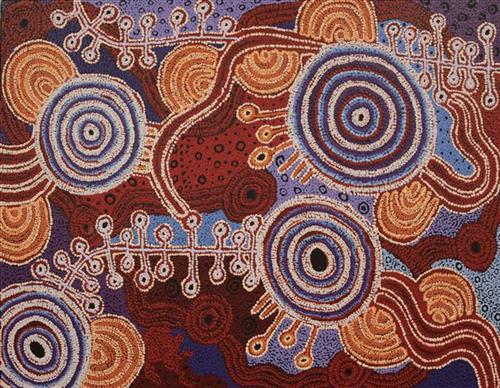
Minyma Kutjara (Two Women Near Ernabella)

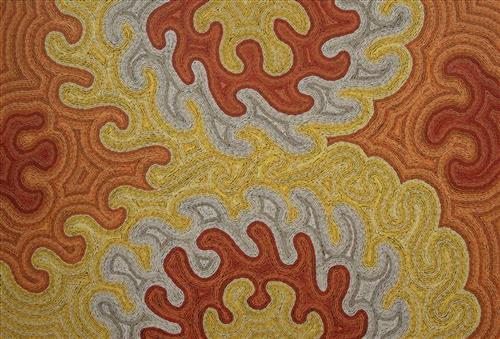
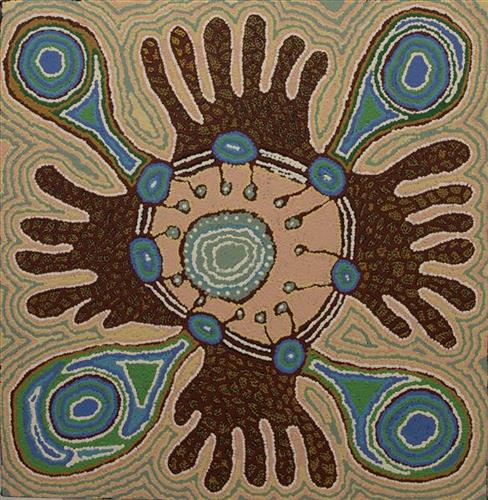
There are many stories about the two sisters (Minyma Kutjara). This part of the story is siginificant to the women of Ernabella. There was a gathering of minyma mingkiri (mouse women) at a hill called Yunanpa, which is near Ngarutjara (to the north of Ernabella). They are all collecting bushfoods together when the two sisters decide to go travelling. They travel to several water places to the north and east of Ernabella including Alalka. They keep going until they get to Wamitjara, a waterhole near Kenmore park. Here they come across a man sleeping. They hit him over the head with their wana (digging stick) and knock him unconscious. Then they tie up his arms and legs and head towards Alice Springs, carrying him between them. They sing and dance sacred women’s stories all the way. They leave him at Stuart’s Well, and continue on to Alice Springs to meet up with a large group of women.
221282371872


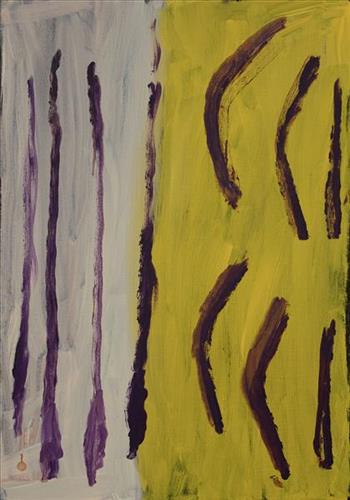
Kulata Tjuta – Many Spears

Freddy is painting his grandfather’s country in far west South Australia. He depicts kulata tjuta (many spears) travelling through the sky to catch wati wanampi (snake man). Those wati wanampi are moving fast through the sky. There was one woman waiting there with a baby and she said there was a wati who was nearby hiding in a bush, ready to duck down and go and then throw those spears.

221282371871


Piltati

There were two sisters who married two brothers and they all lived together. One day the women went wandering and they went such a long way that they forgot about their husbands. Back at the camp, the two husbands were thinking, ‘Where are our wives?’ and they decided to go looking for them. One brother said to the other, ‘What should we become to go looking for them?’ and the other brother said ‘Why don’t we become Rainbow Serpents?’ And they travelled in the sky looking down for their wives. Finally they see them hunting for carpet snakes and they put something in the hole where the women were digging. The women find it and then dig another hole and once again the men have put something in there. And this is how the men lure the women back to Piltati where the men make the sisters transform into Wanampi, swallow them and keep .them in their throats. All four of them live together in the waterhole and still live there today.

221282371870


Tjukula/Waterholes

For the Pitjantjatjara people living in the desert, knowledge of their water sources was critical to their survival. This resulted in an intimate understanding of the landscape which continues today. Water is an essential element in the desert. These rock holes were particularly important during the dry season when most of the water holes and creeks dried up.  Deep familiarity with the topography of their country and the way rain would interact with the land ensured constant sources of water could be found. Knowledge of rock hole sites is passed on from generation to generation and revered by all Anangu (people).

Tjukula means rock-holes, which are found with surprising frequency in the Musgrave Ranges and country around Ernabella.  Between visits, Anangu would use a construction of rocks and spinifex to guard these important water sources from spoilage by feral and stock animals such as cattle, camels, horses and donkeys.

221282371908


Pantu (Salt lake)

A very significant tjurkurpa (story) to Anangu is Kungkarangkalpa (Seven Sisters) which is an extensive creation story relating to the Pleiades constellation. The story traverses Australia taking different forms, and local women are privy to the part of the story which takes place in the country near Ernabella.

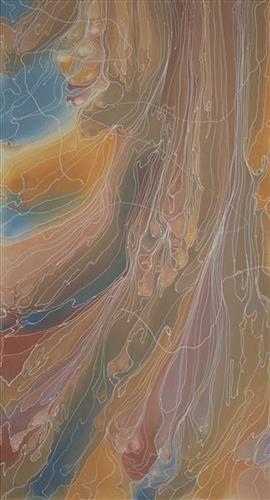
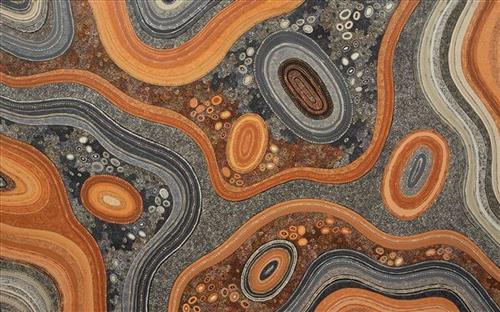
In her paintings Janice is depicting a salt-lake near Attila (Mt Connor) a landmark in the Seven Sisters story. This story has been passed down to her by senior artist and aunt Renita Stanley. In this part of the story the sisters are walking and traveling south through this country. The Salt Lake that is a part of this arid county comes alive after rain. As the kapi (water) moves across the land it transforms the colour and light on the land and Janice is painting this change and movement.

221282371898


Anapalaku Walka – Ernabella Design

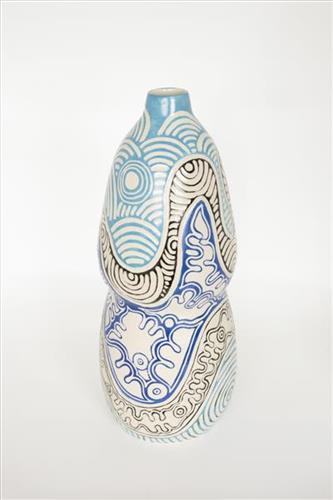
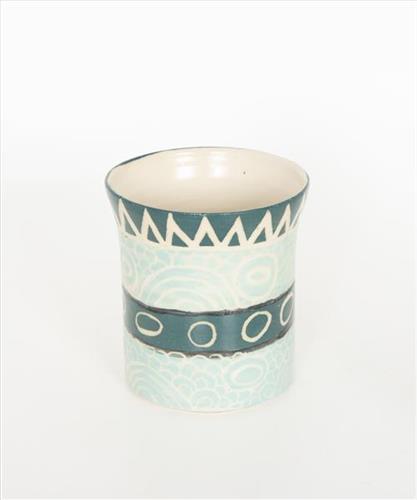
The well-known Anapalaku Walka evolved out of the very first drawings that children made in the Ernabella mission school in the 1940s. The children would often come to the Ernabella craft room (the precursor to today’s art centre) in the afternoon or during school holidays, making their doodles and designs that were the inspiration for the artists who then used this motif on various craft media. The designs are based on flowers, leaves and the rich colourful arid landscape of the Aṉangu Pitjantjatjara Yankunytjatjara (APY) Lands. The young girls grew older and many of them joined the art centre where they developed these designs into a distinctive artistic style. The Anapalaku Walka has been used by Ernabella artists for more than 75 years on floor rugs, batik, paintings and ceramics.

221282371891


Michelle’s Tjala Dreaming (Honey Ant)

Michelle’s father’s country is tjala tjukurpa (honey ant dreaming). Michelle and her family still visit this country where she pays special attention to the natural elements on the land which are then represented in her paintings:

I am painting the landscape from above, as you might see it from an airplane or as a bird looking down. It is beautiful country both from on the ground and up above.

In Michelle’s work she creates how the tjala (honey ants) tunnel though the sandy soil. She also depicts the small groupings of intergenerational women and children sitting together and digging for the tjala. The earth is shown as soft because it’s been raining.

Tjala or honey ants live in nests about a metre underground beneath mulga trees, and they are a highly favoured food source. The tjala tunnels that lead down to the ants’ nests are called nyinantu, and the larvae are called ipilyka-ipilyka. After the rain when the ground is soft the women go digging for tjala by looking for the drill holes under the trees. They then use shovels and crowbars to dig down following the tunnels to find the tjala inside. Aṉangu suck the delicious rich honey-like liquid from the distended abdomen of the tjala. The story of the tjala is told across the Northern Territory into South Australia and is an important link between Aṉangu mythology and inter-dependence on the environment.

221282372357


Kulata and Kali (Spear & Boomerang)

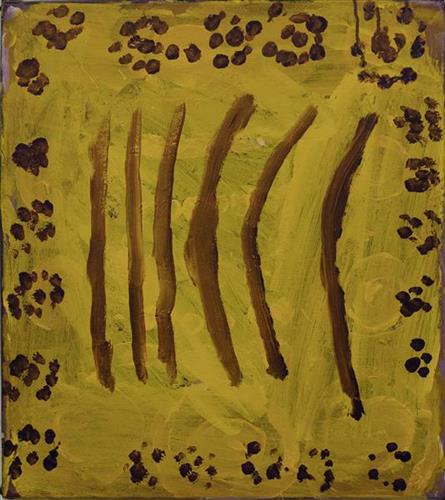
My father told me this story, it’s a dream he had. There was a man who was travelling for a long time. He was travelling with kulata (spear) and kali (boomerang) because someone was waiting there for fighting.

In the middle of the way someone came making problems and trouble. All the kulata gone, all the kali gone. That place is still there and the kangaroo and emu are still drinking there at that waterhole.

This is tjukurpa wiru – a good story. There are some stories I can’t tell you.

221282372356


Wati Wanampi Tjuta / Snake Men – Imuna Kenta’s Story

Imuna paints the Country that stretches from Mutitjulu to Kunytjanu, close to Pipalyatjara in the far west of the Aṉangu Pitjantjatjara Yankunytjatjara (APY) Lands. The ancestral figure known as Wati Wanampi (male water snake) lived at a waterhole site called Malara. The Wanampi gathered a group of men together to go out hunting for kuka (meat).

While they were out looking for meat, another group of male water snakes known as the Wal Mala (an army of soldier snakes who came from Mutitjulu) recruited them into their army. The group joined forces and travelled to a site known as Kuntyjanu, where they engaged in a battle with Wati Tjakura (an edible skink lizard). They speared Wati Tjakura and killed him. The group then returned to Malara, where they rest today at the waterhole.

221282372690


Ngayuku Walka / My Design

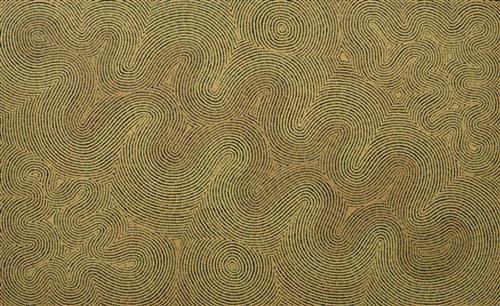
Walka means design or pattern. Artists use this title to describe artworks that are pattern based rather than descriptive or telling a story.