REEF
We rely on the reefs around Moa Island for our fish and shellfish. There is coral down low and up high and sponges and all of them are in danger of being lost becasue of climate change.
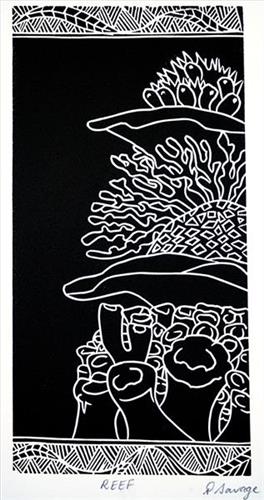
We rely on the reefs around Moa Island for our fish and shellfish. There is coral down low and up high and sponges and all of them are in danger of being lost becasue of climate change.
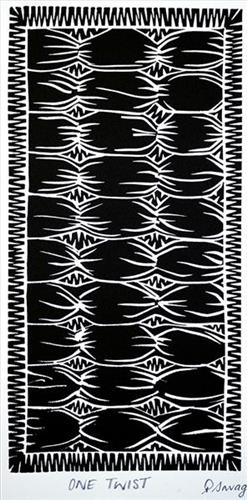
This artwork is about a weaving workshop in interprets my one twist drawn onto a Lino.
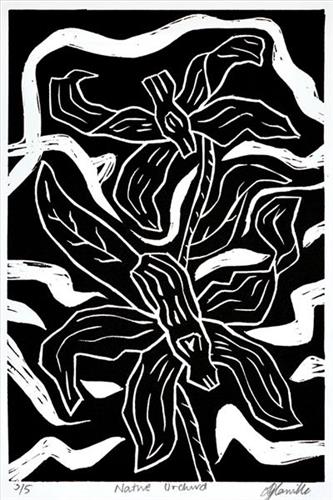
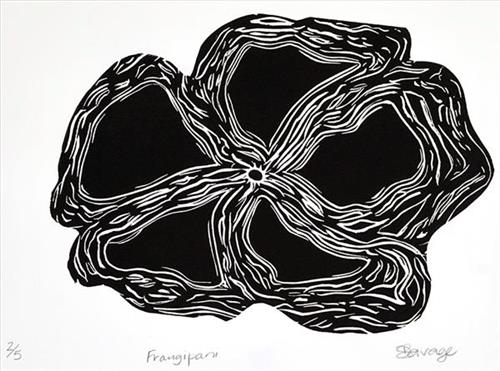
One of the treasures of Mua Island, a plant that is spread for the women of Moa. This orchid resilience to growing in the hash environment and surviving the weather and yet still blossom in its season. resembles the resilience that is in each women of Moa. the white patterns depicts the weather and environment that the Orchid grows in and draws it’s nutrients in order to survive.
Art Centre notes:
Image size: 56 x 38cm. Paper size: 76 x 56cm
The artwork is a (colour reduction/B/W) lino print, printed on BFK Rives paper (100% cotton rag with strong archival properties).
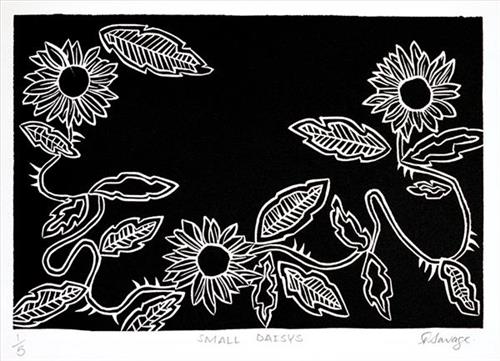
This artwork is based on small creepy crawlers call Daisys that likes to hide and attach themselves to different types of roots and flowers. I like the idea of that particular plant, it’s yellow and you can find in certain garden area.
It is used either as a table ware decorations or too accessories to wear as hair pieces. Different colour ranges have different scents.
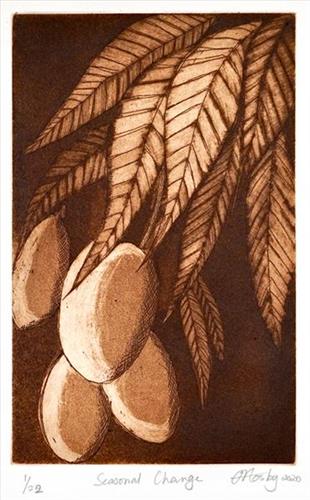
Seasonal Change is about the time changes in season that we are facing right now with climate change. over the past few years the mango season hasn’t come to its fullest abundance like before where it was in its time and season.
Art centre notes:
Paper Size: 320mm x 230mm Image Size: 190mm x 120mm
The artwork is an etching on Hahnemühle paper 100% cotton rag with strong archival properties.
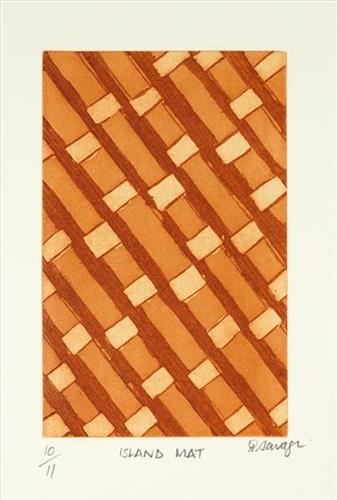
This etching is one of my favourite view of a island mat design.
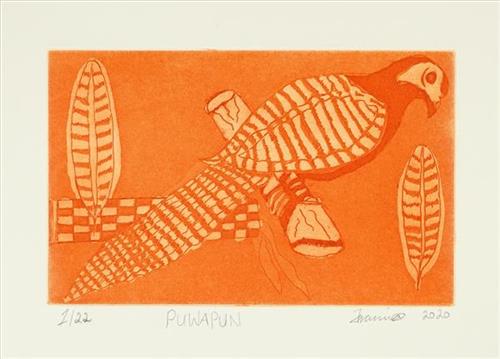
My print depicts the Puwapun (Pheasant Coucal) found on Moa Island.
‘The pheasant coucal (Centropus phasianinus) is a species of cuckoo in the family Cuculidae. It is found in Australia, Timor and New Guinea. Its natural habitats are subtropical or tropical moist lowland forests and subtropical or tropical mangrove forest. It has adapted well to canefields in northern Australia. The pheasant coucal is unusual among Australian cuckoos in that it incubates and raises its own young instead of laying its eggs in the nest of another species’. Text Wikipedia
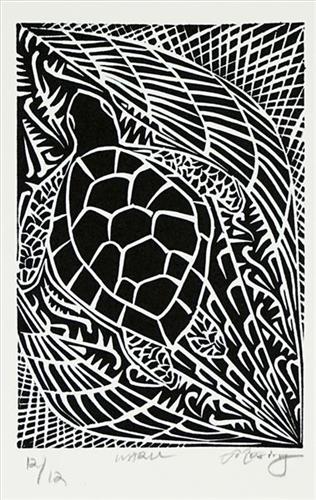
My print depicts the green sea turtle. It’s name in my language is waru.
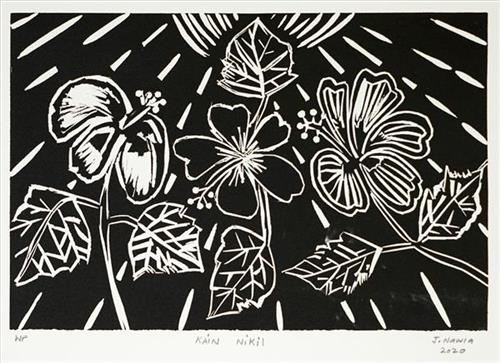
Kain Nikil simply means new beautiful, colourful flowers blooming.