225482358241


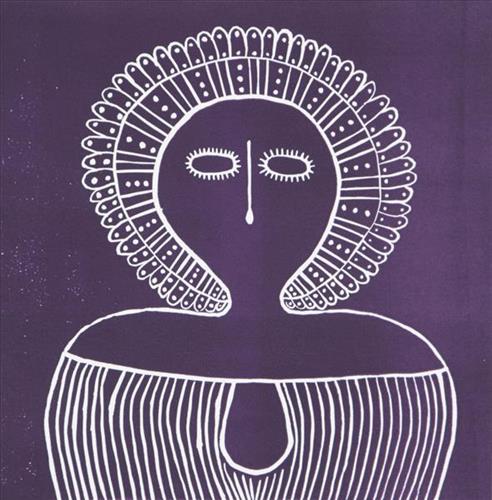
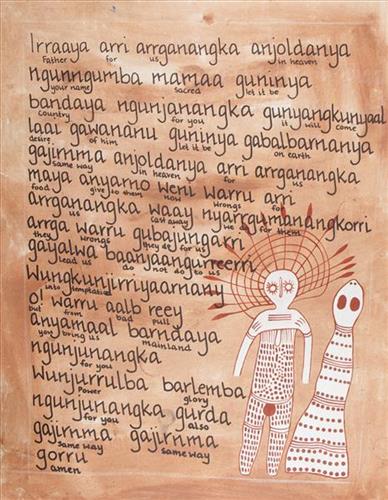
Wandjina and Father God are the same (Wandjina Ge Irraaya Gaaddangaadaa Gajirnma)

Irraaya arri arranangka anjoldanya

Father for us in heaven

ngunngumba mamaa guninya

your name sacred let it be

bandaya ngunjanangka gunyangkunyaal

country for you it will come

laai gawananu guninya gabalbarnanya

desire of him let it be on earth

gajirnma anjoldanyaarri arrganangka

same way in heaven for us

maya anyarno weni warru arri

food give to them now wrongs for

arrganangka waay nyarrgumanangkorri

us cast away we do for them

arrga warru gubajungarri

they wrongs they do for us

gayalwa baanjaangurreerri wungkunjirriyaarnany

lead us do not do to us into temptation

O! warru aalb reey

but from bad pull

Anyamaal barndaya

you bring us mainland

ngunjunangka wunjurrulba barlemba

for you power glory

ngunjunangka gurda

for you also

gajirnma gajirnma

same way same way

gorru

amen


225481320359


Jarlarloyni

Jarlarloyni is a female Wandjina that married Namarali one of the main three Wandjinas that created the laws, country and language for the Ngarinyin, Worrorra, and Wunumbal people. Namarali was originally from Ngarinyin country however he travelled to the Worrorra coast and fell in love with Jarlarloyni.

My uncle Donny Woolagoodja speaks about Jarlarloyni;

Jarlarloyni belonged to Montgomery reef or to Umadai Ungardon. The pronouncement of that name represents this area (Wijingarra Bard Bard, far north Kimberley coast, Worrorra country). Umadai Ungardon sounds like that word when they say Jarlarloyni.

It’s like she’s related to this part of the country, and that’s where Namarli got her. He didn’t get her from up there (Ngarinyin country) he found her here and that’s why the people got angry, she was the wrong skin for Namarli. They didn’t want him to have her.

Another story that my father said, that Namaralis brother was after her too. That‘s how they had that battle because this clan from this area here didn’t like him to have her so they were trying to kill him. They talked amongst themselves saying he’s trying to take our women away.

That’s when the war began. They sent people to all different tribes to tell them to come and help kill Namarali because Namarali was a very smart warrior and very strong. They got tribes from all different areas to come and fight in the battle to get rid of Namarali. They were talking amongst themselves asking why Namarali was coming over here to take our women, so they killed him (Namarali).

Jarlarloyni wasn’t a Ngarinyin woman. Some people say that she came from Ngarinyin country, but I don’t think so. That name, Jarlarloyni, it’s for this country. Namarali fell in love with Jarlarloyni. Namarali ran away from Ngarinyin country because he was angry with his tribe.

His tribe was angry with him for coming here to Wororra country so they followed him.

The Worrorra people were very angry with him for stealing Jarlarloyni.

The caves for Jarlarloyni and Namarali are located approximately 3km’s in from the coast of Langgi

Today you can still see Jarlarloyni and Namarali as they appear in ochre on the rock surface in their respective caves.

Large rock formations at Langgi represent Jarlarloyni and Namarali as well as the other Wandjina warriors that past during this battle.
225481320449


Jilinya (first bush woman)

This Painting represents the Jilinya. She captures the eyes of young and old men and then lures them by giving them whatever they wish to hunt or fish. She then lures them further and further away by catching and hunting. This makes the man more eager to go back to that same place. Once she has pulled them away as far as she can then she’ll show herself to him. She takes them away and they are never seen again. Women can only hear and smell her but the men see her.

225481320561


Argula (ghost spirit)

The name Argula describes a number of ghost-like spirits. Some of them are Jilinya who are seductive Jindiwan (men) and Ngindiwan (women) who steal women, men and babies. There are also some big ‘hairy men’ who live underground, Rye who are little ‘cheeky men’ who can help or punish you and devils. Other examples of Argula include the spirit of deceased people who are making a journey back to their homeland, usually an Ungud waterhole where the person’s birth spirit was formed. A deceased person immediately becomes Argula and begins his journey. In the Kimberley there is a set journey that all Argula spirits make. This journey takes the spirit inland towards Halls Creek, roughly following the course of the Fitzroy River. The spirit then travels through Gidja country before finally traveling to his spiritual birth place in the Wandjina homelands of the Ngarinyin, Worrorra and Wunambul people. The Argula spirits have a devil-like appearance but are usually harmless if left alone. The Wandjina spirits are highly respected by the Worrora, Ngarinyin and Wunumbul people who live at Mowanjum and along the Gibb River Road to Kalumburru in the North West Kimberley region of Western Australia. Wandjina represents the laws of everything the surrounds us trees, rivers, rocks, bush fruit and animals, all creation. The Wandjinas give the law on how we have to treat and use these creations. These customs are carried on today.

225482067872


Iondra (baby dreaming) – Edna Dale

Iondra, is when we dream about a child and their Ungud (totem). That’s how we get their Ungud, through dreams. It could be an animal, maybe we hunted and killed that animal. The Wandjinas, they bring those dreams, that’s how we get our children.

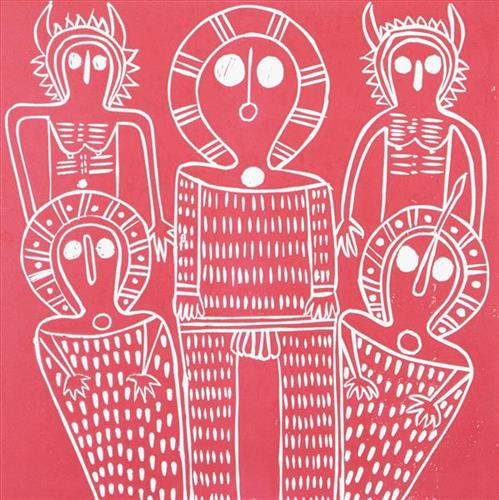
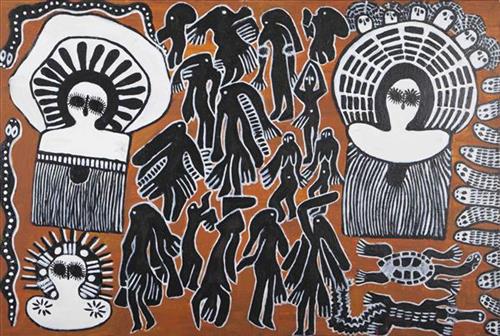
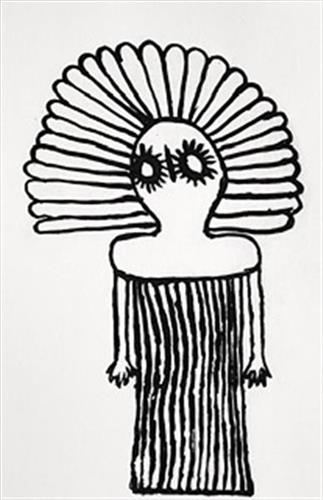
This Wandjina is called the rainmaker. Two lightning spirits in a cave are waiting for the clouds to gather up, so he can make the rain and lightning. Where you see a lot of Wandjinas they represent the laws of trees, rivers, rocks, bush fruit, animals and all of creation. The Wandjinas give the law on how we have to treat and use these creations. These customs are carried on today. The Wandjina spirits are highly respected by the Worrora, Ngarinyin and Wunumbul people who live at Mowanjum and up the Gibb River Road to Kalumburru in the North West Kimberley region of Western Australia.

225482111411


Three Tribes

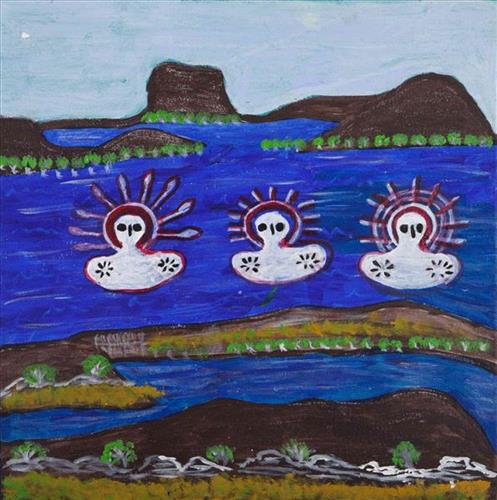
The three tribes are the Worrora, Wunumbul and Ngarinyin. The three tribes represent the Wandjina who made them what they are today. They’re from the North Kimberley region of Western Australia. The area that makes up the three tribes starts from Oobagooma which is 150km north of the coast of Derby, east across towards inland to Iminji and all the way up to Kalumburru. The tribes have travelled, moved and lived together and share similar stories, culture and language with different dialects. They still follow the law, culture and language of the land today carrying on strong and sharing it.

From left to right we have Wannalirri (Ngarinyin) Wandjina. He was the Wandjina that brought all the Wandjina’s together to send the big flood to drown the people, because of what the children had done to the Dumbi the owl.

The Wandjina in the centre is called Namarali (Worrora) Wandjina. He is the only one with spears sticking out of his head. Namarali stole a wife of one of the other Wandjinas and they both ran away to the coast to a place called Langi. The husband of the women rounded up the other Wandjinas and they went after the two and caught up with them at Langi and they surrounded him (Namarali). They all threw their spears at him and as he was dying he told them to bury him in the sand but bury him on the nearby hill. To this day you can see the rock formations of the Wandjinas at the battle at Langi, and Namarali is the biggest rock of them all.

The third Wandjina on the right is Rimmijmurra (Wunambul). This Wandjina likes stealing so thats how it got his name.

225482201275


Wandjina, Gyorn Gyorn & Unguds (cloud and rain spirits, Bradshaw & totems)

The Wandjina spirits are highly respected by the people of Mowanjum. The Wandjinas brought the law, culture and language. The people of Mowanjum believe that the first Wandjina was called Idjair who lives in the Milky Way and is the father of all Wandjinas. The Wandjina Wallungunda was Idair’s first son; he created the Earth and all life upon it. After he created the first human beings, the Gyorn Gyorn people, Wallungunda traveled back to Idjair to bring back more Wandjinas to give the Gyorn Gyorn people laws to live by. Today the Gyorn Gyorns are known to give our corroboree and became hunters, collectors and gatherers.The Wandjina is highly respected by the people because it gave the law, culture and language. The Unguds represent the dreaming of the people which the Wandjina has given. Before birth, the Ungud is given to the father or the grandfather of a child. It way come through dreams, or it may come as a living animal. The animal becomes a gift from the Wandjina to the unborn child which the child belongs to. When the child dies it will go back to being that animal. Today every individual has their own animal.

225482216119


Ilala (child dreaming)

Long ago our ancestors used to travel visiting relatives on the way. They camped near Wuludi (waterholes or billabongs) which had Unguds (dreaming totems) in the Ngaboon (water). Sometimes childless couples were travelling and met with relatives, and that relative may dream or hear a Ilala (baby) cry. That relative may give the couple food or presents which are like giving the couple a Ilala (baby) they’ve longed for. Sometimes it could be in the form of an animal to represent the Ilala’s Ungud. Sometimes the couple would go swimming in the Ungud water (sacred water hole that spirits of children originate from), so it could see that the couple wanted a baby, and maybe would give them one.

225482260840


Wandjina (cloud and rain spirits)_Framed

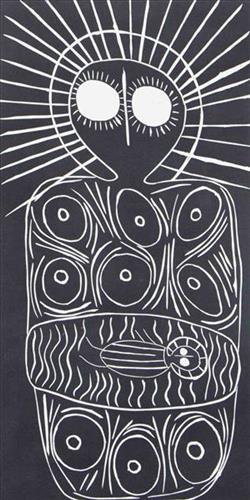
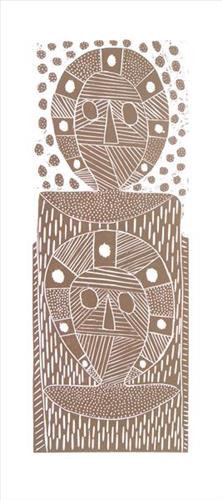
The Wandjina spirits are highly respected by the Worrora, Ngarinyin and Wunumbul people who live at Mowanjum and along the Gibb River Road to Kalumburru in the North West Kimberley region of Western Australia. Wandjina represents the laws of everything the surrounds us trees, rivers, rocks, bush fruit and animals, all creation. The Wandjinas give the law on how we have to treat and use these creations. These customs are carried on today.