114182405357


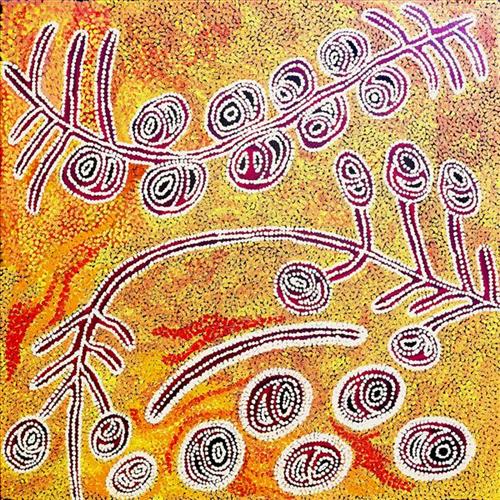
Fathers designs (R. Jackson)

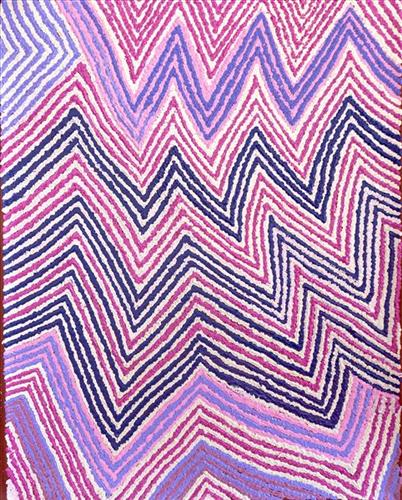
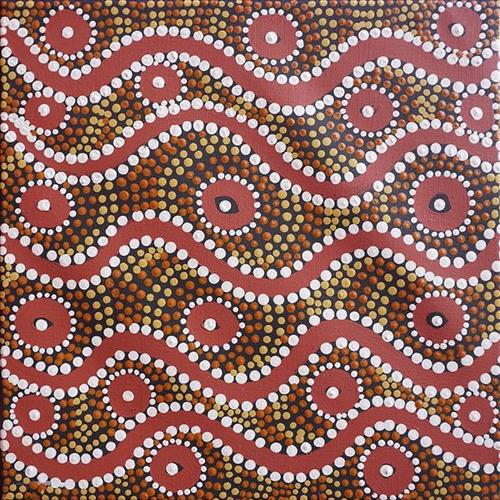
This painting shows the design of her father Reggie Jackson’s male Tjara (shields). The shapes move across the canvas and then down again — the way Reggie always marked them. “This is my mark,” he would say. Katherine paints this design to carry his legacy forward. Reggie was born north of Blackstone and grew up around Mantamaru, living between both places. As one of the founding artists at Irrunytju, he was known for his vivid colours, broad brushstrokes, and the way he’d sing Tjukurrpa as he worked. A true bush man, strong in Law, full of humour, and devoted to his family. By painting his Tjara design, Katherine keeps his story alive.

114182405450


Kungkarrangkalpa (Seven Sisters)

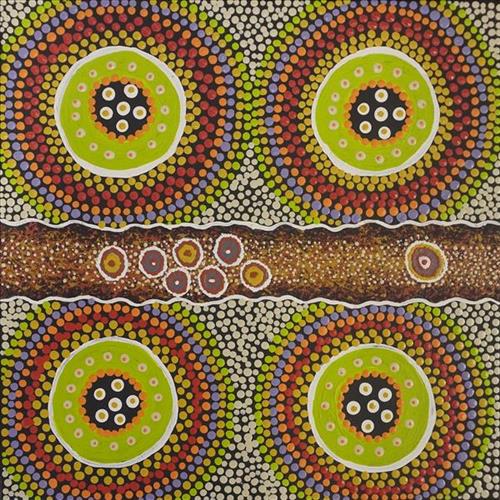
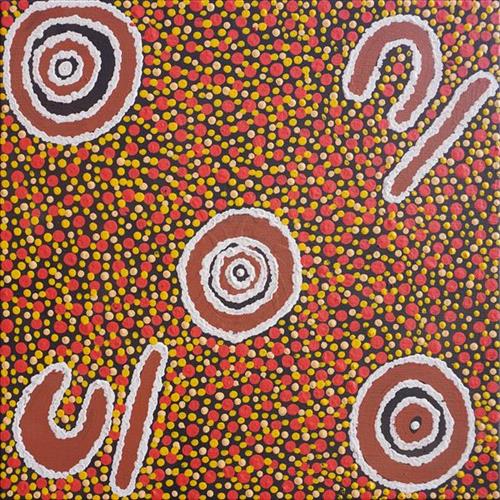
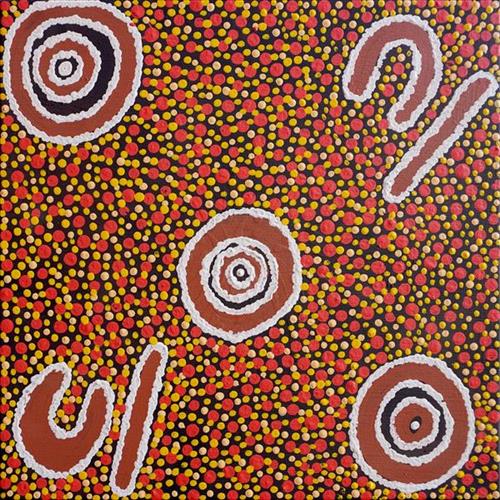
‘Kungkarrangkalpa’ (The Seven Sisters or Pleaides) is significant Tjukurrpa (dreamtime). Its origins you may be familiar with in astronomy and its connection to ‘Wati Nyiru’ (Magic Man or Orion).  The roots of this dreaming stems across indigenous groups around the world. The Australian Aboriginal songline is one part to the whole dreaming which can be traced all around the world. The ladies of the Ngaanyatjarra Lands depict their significant chapter and understanding of the journey of the sisters. The different versions of this story depend on where you live and the significance’s of local Tjukurrpa places.

Nyiru fell in love with the sisters but he was of the wrong skin group to marry, but he still pursued them on their journey. The sisters travel across the land to escape Nyiru’s unwanted attentions, but he is persistent and always finds them. There are significant land forms which can be sited today that evidence this dreaming. As Nyiru is chasing the sisters he tries to catch them by using magic to turn into the most tempting kampurarrpa (bush tomato) and the most beautiful Yirli (wild fig tree), for them to eat and camp under. However, the sisters are knowledgeable of his magic and too clever for Nyiru who they outwit again and again. They go hungry and run through the night rather than be caught by him. As the journey continues, Nyiru gets so frustrated at the wit of the sisters that he uses his magic to make the oldest sister sick to try and get closer to her. The other sisters rescue the big sister and nurse her back to health. It is said he also captures the youngest sister, but with the help of the oldest sister, she escapes back to her sisters who are waiting for her. Eventually, the sisters fly into the sky to escape Nyiru, forming the constellation. Nyiru felt lonely, longing for the sisters who were so far away. Nyiru used his magic to go to the sky, forever in pursuit.

114182406037


Kungkarrangkalpa (Seven Sisters)

‘Kungkarrangkalpa’ (The Seven Sisters or Pleaides) is significant Tjukurrpa (dreamtime). Its origins you may be familiar with in astronomy and its connection to ‘Wati Nyiru’ (Magic Man or Orion).  The roots of this dreaming stems across indigenous groups around the world. The Australian Aboriginal songline is one part to the whole dreaming which can be traced all around the world. The ladies of the Ngaanyatjarra Lands depict their significant chapter and understanding of the journey of the sisters. The different versions of this story depend on where you live and the significance’s of local Tjukurrpa places.

Nyiru fell in love with the sisters but he was of the wrong skin group to marry, but he still pursued them on their journey. The sisters travel across the land to escape Nyiru’s unwanted attentions, but he is persistent and always finds them. There are significant land forms which can be sited today that evidence this dreaming. As Nyiru is chasing the sisters he tries to catch them by using magic to turn into the most tempting kampurarrpa (bush tomato) and the most beautiful Yirli (wild fig tree), for them to eat and camp under. However, the sisters are knowledgeable of his magic and too clever for Nyiru who they outwit again and again. They go hungry and run through the night rather than be caught by him. As the journey continues, Nyiru gets so frustrated at the wit of the sisters that he uses his magic to make the oldest sister sick to try and get closer to her. The other sisters rescue the big sister and nurse her back to health. It is said he also captures the youngest sister, but with the help of the oldest sister, she escapes back to her sisters who are waiting for her. Eventually, the sisters fly into the sky to escape Nyiru, forming the constellation. Nyiru felt lonely, longing for the sisters who were so far away. Nyiru used his magic to go to the sky, forever in pursuit.

114182406034


Emus eating quandongs

In this painting Dorothy has painted two emus and their chicks eating quandongs or native peach (red dots) from the quandong tree. The birds in the sky have quandongs in their beaks as they also enjoy eating the fruit. Quandongs were a traditionally a significant food source for Yarnangu in the Ngaanyatjarra Lands.

114182406123


Emus eating quandongs

In this painting Dorothy has painted two emus and their chicks eating quandongs or native peach (red dots) from the quandong tree. The birds in the sky have quandongs in their beaks as they also enjoy eating the fruit. Quandongs were a traditionally a significant food source for Yarnangu in the Ngaanyatjarra Lands.

114182406044


Tjitji kutjarra – Two boys

This is the story of the two boys, though some say it was two brothers or a brother and sister, living around Mantamaru (Jameson). One day they saw the track of a big snake, they followed and eventually caught and ate. Unbeknownst, the brothers they had eaten a spirit or magical snake.

The next day the brothers felt unwell. Any task became hard and their walking slowed down. Gradually they became slower and slower until they reach the top of a hill where no longer able to move they turned to stone.  

Driving east from Jameson (on your left) you can see two lonely up-right rocks, one smaller than the other on the top of a hill which are called Tjitji (child) Kutjarra (two).

114182406031


Tjitji kutjarra – Two boys

This is the story of the two boys, though some say it was two brothers or a brother and sister, living around Mantamaru (Jameson). One day they saw the track of a big snake, they followed and eventually caught and ate. Unbeknownst, the brothers they had eaten a spirit or magical snake.

The next day the brothers felt unwell. Any task became hard and their walking slowed down. Gradually they became slower and slower until they reach the top of a hill where no longer able to move they turned to stone.  

Driving east from Jameson (on your left) you can see two lonely up-right rocks, one smaller than the other on the top of a hill which are called Tjitji (child) Kutjarra (two).

114182406030


Rockholes & Spinifex Narelle Holland

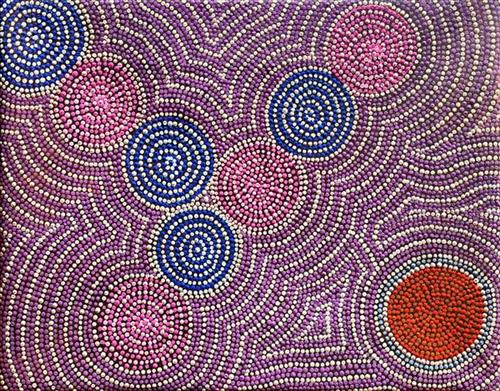
Here Narelle shows her Great Grand parents country and it’s beauty, featuring many Rockholes; Lilyirra, Ngatun, Walu, Multju, Karrpillia and Likarpullar.

114182406257


Kungkarrangkalpa (Seven Sisters)

‘Kungkarrangkalpa’ (The Seven Sisters or Pleaides) is significant Tjukurrpa (dreamtime). Its origins you may be familiar with in astronomy and its connection to ‘Wati Nyiru’ (Magic Man or Orion).  The roots of this dreaming stems across indigenous groups around the world. The Australian Aboriginal songline is one part to the whole dreaming which can be traced all around the world. The ladies of the Ngaanyatjarra Lands depict their significant chapter and understanding of the journey of the sisters. The different versions of this story depend on where you live and the significance’s of local Tjukurrpa places.

Nyiru fell in love with the sisters but he was of the wrong skin group to marry, but he still pursued them on their journey. The sisters travel across the land to escape Nyiru’s unwanted attentions, but he is persistent and always finds them. There are significant land forms which can be sited today that evidence this dreaming. As Nyiru is chasing the sisters he tries to catch them by using magic to turn into the most tempting kampurarrpa (bush tomato) and the most beautiful Yirli (wild fig tree), for them to eat and camp under. However, the sisters are knowledgeable of his magic and too clever for Nyiru who they outwit again and again. They go hungry and run through the night rather than be caught by him. As the journey continues, Nyiru gets so frustrated at the wit of the sisters that he uses his magic to make the oldest sister sick to try and get closer to her. The other sisters rescue the big sister and nurse her back to health. It is said he also captures the youngest sister, but with the help of the oldest sister, she escapes back to her sisters who are waiting for her. Eventually, the sisters fly into the sky to escape Nyiru, forming the constellation. Nyiru felt lonely, longing for the sisters who were so far away. Nyiru used his magic to go to the sky, forever in pursuit.

114182406205


Kungkarrangkalpa (Seven Sisters)

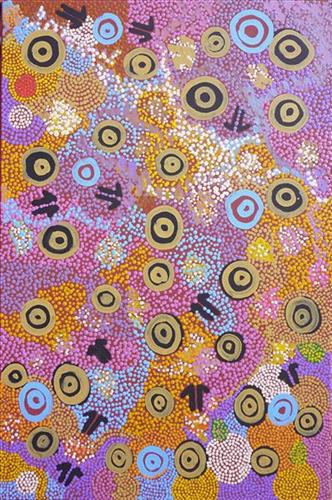
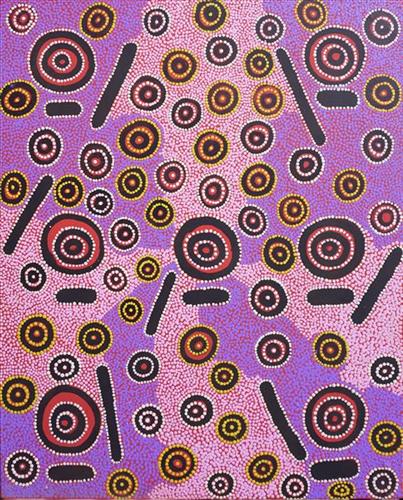
‘Kungkarrangkalpa’ (Seven Sisters / Pleiades) is one of the most significant Tjukurrpa across the Western and Central Deserts. It is part of a vast international story, with versions existing in many First Nations cultures around the world. In the Ngaanyatjarra Lands, the story is anchored in specific places, events, and ancestral movements — each community holding their own knowledge, rights, and responsibilities for particular stretches of the songline.

Maureen Douglas paints this story through her own family lineage. She is the daughter of senior law woman and painter Angilyiya Mitchell, who holds deep cultural authority for Kuru Ala, one of the most important women’s sites connected to the Seven Sisters. Through her mother, Maureen inherits the right to paint this part of the Tjukurrpa, depicting both the physical landscape and the ancestral journey that shaped it.

Story

In this chapter of the Tjukurrpa, the Seven Sisters are travelling across country, continually escaping the relentless pursuit of Wati Nyiru (Orion), who is the wrong skin group to marry them. Nyiru follows them from place to place, using magic to transform himself into tempting foods — kampurarrpa (bush tomato), yirli (wild fig), even a quandong tree — hoping the sisters will stop and fall into his trap. But the sisters are clever and quick; they see through his disguises and outwit him again and again.

Eventually Nyiru grows angry and uses magic to make the oldest sister sick, thinking he can grab her while the others are distracted. Instead, the sisters rescue her, carrying her to the next shelter to rest and gather strength. Some versions of the story also describe the youngest sister being captured and escaping with help from her big sister.

When the chase becomes too much, the sisters leave the earth and travel into the sky, becoming the constellation we know today as the Pleiades. Nyiru follows them into the sky — still chasing, still too late.

Kuru Ala – The Site

This painting focuses on Kuru Ala — known as “two eyes” — a powerful women’s site in Maureen’s grandmother’s country, south of Papulankutja (Blackstone). The caves and rock formations at this place are physical evidence of the Tjukurrpa events that happened there.

Maureen describes the site and story as it has been handed to her:

“This is my Grandmother’s country. At Kuru Ala you can see the circles in the cave — that’s from this story. The young girls turning into young women. The bigger circles are the women already. They were travelling for food and they saw that man had taken the big sister, so they took her to the next cave to rest and get better. You can see Nyiru sitting there. The rockhole, Kuru Ala, is down the bottom — they drank that water in the early days. We still drink this water today.”

About This Painting

Maureen maps the movement of the sisters across this important stretch of country — the resting places, the caves, the water, and Nyiru watching from nearby. The circles, pathways, and forms reference both ceremonial knowledge and the living landscape as it exists today.