114182410335


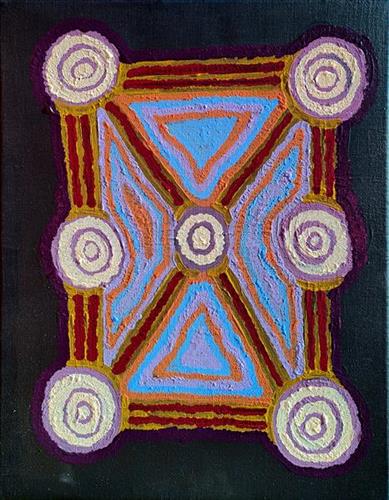
Kungkarrangkalpa (Seven Sisters) – Kuru Ala

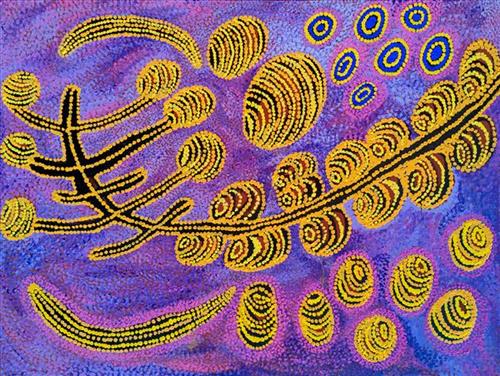
Kuru Ala is a important women’s sites associated with the Kungkarrangkalpa (Seven Sisters) Tjukurrpa (Dreaming / story) across the Western and Central Deserts. Located south, west of Papulankutja (Blackstone), the site holds deep cultural, spiritual, and ceremonial significance for women in the Ngaanyatjarra Lands.

In the sky, Wati Nyiru is associated with Orion’s Belt, while the sisters become the star cluster known widely as the Pleiades. Many desert families still track these stars seasonally, tying sky and Country together in the story.

This place marks a key moment in the Seven Sisters story, where the sisters rested, gathered strength, and cared for one another while escaping the persistent pursuit of Wati Nyiru. The surrounding caves, rock formations, and ground features are recognised as physical evidence of the ancestral events that took place here during the Tjukurrpa.

Across many desert communities, the Seven Sisters Tjukurrpa follows the travels of the sisters as they move through Country, constantly evading Nyiru, who uses magic to disguise himself in many forms — bush foods, trees, and even animals — in an attempt to catch them. At Kuru Ala, the sisters stop to protect and heal the eldest sister before continuing their journey eastward.

Today, Kuru Ala remains an active cultural site, cared for and visited by women with ties to this Country. The story is still taught, sung, and remembered. The paintings created by artists of Papulankutja and Mantamaru reflect both the ancestral narrative and the living landscape, mapping the caves, water sources, and pathways the sisters travelled.

114182410334


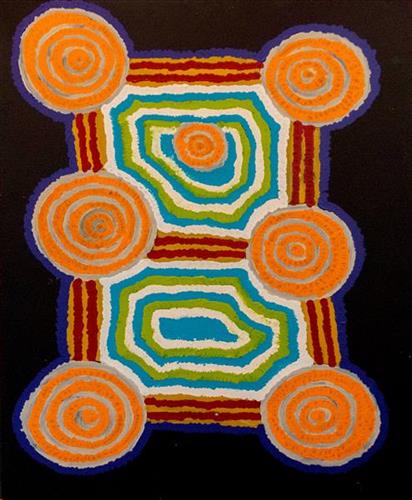
‘Kungkarrangkalpa’ (The Seven Sisters / Pleiades) – Angela Lyons

‘Kungkarrangkalpa’ (The Seven Sisters / Pleiades) is an important Tjukurrpa (Dreaming) across the Ngaanyatjarra Lands. Many families hold knowledge for different parts of this story, and each community paints its own chapter according to Country and ancestral responsibility.

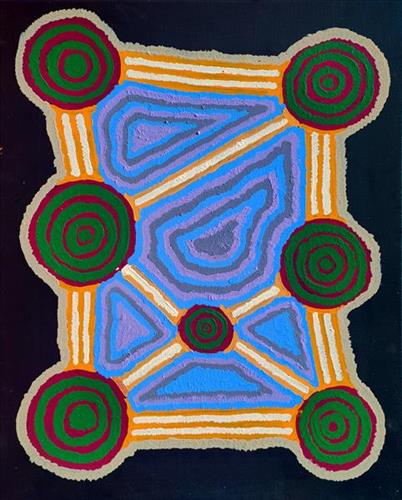
Angela’s paintings focus on the celestial aspect of the story — the moment the sisters move from the earth into the sky. The star cluster becomes the seven bright forms she paints: six surrounding one, often arranged like a shield pattern. This reflects the way the sisters move together, protect each other, and travel as a tight group while fleeing Wati Nyiru, who appears in the sky as Orion’s Belt.

Nyiru follows the sisters across Country, disguising himself with magic — turning into kampurarrpa (bush tomato), a yirli (wild fig), or even a tree — trying to tempt them. But the sisters see through his tricks, outwit him, and keep running. When the chase becomes too much, they rise into the sky, forming the Pleiades. Nyiru follows them, always behind, never close enough.

Angela expresses this story using bold, high-contrast colours and strong circular forms. Her shield-like shapes represent the sisters’ strength and unity, while the central star often marks the eldest sister — the one the others protect along the journey. Through her palette and composition, Angela brings the energy, movement, and brightness of the sky-world into her canvas.

This painting is a contemporary interpretation of a cultural story carried across generations, connecting sky, Country, and ancestral memory.

114182410333


‘Kungkarrangkalpa’ (The Seven Sisters / Pleiades) – Angela Lyons

‘Kungkarrangkalpa’ (The Seven Sisters / Pleiades) is an important Tjukurrpa (Dreaming) across the Ngaanyatjarra Lands. Many families hold knowledge for different parts of this story, and each community paints its own chapter according to Country and ancestral responsibility.

Angela’s paintings focus on the celestial aspect of the story — the moment the sisters move from the earth into the sky. The star cluster becomes the seven bright forms she paints: six surrounding one, often arranged like a shield pattern. This reflects the way the sisters move together, protect each other, and travel as a tight group while fleeing Wati Nyiru, who appears in the sky as Orion’s Belt.

Nyiru follows the sisters across Country, disguising himself with magic — turning into kampurarrpa (bush tomato), a yirli (wild fig), or even a tree — trying to tempt them. But the sisters see through his tricks, outwit him, and keep running. When the chase becomes too much, they rise into the sky, forming the Pleiades. Nyiru follows them, always behind, never close enough.

Angela expresses this story using bold, high-contrast colours and strong circular forms. Her shield-like shapes represent the sisters’ strength and unity, while the central star often marks the eldest sister — the one the others protect along the journey. Through her palette and composition, Angela brings the energy, movement, and brightness of the sky-world into her canvas.

This painting is a contemporary interpretation of a cultural story carried across generations, connecting sky, Country, and ancestral memory.

114182410788


Lukarrara Tjukurrpa – Margie Leo

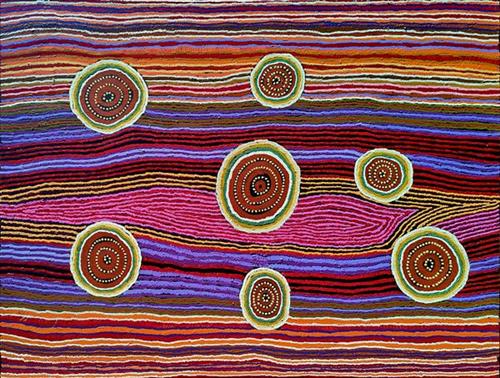
In this artwork Margie has painted Lukarrara Tjukurrpa (Desert Fringe Rush Seed Dreaming). This Tjukurrpa comes from a place north of Yuendumu in the Northern Territory where Margie is from.

114182409989


My Grandfather’s Country

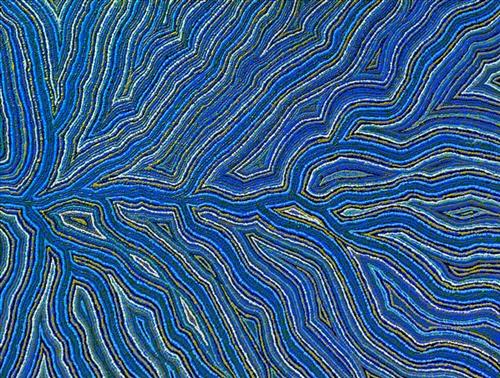
This painting depicts Sharon’s Grandfather’s Country, located within Witjira National Park near the border of the Northern Territory and South Australia, just south of Finke. The area is rich with waterholes, trees, and salt lakes — a beautiful place full of life.

Sharon first saw her Grandfather’s Country from above during a small plane flight over Aputula in 2008. From that moment, she began painting the landscape from memory, experimenting with the forms and patterns she observed from the air. Her paintings map the surface of Aputula, tracing the movement of rivers, salt pans, and desert features with intricate topographical detail. Through this process, Sharon expresses a deep emotional and cultural connection to her family’s land.

114182409563


Kungkarrangkalpa (Seven Sisters)

‘Kungkarrangkalpa’ (The Seven Sisters or Pleaides) is significant Tjukurrpa (dreamtime). Its origins you may be familiar with in astronomy and its connection to ‘Wati Nyiru’ (Magic Man or Orion).  The roots of this dreaming stems across indigenous groups around the world. The Australian Aboriginal songline is one part to the whole dreaming which can be traced all around the world. The ladies of the Ngaanyatjarra Lands depict their significant chapter and understanding of the journey of the sisters. The different versions of this story depend on where you live and the significance’s of local Tjukurrpa places.

Nyiru fell in love with the sisters but he was of the wrong skin group to marry, but he still pursued them on their journey. The sisters travel across the land to escape Nyiru’s unwanted attentions, but he is persistent and always finds them. There are significant land forms which can be sited today that evidence this dreaming. As Nyiru is chasing the sisters he tries to catch them by using magic to turn into the most tempting kampurarrpa (bush tomato) and the most beautiful Yirli (wild fig tree), for them to eat and camp under. However, the sisters are knowledgeable of his magic and too clever for Nyiru who they outwit again and again. They go hungry and run through the night rather than be caught by him. As the journey continues, Nyiru gets so frustrated at the wit of the sisters that he uses his magic to make the oldest sister sick to try and get closer to her. The other sisters rescue the big sister and nurse her back to health. It is said he also captures the youngest sister, but with the help of the oldest sister, she escapes back to her sisters who are waiting for her. Eventually, the sisters fly into the sky to escape Nyiru, forming the constellation. Nyiru felt lonely, longing for the sisters who were so far away. Nyiru used his magic to go to the sky, forever in pursuit.

114182409605


Kungkarrangkalpa (Seven Sisters)

‘Kungkarrangkalpa’ (The Seven Sisters or Pleaides) is significant Tjukurrpa (dreamtime). Its origins you may be familiar with in astronomy and its connection to ‘Wati Nyiru’ (Magic Man or Orion).  The roots of this dreaming stems across indigenous groups around the world. The Australian Aboriginal songline is one part to the whole dreaming which can be traced all around the world. The ladies of the Ngaanyatjarra Lands depict their significant chapter and understanding of the journey of the sisters. The different versions of this story depend on where you live and the significance’s of local Tjukurrpa places.

Nyiru fell in love with the sisters but he was of the wrong skin group to marry, but he still pursued them on their journey. The sisters travel across the land to escape Nyiru’s unwanted attentions, but he is persistent and always finds them. There are significant land forms which can be sited today that evidence this dreaming. As Nyiru is chasing the sisters he tries to catch them by using magic to turn into the most tempting kampurarrpa (bush tomato) and the most beautiful Yirli (wild fig tree), for them to eat and camp under. However, the sisters are knowledgeable of his magic and too clever for Nyiru who they outwit again and again. They go hungry and run through the night rather than be caught by him. As the journey continues, Nyiru gets so frustrated at the wit of the sisters that he uses his magic to make the oldest sister sick to try and get closer to her. The other sisters rescue the big sister and nurse her back to health. It is said he also captures the youngest sister, but with the help of the oldest sister, she escapes back to her sisters who are waiting for her. Eventually, the sisters fly into the sky to escape Nyiru, forming the constellation. Nyiru felt lonely, longing for the sisters who were so far away. Nyiru used his magic to go to the sky, forever in pursuit.

114182409602


Kungkarrangkalpa (Seven Sisters) – Angilyiya Mitchell

‘Kungkarrangkalpa’ (The Seven Sisters or Pleaides) is significant Tjukurrpa (dreamtime). Its origins you may be familiar with in astronomy and its connection to ‘Wati Nyiru’ (Magic Man or Orion).  The roots of this dreaming stems across indigenous groups around the world. The Australian Aboriginal songline is one part to the whole dreaming which can be traced all around the world. The ladies of the Ngaanyatjarra Lands depict their significant chapter and understanding of the journey of the sisters. The different versions of this story depend on where you live and the significance’s of local Tjukurrpa places.

Nyiru fell in love with the sisters but he was of the wrong skin group to marry, but he still pursued them on their journey. The sisters travel across the land to escape Nyiru’s unwanted attentions, but he is persistent and always finds them. There are significant land forms which can be sited today that evidence this dreaming. As Nyiru is chasing the sisters he tries to catch them by using magic to turn into the most tempting kampurarrpa (bush tomato) and the most beautiful Yirli (wild fig tree), for them to eat and camp under. However, the sisters are knowledgeable of his magic and too clever for Nyiru who they outwit again and again. They go hungry and run through the night rather than be caught by him. As the journey continues, Nyiru gets so frustrated at the wit of the sisters that he uses his magic to make the oldest sister sick to try and get closer to her. The other sisters rescue the big sister and nurse her back to health. It is said he also captures the youngest sister, but with the help of the oldest sister, she escapes back to her sisters who are waiting for her. Eventually, the sisters fly into the sky to escape Nyiru, forming the constellation. Nyiru felt lonely, longing for the sisters who were so far away. Nyiru used his magic to go to the sky, forever in pursuit. 

This painting maps the site of ‘Kuru Ala’ (two-eyes), a sacred place for women in Angilyiya’s mother’s country south of Papulankutja (Blackstone). Wati Nyiru was following them, disguising himself as a Quandong tree, a Yirli (wild fig tree), and then a carpet snake, spying on them as they made camp and dug for food. 

“This is the story about my Grandmother’s country, south of Papulankutja. You can see today the circles at the site in the cave from that Dreamtime story. It’s the young girls turning into young women. The bigger circles are those already women. They have been travelling for food and they saw that man had already taken the big sister. So they are taking her to the second cave for resting and getting better. You can see that man sitting; the rock hole down the bottom “Kuru Ala”, they drank that water in the early days. We still drink this water today”.

114182409597


Kungkarrangkalpa (Seven Sisters) – Kuru Ala

Kuru Ala is a important women’s sites associated with the Kungkarrangkalpa (Seven Sisters) Tjukurrpa (Dreaming / story) across the Western and Central Deserts. Located south, west of Papulankutja (Blackstone), the site holds deep cultural, spiritual, and ceremonial significance for women in the Ngaanyatjarra Lands.

In the sky, Wati Nyiru is associated with Orion’s Belt, while the sisters become the star cluster known widely as the Pleiades. Many desert families still track these stars seasonally, tying sky and Country together in the story.

This place marks a key moment in the Seven Sisters story, where the sisters rested, gathered strength, and cared for one another while escaping the persistent pursuit of Wati Nyiru. The surrounding caves, rock formations, and ground features are recognised as physical evidence of the ancestral events that took place here during the Tjukurrpa.

Across many desert communities, the Seven Sisters Tjukurrpa follows the travels of the sisters as they move through Country, constantly evading Nyiru, who uses magic to disguise himself in many forms — bush foods, trees, and even animals — in an attempt to catch them. At Kuru Ala, the sisters stop to protect and heal the eldest sister before continuing their journey eastward.

Today, Kuru Ala remains an active cultural site, cared for and visited by women with ties to this Country. The story is still taught, sung, and remembered. The paintings created by artists of Papulankutja and Mantamaru reflect both the ancestral narrative and the living landscape, mapping the caves, water sources, and pathways the sisters travelled.

114182409223


‘Kungkarrangkalpa’ (The Seven Sisters / Pleiades) – Angela Lyons

‘Kungkarrangkalpa’ (The Seven Sisters / Pleiades) is an important Tjukurrpa (Dreaming) across the Ngaanyatjarra Lands. Many families hold knowledge for different parts of this story, and each community paints its own chapter according to Country and ancestral responsibility.

Angela’s paintings focus on the celestial aspect of the story — the moment the sisters move from the earth into the sky. The star cluster becomes the seven bright forms she paints: six surrounding one, often arranged like a shield pattern. This reflects the way the sisters move together, protect each other, and travel as a tight group while fleeing Wati Nyiru, who appears in the sky as Orion’s Belt.

Nyiru follows the sisters across Country, disguising himself with magic — turning into kampurarrpa (bush tomato), a yirli (wild fig), or even a tree — trying to tempt them. But the sisters see through his tricks, outwit him, and keep running. When the chase becomes too much, they rise into the sky, forming the Pleiades. Nyiru follows them, always behind, never close enough.

Angela expresses this story using bold, high-contrast colours and strong circular forms. Her shield-like shapes represent the sisters’ strength and unity, while the central star often marks the eldest sister — the one the others protect along the journey. Through her palette and composition, Angela brings the energy, movement, and brightness of the sky-world into her canvas.

This painting is a contemporary interpretation of a cultural story carried across generations, connecting sky, Country, and ancestral memory.