Pilbara Hills
In our country we have many hills of all different shapes and sizes. When driving through country at different times the colours change and some of the hills look like velvet in the evening and morning light.

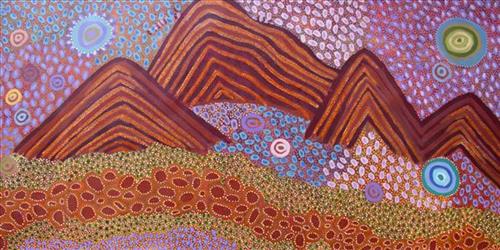
In our country we have many hills of all different shapes and sizes. When driving through country at different times the colours change and some of the hills look like velvet in the evening and morning light.

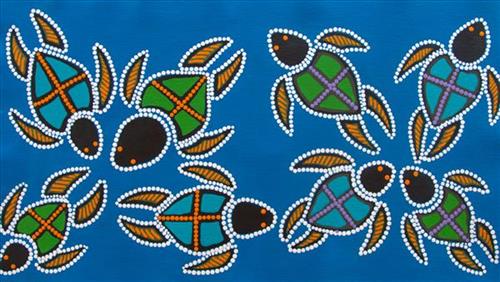
The Pilbara has a number of different turtles that live along the coastline.

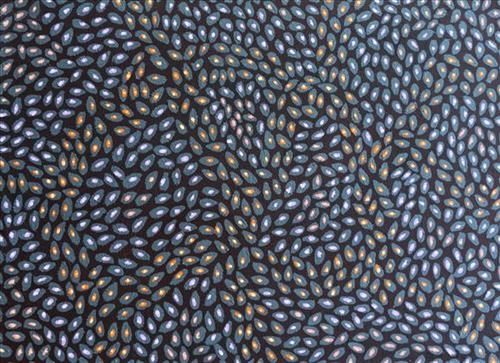
At the end of the season the wildflower seed spread all over the country, ready for next year,

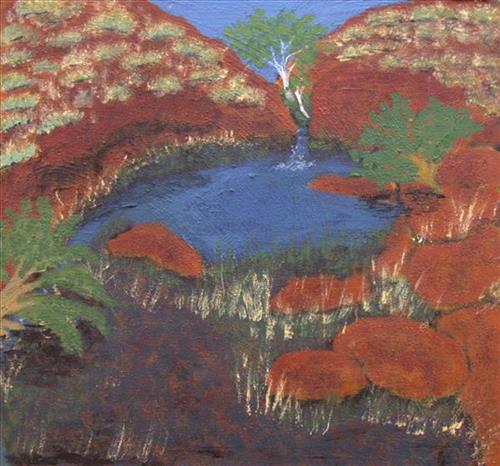
In Solomon Mine area this is a place very important for Yinjibarndi people where my Grandparent’s parents lived one time ago.

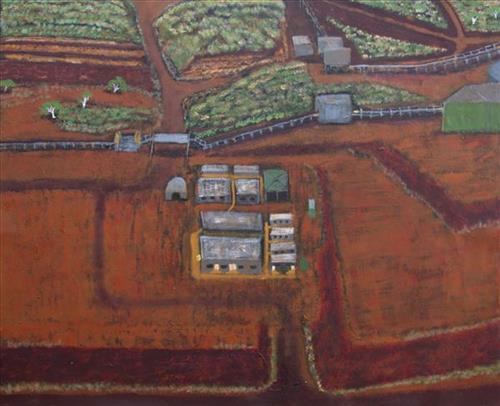
There are many OPF’s (ore processing facilities) on Yindjibarndi land. Rodney Adams likes to take mental images in his mind of his country before and after infrastructure is built. He has an incredible ability to capture the essence of a place on canvas.

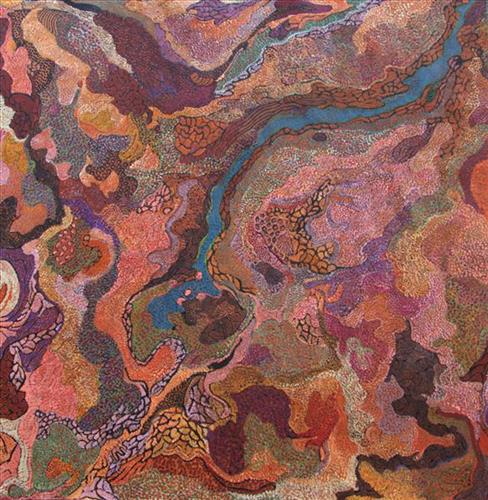
We have many of these hidden creeks running through our country. Some are dry, but you know there is water beneath the surface because of the birds flying into the thick growth of grass alongside. This is where we will find a soak for water.

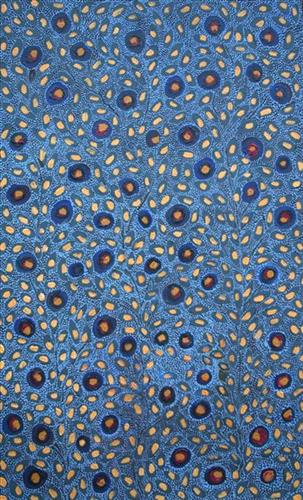
Blue Gum Tree (Ganyji) The Blue Gum Tree, gets its name because of its bluish leaves. In Yindjibarndi language it is called Ganyji, in English, Kanji Bush (Acacia pyrifolia).This painting depicts elements of the bush – its blue leaves and yellow flowers against the red and green of the earth. When the rain comes, or when there has been a heavy dew, the Blue Gum Tree just shimmers in the light. In September, when we are looking for gum from the Blue Gum Tree, we walk through the spinifex country. We pick the gum when it is crystal coloured, and we eat it, or put it into hot water and leave it out in the sun to make it like a toffee. We call it sugar lolly.

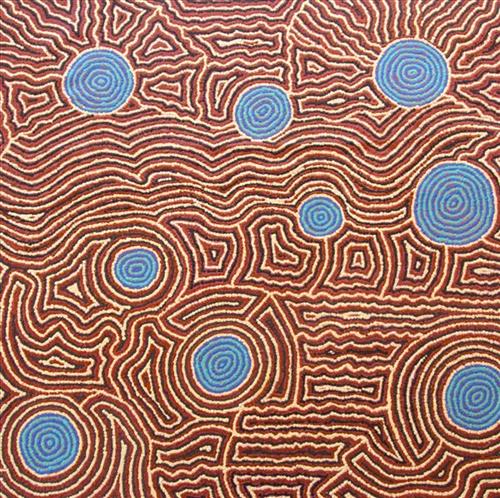
The blue of the waterholes is a stark contrast against the Pilbara rugged country.

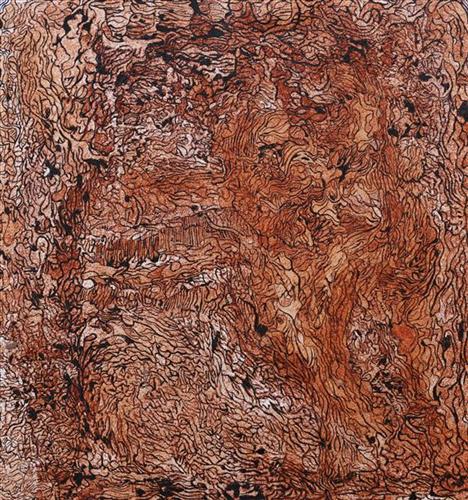
In the early years living out on country our ancestors walked freely from one place to another, always visiting families nearby. They knew where to go and never lost direction or place. In the season of rain and cyclones they would find shelter in the caves or build shelter from the spinifex just like a humby (baru maya). As we continue our journey there are caves that we see but never enter because of our culture and respect not to enter or go anywhere near. Once our country was so rugged hills and valleys with hidden pools lay far away. Caves were used for shelter during cyclones and big rains and still lay untouched by those who walked the land. Just left are the stories and memories that we tell our children.

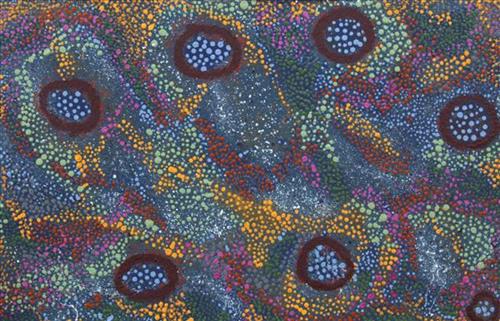
This is the story of the Seven Sisters