111981717555


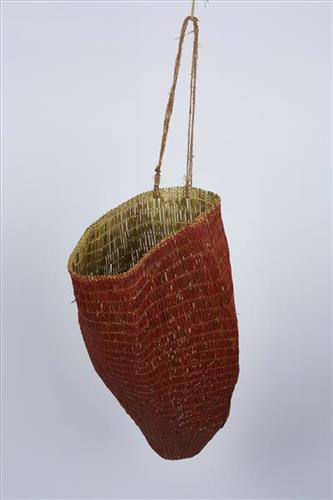
Kun-madj (Dilly Bag)

Kun-madj, or dilly bag, is a large woven collecting basket. These large bags are often made from the vine ‘Malasia scandens’, a strong pliable plant which grows along the floor and into the canopy of monsoon vine thickets. The bags are used to collect any kind of large numbers of heavy foods such as fish caught in conical fish traps or large collections of yams.They can also be made from Pandanus spiralis, a plant which grows in many areas of Arnhem Land. These dilly bags are a tightly woven collecting basket, very finely made. These dilly bags are often used to collect sugarbag, the native honey As well as being of practical use, dilly bags are also of religious significance to Arnhem Land people. Dilly bags are said to be totemic objects and associated with particular sites in the landscape.

111981717554


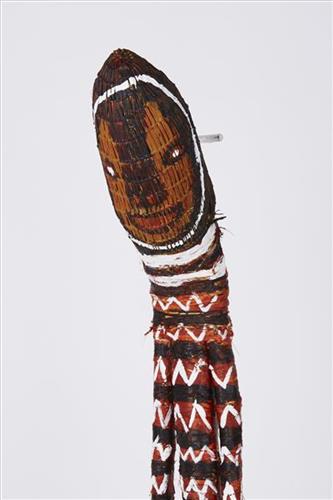
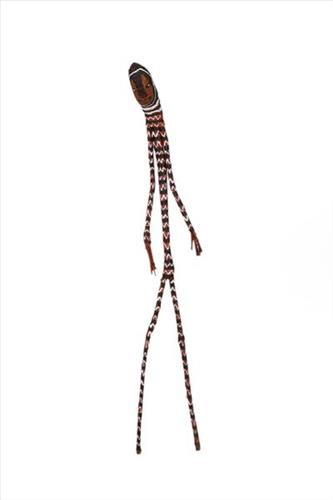
Wyarra

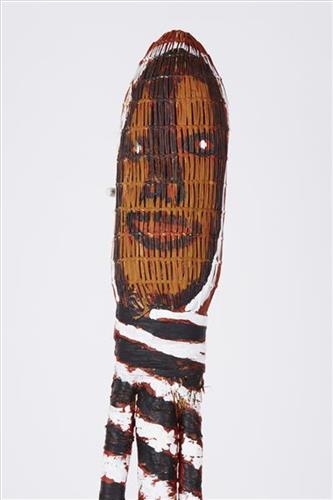
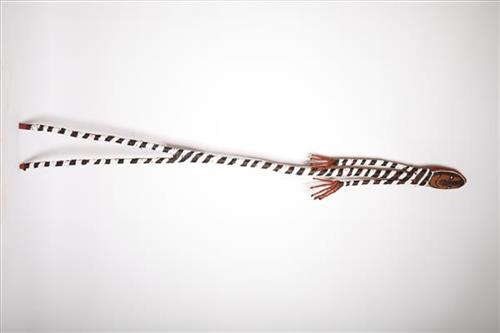
Wayarra/Wyarra is a spirit in the darkness that makes people very frightened. It is unseen but you feel scared when he is near you. It is something that you can’t normally see; but you can see skeleton shapes of the Wayarra/Wyarra if you are a witch doctor. It floats around at night and can appear as a floating white skeleton. They take their skin off to wash. These spirits can be frightening in appearance, however they usually stay away from humans.
A result of being a ‘clever man’ or a traditional healer, is they can commune with the Wayarra/Wyarra. It is also believed that the Wayarra/Wyarra can endow humans with the power to heal.

The ghost-like spirits are an integral part of Aboriginal cosmology in the western and central parts of Arnhem land. Some of the clans have the Wayarra/Wyarra as their clan totem and there are also dreaming sites for Wayarra/Wyarras and if you break or move rocks on those sites, there will be Wayarra/Wyarras everywhere. Wayarra/Wyarras prefer darkness.
Arnhem land is divided into clans or moieties. All living things, lands, clans, people, the natural and supernatural are classed as either one or the other of two moieties in Kununjku. duwa or yirridjdja. The duwa patrimony Wayarra cant walk around if the moon is shining. If they see the thin crescent just after the new moon, they have to put their heads down so they cant see the moon or their necks break. The yirridjdja patrimoiety Wayarra behave differently, they can walk about anytime.

You can hear them calling at night sometimes, they sound like the Curlew or they may even visit you! They look after you if you are lost by yourself. They can even follow you home until you are close to your home before they let you go.

111981717551


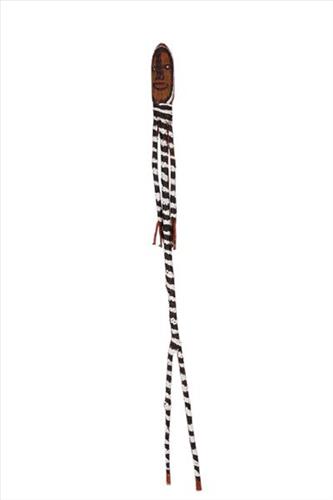
Wyarra

Wayarra/Wyarra is a spirit in the darkness that makes people very frightened. It is unseen but you feel scared when he is near you. It is something that you can’t normally see; but you can see skeleton shapes of the Wayarra/Wyarra if you are a witch doctor. It floats around at night and can appear as a floating white skeleton. They take their skin off to wash. These spirits can be frightening in appearance, however they usually stay away from humans.
A result of being a ‘clever man’ or a traditional healer, is they can commune with the Wayarra/Wyarra. It is also believed that the Wayarra/Wyarra can endow humans with the power to heal.

The ghost-like spirits are an integral part of Aboriginal cosmology in the western and central parts of Arnhem land. Some of the clans have the Wayarra/Wyarra as their clan totem and there are also dreaming sites for Wayarra/Wyarras and if you break or move rocks on those sites, there will be Wayarra/Wyarras everywhere. Wayarra/Wyarras prefer darkness.
Arnhem land is divided into clans or moieties. All living things, lands, clans, people, the natural and supernatural are classed as either one or the other of two moieties in Kununjku. duwa or yirridjdja. The duwa patrimony Wayarra cant walk around if the moon is shining. If they see the thin crescent just after the new moon, they have to put their heads down so they cant see the moon or their necks break. The yirridjdja patrimoiety Wayarra behave differently, they can walk about anytime.

You can hear them calling at night sometimes, they sound like the Curlew or they may even visit you! They look after you if you are lost by yourself. They can even follow you home until you are close to your home before they let you go.

111981717446


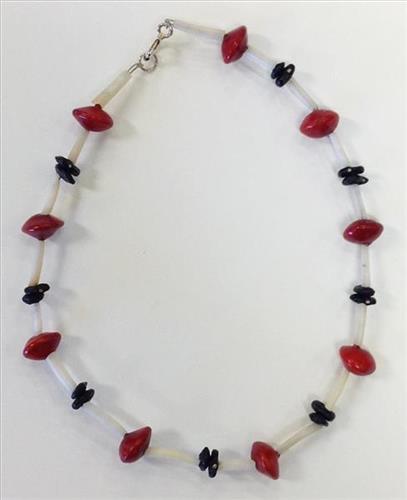
Bush Jewellery – Bracelet

The women of Maningrida and surrounding homelands use a combination of locally found seeds, bone and shells to make a variety of jewellery including necklaces. earrings and bracelets.  Many of the artists use complex patterns and designs to make their beautiful creations.

1881717441


The Rabbit Story

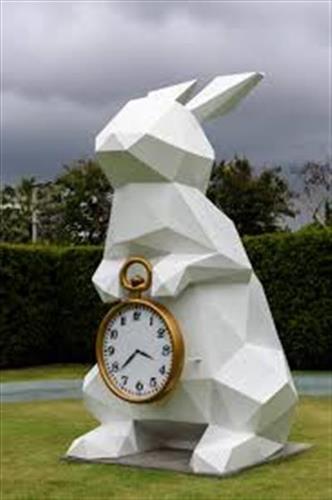
This is a story about a rabbit who lives on a hill. He loves to dig under houses and has burrowed right under a city. He can always tell you the time as he carries a big clock around. 

111581719865


Untitled

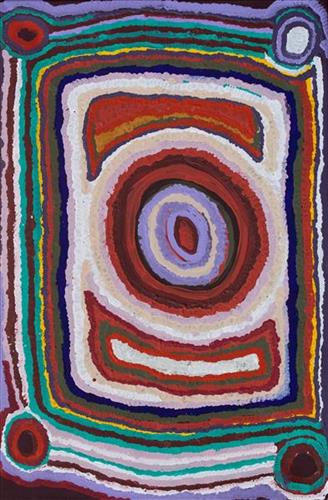
This is Yikartu’s Country- her ‘ngurra’ (home Country, camp). People identify with their ngurra in terms of specific rights and responsibilities, and the possession of intimate knowledge of the physical and cultural properties of one’s Country. Painting ngurra, and in so doing sharing the Jukurrpa (Dreaming) stories and physical characteristics of that place, has today become an important means of cultural maintenance. 

Yikartu’s ngurra encompasses the Country that she and her family walked in the pujiman (traditional, desert-dwelling) era. Yikartu was born at Lalyipuka. She grew up, walked and hunted primarily within Yulparija Country, north of Manyjilyjarra Country, and through to the Percival Lakes area, at the northern boundary of the Martu homelands. She continued to live nomadically before eventually deciding to move to Jigalong Mission along with many other relatives following an extreme and prolonged drought in the 1960s. 

Portrayed in this work are features of Yikartu’s ngurra, such as the dominant permanent red tali (sandhills), warta (trees, vegetation), and the individually named water sources she and her family camped at. These include Yulpu, Yimiri, Kupankurlu, Kurturrara, Wirnpa, Jurnpanja, Rulu-rulu, Taparl-taparl, Wirrkujapayi, Tayiku and Puntita. Rock holes, waterholes, soaks and springs were all extremely important sites for Martu people during the pujiman period, and are generally depicted with circular forms. 

The encyclopaedic knowledge of the location, quality and seasonal availability of the hundreds of water bodies found in one’s Country sustained Martu as they travelled across their Country, hunting and gathering, visiting family, and fulfilling ceremonial obligations. They would traverse very large distances annually, visiting specific areas in the dry and wet season depending on the availability of water and the corresponding cycles of plant and animal life on which hunting and gathering bush tucker was reliant. As they travelled and hunted they would also burn areas of Country, generating a greater diversity of plant and animal life.

111581719852


Untitled

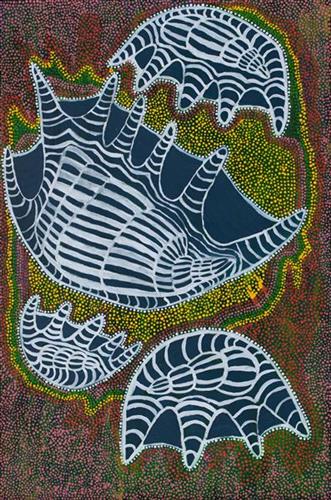
This work portrays an area known intimately to the artist, painted here in exquisite detail from memory. During the pujiman (traditional, desert dwelling) era one’s survival depended on their intimate knowledge of the location of resources; thus physical elements of Country, such as sources of kapi (water), tali (sandhills), and different varieties of warta (trees, vegetation) were carefully observed and remembered. Today, this relationship with Country remains equally strong, despite the movement of Martu out of the desert and into remote Aboriginal Communities, towns and cities.

Also visible may be traces of life cycles based around kalyu (rain, water) and waru (fire). A thousands of year old practice, fire burning continues to be carried out as both an aid for hunting and a means of land management today. As the Martu travelled and hunted they would burn tracts of land, ensuring plant and animal biodiversity and reducing the risk of unmanageable, spontaneous bush fires. The patchwork nature of regrowth is visible in many landscape works, with each of the five distinctive phases of fire burning visually described with respect to the cycle of burning and regrowth.  

Finally, metaphysical information relating to a location may also be recorded; jukurrpa (dreaming) narratives chronicle the creation of physical landmarks, and can be referenced through depictions of ceremonial sites, songlines, and markers left in the land. 

111581719851


Untitled

“When Martu paint, it’s like a map. Martu draw story on the ground and on the canvas, and all the circle and line there are the hunting areas and different waters and tracks where people used to walk, and [some you] can’t cross, like boundaries. So nowadays you see a colourful painting and wonder what it is, but that’s how Martu tell story long ago. It’s not just a lovely painting, it’s a story and a songline and a history and everything that goes with it.” 

– Ngalangka Nola Taylor and Joshua Booth

This work portrays an area of Country that can be interpreted in multiple ways. Firstly, the image may be read as an aerial representation of a particular location known to the artist- either land that they or their family travelled, from the pujiman (traditional, desert dwelling) era to now. During the pujiman period, Martu would traverse very large distances annually in small family groups, moving seasonally from water source to water source, and hunting and gathering bush tucker as they went. At this time, one’s survival depended on their intimate knowledge of the location of resources; thus physical elements of Country, such as sources of kapi (water), tali (sandhills), different varieties of warta (trees, vegetation), ngarrini (camps), and jina (tracks) are typically recorded with the use of a use of a system of iconographic forms universally shared across the desert. 

An additional layer of meaning in the work relates to more intangible concepts; life cycles based around kalyu (rain, water) and waru (fire) are also often evident. A thousands of year old practice, fire burning continues to be carried out as both an aid for hunting and a means of land management today. As the Martu travelled and hunted they would burn tracts of land, ensuring plant and animal biodiversity and reducing the risk of unmanageable, spontaneous bush fires. The patchwork nature of regrowth is evident in many landscape works, with each of the five distinctive phases of fire burning visually described with respect to the cycle of burning and regrowth.  

Finally, metaphysical information relating to a location may also be recorded; jukurrpa (dreaming) narratives chronicle the creation of physical landmarks, and can be referenced through depictions of ceremonial sites, songlines, and markers left in the land. Very often, however, information relating to jukurrpa is censored by omission, or alternatively painted over with dotted patterns.