11153973800


Status: Stock


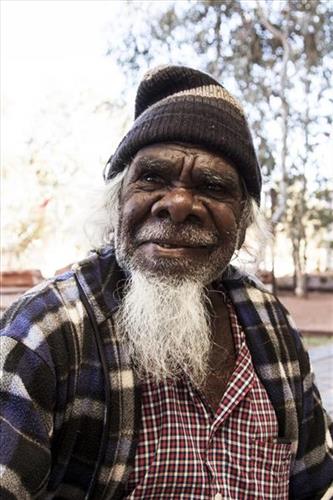
Desart Photograph – Jamu (A3)

“This is Wokka, he’s my grandfather. He’s a loving and caring person and in this photo here he was so excited about Desart and taking these photos. It was taken at Martumili. He goes there every day.”

– Alysha Taylor

11153973796


Status: Stock


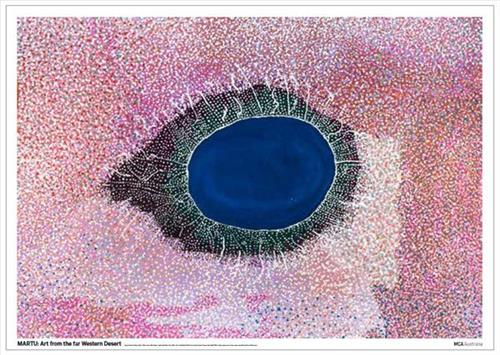
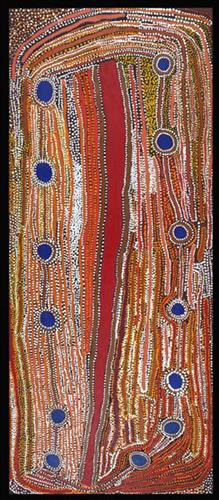
Mukurtu – Nancy Chapman

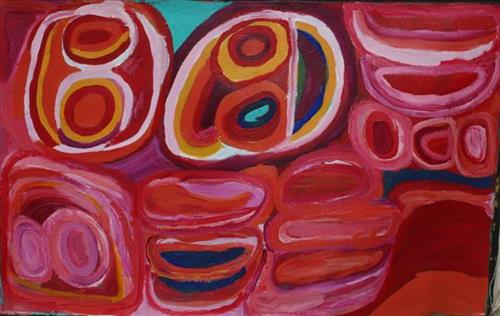
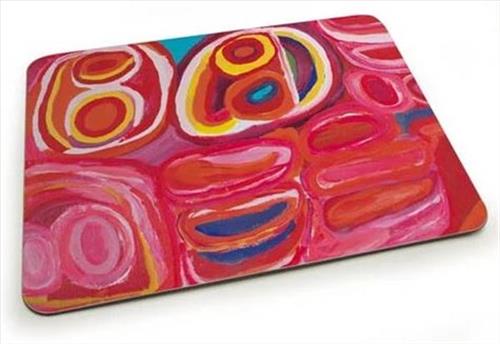
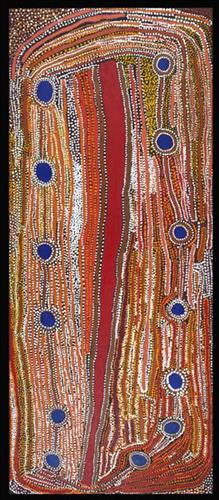
Poster from the 2014 MCA exhibition ‘Martu Art from the Far Western Desert’, featuring a detailed section from the collaborative Martumili Artists painting, ‘Mukurtu’, by sisters Nyanjilpayi Nancy Chapman, May Mayiwalku Chapman and Marjorie Yates.

“This one Mukurtu, spring water yinta (permanent spring). Nana mili (belong), Daddy, sister, brother’s ngurra (home country). We walk around here long time [ago]”.

Mukurtu is an important yinta (spring water) that is in the middle of a salt warla (lake), it is situated kayili (north) of Tiwa (Well 26) on the Canning Stock Route. In order to access the fresh water at the site the yinta must first be cleared by removing the warta (shrubs) growing around its edges. Surrounding this area are many lyinji (clay pans) scattered all around.

When the artist was young she travelled around this area with her two mommies, her daddy and her sisters. There is a lot of tuwa (sand hills) all around the outside of the lake and lots of grass. The grass that grows in this area is called Kukurlyul. There is lots of rabbits there now, good meat and lots of other good tucker around.

11153973795


Status: Stock


Puntawarri, Jilakurru and Kumpupirntily

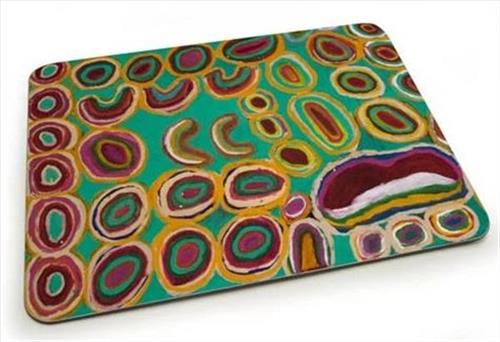
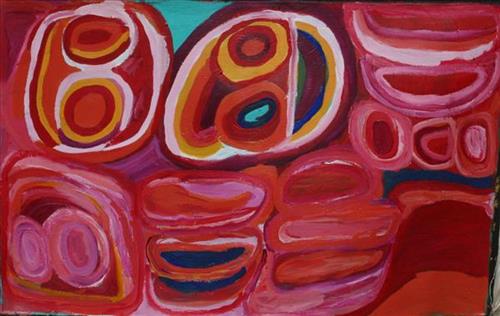
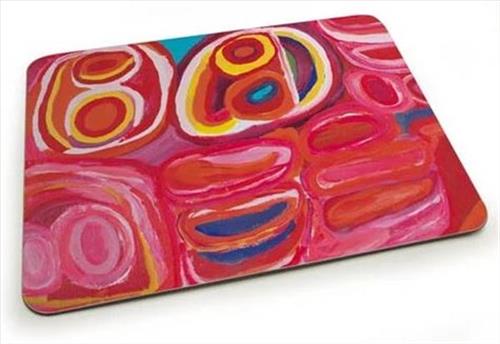
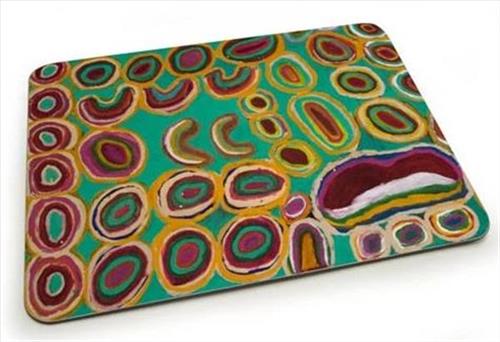
Individual tablemat made in heat, stain and scratch resistant melamine with 3.2mm hardboard and cork backing, featuring the collaborative artwork ‘Puntawarri, Jilakurru and Kumpupirntily” by Martumili Artists, and grandmother and granddaughter, Dadda Samson and Judith Samson. 

Puntawarri, Jilakurru and Kumpupirntily are sites in Dadda’s ngurra (home country), which she has painted here with her granddaughter, Judith. Puntawarri is an important cultural area, on the middle stretches of the Canning Stock Route and east of the Jigalong Aboriginal Community, where the artists now live with their family. It is also the site of a now abandoned community, and a creek and lake. Jilakurra (Well 17 on the Canning Stock Route) is a permanent spring, and was a major meeting and ceremonial site in the pujiman (bush dwelling) era. Located here are many significant engravings and rock art, much of which are sacred to Martu people. Kumpupirntily (Lake Disappointment) is a large warla (salt lake) and one of the most sacred and dangerous sites in the far Western Desert. This is where the Ngayurnangalku (cannibal beings) live beneath the lake, surfacing only to feed on human flesh.

11153973794


Status: Stock


Sunday Well

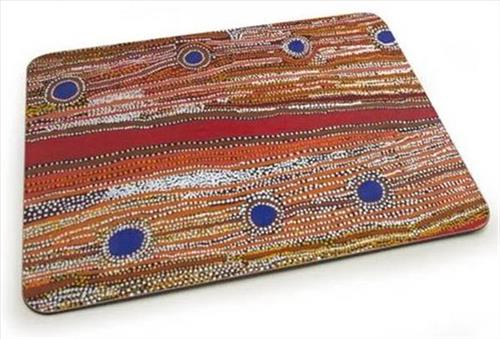
Individual tablemat made in heat, stain and scratch resistant melamine with 3.2mm hardboard and cork backing, featuring a detailed section of Dadda Samson’s painting ‘Sunday Well’. Sunday Well is an important historical location close to Jigalong Aboriginal Community. 

“People used to stay here. When people see the whitefella they used to run away, up to the hills and rocks. They were afraid of the whitefellas. My mother and my brothers ran away, right up to the Puntawarri because the whitefellas were shooting at the Martu people. They were sneaking in and the gun went off, and they all ran and just kept running and running until they got to Puntawarri.”

– Dadda Samson

11153973793


Status: Stock


Minyipuru

Individual tablemat made in heat, stain and scratch resistant melamine with 3.2mm hardboard and cork backing, featuring the collaborative artwork ‘Minyipuru ‘ by Martumili Artists Muni Rita Simpson, Rosie Williams and Dulcie Gibbs.

Sisters Muni, Rosie and Dulcie grew up in the Country depicted in this painting. But it is the epic story of the Seven Sisters or Minyipuru, which they have described here. In this story, the old man Yurla, who had been pursuing the sisters, captured one of the women at Parnkarpini, between wells 35 and 36. The Minyipuru tricked him and rescued her.

Poor old fella, he had a rough time. He was trying and trying and trying.

The Minyipuru promised to stay with the old man Yurla but, when he returned from collecting wood, they were floating above his head, teasing him. Yurla made a ladder but the sisters pushed it over and laughed at him. When he collapsed, exhausted, they rescued their sister and flew away.
11153973792


Status: Stock


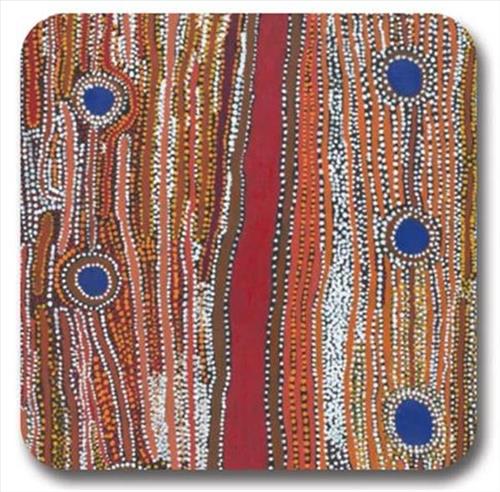
Sunday Well

Set of four tablemats made in heat, stain and scratch resistant melamine with 3.2mm hardboard and cork backing, featuring a detailed section of Dadda Samson’s painting ‘Sunday Well’. Sunday Well is an important historical location close to Jigalong Aboriginal Community. 

“People used to stay here. When people see the whitefella they used to run away, up to the hills and rocks. They were afraid of the whitefellas. My mother and my brothers ran away, right up to the Puntawarri because the whitefellas were shooting at the Martu people. They were sneaking in and the gun went off, and they all ran and just kept running and running until they got to Puntawarri.”

– Dadda Samson

11153973791


Status: Stock


Puntawarri, Jilakurru and Kumpupirntily

Set of four tablemats made in heat, stain and scratch resistant melamine with 3.2mm hardboard and cork backing, featuring the collaborative artwork ‘Puntawarri, Jilakurru and Kumpupirntily” by Martumili Artists, and grandmother and granddaughter, Dadda Samson and Judith Samson. 

Puntawarri, Jilakurru and Kumpupirntily are sites in Dadda’s ngurra (home country), which she has painted here with her granddaughter, Judith. Puntawarri is an important cultural area, on the middle stretches of the Canning Stock Route and east of the Jigalong Aboriginal Community, where the artists now live with their family. It is also the site of a now abandoned community, and a creek and lake. Jilakurra (Well 17 on the Canning Stock Route) is a permanent spring, and was a major meeting and ceremonial site in the pujiman (bush dwelling) era. Located here are many significant engravings and rock art, much of which are sacred to Martu people. Kumpupirntily (Lake Disappointment) is a large warla (salt lake) and one of the most sacred and dangerous sites in the far Western Desert. This is where the Ngayurnangalku (cannibal beings) live beneath the lake, surfacing only to feed on human flesh.

11153973790


Status: Stock


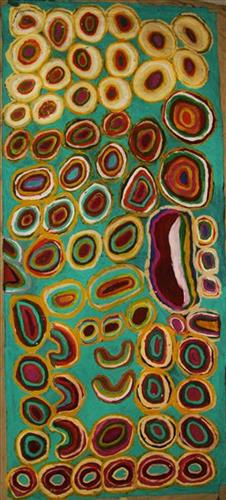
Kun Kun

Set of four tablemats made in heat, stain and scratch resistant melamine with 3.2mm hardboard and cork backing, featuring a detailed section from the collaborative work ‘Kun Kun’ by Martumili Artists Nora Nungabar, Nora Wompi, Bugai Whyoulter and Kumpaya Girgaba.

The central water in this painting is Kuny Kuny (Kun Kun), an important women’s site belonging to the Marlu Jukurrpa (Kangaroo Dreaming). This Jukurrpa is also significant within men’s law and contains elements restricted to initiated men and women.

Despite the title, there are 57 named sites in this painting, 11 of which are Canning Stock Route wells. These are places where the artists lived, where family members were born and died, and where ancestral beings left their power.

11153973789


Status: Stock


Martumili Ngurra

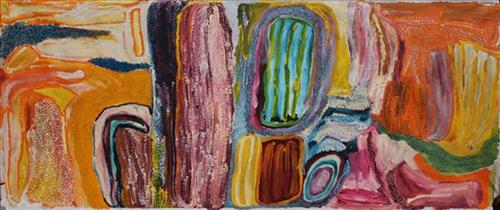
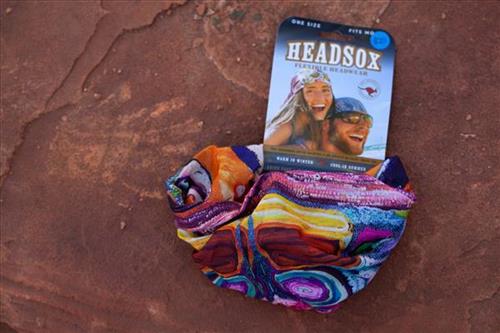
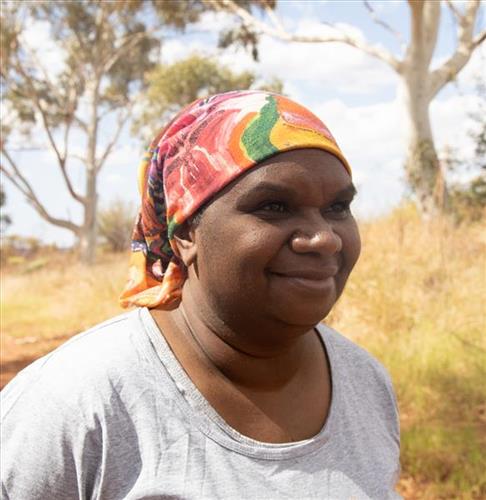
Flexible moisture wicking headwear that can be worn in 12 ways, printed with the collaborative work ‘Martumili Ngurra’, painted by three Kunawarritji artists Nora Wompi, Nora Nungabar and Bugai Whyoulter. 

‘Martumili Ngurra’ portrays a very large area of country where the artists and their family lived and travelled during the pujiman (bush) days. Martumili Ngurra means the Martu belong to this ngurra (home) country. Portrayed in this artwork are Kurta Kurta, Parnngurr, and Wantili.

11153973788


Status: Stock


Minyipuru

Individual potstand made in heat, stain and scratch resistant melamine with 6mm hardboard and cork backing, featuring the collaborative artwork ‘Minyipuru ‘ by Martumili Artists Muni Rita Simpson, Rosie Williams and Dulcie Gibbs.

Sisters Muni, Rosie and Dulcie grew up in the Country depicted in this painting. But it is the epic story of the Seven Sisters or Minyipuru, which they have described here. In this story, the old man Yurla, who had been pursuing the sisters, captured one of the women at Parnkarpini, between wells 35 and 36. The Minyipuru tricked him and rescued her.

Poor old fella, he had a rough time. He was trying and trying and trying.

The Minyipuru promised to stay with the old man Yurla but, when he returned from collecting wood, they were floating above his head, teasing him. Yurla made a ladder but the sisters pushed it over and laughed at him. When he collapsed, exhausted, they rescued their sister and flew away.