11153973787


Status: Stock


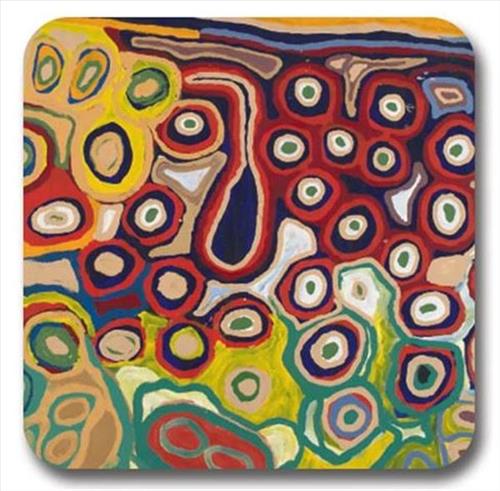
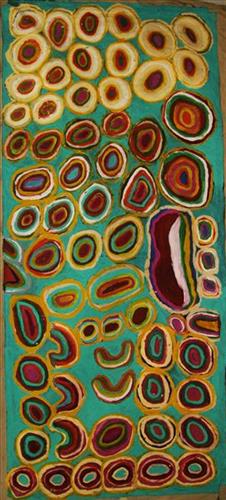
Kun Kun

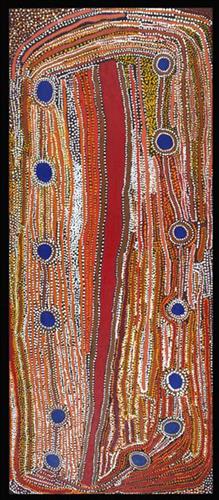
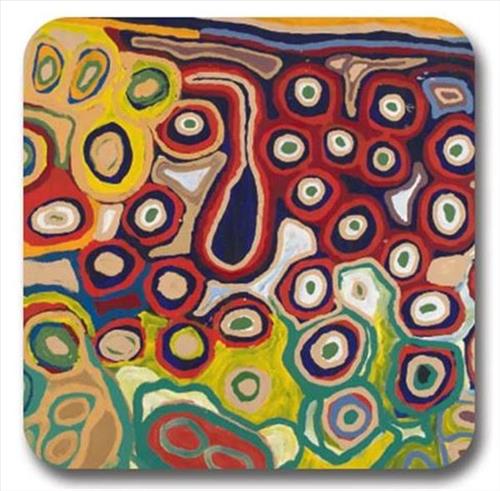
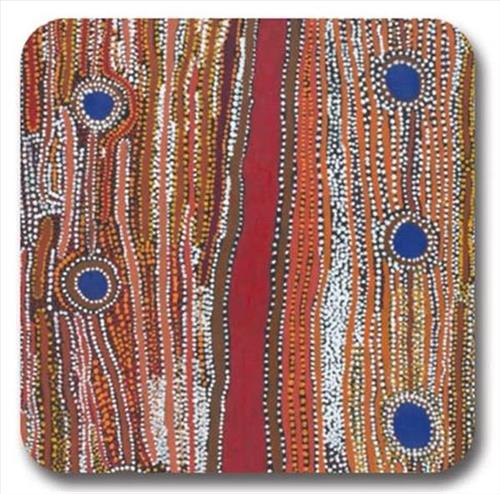
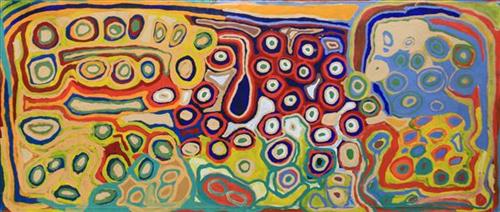
Individual potstand made in heat, stain and scratch resistant melamine with 6mm hardboard and cork backing, featuring a detailed section from the collaborative work ‘Kun Kun’ by Martumili Artists Nora Nungabar, Nora Wompi, Bugai Whyoulter and Kumpaya Girgaba.

The central water in this painting is Kuny Kuny (Kun Kun), an important women’s site belonging to the Marlu Jukurrpa (Kangaroo Dreaming). This Jukurrpa is also significant within men’s law and contains elements restricted to initiated men and women.

Despite the title, there are 57 named sites in this painting, 11 of which are Canning Stock Route wells. These are places where the artists lived, where family members were born and died, and where ancestral beings left their power.
11153973786


Status: Stock


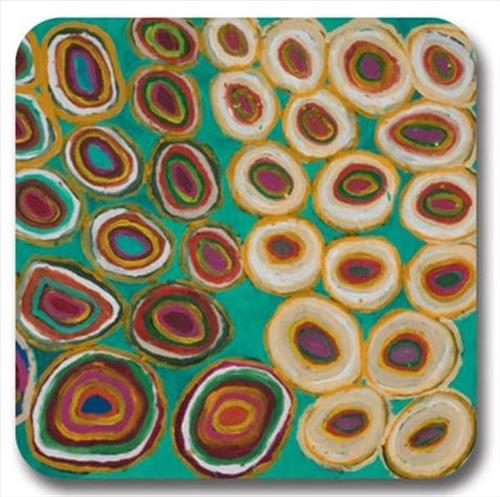
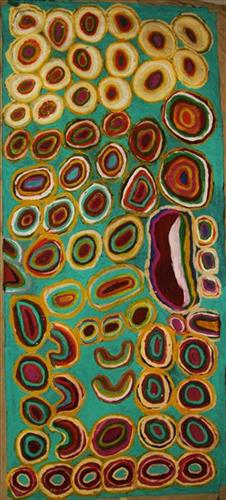
Puntawarri, Jilakurru and Kumpupirntily

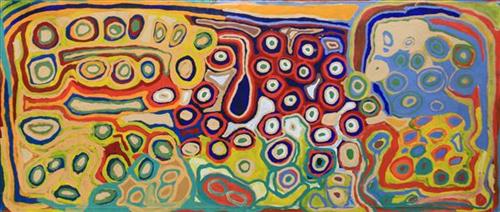
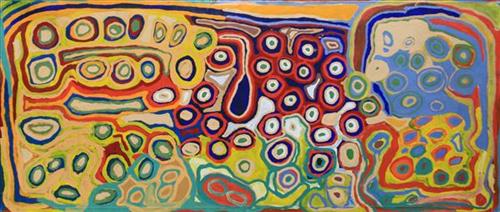
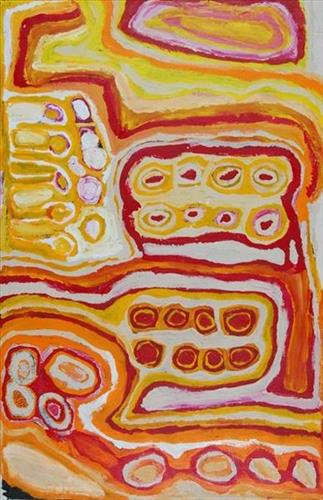
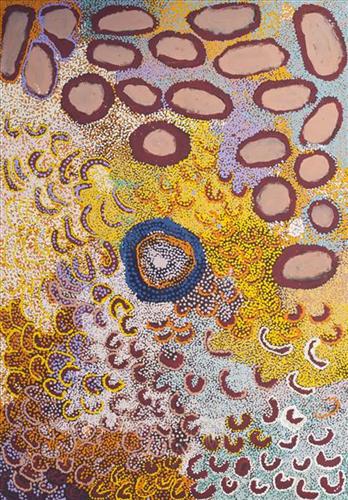
Individual potstand made in heat, stain and scratch resistant melamine with 6mm hardboard and cork backing, featuring the collaborative artwork ‘Puntawarri, Jilakurru and Kumpupirntily” by Martumili Artists, and grandmother and granddaughter, Dadda Samson and Judith Samson. 

Puntawarri, Jilakurru and Kumpupirntily are sites in Dadda’s ngurra (home country), which she has painted here with her granddaughter, Judith. Puntawarri is an important cultural area, on the middle stretches of the Canning Stock Route and east of the Jigalong Aboriginal Community, where the artists now live with their family. It is also the site of a now abandoned community, and a creek and lake. Jilakurra (Well 17 on the Canning Stock Route) is a permanent spring, and was a major meeting and ceremonial site in the pujiman (bush dwelling) era. Located here are many significant engravings and rock art, much of which are sacred to Martu people. Kumpupirntily (Lake Disappointment) is a large warla (salt lake) and one of the most sacred and dangerous sites in the far Western Desert. This is where the Ngayurnangalku (cannibal beings) live beneath the lake, surfacing only to feed on human flesh.

11153973785


Status: Stock


Minyipuru

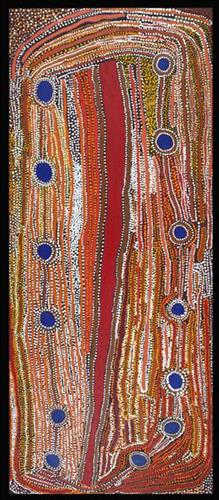
Individual coaster made in heat, stain and scratch resistant melamine with 3.2mm hardboard and cork backing, featuring the collaborative artwork ‘Minyipuru ‘ by Martumili Artists Muni Rita Simpson, Rosie Williams and Dulcie Gibbs.

Sisters Muni, Rosie and Dulcie grew up in the Country depicted in this painting. But it is the epic story of the Seven Sisters or Minyipuru, which they have described here. In this story, the old man Yurla, who had been pursuing the sisters, captured one of the women at Parnkarpini, between wells 35 and 36. The Minyipuru tricked him and rescued her.

Poor old fella, he had a rough time. He was trying and trying and trying.

The Minyipuru promised to stay with the old man Yurla but, when he returned from collecting wood, they were floating above his head, teasing him. Yurla made a ladder but the sisters pushed it over and laughed at him. When he collapsed, exhausted, they rescued their sister and flew away.

11153973784


Status: Stock


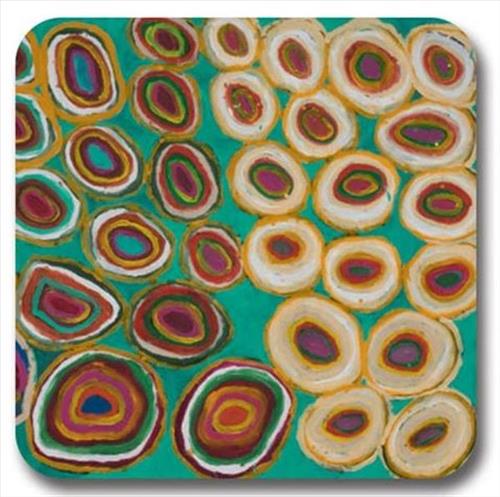
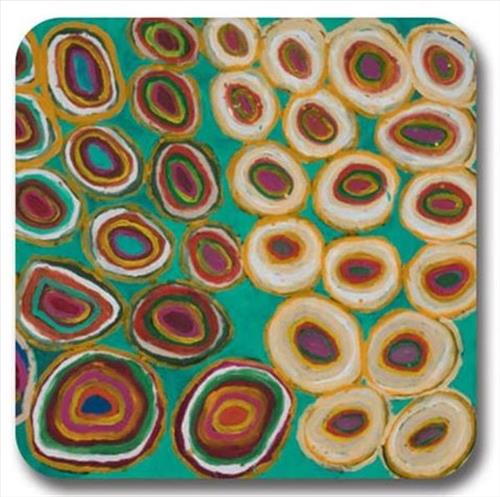
Kun Kun

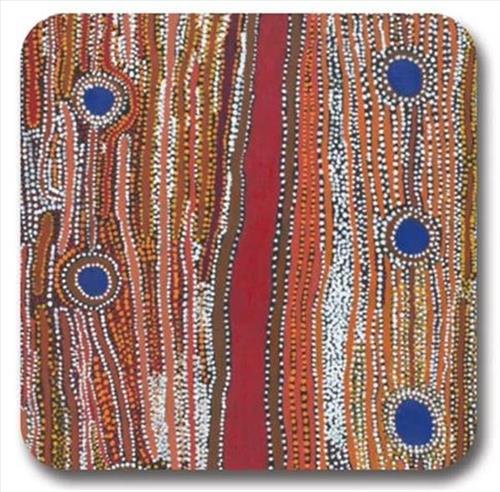
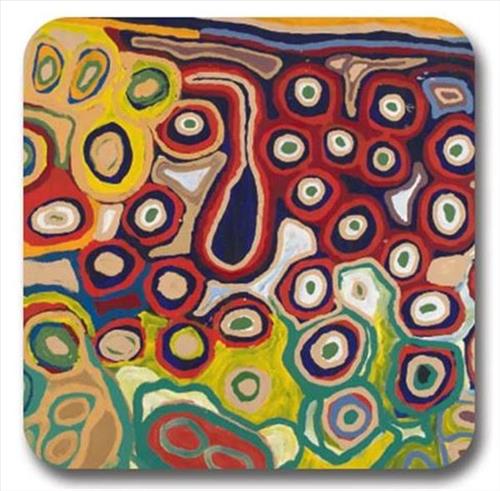
Individual coaster made in heat, stain and scratch resistant melamine with 3.2mm hardboard and cork backing, featuring a detailed section from the collaborative work ‘Kun Kun’ by Martumili Artists Nora Nungabar, Nora Wompi, Bugai Whyoulter and Kumpaya Girgaba.

The central water in this painting is Kuny Kuny (Kun Kun), an important women’s site belonging to the Marlu Jukurrpa (Kangaroo Dreaming). This Jukurrpa is also significant within men’s law and contains elements restricted to initiated men and women.

Despite the title, there are 57 named sites in this painting, 11 of which are Canning Stock Route wells. These are places where the artists lived, where family members were born and died, and where ancestral beings left their power.
11153973783


Status: Stock


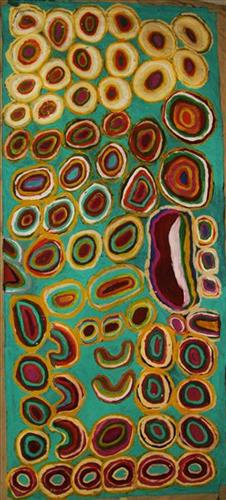
Puntawarri, Jilakurru and Kumpupirntily

Individual coaster made in heat, stain and scratch resistant melamine with 3.2mm hardboard and cork backing, featuring the collaborative artwork ‘Puntawarri, Jilakurru and Kumpupirntily” by Martumili Artists, and grandmother and granddaughter, Dadda Samson and Judith Samson. 

Puntawarri, Jilakurru and Kumpupirntily are sites in Dadda’s ngurra (home country), which she has painted here with her granddaughter, Judith. Puntawarri is an important cultural area, on the middle stretches of the Canning Stock Route and east of the Jigalong Aboriginal Community, where the artists now live with their family. It is also the site of a now abandoned community, and a creek and lake. Jilakurra (Well 17 on the Canning Stock Route) is a permanent spring, and was a major meeting and ceremonial site in the pujiman (bush dwelling) era. Located here are many significant engravings and rock art, much of which are sacred to Martu people. Kumpupirntily (Lake Disappointment) is a large warla (salt lake) and one of the most sacred and dangerous sites in the far Western Desert. This is where the Ngayurnangalku (cannibal beings) live beneath the lake, surfacing only to feed on human flesh.

11153973782


Status: Stock


Puntawarri, Jilakurru and Kumpupirntily

Set of six coasters made in heat, stain and scratch resistant melamine with 3.2mm hardboard and cork backing, featuring the collaborative artwork ‘Puntawarri, Jilakurru and Kumpupirntily” by Martumili Artists, and grandmother and granddaughter, Dadda Samson and Judith Samson. Magnets are 1.5mm thick and superior strength magnet to attach card and heavier papers to your fridge or cabinet

Puntawarri, Jilakurru and Kumpupirntily are sites in Dadda’s ngurra (home country), which she has painted here with her granddaughter, Judith. Puntawarri is an important cultural area, on the middle stretches of the Canning Stock Route and east of the Jigalong Aboriginal Community, where the artists now live with their family. It is also the site of a now abandoned community, and a creek and lake. Jilakurra (Well 17 on the Canning Stock Route) is a permanent spring, and was a major meeting and ceremonial site in the pujiman (bush dwelling) era. Located here are many significant engravings and rock art, much of which are sacred to Martu people. Kumpupirntily (Lake Disappointment) is a large warla (salt lake) and one of the most sacred and dangerous sites in the far Western Desert. This is where the Ngayurnangalku (cannibal beings) live beneath the lake, surfacing only to feed on human flesh.

11153973781


Status: Stock


Kun Kun

Set of six coasters made in heat, stain and scratch resistant melamine with 3.2mm hardboard and cork backing, featuring a detailed section from the collaborative work ‘Kun Kun’ by Martumili Artists Nora Nungabar, Nora Wompi, Bugai Whyoulter and Kumpaya Girgaba.

The central water in this painting is Kuny Kuny (Kun Kun), an important women’s site belonging to the Marlu Jukurrpa (Kangaroo Dreaming). This Jukurrpa is also significant within men’s law and contains elements restricted to initiated men and women.

Despite the title, there are 57 named sites in this painting, 11 of which are Canning Stock Route wells. These are places where the artists lived, where family members were born and died, and where ancestral beings left their power.
11153973779


Status: Stock


Minyipuru

Set of six coasters made in heat, stain and scratch resistant melamine with 3.2mm hardboard and cork backing, featuring the collaborative artwork ‘Minyipuru ‘ by Martumili Artists Muni Rita Simpson, Rosie Williams and Dulcie Gibbs.

Sisters Muni, Rosie and Dulcie grew up in the Country depicted in this painting. But it is the epic story of the Seven Sisters or Minyipuru, which they have described here. In this story, the old man Yurla, who had been pursuing the sisters, captured one of the women at Parnkarpini, between wells 35 and 36. The Minyipuru tricked him and rescued her.

Poor old fella, he had a rough time. He was trying and trying and trying.

The Minyipuru promised to stay with the old man Yurla but, when he returned from collecting wood, they were floating above his head, teasing him. Yurla made a ladder but the sisters pushed it over and laughed at him. When he collapsed, exhausted, they rescued their sister and flew away.

11153973778


Status: Stock


Kunawarritji

An individual, blank greeting card with envelope featuring a detailed section from Nora Wompi’s painting, ‘Kunawarritji’

Kunawarritji is an important site in the Great Sandy Desert where multiple stories and histories intersect. Originally a spring water, at the turn of the 20th century Kunawarritji was converted to a well (Well 33) along the Canning Stock Route. Each year throughout the 1930-50s, the well became a site of contact between the drovers, their cattle, and desert families. Long before colonial history entered this country, other stories dominated this site. In the jukurrpa (dreaming), the Minyipuru (Seven Sisters) stopped here, where they transformed themselves into a distinctive group of trees that remain in the area between Kunawarritji and Nyipil (Well 34).

Today, Kunawarritji is a site of return, a place where people came back to continue their life in the desert with the formation of Kunawarritji community in the early 1980s. The community’s cultural significance endures, with the population swelling up to 1000 during cultural business.

11153973777


Status: Stock


Puntawarri, Jilakurru and Kumpupirntily

An individual, blank greeting card with envelope featuring Martumili Artist Mulyatingki Marney’s painting, ‘Minyipuru’.

Minyipuru is an important jukurrpa (dreamtime) story about seven sisters that are travelling through the desert, running away from Yurla, a lustful old man. The man chases the wanti(women) all the way from Roebourne on the west coast, right through Martu country before flying east across Australia. Along the way they stop at many significant sites to camp, sing, dance and collect bush tucker, leaving markers in the landscape along the way. The many events and interactions with Yurla chronicled through the story create a culturally rich narrative that is associated with the Pleiades star constellation.