377810582116075


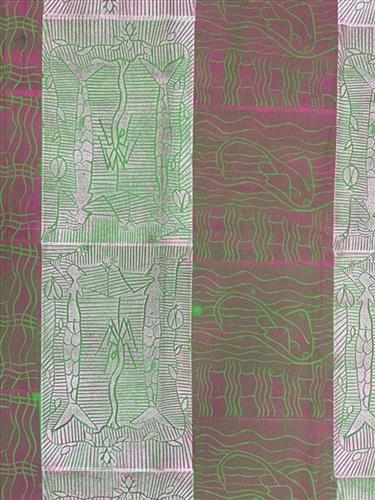
Djomi and Hammerhead Shark

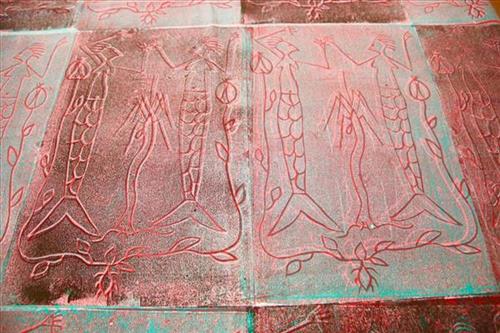
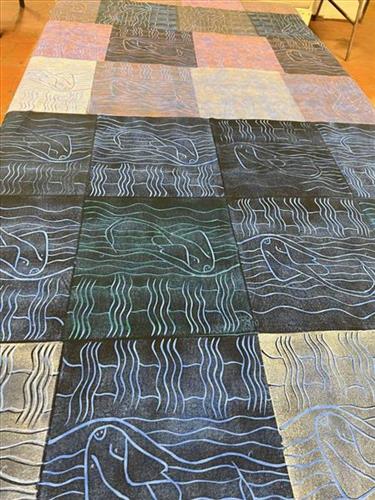
Joy depicts the story of the Djomi and Hammerhead shark in her Lino print design. Joy depicts the story of her ancestral dreaming the Djomi in her textile work, with permission from her djunguys (cultural caretaker) she’s able to tell her story through her magnificent design. ‘This Djomi is my dreaming, I got permission by djunguys to design Djomi, to tell my story of my dreaming, for me always ask my djunguys first to put design” The Djomi dreaming is described to be a long lady spirit with fish like tales that comes from a water stream that flows out to the sea cliff of Maningrida. It is a known to be a women fertile water stream. ‘if you go there you can get pregnant, Djomi has babies, you can have babies’ Here are two Dreaming ladies– Djómi and Bábbarra. These two are sisters: one freshwater ‘mermaid’ and one saltwater one. ‘Babbarra billabong is inland, Djomi is near the saltwater’ – Joy Garlbin 100% cotton. Linocut print with two colours on Green cotton.
377810582116074


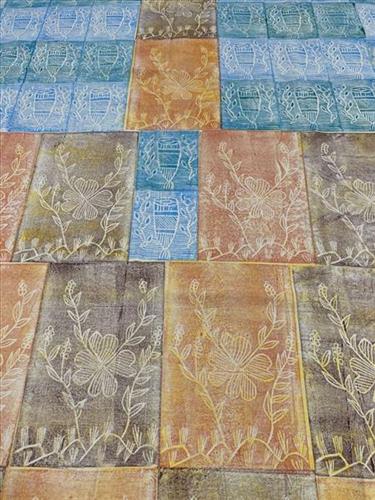
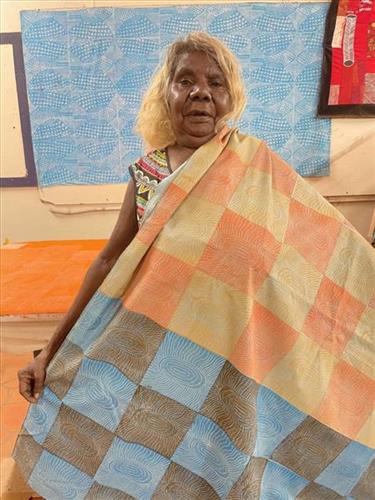
Kaijowa

This is a Joy’s new design of a small pandanus floor mat. Joy has used a combination of blue, orange, white, brown and green ink to make up this hopscotch 3m fabric length.

377810582116071


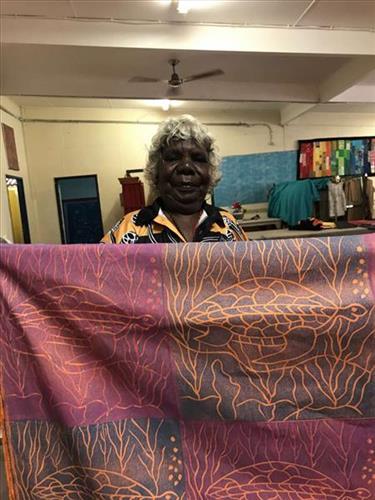
Saltwater Turtle

This fabric was created using the linocut printing technique. The lino tile has been carved by the artist in Maningrida, and has been printed by hand using a variety of colours and layers. The linocut technique ensures each textile piece is a one-off, limited edition piece. Neon orange base cloth with purple, blue and white ink. This is a stunning piece of fabric that would look beautiful as a curtain or piece of soft furnishing.

377810582116070


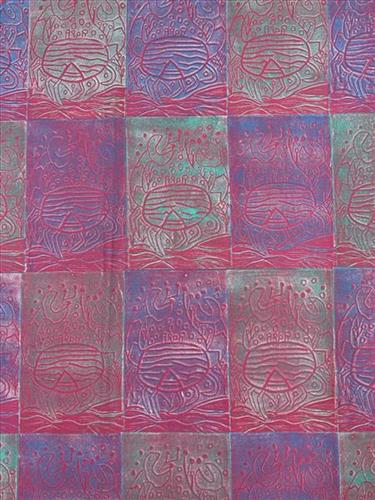
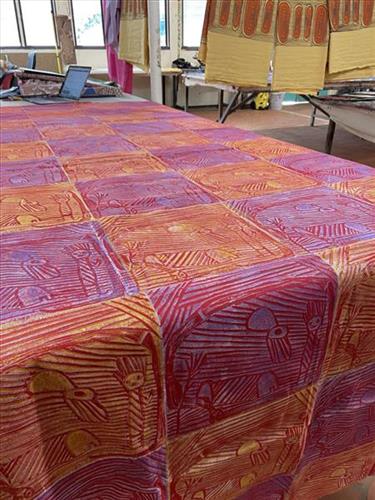
Djomi (Water Spirit

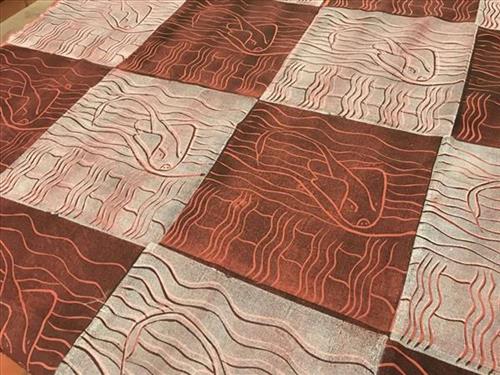
A piece of red cotton printed with opulent layers of pink, black, and turquoise ink. This fabric was created using the linocut printing technique. The lino tile has been hand drawn and carved by the artist in Maningrida, and has been printed by hand using a variety of colours and layers. The linocut technique ensures each textile piece is a one-off, limited edition piece. Joy depicts the story of her ancestral dreaming the Djomi in her textile work, with permission from her djunguys (cultural caretaker) she’s able to tell her story through her design. The Djomi dreaming is described to be a long lady spirit with fish like tales that comes from a water stream that flows out to the sea cliff of Maningrida. It is a known to be a women fertile water stream. ‘This Djomi is my dreaming, I got permission by djunguys to design Djomi, to tell my story of my dreaming, for me always ask my djunguys first to put design. If you go there you can get pregnant, Djomi has babies, you can have babies.” – Joy Garlbin

377810582116004


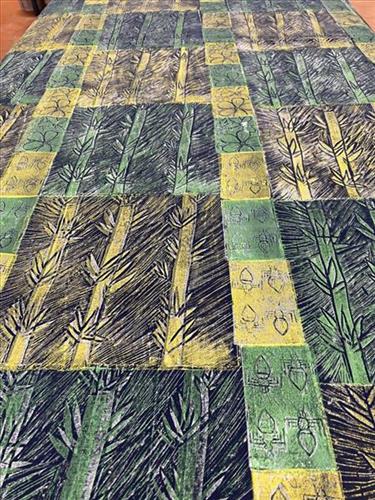
Bamboo Shoot & Green Ants

This fabric was created using the linocut printing technique. The lino tile has been carved by the artist in Maningrida, and has been printed by hand using a variety of colours and layers. The linocut technique ensures each textile piece is a one-off, limited edition piece. Bábbarra Women’s Centre supports the economic independence of Indigenous women in the Arnhem Land community of Maningrida, Northern Territory, Australia. Designs created by the women at Bábbarra reflect strong cultural knowledge, which is passed down to younger generations through their textile design practice.

377810582115991


Mududu (Mud Crab)

A new design by Lucy celebrating her love of eating mudcrab. Lucy Yarawanga ‘I feel good waking up in the morning, knowing I am going to Bábbarra. After work I go home and talk about my printing with all my family, and then I dream about it too. I am always thinking about my designs. They make me feel so proud.” – Lucy Yarawanga. This is a Lino print textile length hand printed by the women of Arnhem Land. A bright pink cotton with sky blue and aqua blue ink.

377810582115987


Bawaliba and Ngalyod (Rainbow Serpent)

‘My Kikka (mother), when she was alive, she would tell me these stories. I was just a  little girl and she would tell us the stories in her language Gurrgoni.

In the camps there were boy and girl Bawaliba, and old Bawaliba too. They loved to  dance by the firelight, keeping rhythm with a stick. They had lots of hair, they were  really tall and skinny, with spots on their bodies. The Bawaliba lived a long time in  peace. They were the only spirits on their country and so they were never disturbed.

One day, a long time ago, the Bawaliba were out hunting and they saw a large  snake- they didn’t know then but she was the Rainbow Serpent. They were really  scared, they had never seen that. creature before. She was really beautiful- like a  normal king brown snake but with a rainbow from the sky on her back. The rainbow  serpent was really hungry, and she could smell the Bawaliba from a long way away.  She was out looking for food.  The Bawaliba tried to stop Ngalyod coming for them but she was just too quick. She  snuck up behind the Bawaliba and before they could get away she ate them up.  When she was really full and couldn’t eat anymore Bawaliba she changed the rest of  them into stone. Still til this day, the Bawaliba stay on that same country as stones.’ Lucy Yarawanga

377810582115953


Mandjabu & Bush Flower

The lino tile has been carved by the artist in Maningrida, and has been printed by hand using a variety of colours and layers. The linocut technique ensures each textile piece is a one-off, limited edition piece. Bábbarra Women’s Centre supports the economic independence of Indigenous women in the Arnhem Land community of Maningrida, Northern Territory, Australia. Designs created by the women at Bábbarra reflect strong cultural knowledge, which is passed down to younger generations through their textile design practice.

377810582116077


Stingray

Joy Garlbin depicts the story of Stingray in this beautiful, hand-printed Lino design. white cotton with yellow, purple, dark blue and orange ink.

377810582116069


Stingray

This fabric was created using the linocut printing technique. The lino tile has been carved by the artist in Maningrida, and has been printed by hand using a variety of colours and layers. The linocut technique ensures each textile piece is a one-off, limited edition piece. Bábbarra Women’s Centre supports the economic independence of Indigenous women in the Arnhem Land community of Maningrida, Northern Territory, Australia. Designs created by the women at Bábbarra reflect strong cultural knowledge, which is passed down to younger generations through their textile design practice. A new stingray design by Joy Garlbin White and Black ink on terracotta linen cotton.