Hammerhead Shark
Linocut print with black and white on cotton. Joy depicts the story of the hammer head shark in her linocut design.

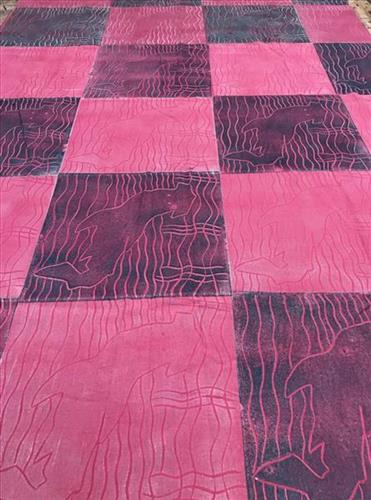
Linocut print with black and white on cotton. Joy depicts the story of the hammer head shark in her linocut design.

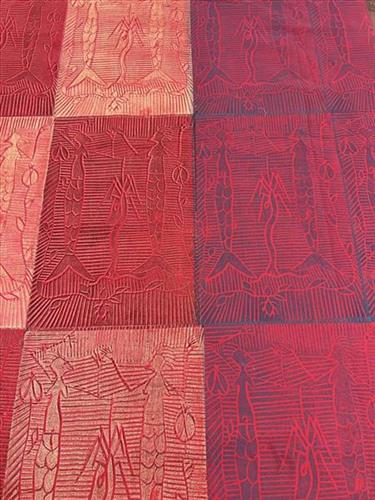
Joy depicts the story of her ancestral dreaming the Djomi in her textile work, with permission from her djunguys (cultural caretaker) she’s able to tell her story through her design. The Djomi dreaming is described to be a long lady spirit with fish like tales that comes from a water stream that flows out to the sea cliff of Maningrida. It is a known to be a women fertile water stream. ‘Hello my name is Joy Garblin and I work women’s centre. I’m printing Djomi, my design dreaming*. My dreaming* is sacred site and people don’t touch that swamp. They keep away from that swamp. Only the djungkay and my labour they go there and look and shout and talk to my dreaming. My dreaming is tough and strong and nobody touch. Even I am landowner and I don’t go and touch or else I get pregnant from my dreaming. That’s why we keep our dreaming sacred.’ Joy Garblin 2020

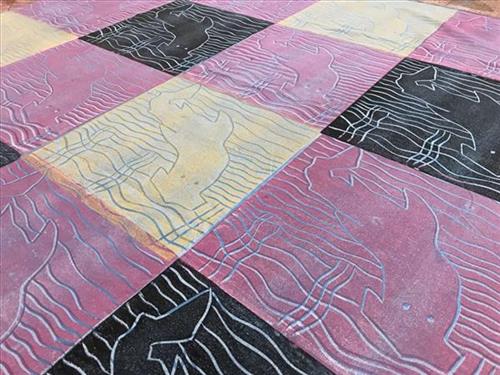
Joy depicts the story of the hammershark in her Lino print design.

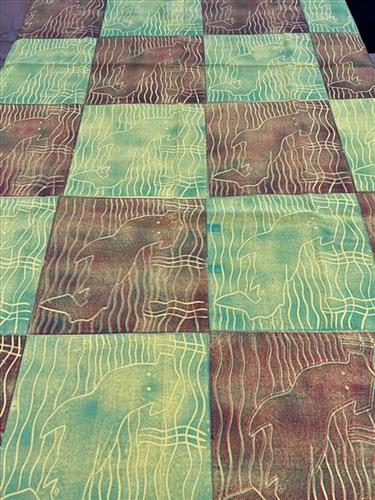
Joy Garlbin depicts the story of Hammerhead Shark with this beautiful, hand-printed Lino design. Yellow cotton with red and green ink.

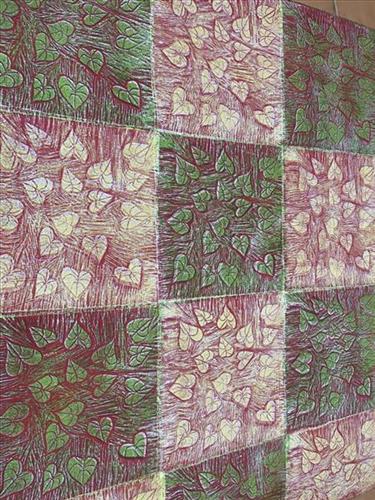
This fabric was created using the linocut printing technique. The lino tile was carved by the artist in Maningrida and printed by hand using a variety of colours and layers. The linocut technique ensures each textile piece is a one-off, limited edition piece. Bábbarra Women’s Centre supports the economic independence of Indigenous women in the Arnhem Land community of Maningrida, Northern Territory, Australia. Designs created by the women at Bábbarra reflect strong cultural knowledge, which is passed down to younger generations through their textile design practice. A bright red piece of cotton with yellow, green and white ink.

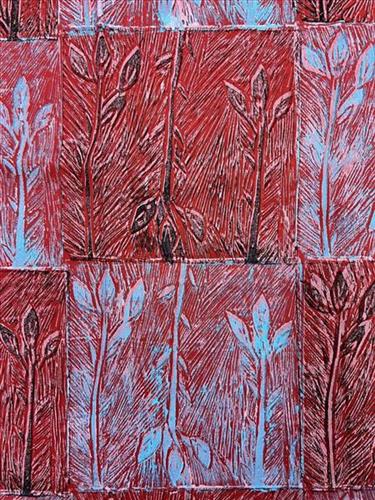
This fabric was created using the linocut printing technique. The lino tile has been carved by the artist in Maningrida, and has been printed by hand using a variety of colours and layers. The linocut technique ensures each textile piece is a one-off, limited edition piece. Bábbarra Women’s Centre supports the economic independence of Indigenous women in the Arnhem Land community of Maningrida, Northern Territory, Australia. Designs created by the women at Bábbarra reflect strong cultural knowledge, which is passed down to younger generations through their textile design practice. Three colour print – light pink, black and blue on red cotton.

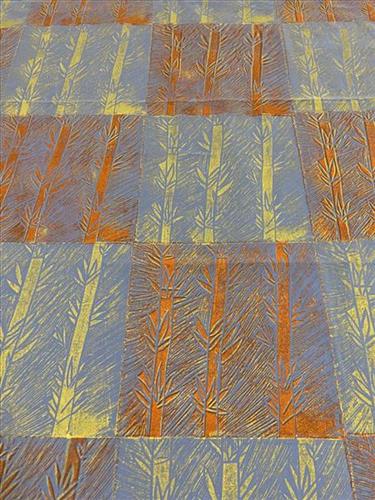
This fabric was created using the linocut printing technique. The lino tile has been carved by the artist in Maningrida, and has been printed by hand using a variety of colours and layers. The linocut technique ensures each textile piece is a one-off, limited edition piece. Bábbarra Women’s Centre supports the economic independence of Indigenous women in the Arnhem Land community of Maningrida, Northern Territory, Australia. Designs created by the women at Bábbarra reflect strong cultural knowledge, which is passed down to younger generations through their textile design practice. Belinda Kernan depicts the story of Bamboo shoot with this beautiful, hand-printed lino design.

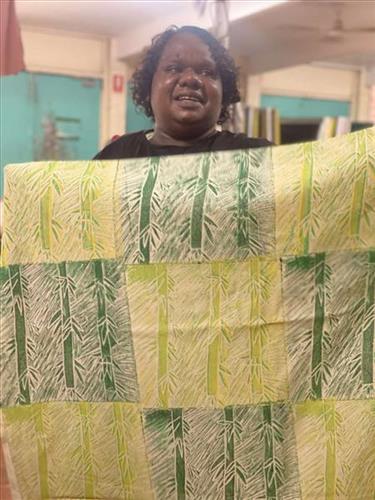
Belinda’s popular bamboo shoot design lightly printed in tones of green on a cream cotton. Her layering technique creates texture and rhythm on the fabric.

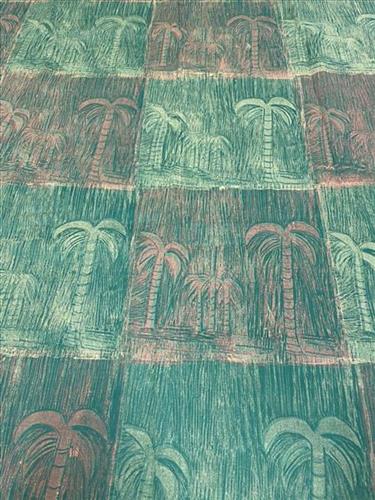
This fabric was created using the linocut printing technique. The lino tile has been carved by the artist in Maningrida, and has been printed by hand using a variety of colours and layers. The linocut technique ensures each textile piece is a one-off, limited edition piece. Bábbarra Women’s Centre supports the economic independence of Indigenous women in the Arnhem Land community of Maningrida, Northern Territory, Australia. Designs created by the women at Bábbarra reflect strong cultural knowledge, which is passed down to younger generations through their textile design practice.

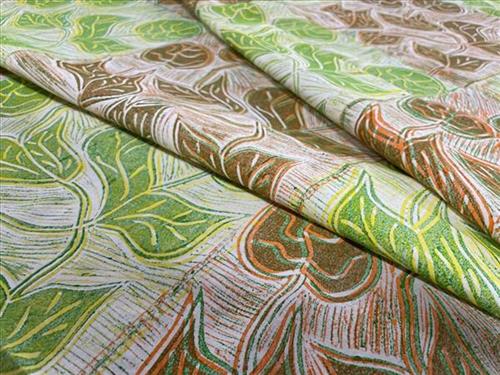
This fabric was created using the linocut printing technique. The lino tile has been carved by the artist in Maningrida, and has been printed by hand using a variety of colours and layers. The linocut technique ensures each textile piece is a one-off, limited edition piece. Bábbarra Women’s Centre supports the economic independence of Indigenous women in the Arnhem Land community of Maningrida, Northern Territory, Australia. Designs created by the women at Bábbarra reflect strong cultural knowledge, which is passed down to younger generations through their textile design practice.