377810582115396


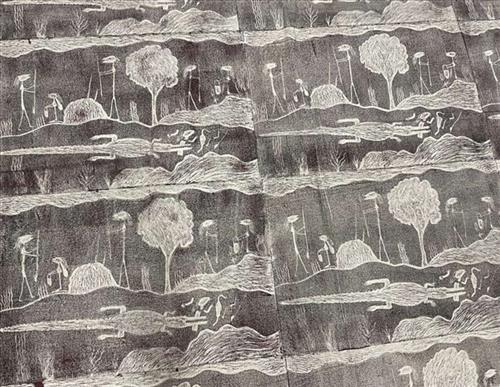
Modjarrkki & Namurre Boko

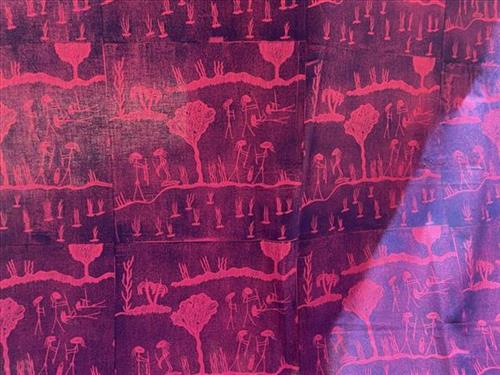
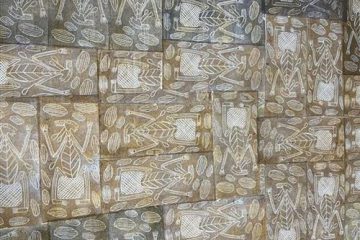
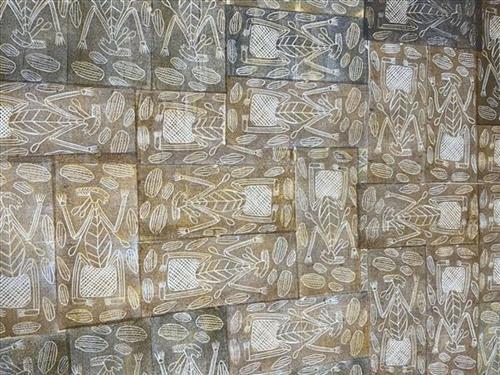
‘Bini-murreko means two brothers – big brother and little brother. Two brothers were really strong leaders and good hunters, sharing animals with different tribes. With those different tribe there were jealousy going on. Little brother went walkabout and heard the different tribe was talking about his tribe. They said ngarribin manre djed-djedme bokko Meaning: will make spear for them Ngarrbin danj-bun, ngarrbinbun Meaning: will spear them kill them little brother turn around went back tell his brother Namurre bokko kadi marne djed-djedme Karre wonens, kardi-djal danjbun Meaning: they making spear for us, they gonna spear us Couple of months they saw different tribe They changed their attitude They been bringing lots of animals to them and start asking for women And that tribe realise that’s how those brothers died. They kill them This Why? They got jealous because two brothers was a good hunter. This story written on the rock art and it stays forever.’ This story was transcribed by Jay Jurrupula Rostron. Her lino designs illustrate the different scenes in this ancestral story. Jay is a meticulous artist with a fine lino carving technique and beautiful colour combinations that reflect the Arnhem Land environment and her homeland near Korlobididah.
377810582115395


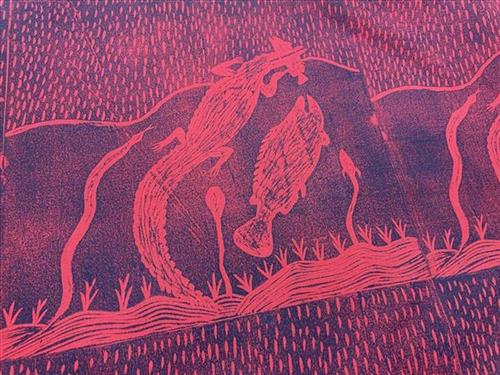
Modjarrkki (The Crocodile)

Two brothers and Modjarrkki the Crocodile ‘This is a true story. My great great grandfather and my father told this story and I tell it to my children. It’s about a freshwater crocodile called Modjarrkki. One day an unmarried man who was camping with his brother and his brothers wife went walking by himself. He came to a creek where he found a crocodile. He went back to camp and said to his brother ‘hey I found a croc, lets go kill it!’. He tried to kill the crocodile but the crocodile bit his brother. He bit his guts, his hand, his legs and he died. Modjarrkki was an angry crocodile but today Modjarkki doesn’t bite people, he’s only a little crocodile and he eats barramundi. He is still alive and he lives in rock country, Karrabarda, which is in Gorlobidahdah.’ Jay Jurrupula Rostron

377810582115394


Namurre Boko (Two brothers story)

‘Bini-murreko means two brothers – big brother and little brother. Two brothers were really strong leaders and good hunters, sharing animals with different tribes. With those different tribe there were jealousy going on. Little brother went walkabout and heard the different tribe was talking about his tribe. They said ngarribin manre djed-djedme bokko Meaning: will make spear for them Ngarrbin danj-bun, ngarrbinbun Meaning: will spear them kill them little brother turn around went back tell his brother Namurre bokko kadi marne djed-djedme Karre wonens, kardi-djal danjbun Meaning: they making spear for us, they gonna spear us Couple of months they saw different tribe They changed their attitude They been brining lots of animals to them and start asking for women And that tribe realise that’s how those brothers died. They kill them This Why? They got jealous because two brothers was a good hunter. This story written on the rock art and it stays forever.’ This story was transcribed by Jay Jurrupula Rostron. Her lino designs illustrate the different scenes in this ancestral story. Jay is a meticulous artist with a fine lino carving technique and beautiful colour combinations that reflect the Arnhem Land environment and her homeland near Korlobididah.
377810582115393


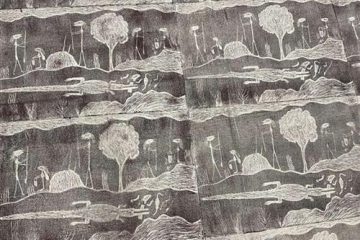
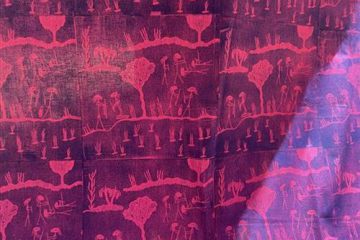
Namurre Boko (Two Brothers Story) and Modjarrkki

‘Bini-murreko means two brothers – big brother and little brother. Two brothers were really strong leaders and good hunters, sharing animals with different tribes. With those different tribe there were jealousy going on. Little brother went walkabout and heard the different tribe was talking about his tribe. They said ngarribin manre djed-djedme bokko Meaning: will make spear for them Ngarrbin danj-bun, ngarrbinbun Meaning: will spear them kill them little brother turn around went back tell his brother Namurre bokko kadi marne djed-djedme Karre wonens, kardi-djal danjbun Meaning: they making spear for us, they gonna spear us Couple of months they saw different tribe They changed their attitude They been brining lots of animals to them and start asking for women And that tribe realise that’s how those brothers died. They kill them This Why? They got jealous because two brothers was a good hunter. This story written on the rock art and it stays forever.’ This story was transcribed by Jay Jurrupula. Her lino designs illustrate the different scenes in this ancestral story. This print also includes the story of Modjarrkki the crocodile. Jay is a meticulous artist with a fine lino carving technique and beautiful colour combinations that reflect the Arnhem Land environment.

377810582115391


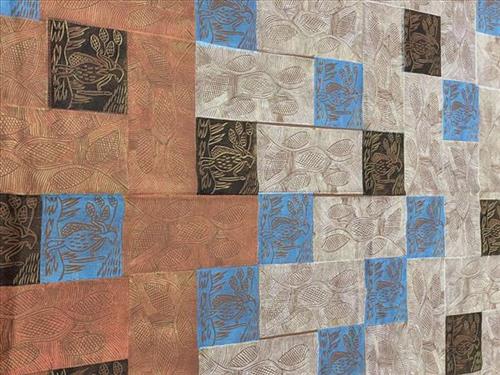
Kunmadj (pandanus mat) and that ‘Sharp Tree’

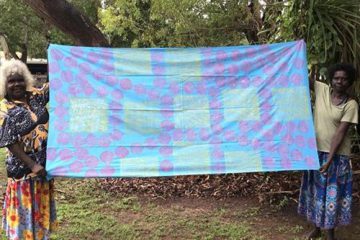
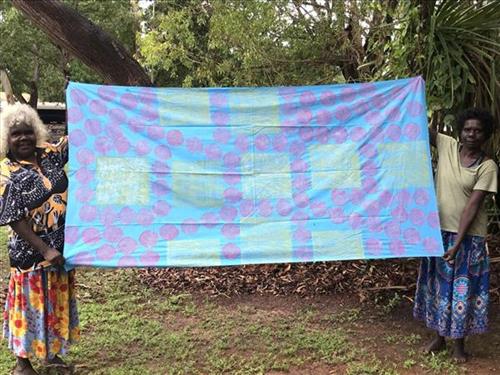
‘I like lino, print my design and doing different way to print my lino, different colours and different way. I print lino Yawkyawk (spirit woman) and Andjolpo. This was an old lady and she create that language and the world before. I also print also Rolk (maggot), my mother design cause I’m the Djunkay (land manager) for her.’ Janet Marawarr 2020 This is a beautiful piece of cloth printed by hand in Maningrida. Janet’s layout breaks away from a traditional block printed lino. Kunmadj (pandanus mat) dance loosely together in a harmonious repeat pattern. Pink, white and yellow on a bright blue base.

377810582115390


Sacred Site

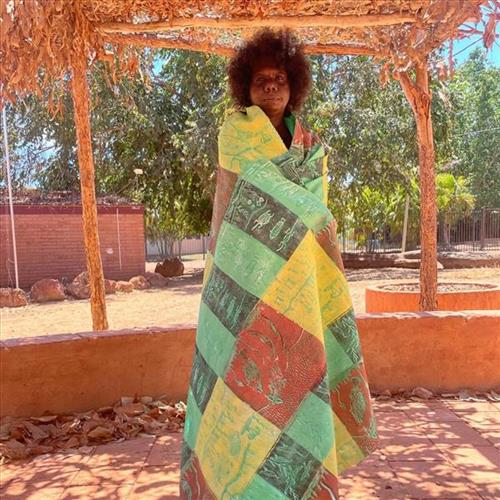
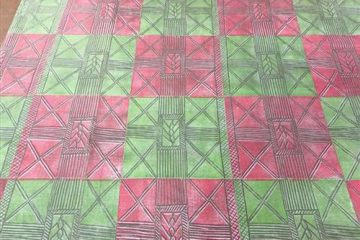
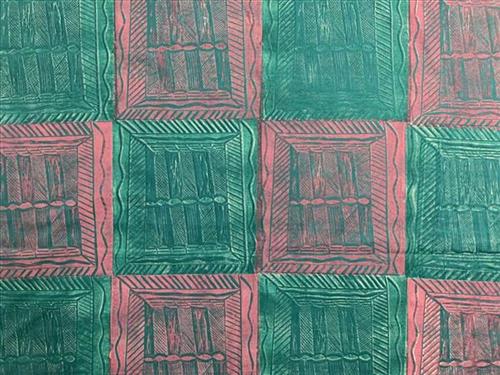
Design: Sacred Site Artist: Janet Marawarr A one-off, three colour print on bush-green cotton overlaid with soft red, green, and white tones. This fabric was created using the linocut printing technique. The lino tile has been carved by the artist in Maningrida, and has been printed by hand using a variety of colours and layers. The linocut technique ensures each textile piece is a one-off, limited edition piece. Bábbarra Women’s Centre supports the economic independence of Indigenous women in the Arnhem Land community of Maningrida, Northern Territory, Australia. Designs created by the women at Bábbarra reflect strong cultural knowledge, which is passed down to younger generations through their textile design practice. Janet is a talented linocut and screenprint designer. She regards textile design as an opportunity to work with colour and and new methods to express her djang (ancestral creator stories). As well as her artistic work with Bábbarra Women’s Centre, she is an established bark painter with Maningrida Arts & Crafts, and she works for the Maningrida Night Patrol, a community safety service.

377810582115389


Sacred Site

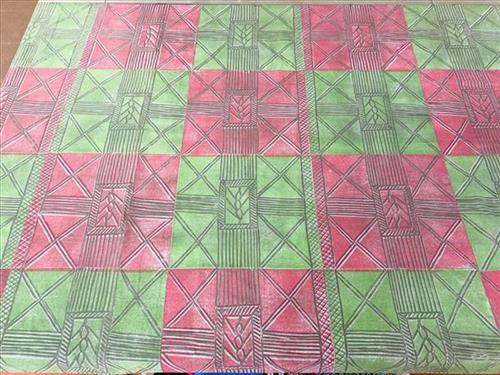
This fabric was created using the linocut printing technique. The lino tile has been carved by the artist in Maningrida, and has been printed by hand using a variety of colours and layers. The linocut technique ensures each textile piece is a one-off, limited edition piece. Bábbarra Women’s Centre supports the economic independence of Indigenous women in the Arnhem Land community of Maningrida, Northern Territory, Australia. Designs created by the women at Bábbarra reflect strong cultural knowledge, which is passed down to younger generations through their textile design practice.

377810582115386


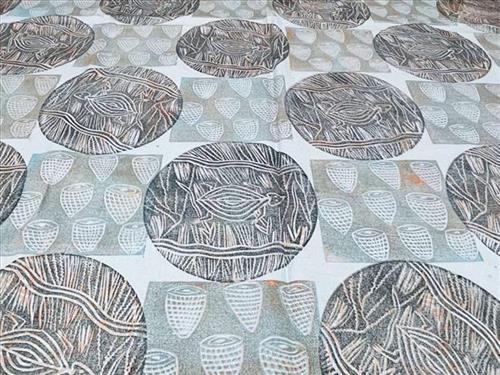
Manbamo (nut) and Komrdawh (turtle)

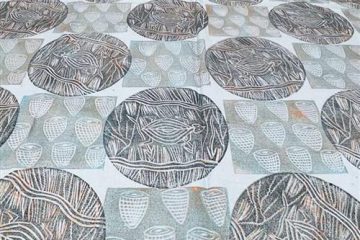
A new design by Janet showing a small fresh water (northern snake necked) turtle with repeating motifs of Manbamo (nuts). Janet Marawarr is a leading textile artist working at Babbarra Women’s Centre

377810582115385


Ngalng & Namorrorddo(woman create)

‘This is a story from Mankorlod. This is a djang story. This is the creation story about the fresh water yabby. Starting with the stone, that’s the raw one and the cooked one. The stone rock suddenly turned to ngalng, in a flash. ngalng started growing and turned into a body. Its a magic one and it can change from rock to ngalng to human and back to ngalng. Now it’s a Ngalng.’ Janet Marawarr 2021