377810582115384


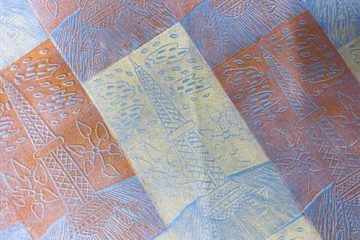
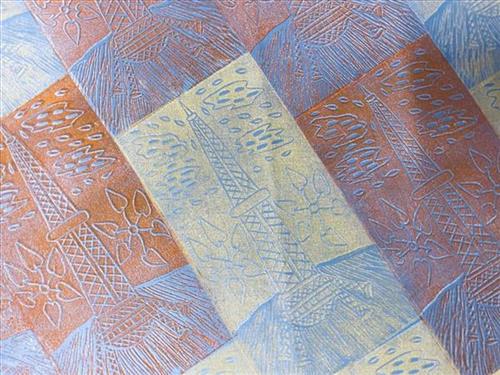
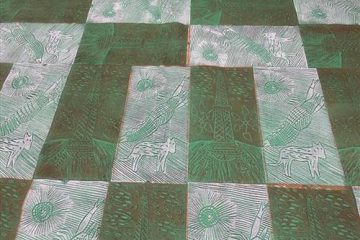
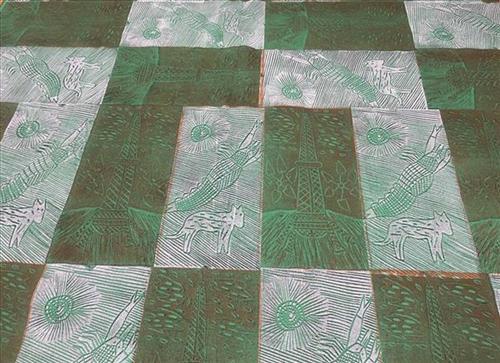
Ngalng, Duruk (dog) and Eiffel Tower

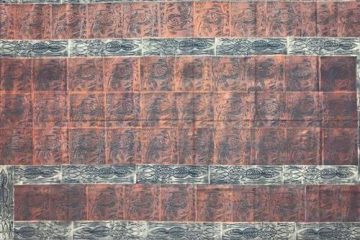
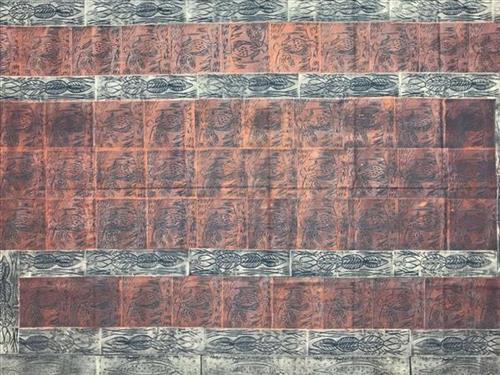
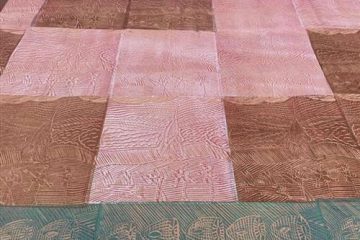
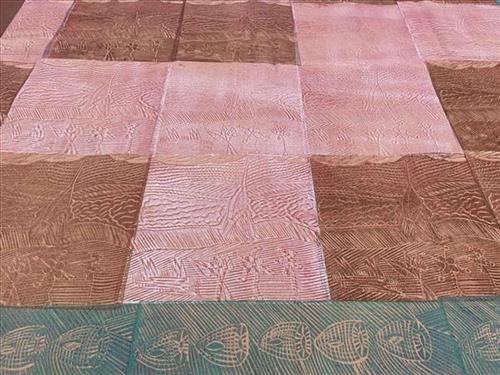
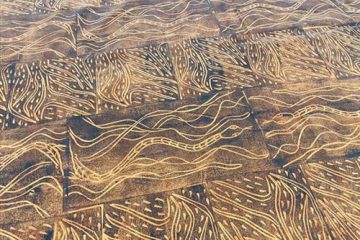
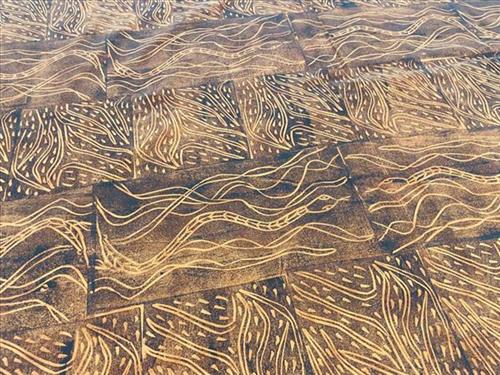
This fabric was created using the linocut printing technique. The lino tile has been carved by the artist in Maningrida, and has been printed by hand using a variety of colours and layers. The linocut technique ensures each textile piece is a one-off, limited edition piece. White and brown on a green cotton Janet varies her repeat patterns and works instinctively on each piece of fabric making all of her work deeply connected to her djang (powerful creation spirits). This cloth features elements of goal, the creation story of the fresh water yabbie with duruk, a camp dog that comes from the water and Janet’s Eiffel Tower

377810582115383


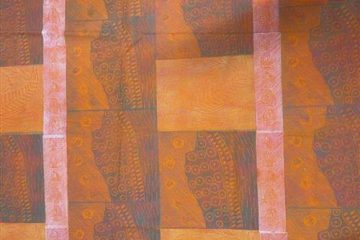
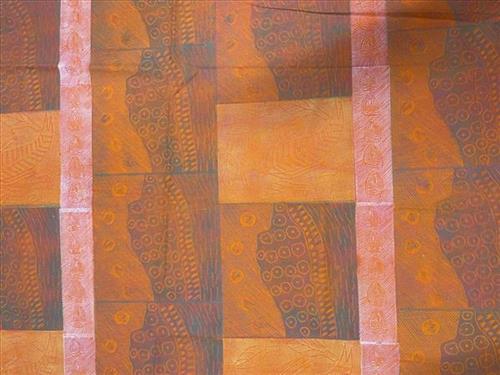
Kunred (country), Yawkyawk (young woman spirit) & Manbedde

Janet has depicted the rocky country of Mankorlod along side a yawkyawk young woman spirit. Manbedde is printed in white lines throughout the design. Manbedde is a bush food from the Quinine tree. Petalostigma pubescens This is a bright neon orange base cloth with blue, yellow and white ink. Janet works slowly and meticulous to create vivid textiles with complex cultural meaning.

377810582115382


Eiffel Tower

‘I want to tell you about my design, that Eiffel tower one. This year it was my first time going to Paris. I didn’t know that place, nothing. We travelled around the world to get there, we flew underneath the world in an aeroplane. Paris was a big, crowded city. They speak a different language there, just like here in Maningrida with all our different languages. The Bábbarra artists and Ingrid, we were all walking around, like tourists. We went on the boat in the Paris river. There was a film crew taking videos of us. We saw so many beautiful buildings covered with black string (iron balconies) and big statues. We’d never seen things like that before. I remember when we got off that boat and I looked up and saw that tower. When I first looked up at that tower, it made me happy- it’s so long up into the sky. We walked towards it. I was standing there watching that tower and thinking, ‘wow, first time for me seeing a tower like that’. Then I was thinking, and I said to myself, when I go back to my own country, I’m going to paint that tower. We came to Maningrida, I started to draw. I drew that tower from France, but also I drew maladj (stone country orphan spirit), women’s sacred woven mat, fish traps and rolk (insects). I also put round kunngol (clouds) in the design, those circles. That maladj spirit, it’s standing there next to the Eiffel tower, looking at the dancing lights at night. The tower is from Paris, but everything else in my design I took from my mother’s country and my father’s country. Maybe one day I’ll travel back to France, and take my design with me to show them, all the French mob.’ Janet Marawarr 2020
377810582115381


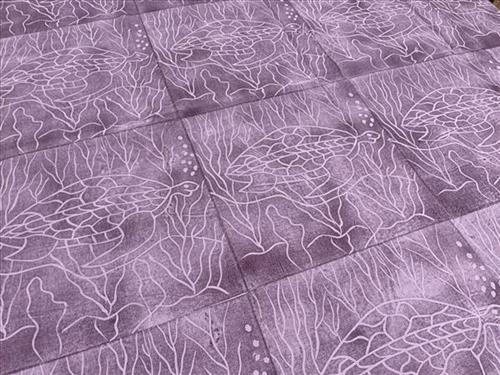
Rolk (maggot) and Maladj

This fabric was created using the linocut printing technique. The lino tile has been carved by the artist in Maningrida, and has been printed by hand using a variety of colours and layers. The linocut technique ensures each textile piece is a one-off, limited edition piece. ‘I like lino, print my design and doing different way to print my lino, different colours and different way. I print lino Yawkyawk (spirit woman) and Andjolpo. This was an old lady and she create that language and the world before. I also print also Rolk (maggot), my mother design cause I’m the Djunkay (land manager) for her.’ Janet Marawarr 2020 Tonal colours on a dusky blue cotton. Janet varies her repeat patterns and works instinctively on each piece of fabric making all of her work deeply connected to her djang (powerful creation spirits). She has a beautiful eye for colour and layout.
377810582115380


Jabiru

A piece of fabric carefully hand printed by Janet Marawarr. Subtle colours detailing a scene from her country of a Jabiru with it’s wings outstretched.

377810582115378


Barramundi

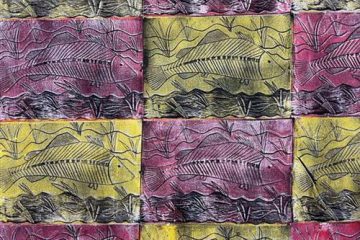
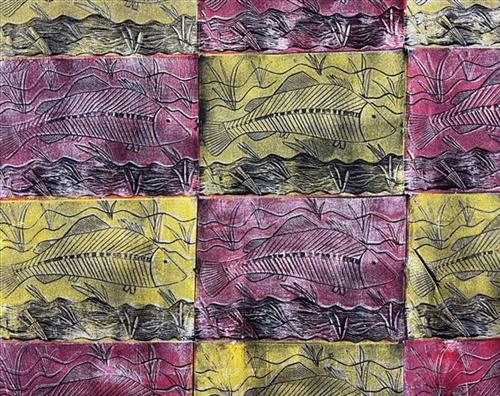
Miriam’s first lino design depicting a large local barramundi. Miriam has chosen striking colours on a black base cloth. This fabric was created using the linocut printing technique. The lino tile has been carved by the artist in Maningrida, and has been printed by hand using a variety of colours and layers. The linocut technique ensures each textile piece is a one-off, limited edition piece. Bábbarra Women’s Centre supports the economic independence of Indigenous women in the Arnhem Land community of Maningrida, Northern Territory, Australia. Designs created by the women at Bábbarra reflect strong cultural knowledge, which is passed down to younger generations through their textile design practice.

377810582115377


Yokkarra (fish), Ngaduna (palm tree) & Barruar (Seagull egg)

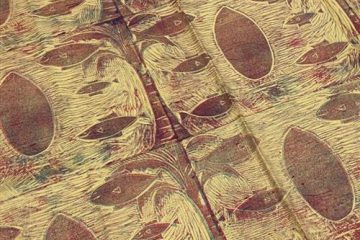
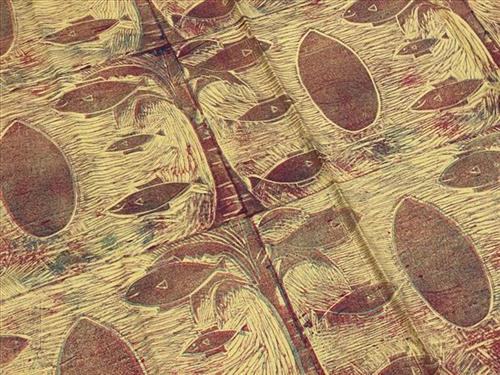
‘Hi it’s me Marilyn! I’m the age of 52. I like working at the women centre and doing lino printing but I prefer screen printing. I have one design, that’s lorrkkon (hollow log). My great grandfather used to make lorrkkon and do bark paining. I never met him but I heard a lot of stories about him. My mother used to tell me history stories. When I was 16 my parents passed away. I’m was on my own but now I’ve got my own family and my partner who helps me. I’ve got 6 grandchildren. My homeland is Entrance island, Haulround island and Juda point. I really like Haulround island and that’s where we collect barruar (seagull egg). Entrance island is my favourite camping area, I go across with boat. Balanda (non-Aboriginal or European people) can’t go into those islands or Juda point without permission from me. Come and chat to me if you want to go to any of those places. We have a sacred totem ngaduma (palm tree) at those places and if people destroy it, we will have a strong wind and maybe a cyclone.’ Marilyn James 2021

377810582115376


Ngalyod (rainbow serpent) and kundayarr (Pandanus)

Ngalyod (rainbow serpent) and kundayarr (Pandanus) A new lino print textile by Deborah Wurrkidj. During the Covid19 pandemic, Deborah has been working at home in Kakodbebuldi Outstation. Black on orange homespun Cotton.

377810582115375


Makéddja (saltwater turtle)

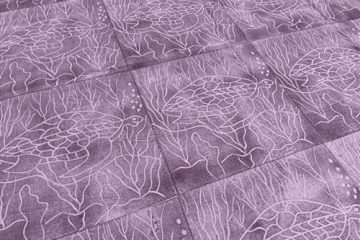
Makéddja (sea turtle) is a popular design by Joy Garlbin, Ndjebbana speaking traditional owner of Maningrida. This simple one colour design was created during the Covid19 lock downs in the month of January and February 2022 when artists were working from home.

377810582115373


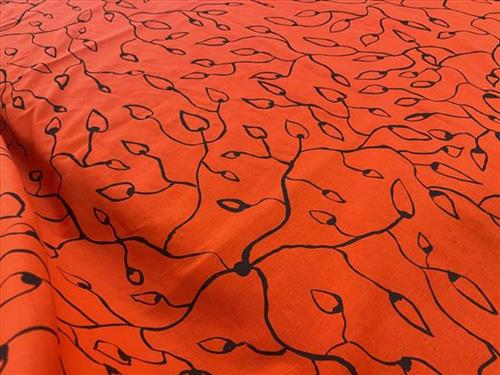
Mankotbe (Bush Onion)

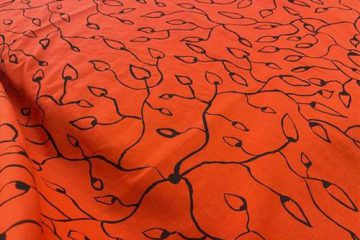
Mankotbe (bush onion) grows under the ground, we follow the vine to dig it up. It is brown on the outside and white inside and we cook it on the fire, just like a potato. All the old people used to eat Mankotbe on my homeland. My grandmother showed me how to find that plant and the first time I ate so much my mouth got sore! You can’t be too greedy.

This design brings back good memories for me. I used to eat Mankotbe when I was young and living at my homeland Buluhkaduru. In those old times, my house was made of paper bark and sticks. If we wanted to come into town we had to walk, and it’s a long walk, so we would fill our dilly bags with sugar bag honey, Mankotbe and long yams to eat on the way. They were good times for me.

You can find Mankotbe any time of the year- the plant has big black leaves. When you find one onion, you know there is big mob around- they are always connected by a big long vine underground