377810582144049


Manbirrbbirr (small bush flowers)

In Kuninjku the name manbirrbbirr is used for a number of densely flowering shrubs and small trees including Verticordia cunninghamii, yellow flowering Austromyrtus species and also Acacia platycarpa which also has dense white. 


377810582144007


Mandjabu and Kunwardde

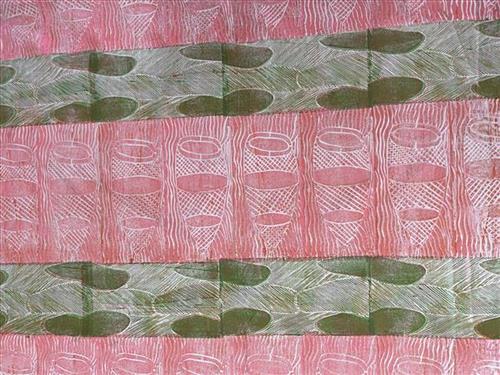
Kuninjku people traditionally make two sorts of conical fish traps. One is called mandjabu and is made from a strong, durable vine called milil, and a smaller one is called manylik mandjabu, and made from the grass manylik. The mandjabuconical fish trap is bigger and stronger and used in tidal reaches of creeks to catch large fish. The smaller, lighter manyliktrap is used in freshwater flowing creeks to catch smaller fish and freshwater prawns. In earlier times, only men were involved in the construction of the large fish traps, but children would often crawl inside and assist.

To make mandjabu, weavers firstly harvest milil (burney vine, Malaisia scandens) and put it in water overnight to make it soft. Then they start weaving it; they make rings for the inside to keep the fish trap’s shape. People also make string from the bark of burdaga (kurrajong) to attach the bardainy (hibiscus) rings and to tie the conical end of the fish trap. It’s hard work and it can take three or four weeks to make a fish trap. People also use fish-net fences called kunkarlewabe. They would put the kunkarlewabe  across rivers and creeks. In the middle they would place the mandjabu. They also used small things like sticks, rocks, mud and grass to block the fish from going through. This way we would catch fish such as saltwater barramundi rajarra, ngaldadmurrng (freshwater barramundi), small black freshwater catfish (buliya), bonefish (an-guwirrpiya), and sand bass (dalakan) in the mandjabu.

377810582144004


Mimih Dancing

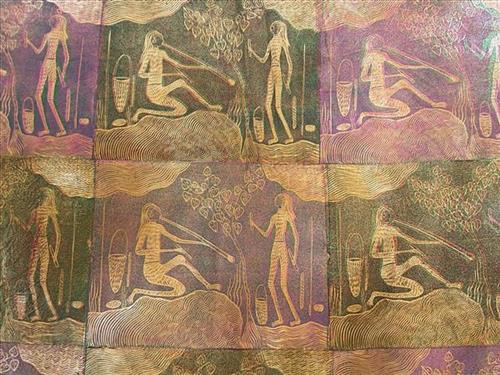
This is an artwork about a dancing Mimih. It’s based on a song line from Korlobididah. My fathers eldest brother used to sing this song line and Unkle Dennis he was a dancer. My real father, Jacky was a dancer as well and he was from Korlobididah.


111982143997


Man-ngalinj (bush potato)

Man-ngalinj is a root vegetable often described as ‘bush potato’. It’s duwa, the artist’s moiety. It has a bulbous root and a long thin vine with small flowers that grows across the ground or up the trunks of nearby trees. Large crops can be found near the artist’s outstation, Bolkdjam. Man-ngalinj are harvested after the Wet season in the early Dry

377810582143927


Njá-barawarra Na-míbba (Hammerhead shark)

Ndjébbana:

Njá-barawarra na-míbba   hammerhead shark. Sphyrna spp. Gender: djíya; Moiety: Djówanga; Generic (big name): djábbarnbókka ‘sharks’.


377810582143891


Jin-merduwa (Mermaid)

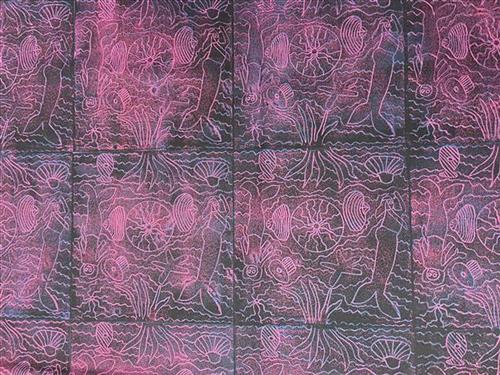
Elizabeth Wullunmingu – Jin-merduwa (Mermaid) from Gupanga

My niece, Stephanie James is singing a song called Diyama and it is about Jin-merduwa. She is in the Ripple Effect Band. They are now famous in Maningrida and everywhere. Her great grandmother told her about the Jin-merduwa living at Gupanga/ Kupanga (sp?).  I heard the story before Stephanie.  Now I hear her singing the story about that place.  I am very proud of her. We have the same country.  Our stories match.  She is singing the story and I am making artwork about the story. 

My lino print shows the Jin-merduwa who live at Gupanga.  Gupanga is located at the mouth of the Blyth River.  It is a saltwater place.  There must be more than one Jin-merduwa living there?  They eat fish, shellfish and seaweed.  Sometimes they travel to the end of the river to find food in the ocean, but they don’t go far and always swim back to their home.

Gupanga is a beautiful place.  The sand is golden, there are mangroves, and the water is cloudy.  It is good hunting in that area.  When we lived there, we got lots of barramundi, mudcrabs, shellfish, everything!

This is a bit of a dangerous story.  I can’t say too much about this sacred place. The Rangers help to look after this place, but they also know they must be careful.   

Kuninjku people call mermaids yawkyawk.  Yawkyawk are  freshwater.  In my language, Burarra we call them Jin-merduwa.  Jin-merduwa are a bit different to yawkyawk but are also a type of mermaid.

I love to make lino print fabric showing Jin-merduwa. I like using bright colours but sometimes I print using black and white.

Ripple Effect Band – Diyama Song

 https://rippleeffectband.bandcamp.com/track/diyama

This song was written by Stephanie James in her language of Burarra. It is about the mermaids that live in the river at her country of Kupanga.


Her father sings the Kun-borrk traditional music from the Diyama song cycle to link his daughter’s music to the past.


Credits

from Wárrwarra, released July 5, 2018
Written by Stephanie James, D. Maxwell (father for Stephanie)
Produced by Paul Mac, Jodie Kell, Clint Bracknell
Audio Engineer: Campbell Barnes
Guitar: Jodie Kell, Jolene Lawrence
Bass guitar: Tara Rostron
Drums: Jolene Lawrence
Keys: Patricia Gibson
Lead Vocals: Stephanie James
Back up Vocals: Jodie Kell
Diyama vocals: D. Maxwell

377810582143788


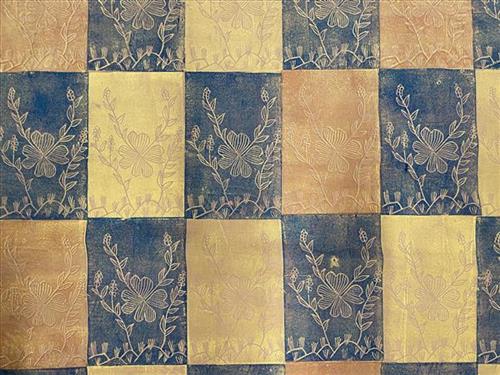
Stingray

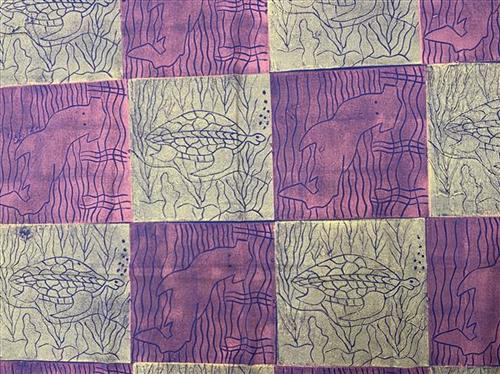
This is Debbie Pascoe’s first ever screen print design. Printed as a two colour design.

Debbie is from the Djinang language group in Maningrida, which according to the ABS Census has approximately 220 speakers.

111582143434


No Cigarette Lighter

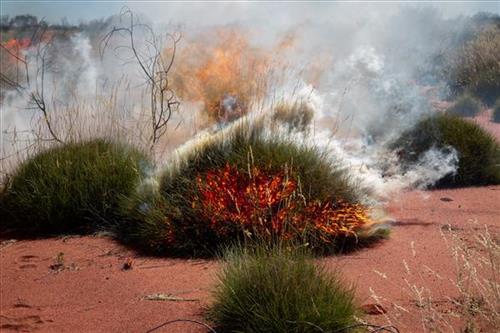
‘Long time ago when only Martu was living in their ngurra (Home, Country, Camp). They had no cigarette lighters. That’s how they make fire. Not just only for cooking but for many things. Straightening spears on hot ash, cooking lungi (witchetty grubs) on hot ash, minyarra (bush onions), and also smoking babies, keeping them strong for their future. And bringing country back to life. The ash from the bush fire can create a fertilizer that can create new food for the future. For the wildlife and the Martu. That’s how Martu been keeping country clean for long time till today.’

– Ignatius Taylor