110681416428


Wardel and Garnkiny


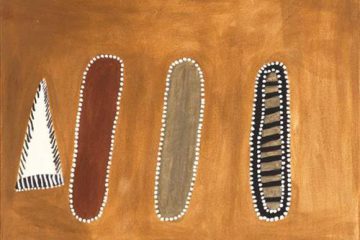
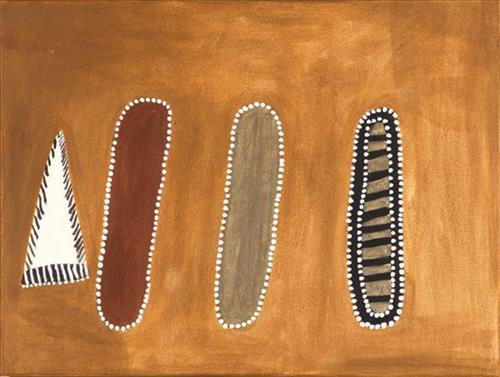
Mabel says – Well this the dream by Wardel and Garnkiny (star and moon). That’s what my mother and dad told me about that Dream.

the moon’s skin name was of Jawuru skin who loved his mother in-law which skin name was Nambin, but the people within the tribe told him he couldn’t love her as they were wrong skin. So he left with shame and climbed up a hill and he was looking from on top [of the hill]. He told all the people that they were going to die. He said that he would be the only one living. He cursed those people that he would be the only one coming back alive. He told them, while they were sitting down, ‘you are all going to die and I will be still alive, coming out. Every three days I will rise from the dead.’ They all died and he was the only one that stayed alive. He came back as the moon, for three days every month. This is Yariny country in Darrajayin (Springvale Station) which lies south of Warmun. This is Juli’s traditional country.

The figures within the painting are representations of Nambin the black headed python (far right) and the garnkiny which is located on the far left side in a white triangular. One of the two within the middle is the man of Juwurru skin and the other is represented as the hill of where the moon sits.
110681934128


Birnoo Country

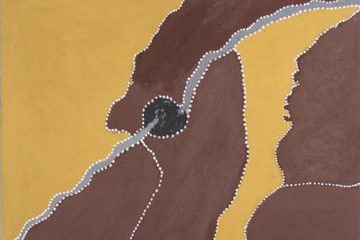
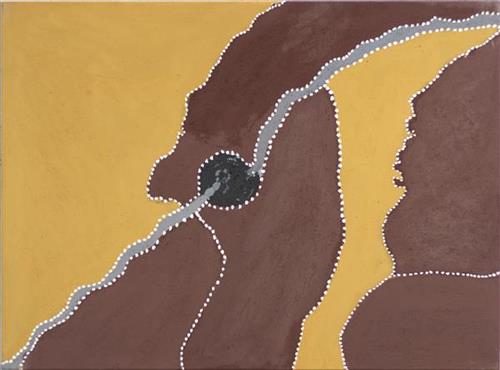
This painting shows Gordon’s country – Birnoo Country (Alice Downs Station). Birnoo is Gordon’s mother’s country. Gordon mustered cattle all throughout this country for many years – the way his father taught him to.

He became known as a skilled horsebreaker and buckjumper (rodeo rider). When Gordon worked as a stockman, he would often carry with him a saddle bag for his ochre collection. At the end of his mustering stint, he would have a bagful of ochres that he sourced from riding through his country.

He often paints the hills of Birnoo, which connects his to his mother’s country.

377810582143938


Kunmadj (dilly bags)

Kunmadj is the Kuninjku term for large woven collecting baskets, known as dillybags.

They are often made from the burney vine (Malaisia scandens), a strong, pliable plant that grows along the ground and into the canopy of monsoon vine thickets. The baskets are used to collect a variety of heavy foods, such as fish caught in conical fish traps or a good harvest of yams. As well as being of practical use, dillybags are of cultural significance to Arnhem Land people. Dillybags are totemic objects and they are associated with particular sites in the landscape.

377810582143929


Marebu (pandanus mat)

Works in fibre from the Maningrida region are widely recognised as some of the finest in Australia. Artists confidently push the boundaries of fibre craft and cultural expression, adapting traditional techniques and forms to produce strikingly inventive and aesthetically exquisite artworks.

Artists weave many different kinds of mats. Conical mats were traditionally used to shield babies from mosquitoes. Long flat mats were used for blocking creeks so that fish would be diverted into fish traps. A small triangular mat made of pandanus fibre used to be worn by women during ceremonial gatherings, tied around their back and covering them at the front. Mats are also used for wrapping and rinsing food in water.

Artists usually use kundayarr, pandanus spiralis, to weave decorative round or oblong mats, as well as the less common triangular and conical shapes. Weaving is physically hard work, now done only by women. They colour the pandanus using natural dyes made from the roots, leaves or flowers of plants within the weaver’s clan estate.

The radial woven patterns of the finest round mats appear to vibrate with colour, sometimes regarded as an aesthetic manifestation of deep cultural meaning, as there is a significant spiritual dimension to pandanus mats.

377810582143901


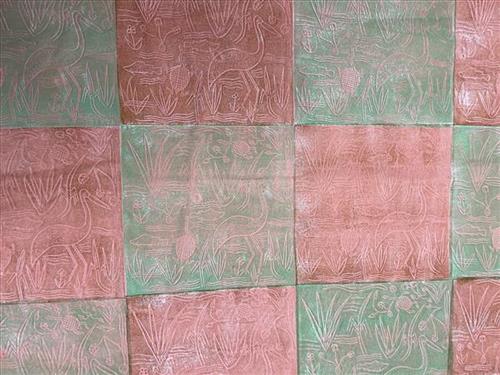
Kunronj (Freshwater Story)

This design depicts important manme (food) sources from freshwater environments on Abigail’s country and the implements used to gather these items.  The kunkaninjor digging stick featured in the design is used to dig for wayuk (waterlily) roots in billabongs, which are eaten fresh from the water or cooked on an open fire. The kunkaninj is also used to find and dig freshwater komrdawh (northern snake-necked turtle) that hibernate on the floodplains during the dry season.

Various fish species including the birlmu (barramundi), as shown here, are hunted with a spear or trapped inside a woven fish trap. This manme is carried within kunmadj (woven bags), which are made with fibres from the pandanus tree or sedge grasses, then enjoyed together by the family back at camp.

377810582143899


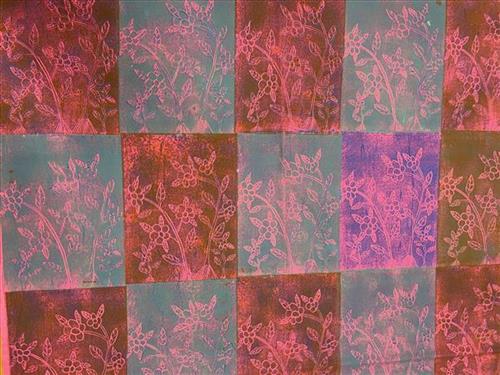
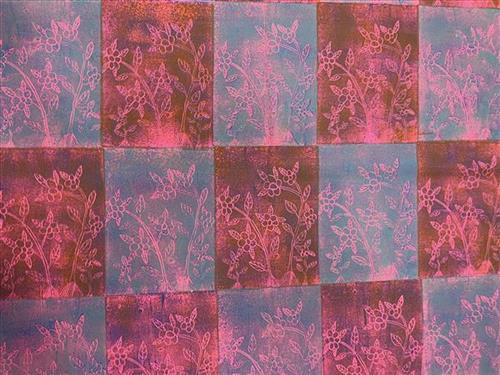
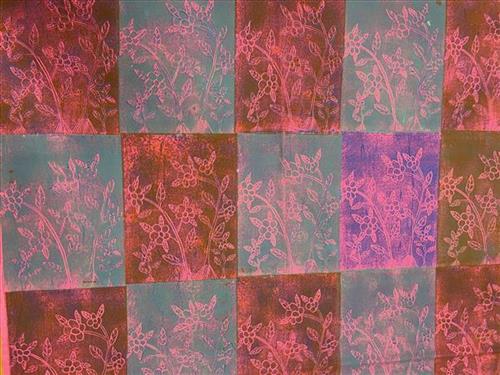
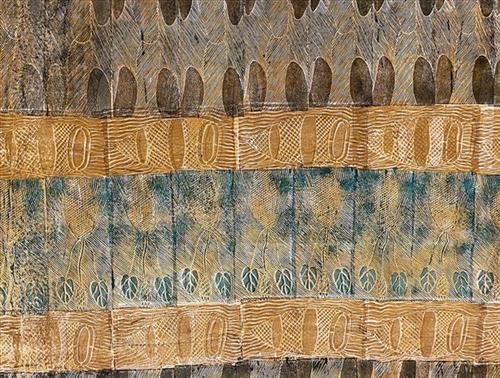
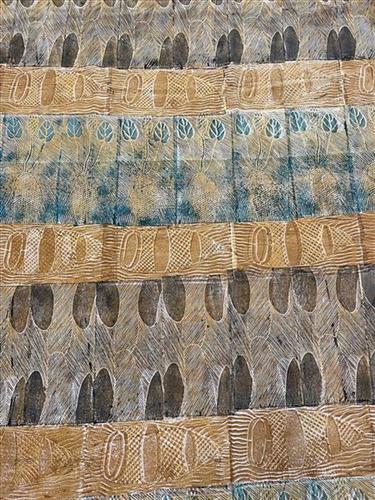
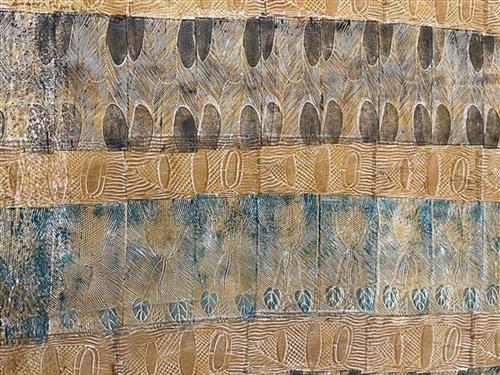
Manbirrbbirr (small bush flowers)

In Kuninjku the name manbirrbbirr is used for a number of densely flowering shrubs and small trees including Verticordia cunninghamii, yellow flowering Austromyrtus species and also Acacia platycarpa which also has dense white. 


377810582143894


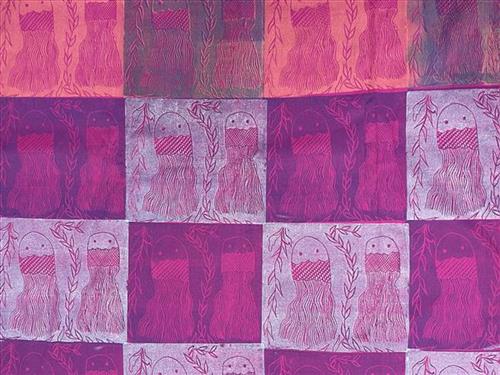
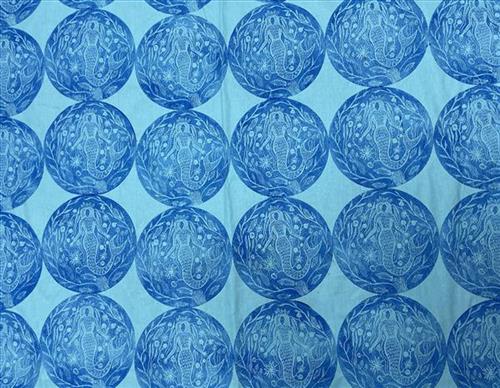
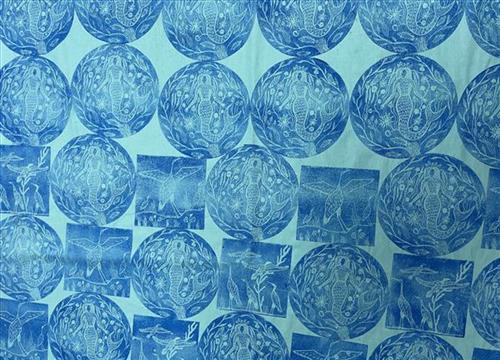
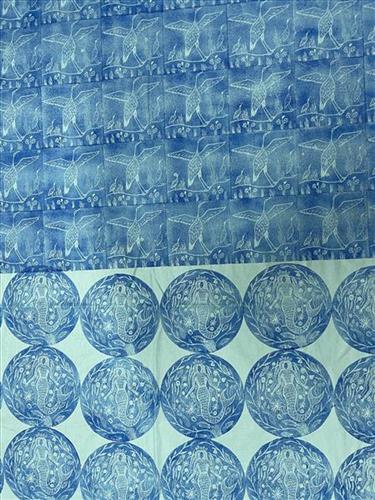
Ngalkunburriyaymi (Mermaid)

Ngalkunburriyaymi 

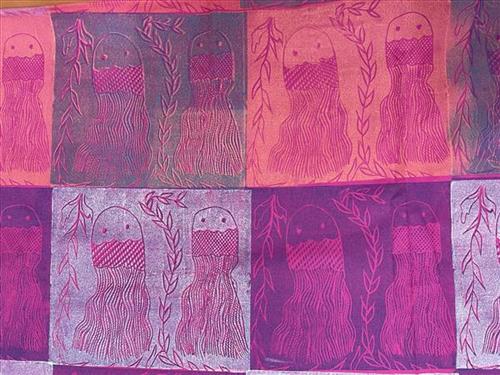
Kuninjku people call mermaids yawkyawk, but in my language, Kune, we call them Ngalkunburriyaymi (pronounced Ngaal gun borro yay mee).

The Ngalkunburriyaymi depicted in my artworks is from a place called Marra-yii (sp?).  There are too many Ngalkunburriyaymi living at this place.  They are always there and have been there forever. We can go camping and fishing at this place.  Marar-yii is a place in the river. They are freshwater. They are Duwa moiety. Same as the freshwater crocodile. 

My mum told me her story.  Ngalkunburriyaymi gave her a baby.  Ngalkunburriyaymi came to her in a dream.  They gave her my brother. In my mother’s dream, she went fishing Marra-yii and Ngalkunburriyaymi came to her to tell her she was having a baby.  She said to her I will give you a baby.  In a couple of months, you will be pregnant.

Ngalkunburriyaymi eats fish and waterlilies.

Owen Yalandja is my cousin from my father’s side and Lulu is my grandmother also from my father’s side. They are from different outstations, but we are family.  My Ngalkunburriyaymi story is connected to them but different.

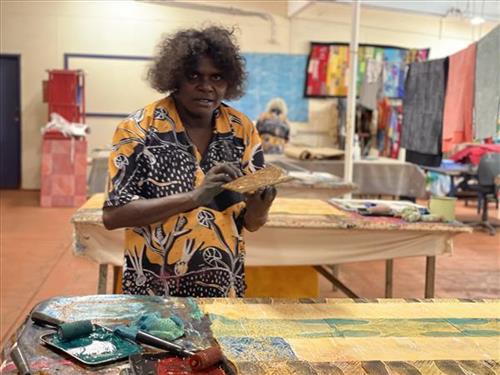
I love my mother’s story and it is why I made a lino plate. I print it on different colour fabrics – silk, linen and cotton. I like using lots of different colours.  I come from a family who have made artwork on bark and hollow logs using ochre—black, yellow, red and white. But at Babbarra Designs, we can use bright colours in our fabric designs.

377810582143860


Manbirrbbirr dja Kunwardde

Manbirrbbirr dja Kunwardde 

In Kuninjku the name manbirrbbirr is used for a number of densely flowering shrubs and small trees including Verticordia cunninghamii, yellow flowering Austromyrtus species and also Acacia platycarpa which also has dense white.

Kunwardde means stone, rock or money in Kuninjku.

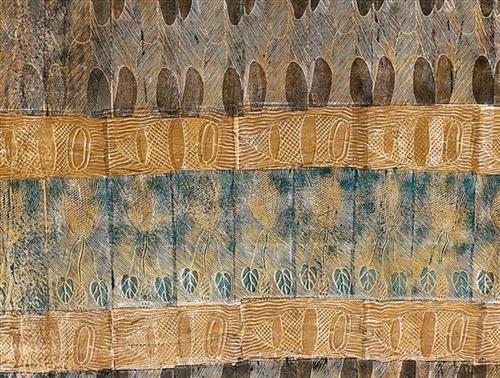
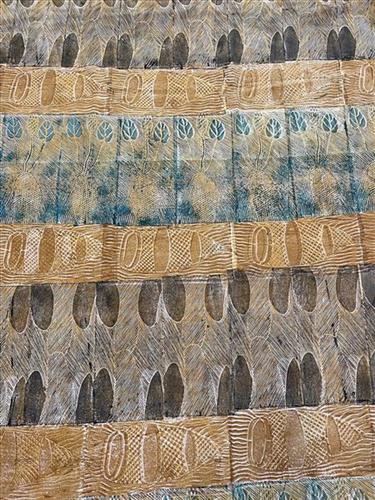
This design combines imagery of the country around Mumeka with common dry season bush flowers. 

377810582143859


Manbirrbbirr dja Kunwardde

Manbirrbbirr dja Kunwardde 

In Kuninjku the name manbirrbbirr is used for a number of densely flowering shrubs and small trees including Verticordia cunninghamii, yellow flowering Austromyrtus species and also Acacia platycarpa which also has dense white.

Kunwardde means stone, rock or money in Kuninjku.

This design combines imagery of the country around Mumeka with common dry season bush flowers.