110664980332
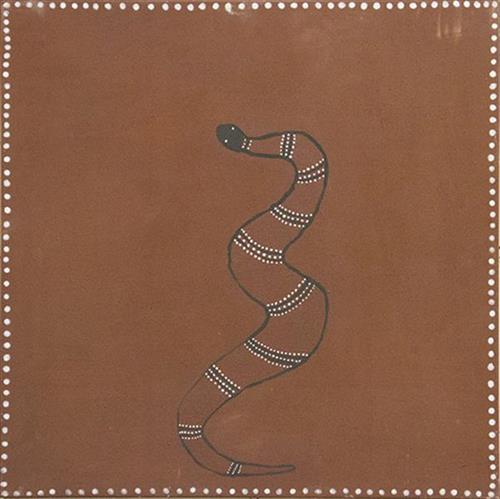
Snake Dreaming
110680604466
BARLNGINY
‘this is my grandmothers Country, we call is Barlnginy’
110680610530
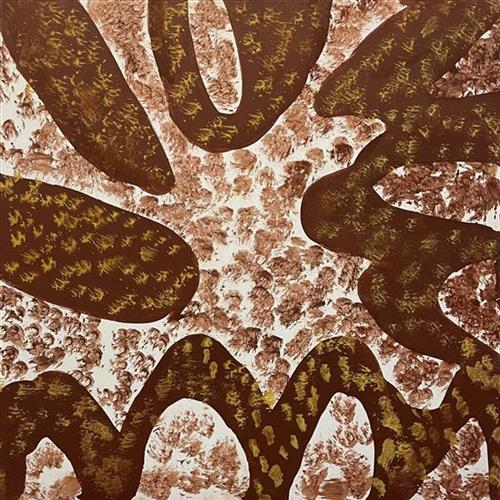
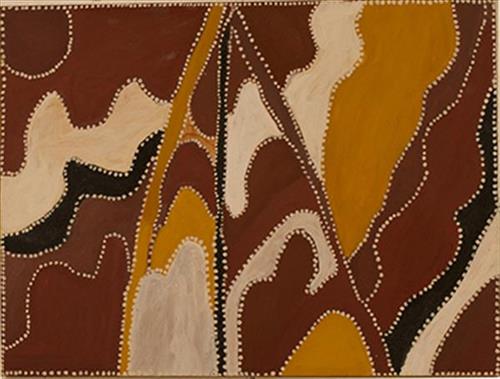
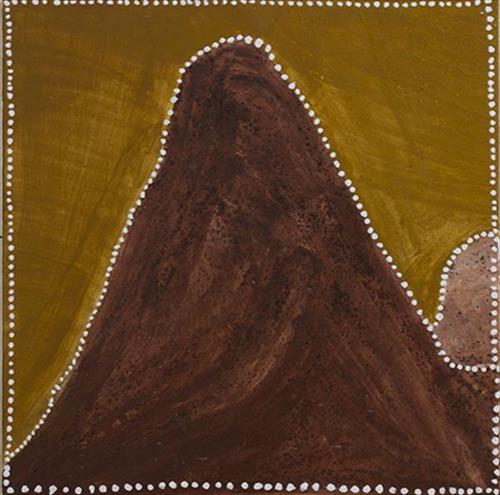
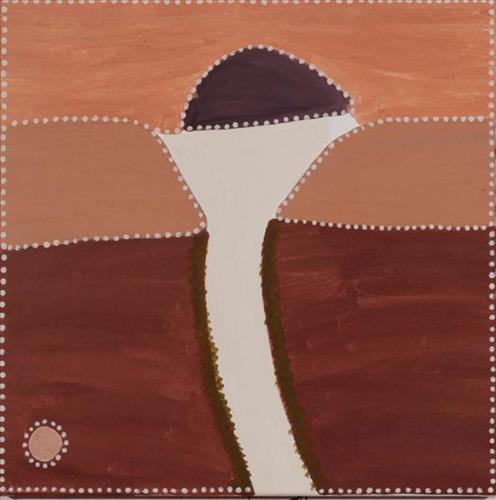
Rugun, Crocodile Hole
‘This la bottom side of Rugun [Crocodile Hole]. This good country that. That’s the water [that brown painted part in the middle]. You can’t swim there, too many crocodiles and that snake, but it’s a beautiful place to go.’
Peggy says this gorge at Crocodile Hole is a very good place for fishing. It has been an important hunting ground for her ancestors.
But she also said that in this river there is a big underwater cave, a long time ago a young girl from another Country went swimming here. She didn’t get welcomed before swimming here. That big water snake that lives there grabbed that girl and pulled her underwater into that cave. All the gardiya (white) divers came to try find her but they couldn’t. Peggy told them to look into the cave and thats where they found her, she has said that everyone always needs to be welcomed before going to another Country.
110681257822
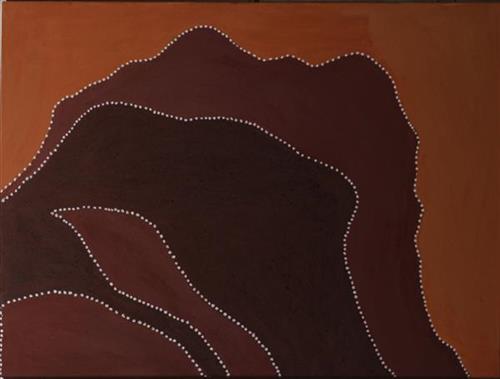
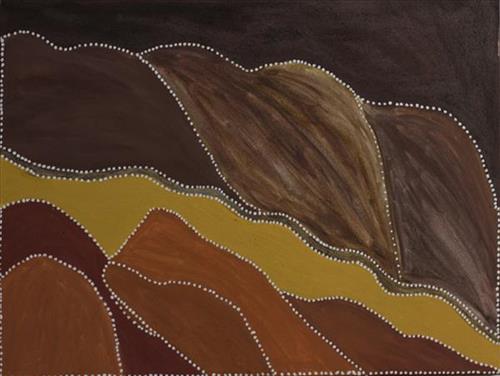
Birnoo Country
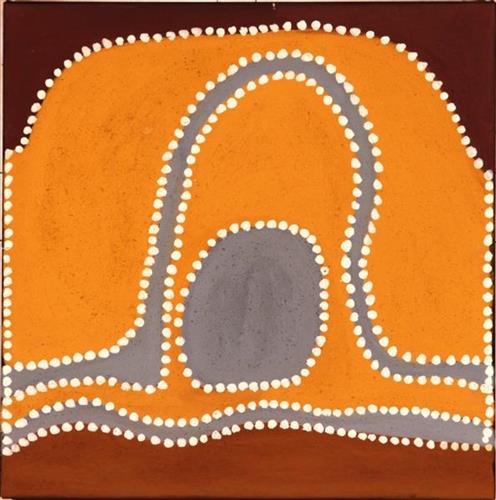
This painting shows Gordon’s country – Birnoo Country (Alice Downs Station). Birnoo is Gordon’s mother’s country. Gordon mustered cattle all throughout this country for many years – the way his father taught him to.
He became known as a skilled horsebreaker and buckjumper (rodeo rider). When Gordon worked as a stockman, he would often carry with him a saddle bag for his ochre collection. At the end of his mustering stint, he would have a bagful of ochres that he sourced from riding through his country.
He often paints the hills of Birnoo, which connects his to his mother’s country.
110681266565
Untitled
111981626017
Wak Wak
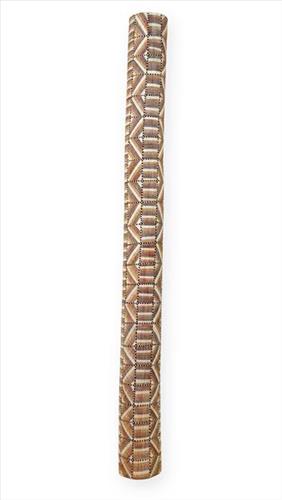
This painting depicts a sacred site at ‘Kurrurldul’, an outstation south of Maningrida.
The ‘rarrk’, or abstract crosshatching, on this work represents the design for the crow totem ancestor called ‘Djimarr’. Today this being exists in the form of a rock, which is permanently submerged at the bottom of Kurrurldul Creek. The ‘Djimarr’ rock in the stream at Kurrurldul is said to move around and call out in a soft hooting tone at night. Both the stone itself and the area around it are considered sacred.
The imagery represents the rock mentioned above at the bottom of Kurrurldul creek, which is the final transmutation of the dreaming ancestor ‘Djimarr’. Finally, the pattern used here is also the crow design used in the sacred ‘Mardayin’ ceremony, which is a large regional patri-moiety ceremony now rarely conducted in central and eastern Arnhem Land.
111981683985

Wak Wak
This painting depicts a sacred site at ‘Kurrurldul’, an outstation south of Maningrida.
The ‘rarrk’, or abstract crosshatching, on this work represents the design for the crow totem ancestor called ‘Djimarr’. Today this being exists in the form of a rock, which is permanently submerged at the bottom of Kurrurldul Creek. The ‘Djimarr’ rock in the stream at Kurrurldul is said to move around and call out in a soft hooting tone at night. Both the stone itself and the area around it are considered sacred.
The imagery represents the rock mentioned above at the bottom of Kurrurldul creek, which is the final transmutation of the dreaming ancestor ‘Djimarr’. Finally, the pattern used here is also the crow design used in the sacred ‘Mardayin’ ceremony, which is a large regional patri-moiety ceremony now rarely conducted in central and eastern Arnhem Land.