11594002173


Status: Stock


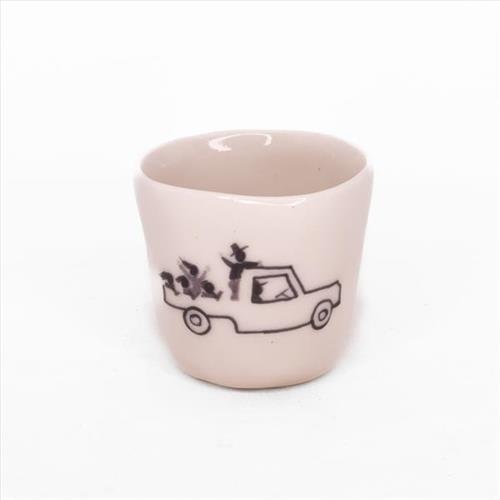
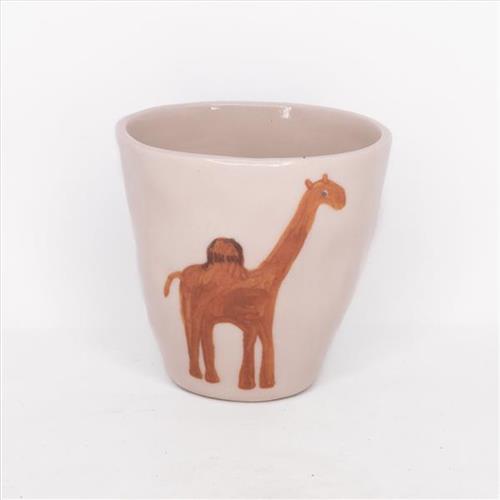
Cup Kuka Inthurra – Bush Ute

STORY 
_____________________________________________________________________________________

This cup has travelled all the way from our pottery studio in the community of Ntaria (Hermannsburg), Western Aranda Country, to you.

Bush cars are everywhere in Ntaria. All the family is in the ute, heading out for a picnic, excited to go fishing and swimming. 

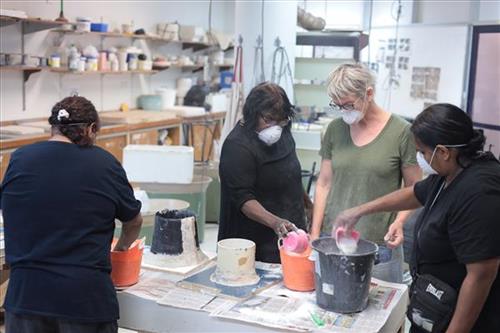
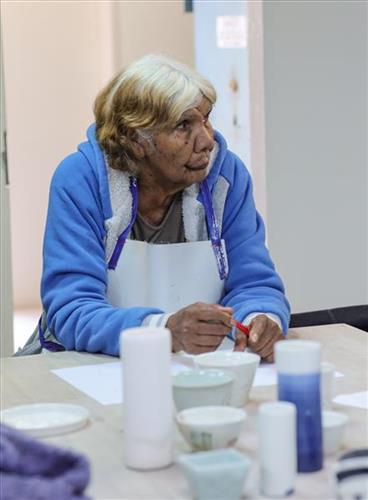
Hermannsburg Potters is an Aboriginal owned art centre located at the remote foothills of the MacDonnell Ranges, 130 kilometres west of Alice Springs in the Northern Territory. Taking inspiration from Country, culture, history and day to day life activities the Potters depict family, birds, animals, bush tucker, mission days, stories of Country and current life in Ntaria (Hermannsburg). 

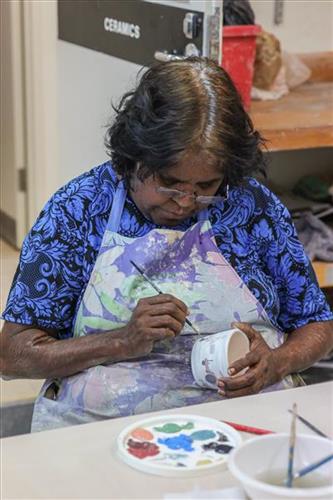
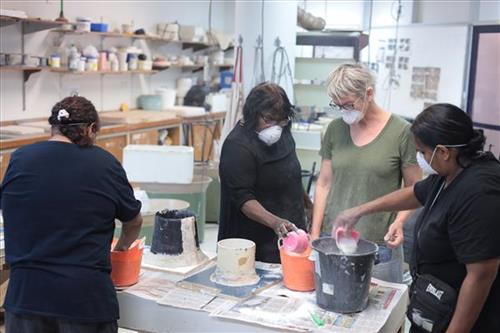
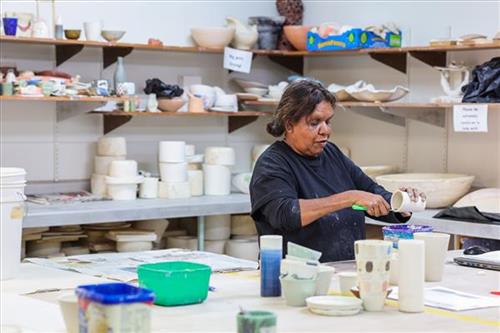
Our homewares were designed by the potters in a series of workshops at Charles Darwin University in Alice Springs, then produced by hand out here at our pottery studio in Ntaria. Each form and painting was created by one of our artists – keep reading to find out more about the artists who made your cup.  


ARTISTS
__________________________________________________________________________________________


FORM DESIGN:
Stephanie Ratara Ngala

Stephanie was born in Hermannsburg and then spent her early years of childhood at MutiTjulu, Uluru. Stephanie returned to Hermannsburg with her family at age 9. Stepahnie is the niece of  senior artist Anita Ratara and cousin to prominent artist Hayley Coulthard.

Stephanie draws on the landscape of Palm Valley, her fathers country. Stephanie is a strong emerging artist and dedicated member of Hermannsburg potters.


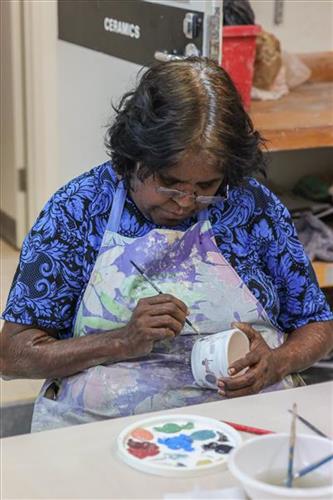
PAINTING DESIGN: Rona Rubuntja Panangka

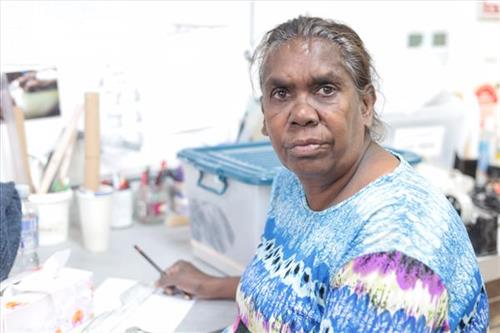
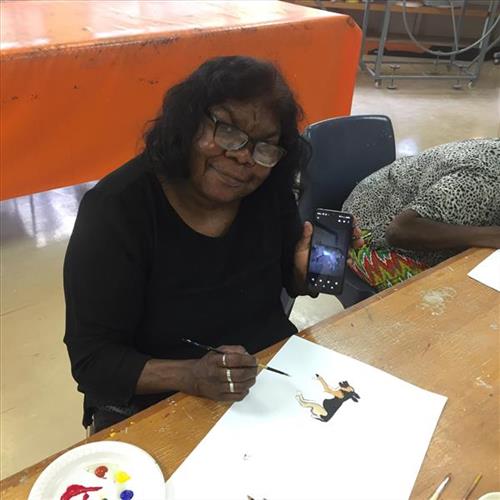
Rona Rubuntja was born in 1970 and is the niece of famous watercolourist and elder Wenten Rubuntja. She joined the Hermannsburg Potters in 1998, and has since established herself as one of the most prominent senior artists of the group, participating in over twenty exhibitions in Australia and internationally, including the highly acclaimed exhibition at the National Gallery of Victoria Our Land is Alive: Hermannsburg Potters for Kids in 2015/2016.

Rubuntja’s joyous style is distinctive, humorous and imaginative, and her storytelling ability comes across most strongly in her figurative work. She remains inspired by contemporary life in Ntaria, and her work often includes depictions of cattle and brumbies roaming country, heading out to the outstation in a Toyota, and collecting bush tucker with her extended family. 

Rona’s work was shortlisted for the Telstra NATSIAA’s in 2021 and she her work has also been shortlisted in The Design Files Awards for 2021. Rona Rubuntja’s work was selected for the prestigious Shepparton Art Museum Indigenous Ceramic Art Award three times, winning second place in 2008 for her work Palm Valley Muster.
11594002138


Status: Stock


Ntaria Cup – Antjatjinya (Camel)

STORY 
_____________________________________________________________________________________

This cup has travelled all the way from our pottery studio in the community of Ntaria (Hermannsburg), Western Aranda Country, to you.

 Antjatjinya mean camel in Western Aranda. Antja means ‘throat’ and tjinya means ‘long’, so a camel is referred to as a ‘longthroat’, or a humpa. Antjatjinya is good meat, good medicine for the body and for lowering blood pressure, makes you healthy.

Hermannsburg Potters is an Aboriginal owned art centre located at the remote foothills of the MacDonnell Ranges, 130 kilometres west of Alice Springs in the Northern Territory. Taking inspiration from Country, culture, history and day to day life activities the Potters depict family, birds, animals, bush tucker, mission days, stories of Country and current life in Ntaria (Hermannsburg). 

Our new range of homewares was designed by the Potters in a series of workshops at Charles Darwin University in Alice Springs, then produced by hand out here at our pottery studio in Ntaria. Each form and painting was created by one of our artists – keep reading to find out more about the artists who made your cup.  


ARTISTS
__________________________________________________________________________________________


FORM DESIGN: Karen Inkamala

Karen was born Hermannsburg and is now living in Tijikata. 

Coming from Inkamala family who holds a strong legacy in the Pottery, Karen has enjoyed painting throughout her life. Joining the Pottery in 2019 Karen is an emerging artist who exhibits natural handbuilding and slip-casting skills. 


PAINTING DESIGN: Rona Rubuntja Panangka

Rona Rubuntja was born in 1970 and is the niece of famous watercolourist and elder Wenten Rubuntja. She joined the Hermannsburg Potters in 1998, and has since established herself as one of the most prominent senior artists of the group, participating in over twenty exhibitions in Australia and internationally, including the highly acclaimed exhibition at the National Gallery of Victoria Our Land is Alive: Hermannsburg Potters for Kids in 2015/2016.

Rubuntja’s joyous style is distinctive, humorous and imaginative, and her storytelling ability comes across most strongly in her figurative work. She remains inspired by contemporary life in Ntaria, and her work often includes depictions of cattle and brumbies roaming country, heading out to the outstation in a Toyota, and collecting bush tucker with her extended family. 

Rona’s work was shortlisted for the Telstra NATSIAA’s in 2021 and she her work has also been shortlisted in The Design Files Awards for 2021. Rona Rubuntja’s work was selected for the prestigious Shepparton Art Museum Indigenous Ceramic Art Award three times, winning second place in 2008 for her work Palm Valley Muster.
11594002134


Status: Stock


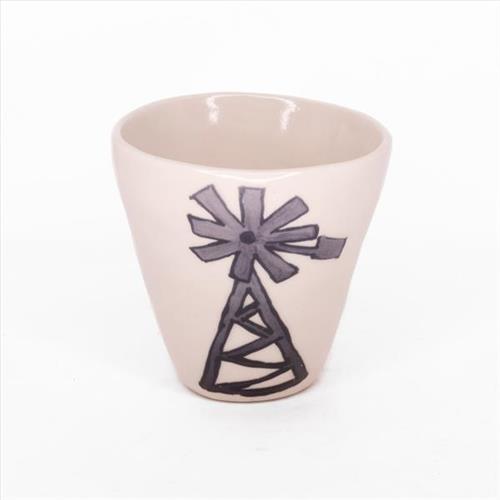
Ntaria Cup – Windmill

STORY 
_____________________________________________________________________________________

This cup has travelled all the way from our pottery studio in the community of Ntaria (Hermannsburg), Western Aranda Country, to you.

There are alot of windmills around Ntaria. 

Hermannsburg Potters is an Aboriginal owned art centre located at the remote foothills of the MacDonnell Ranges, 130 kilometres west of Alice Springs in the Northern Territory. Taking inspiration from Country, culture, history and day to day life activities the Potters depict family, birds, animals, bush tucker, mission days, stories of Country and current life in Ntaria (Hermannsburg). 

Our new range of homewares was designed by the Potters in a series of workshops at Charles Darwin University in Alice Springs, then produced by hand out here at our pottery studio in Ntaria. Each form and painting was created by one of our artists – keep reading to find out more about the artists who made your cup.  


ARTISTS
__________________________________________________________________________________________


FORM DESIGN: Anita Ratara Mbitjana

Anita Ratara was ‘born bush’ in the alukura (women’s camp) near Hermannsburg in 1943. She is the mother of prominant potter Hayley Coulthard. Anitas youngest daughter Alizha is an emerging artist with her niece Stephanie Ratara, June Campbell and grandson Lawrence Inkamala.

She attended the Hermannsburg Mission school, and later went on to work in the clinic, teaching the young mother’s who had children. She also recalls making moccasins, or ‘fancy work’, for the missionaries.

As a young woman, Anita showed natural ability in the arts and crafts, teaching herself to paint from an early age. She recalls being taught pottery by Naomi Sharp in the early 1990s, when the pottery program was located at the outstations. Anita continues today residing mostly at her outstation, Ipalala, today, but travels into the Pottery most days to continue her love of working with clay.

Anita mostly depicts Palm Valley in her work, the home of the Wily Wagtail Dreaming, who turned into a stone in the desert. Palm Valley is Anita’s grandfather’s Country, and she continues to assert her links with her Country through her art. 


PAINTING DESIGN: Stephanie Ratara Ngala

Stephanie was born in Hermannsburg and then spent her early years of childhood at MutiTjulu, Uluru. Stephanie returned to Hermannsburg with her family at age 9. Stepahnie is the niece of  senior artist Anita Ratara and cousin to prominent artist Hayley Coulthard.

Stephanie draws on the landscape of Palm Valley, her fathers country. Stephanie is a strong emerging artist and dedicated member of Hermannsburg potters.

11594002176


Status: Stock


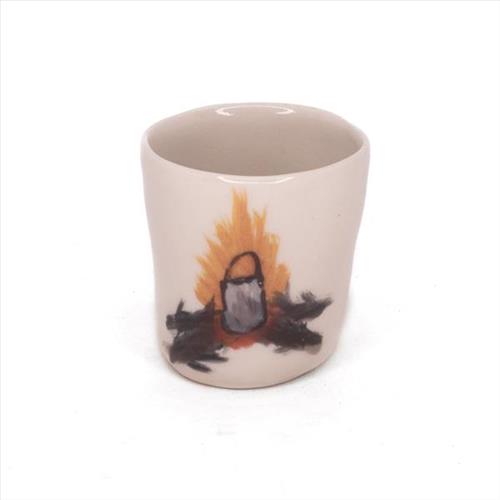
Cup Kuka Inthurra – Billycan

STORY 
_____________________________________________________________________________________

This cup has travelled all the way from our pottery studio in the community of Ntaria (Hermannsburg), Western Aranda Country, to you.

Billy tea is cooking on the fire. Ura means fire in Western Aranda. 

Hermannsburg Potters is an Aboriginal owned art centre located at the remote foothills of the MacDonnell Ranges, 130 kilometres west of Alice Springs in the Northern Territory. Taking inspiration from Country, culture, history and day to day life activities the Potters depict family, birds, animals, bush tucker, mission days, stories of Country and current life in Ntaria (Hermannsburg). 

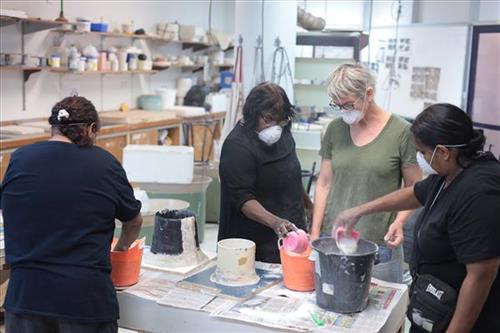
Our new range of homewares was designed by the Potters in a series of workshops at Charles Darwin University in Alice Springs, then produced by hand out here at our pottery studio in Ntaria. Each form and painting was created by one of our artists – keep reading to find out more about the artists who made your cup.  


ARTISTS
__________________________________________________________________________________________


FORM DESIGN: 
Stephanie Ratara Ngala

Stephanie was born in Hermannsburg and then spent her early years of childhood at MutiTjulu, Uluru. Stephanie returned to Hermannsburg with her family at age 9. Stepahnie is the niece of  senior artist Anita Ratara and cousin to prominent artist Hayley Coulthard.

Stephanie draws on the landscape of Palm Valley, her fathers country. Stephanie is a strong emerging artist and dedicated member of Hermannsburg potters.


PAINTING DESIGN: Judith Inkamala Pungarta

Judith Inkamala is the former Chair and senior member of Hermannsburg Potters Aboriginal Corporation, having joined the founding group of artists in 1993. Judith is an is an inspiring and respected leader in her community of Ntaria (Hermannsburg), for her unwavering dedication and commitment to intergenerational sharing of cultural and ceramic knowledge. Judith is also a proud, former member of the renowned Hermannsburg Choir.

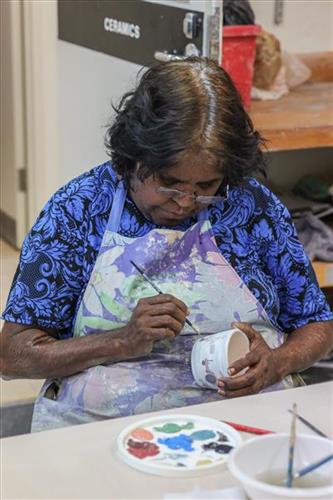
In her works, Judith depicts her lived histories and distinct Western Arranta Country. She sculpts and paints these visual histories and contemporary settings, speaking to her cultural beliefs, traditions and values. With near 30 years’ experience working with clay and underglazes, Judith’s work is a skilfully painted as the pot is constructed.

Like many Hermannsburg Potters and Western Arrarnta artists, Judith’s painting style was informed by the watercolours of Albert Namatjira and the artists working in Ntaria at this time. “I remember the old people painting on paper. Painting the watercolours. I was best friends with Gillian Namatjira. After school I went to her house. Albert, her grandfather, was painting watercolours. The ladies painted too.”

Since 1993, Judith has been a part of over 100 group exhibitions both nationally and internationally. Her work has been widely collected, held in public and private collections including Art Gallery of New South Wales, National Gallery of Victoria and National Gallery of Australia. In 1996, Inkamala was invited to participate in a cultural and pottery exchange with the Sasak Potters of Lombok, Indonesia. She also travelled to China in 2010 to showcase her pottery to ceramic artists for the collaborative exhibition Meou Art: Exhibition of Australian Indigenous Art in Shanghai. Judith has been a finalist of the NATSIAA awards three times. Judith’s achievements should also be measured in terms of the significant social and cultural contributions she has made to her community, her audiences and to Australian contemporary art.

1106931091


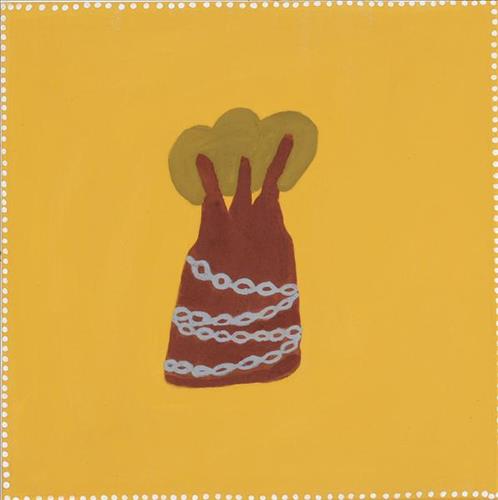
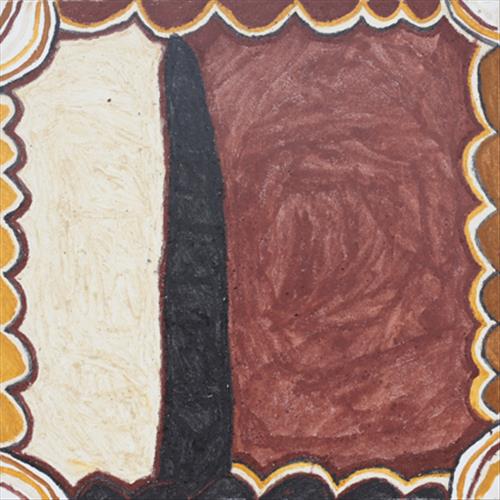
MY MOTHER’S BIRTH

This one, before my mother bin’ born. Today this boab is down at the school in Warmun.
 
Gardiya (whitefellas) never cared if they were breaking a woman or not. They made ‘em work.
 
One day the gardiya, maybe a police man, I don’t know, one day the gardiya grabbed my grandmother and chained her to that tree. They bin’ belting her, hitting her with a stick. She was feeling sick. She was feeling sick – for 5 or 6 days she was feeling crook.
 
And that vegi garden that used to be down at the junction, that’s where she had my mother. Mrs Radigan found them in the afternoon when she was collecting cabbage and carrots for dinner. She heard a baby crying. This baby was my mother.
 
My grandmother was all swollen up. She had died but the baby was alive. Mrs Radigan been cut my mother’s cord and saved her. The Radigan’s grew her up. My mother spoke high English, but she also spoke Gija. Me, I speak like my father.
 

1106932125


MARLAM, MARLAM

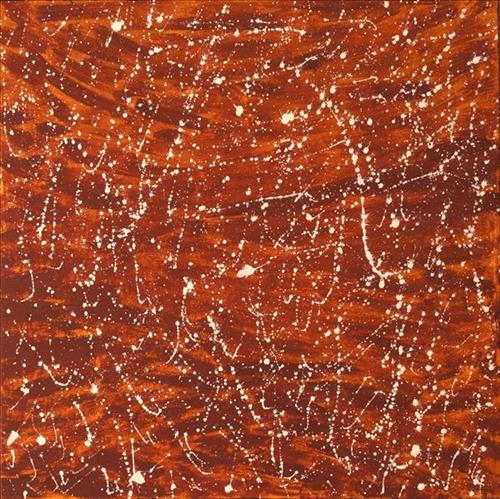
Respected Warmun elder Peggy Patrick says, “Marlam that one, Finger painting. When we paint our bodies, that’s the one, our body painting. I made that, it’s my story. When we have corroboree, that’s the body painting. I wanted to try it and it’s a good one, he’s all right.”
Peggy has painted this work in the same style that she paints the body for corroboree and ceremony using her fingers (marlam) and by spitting paint out her mouth.
 

1106920186


Yarrunga

As growing up me and my family used to go looking for gold and we put it in Milk Tins and bury the tins under ground, til we need it for rations or buy a Toyota for  whole family to go bush. The Warmun mob used to come visit us [at Yarrunga Chinamen’s Garden] for a few days, sometimes weeks. When that flood come we run up. Run to Halls Creek. We been camp then, camping there and go back, back Chinamen Garden. We been go there and camp, and see that cement where them houses used to be. That cement on the side, and that hole in the middle where houses used to be. They’re building now, building for us. I did them [painting] in Halls Creek. That’s my memory, Chinamen Garden after the flood, when I been in Halls Creek.

1106920377


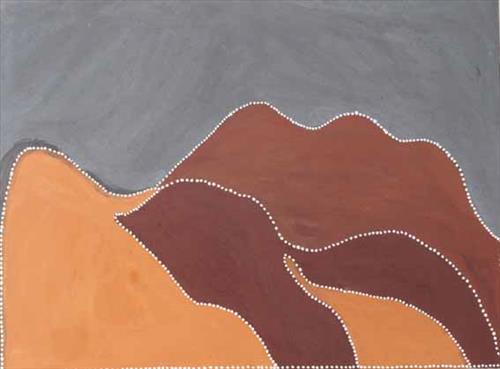
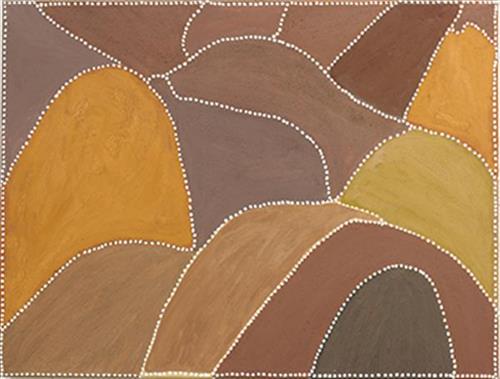
Birnoo Country

This painting shows Gordon’s country – Birnoo Country (Alice Downs Station). Birnoo is Gordon’s mother’s country. Gordon mustered cattle all throughout this country for many years – the way his father taught him to.

He became known as a skilled horsebreaker and buckjumper (rodeo rider). When Gordon worked as a stockman, he would often carry with him a saddle bag for his ochre collection. At the end of his mustering stint, he would have a bagful of ochres that he sourced from riding through his country.

He often paints the hills of Birnoo, which connects his to his mother’s country.

110673303420


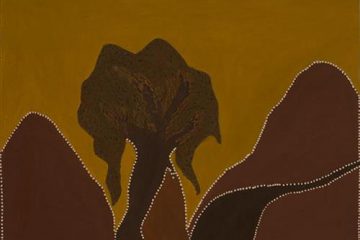
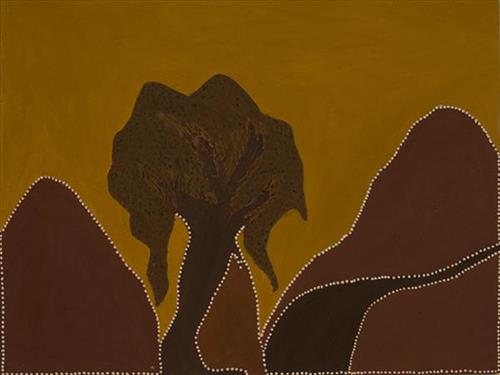
Joogoorrool (Bush Orange) – Birnoo Country

This painting shows Gordon’s country – Birnoo Country (Alice Downs Station). Gordon mustered cattle all throughout this country for many years – the way his father taught him to. The central tree is Joogoorrool, or the Bush Orange tree. Gordon says the tree bears fruit during the ‘hot time’ (November to March), and it is growing up on the rocks. However, the tree has been observed to bear fruit at other times, indicating the changing climate in Gija country. 

110673324926


Birnoo Country

This painting shows Gordon’s country – Birnoo Country (Alice Downs Station). Birnoo is Gordon’s mother’s country. Gordon mustered cattle all throughout this country for many years – the way his father taught him to.

He became known as a skilled horsebreaker and buckjumper (rodeo rider). When Gordon worked as a stockman, he would often carry with him a saddle bag for his ochre collection. At the end of his mustering stint, he would have a bagful of ochres that he sourced from riding through his country.

He often paints the hills of Birnoo, which connects his to his mother’s country.