


377810582139832
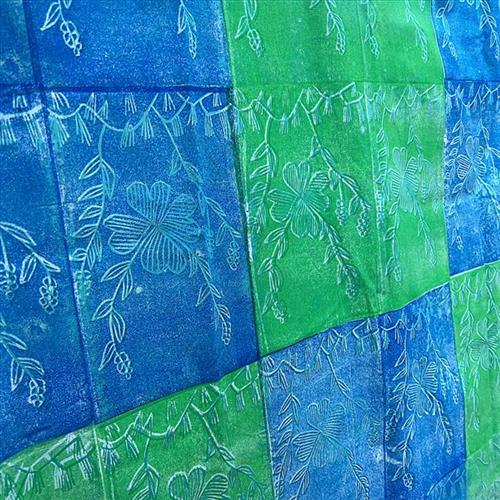
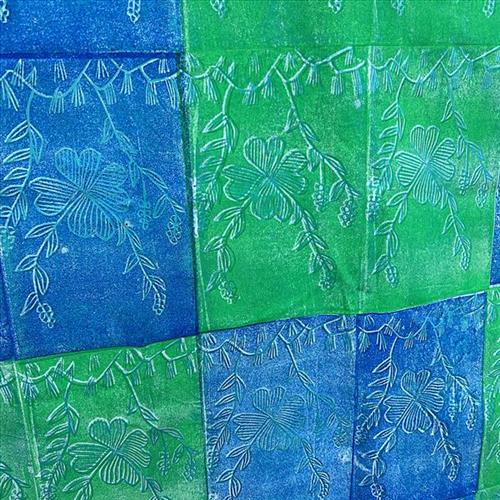
Bush Flowers – Abigail Namandja
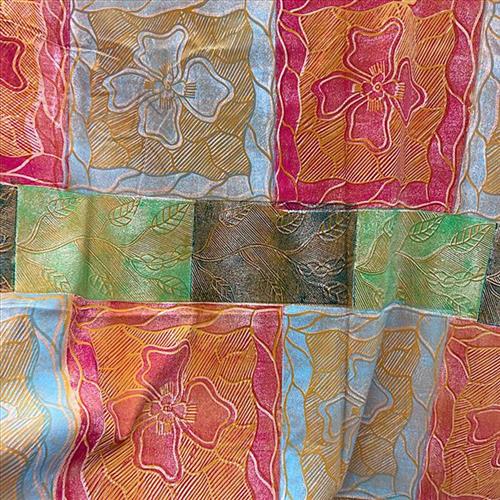
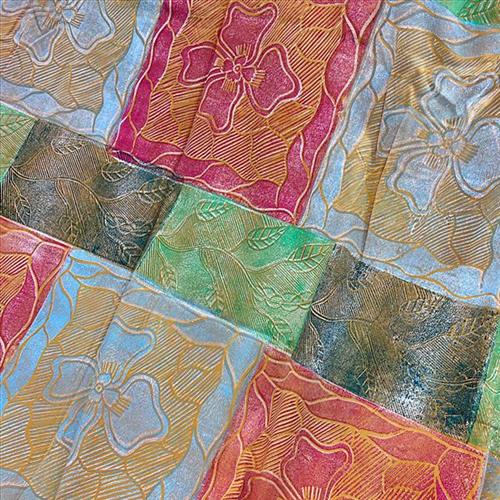
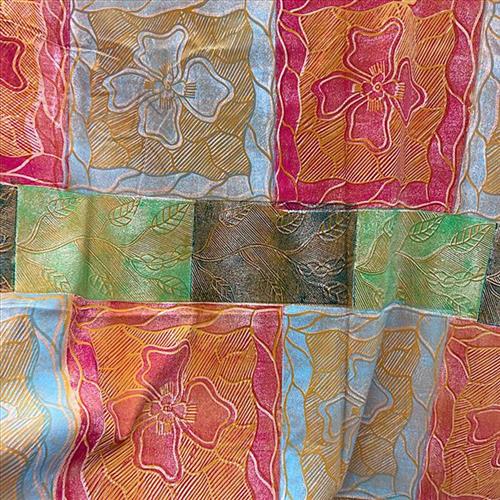
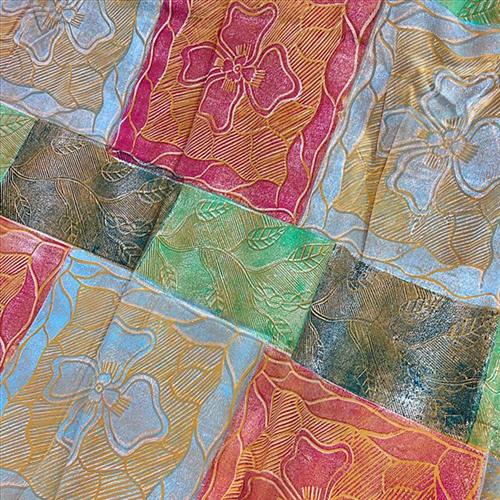
I love printing bush flowers. We have lots of types on my Country. Some are used for different cultural purposes.

377810582140188
Wak Wak – Melba
This design depicts a sacred site at ‘Kurrurldul’, an outstation south of Maningrida.
The ‘rarrk’, or abstract crosshatching, on this work represents the design for the crow totem ancestor called ‘Djimarr’. Today this being exists in the form of a rock, which is permanently submerged at the bottom of Kurrurldul Creek. The ‘Djimarr’ rock in the stream at Kurrurldul is said to move around and call out in a soft hooting tone at night. Both the stone itself and the area around it are considered sacred.
Finally, the pattern used here is also the crow design used in the sacred ‘Mardayin’ ceremony, which is a large regional patri-moiety ceremony now rarely conducted in central and eastern Arnhem Land.


377810582139947
Bawaliba and Ngalyod (Rainbow Serpent)
‘My Kikka (mother), when she was alive, she would tell me these stories. I was just a little girl and she would tell us the stories in her language Gurrgoni.
In the camps there were boy and girl Bawaliba, and old Bawaliba too. They loved to dance by the firelight, keeping rhythm with a stick. They had lots of hair, they were really tall and skinny, with spots on their bodies. The Bawaliba lived a long time in peace. They were the only spirits on their country and so they were never disturbed.
One day, a long time ago, the Bawaliba were out hunting and they saw a large snake- they didn’t know then but she was the Rainbow Serpent. They were really scared, they had never seen that. creature before. She was really beautiful- like a normal king brown snake but with a rainbow from the sky on her back. The rainbow serpent was really hungry, and she could smell the Bawaliba from a long way away. She was out looking for food. The Bawaliba tried to stop Ngalyod coming for them but she was just too quick. She snuck up behind the Bawaliba and before they could get away she ate them up. When she was really full and couldn’t eat anymore Bawaliba she changed the rest of them into stone. Still til this day, the Bawaliba stay on that same country as stones.’ Lucy Yarawanga

377810582139937
Ngaldadmurrng (Saratoga)
This design tells the story of Saratoga dreaming, a freshwater fish that swims on the edge of creeks and rivers. This design is the Saratoga dreaming from the Mularra songline. Where the Saratoga we call Murdulngu, Danguny travelled from Malmyangarnak billabong to Mirrigatja.
This Billabong was owned by Murdulngu (Saratoga) before the water was taken over by shark Barlangu he came all the way from east to north then to west. He was travelling when that water level was high he went up the stream but he couldn’t make it. This Barlangu came from Murruggun clan but really this shark came from long way all the way south. This story is connected through Mularra songline it represents many clans.
With permission from clan elders, Carol is able to pass on this family knowledge through her passion in textile and art.
‘I am proud of my first design, I want to keep this design for future, for my children and grandchildren so they remember this story, this story is a big part of the mularra songline’ Carol Liyawanga Campion

377810582140336

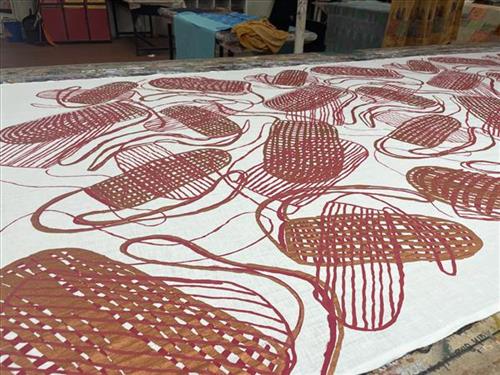
Kunmadj
Kunmadj is the Kuninjku term for large woven collecting baskets, known as dillybags.
They are often made from the burney vine (Malaisia scandens), a strong, pliable plant that grows along the ground and into the canopy of monsoon vine thickets. The baskets are used to collect a variety of heavy foods, such as fish caught in conical fish traps or a good harvest of yams. As well as being of practical use, dillybags are of cultural significance to Arnhem Land people. Dillybags are totemic objects and they are associated with particular sites in the landscape.

111582140347
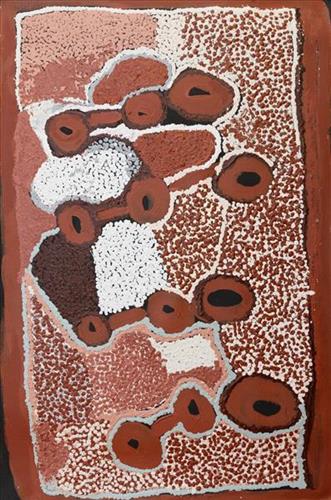
Pintu- Pintu – Kumpaya Girgaba
“We were at Pintu-pintu when all of a sudden we heard a rumbling noise like an earthquake. When I heard that noise, I set the little one down [her children] and saw for the first time a grader and there was a Toyota in the front. That whitefella [Len Beadell] had fruit, flour and tucker… He gave all the little kids fruit – apple, orange, tomato, plum, a whole sheep. The kids made the biggest waru (fire) for the fruit and cooked it. When they came back from playing games, they tried to take the fruit out of the fire because it should be cooked and [it] was all soggy and it had cooked away to nothing, there was nothing there to eat. That’s when they got picked up.”
– Kumpaya Girgirba (Girgaba), as translated by Ngalangka Nola Taylor
Pintu-pintu is a rockhole located south east of Parnngurr Aboriginal community and within in the Mckay Range region. As Kumpaya here describes, this site is especially significant to her as the location where she first had direct contact with a whitefella, Len Beadell. He was surveying a testing range for an intercontinental ballistic missile called the Blue Streak, and graded a road from Woomera, in South Australia, to the Percival Lakes. In the process he encountered some of the last Martu still living in the desert. For them, the sight of Beadell’s bulldozers and graders churning up the Country evoked a frightening scene. Soon after this meeting she was picked up with her husband and children and another twenty or so Martu at nearby Parnngurr Rockhole by the Native Welfare Department. From there they were taken to Jigalong Mission. Collectively the group had come to the decision to move to the mission as a result of an extended drought, which had caused a scarcity in food and water resources. They also wanted to join their families, who had already moved to Jigalong.

111582140344
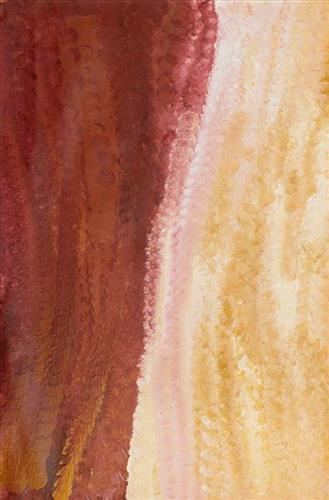
Parnngurr
“We were climbing Parnngurr hill; we were frightened. Kartiya (Europeans) would walk around, trying to catch Martu people. We would run up the hill and hide. We watched them catch people. We were eating flour that white people gave us. It was horrible. From [Parnngurr rockhole], we got in the truck and went with the white people to Jigalong. Kumpaya [Girgirba], Jakayu [Biljabu] and Ngamaru [Bidu], we were all on top of the hill looking at the white people.”
– Bugai Whyoulter
Parnngurr rockhole is located 370km east of Newman. This site lies within Bugai’s ngurra (home Country, camp), the area which she knew intimately and travelled extensively with her family in her youth. For many Martu, including Bugai, Parnngurr also signifies the location at which their nomadic bush life came to an end. Poignantly described here by Bugai, it was here that a group of 29 Martu were picked up by the Native Welfare Department to be taken to Jigalong Mission in 1963. Collectively the group had come to the decision to move to the mission as a result of an extended drought, which had caused a scarcity in food and water resources. The group also wanted to join their families, who had already moved to Jigalong.
At the junction of three linguistic groups; Manyjilyjarra, Kartujarra, and Warnman, Parnngurr rockhole was a critical and permanent source of water during the pujiman (traditional, desert born) era, supporting many ritual large gatherings. During this nomadic period families stopped and camped here depending on the seasonal availability of water and the corresponding cycles of plant and animal life on which hunting and gathering bush tucker was reliant. At Parnngurr and other similarly important camp sites families would meet for a time before moving to their next destination. Parnngurr rockhole and its surrounds are physically dominated by distinctively red tali (sandhills), covered sparingly with spinifex and low lying shrub.
Parnngurr community, just north of Parnngurr rockhole, was created during the Return to Country movement of the 1980s, coinciding with the recognition of Aboriginal land rights and native title. The community was named after its’ original primary water source. Until recently the community was widely known as Cotton Creek, after the European name for the ephemeral creek running alongside the community.