115682158817


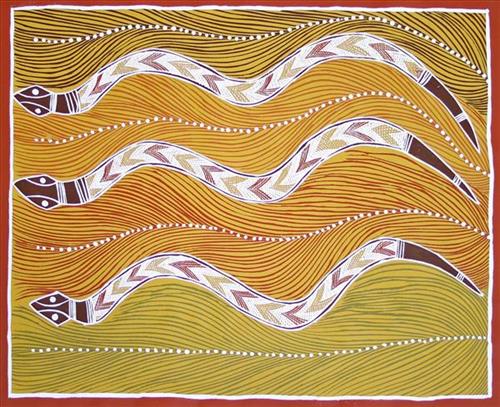
Dhanbaniny (King Brown Snake)

This painting depicts Dhanbaniny (King Brown Snake). This is a Dhuwa dreaming and is the totem for Borruwa and her two sisters Burruna and Djampalil. Dhanbaniny can be found across the dry landscapes of NE Arnhem Land particularly during the dry season. 

115682159131


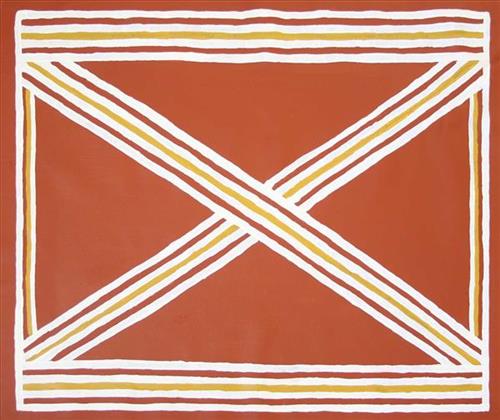
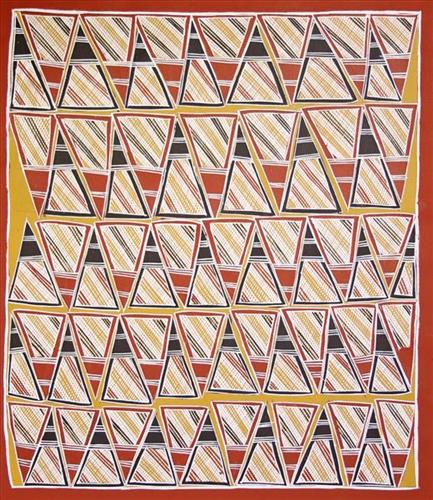
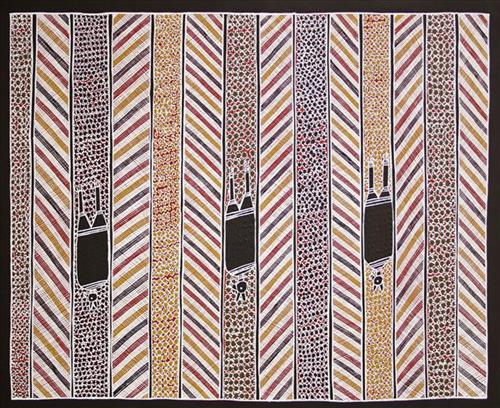
Garrawura Minyt’ji

Each Yolngu clan was created by their ancestors as they moved along the country whilst they were singing, dancing and talking. Each time they arrived at a new land, they created distinct rom (culture, law). A part of this rom is miny’tji (art, totemic designs, colours). Each clan has a distinct miny’tji, and Yolngu can tell where someone is from by their miny’tji. The ancestors passed down sacred designs, some of which are secret or have secret meanings. These designs were traditionally painted on people’s bodies, or carved into sacred objects. More recently, they have been painted on canvases and barks. This painting is of Dhunbaḻmirriwuy’s miny’tji. It uses the colours which were passed down to her from her ancestors. The circles represent waterholes, while the lines represent the land. This design is a sort of coat of arms for the Garrawura clan.

115682159677


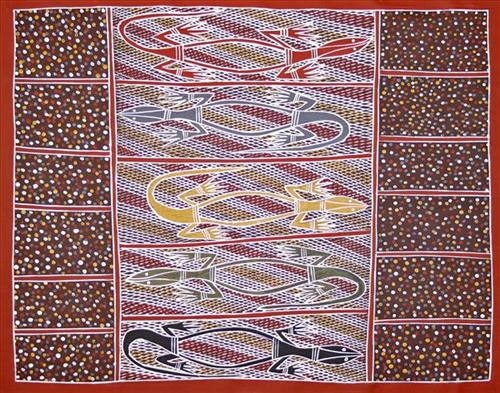
Djarrka (goanna)

Djarrka is a freshwater goanna that can be found in small inland creeks and feeds on small crabs and yabbies. People hunt this goanna for food and they can be very delicious to eat, like other meats you can find around and in the creek. Djarrka is a Dhuwa water goanna and it plays a big part in some ceremonies. In nearly all Liyagawumirr Dhuwa ceremony like Djungguwan, Ngulmarrk, and Liyagalawumirr Ngarra, Djarrka is represented. The ceremonies are very secret to both women and children and those not in this group and unconnected to Yolngu lifestyle and their beliefs. It is very taboo to speak about.

115682160061


Ngambi (limestone spearheads)

This painting illustrates elements from the Wagilag Sisters’ Creation story.  Ngambi are the stone spear heads that the sisters collected at Ngilipitji on their way to Mirarrmina.

The Wagilag Sisters’ Story is primarily an account of how in the distant past the two Wagilag Sisters came out of the southern interior and came across the countryside to the Liyagalawumirr waterhole at Mirarrmina. There the younger sister profaned the pool of the great Python by accidently allowing her  blood to fall into the waterhole. Because of this the women and the children were swallowed by the Olive Python, Wititj, along with all the water from the waterhole. The other snakes heard about this and demanded Wititj spit out the sisters. Wititj vomited the women out, along with the water, creating the first monsoon rains.

115682161656


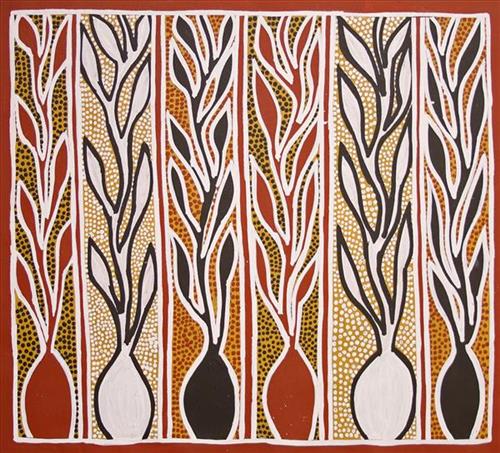
Baltji (Yam)

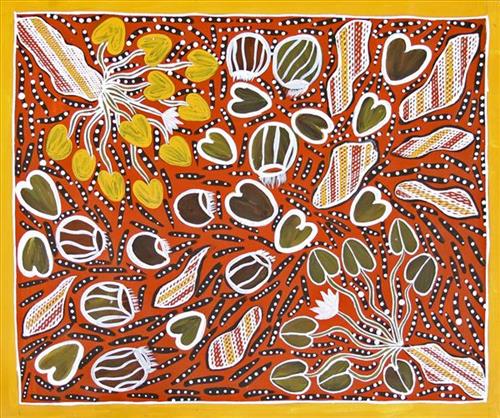
This painting depicts Baltji (Yam) which has been a reliable food source for Yolngu people for many centuries. Baltji can be found across the different landscapes of East Arnhem Land and are only harvested seasonally. 

115682161959


Giny-giny (Catfish)

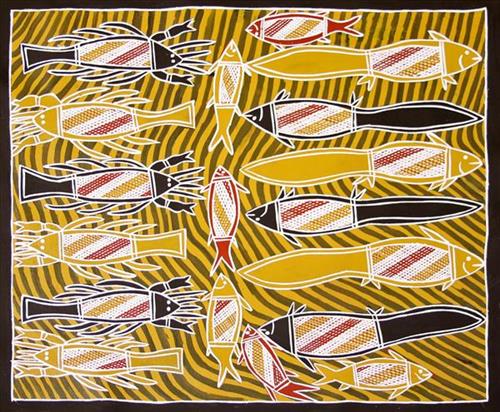
Peter Gambong is painting the Giny-giny (Catfish) story from his Gupapuyngu ancestry. The Giny-giny is a particularly significant animal to Peter, and the Giny-giny song line is one of two song lines which Peter uses in ceremony. Peter would perform the Giny-giny song line at a Gupapuyngu funeral to allow the dead person’s spirit to return to their homeland. Peter would also perform the song line at a Mandayala (coming of age ceremony) for a Gupapuyngu boy. The Giny-giny is not scared of any other animal, because of the barbs on it’s face. During war time, Peter’s tribe mimic the Giny-giny’s barbed heads by holding their spears out as they approach their enemies.

115682162429


Woven Mat

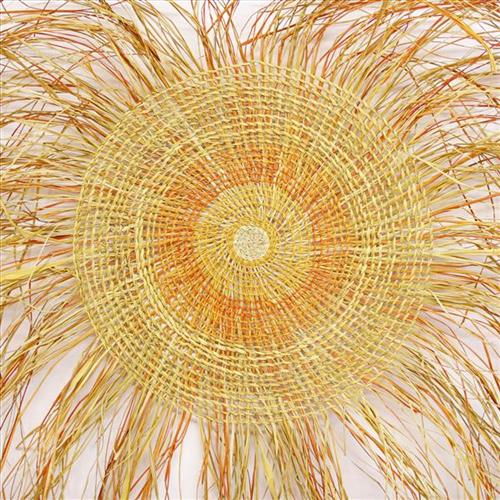
Traditionally, Nganiyal (conical mats) were used as an insect screen when erected, and as a sitting mat when folded. They are used in Ceremony as well as a functional item. 

Nowadays, artists weave many different shapes including flat, round and oblong. 

115682164179


Dakawa (crayfish)

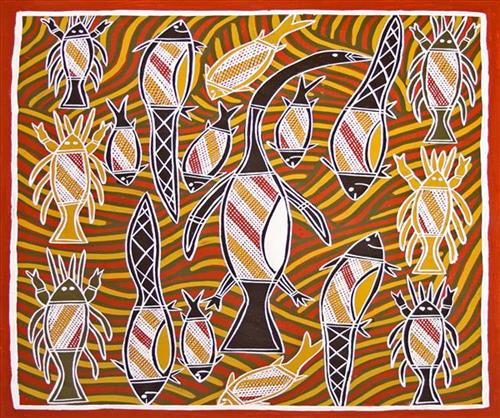
Yolngu collect Dakawa from the side of the river or swamp where it’s muddy and there are lots of them. They break the claws off, throw them on the fire and eat them. Dakawa are also good food for turtles. 


115682166544


Baltji (Yam)

This painting depicts Baltji (Yam) which has been a reliable food source for Yolngu people for many centuries. Baltji can be found across the different landscapes of East Arnhem Land and are only harvested seasonally. 

115682166741


Warrnyu Dhawu (Flying Fox Story)

Back in the Creation time, Warrnyu (Flying Foxes) once lived, like men, in the cave at the place called Kurrki Warrnyu Yirri Djaringal (they also lived in caves called Wadatilmurr & Gurngurmirrngu). Warrnyu lived in these caves for many years and then one day Djanyarr (The Dog), an ancestral being in the form of a man, came along. He was looking around for a place to live. Djanyarr heard the sound of a Flying Fox screaming. He went down to the cliff and pushed the rock and the water came out at the Ganalbingu place called Gurrkawakarrmurr. He then went into the cave and into the sacred hole, frightening all the Flying Fox away. When he went into the hole he left his dilly bag in the tree and went out on the other side of the sacred cave and leaving his spear and woomera. He sat there for a long time. The Dog made three streams and the water went inside the cave. Two of these streams are good drinking water. In the middle it is a sacred water. No-one drinks from the middle of the stream. Children, men, women, young boys or girls are not allowed to drink from the middle of the stream. If they drink the water from the middle of the stream they will go grey too early.

At Kurrki Warrnyu Yirri Ngilaya Djaringal, the Flying Fox made himself into a young man… that’s what Aboriginal people do today. They have ceremonies and dances to make the young boys into men. The songs are called Yirrarwu, Gulumu, Rruburra and Burryun. Dhapi (initiation ceremony) happen today because the Warrnyu (Flying Fox) people performed them a long time ago before the Yolgnu people. It was the Warrnyu people who first performed circumcision of the young boys to make them into men. It all happened at Kurrki Warrnyu Yirri Ngilaya Djaringal, this is how this place got its name.

Leaving behind the cave at Kurrki Warrnyu Yirri Djaringal, the Dog travelled west across the Arafura Swamp and came to Djalkulmurr (Mount Delight). From there he travelled north and came to Dunganda (a hill situated a few kilometres east of Ramingining). There he met a female Dog, then they both headed north and came to a place called Garanydjirrmurr where they spoke the Mildjingi language. From Garanydjirrmurr they changed their direction and went west through Guliny’barra, Burgumara and onto the plains. When they reached the plains they smelled something cooking, way up in the north – at Wessel Islands. The aroma they smelt was so enticing that they decided to go there. Lungurrma (the north-east wind) was carrying the smell. One Dog headed north again, but the other Dog decided not to go with him and went back the opposite way. The first Dog that went to Malwanatharra (Sandy Point) went into the sea following its nose to wherever the smell was coming from. It is believed that this Dog still lives in the sea…