225682240667


KAMBI – Fashion Collection, Lila Creek – Baral Print

I am a Nyungkul  woman from Shipton’s Flat, my mother’s Country.  My dad was a  Kaanju man from the Coen area.

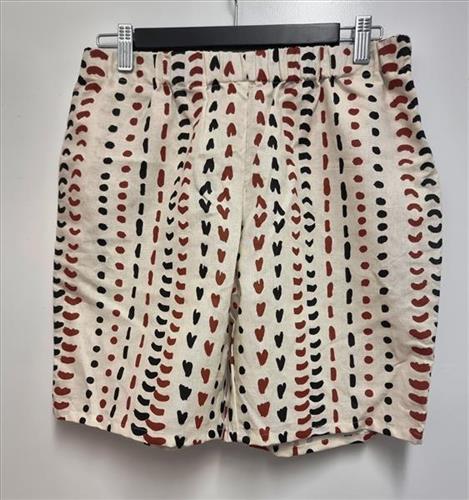
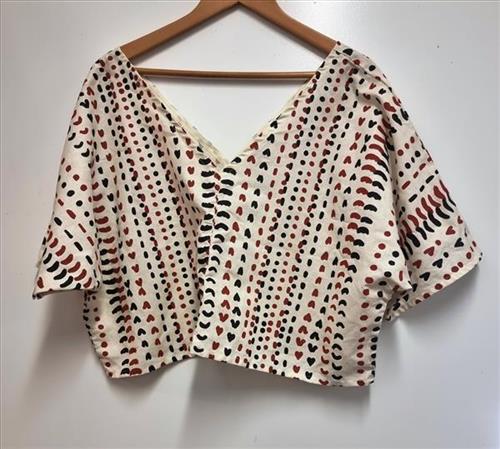
This fabric print represents Baral which means tracks and what animals are travelling around. Some of the tracks we see are from kurriyala- snake, walkarr- lizard and kadar- wallaby. 

Bana Yirriji are currently collaborating with Fashion Designer, Shannon Brett -To create a collection of garments – as wearable art pieces – that promote the work of the artists of Bana Yirriji Art Centre, and the beautiful community of Wujal Wujal.

Shannon Brett is a Wakka Wakka, Gooreng Gooreng, Butchulla artist,
designer and educator, with many years of experience as a fashion designer and textile artist who has worked with numerous studios and art centres internationally.

Shannon has also worked with Bana Yirriji Art Centre for many years as an arts facilitator, and this year we are delighted to collaborate on our first fashion collection KAMBI.

225682240665


KAMBI – Fashion Collection, Lila Creek – Baral Print

I am a Nyungkul  woman from Shipton’s Flat, my mother’s Country.  My dad was a  Kaanju man from the Coen area.

This fabric print represents Baral which means tracks and what animals are travelling around. Some of the tracks we see are from kurriyala- snake, walkarr- lizard and kadar- wallaby. 

Bana Yirriji are currently collaborating with Fashion Designer, Shannon Brett -To create a collection of garments – as wearable art pieces – that promote the work of the artists of Bana Yirriji Art Centre, and the beautiful community of Wujal Wujal.

Shannon Brett is a Wakka Wakka, Gooreng Gooreng, Butchulla artist,
designer and educator, with many years of experience as a fashion designer and textile artist who has worked with numerous studios and art centres internationally.

Shannon has also worked with Bana Yirriji Art Centre for many years as an arts facilitator, and this year we are delighted to collaborate on our first fashion collection KAMBI.

225682240652


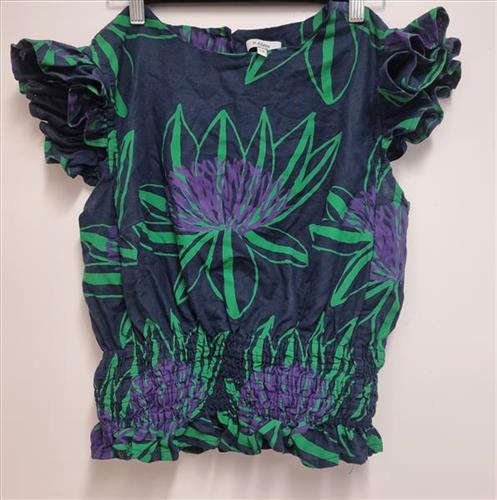
KAMBI – Fashion Collection, Anne Nunn, Kababina print

I am a Nyungul woman. My art depicts cultural, historic and contemporary stories from my Country, the Helensvale and Shipton’s Flat area in Far North Queensland. 

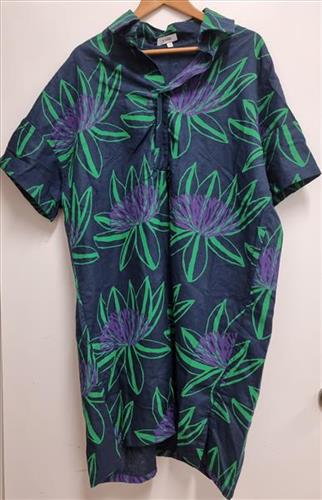
My fabric print represents the waterlily that live and grow around my bubu (country). I love going out bush and am especially inspired by the wetlands.

Bana Yirriji are currently collaborating with Fashion Designer, Shannon Brett -To create a collection of garments – as wearable art pieces – that promote the work of the artists of Bana Yirriji Art Centre, and the beautiful community of Wujal Wujal.

Shannon Brett is a Wakka Wakka, Gooreng Gooreng, Butchulla artist,
designer and educator, with many years of experience as a fashion designer and textile artist who has worked with numerous studios and art centres internationally.

Shannon has also worked with Bana Yirriji Art Centre for many years as an arts facilitator, and this year we are delighted to collaborate on our first fashion collection KAMBI.

225682240648


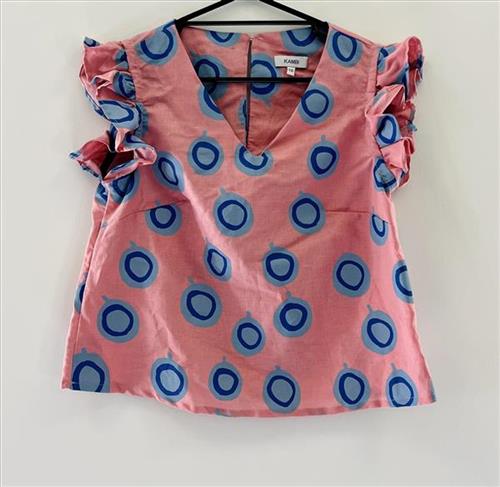
KAMBI – Fashion Collection, Lila Creek – Janbal Print

I am a Nyungkul  woman from Shipton’s Flat, my mother’s Country.  My dad was a  Kaanju man from the Coen area.

This Janbal print represents the Quandong tree which grows in my country. I have been collecting and eating Janbal since I was a young girl.

Bana Yirriji are currently collaborating with Fashion Designer, Shannon Brett -To create a collection of garments – as wearable art pieces – that promote the work of the artists of Bana Yirriji Art Centre, and the beautiful community of Wujal Wujal.

Shannon Brett is a Wakka Wakka, Gooreng Gooreng, Butchulla artist,
designer and educator, with many years of experience as a fashion designer and textile artist who has worked with numerous studios and art centres internationally.

Shannon has also worked with Bana Yirriji Art Centre for many years as an arts facilitator, and this year we are delighted to collaborate on our first fashion collection KAMBI.

225682240646


KAMBI – Fashion Collection, Anne Nunn, Kababina print

I am a Nyungul woman. My art depicts cultural, historic and contemporary stories from my Country, the Helensvale and Shipton’s Flat area in Far North Queensland. 

My fabric print represents the waterlily that live and grow around my bubu (country). I love going out bush and am especially inspired by the wetlands.

Bana Yirriji are currently collaborating with Fashion Designer, Shannon Brett -To create a collection of garments – as wearable art pieces – that promote the work of the artists of Bana Yirriji Art Centre, and the beautiful community of Wujal Wujal.

Shannon Brett is a Wakka Wakka, Gooreng Gooreng, Butchulla artist,
designer and educator, with many years of experience as a fashion designer and textile artist who has worked with numerous studios and art centres internationally.

Shannon has also worked with Bana Yirriji Art Centre for many years as an arts facilitator, and this year we are delighted to collaborate on our first fashion collection KAMBI.

115682240442


Warrnyu Dhawu (Flying Fox Story)

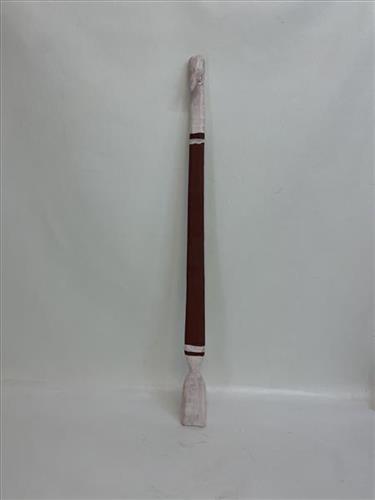
Back in the Creation time, Warrnyu (Flying Foxes) once lived, like men, in the cave at the place called Kurrki Warrnyu Yirri Djaringal (they also lived in caves called Wadatilmurr & Gurngurmirrngu). Warrnyu lived in these caves for many years and then one day Djanyarr (The Dog), an ancestral being in the form of a man, came along. He was looking around for a place to live. Djanyarr heard the sound of a Flying Fox screaming. He went down to the cliff and pushed the rock and the water came out at the Ganalbingu place called Gurrkawakarrmurr. He then went into the cave and into the sacred hole, frightening all the Flying Fox away. When he went into the hole he left his dilly bag in the tree and went out on the other side of the sacred cave and leaving his spear and woomera. He sat there for a long time. The Dog made three streams and the water went inside the cave. Two of these streams are good drinking water. In the middle it is a sacred water. No-one drinks from the middle of the stream. Children, men, women, young boys or girls are not allowed to drink from the middle of the stream. If they drink the water from the middle of the stream they will go grey too early.

At Kurrki Warrnyu Yirri Ngilaya Djaringal, the Flying Fox made himself into a young man… that’s what Aboriginal people do today. They have ceremonies and dances to make the young boys into men. The songs are called Yirrarwu, Gulumu, Rruburra and Burryun. Dhapi (initiation ceremony) happen today because the Warrnyu (Flying Fox) people performed them a long time ago before the Yolgnu people. It was the Warrnyu people who first performed circumcision of the young boys to make them into men. It all happened at Kurrki Warrnyu Yirri Ngilaya Djaringal, this is how this place got its name.

Leaving behind the cave at Kurrki Warrnyu Yirri Djaringal, the Dog travelled west across the Arafura Swamp and came to Djalkulmurr (Mount Delight). From there he travelled north and came to Dunganda (a hill situated a few kilometres east of Ramingining). There he met a female Dog, then they both headed north and came to a place called Garanydjirrmurr where they spoke the Mildjingi language. From Garanydjirrmurr they changed their direction and went west through Guliny’barra, Burgumara and onto the plains. When they reached the plains they smelled something cooking, way up in the north – at Wessel Islands. The aroma they smelt was so enticing that they decided to go there. Lungurrma (the north-east wind) was carrying the smell. One Dog headed north again, but the other Dog decided not to go with him and went back the opposite way. The first Dog that went to Malwanatharra (Sandy Point) went into the sea following its nose to wherever the smell was coming from. It is believed that this Dog still lives in the sea…

111582239204


Untitled

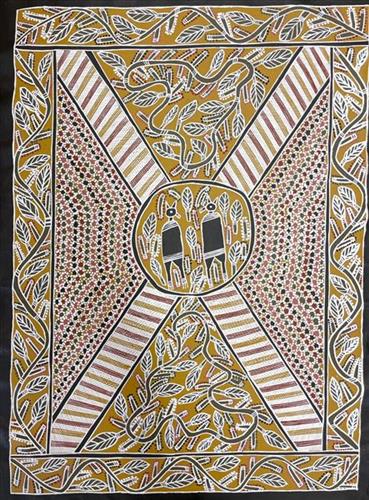
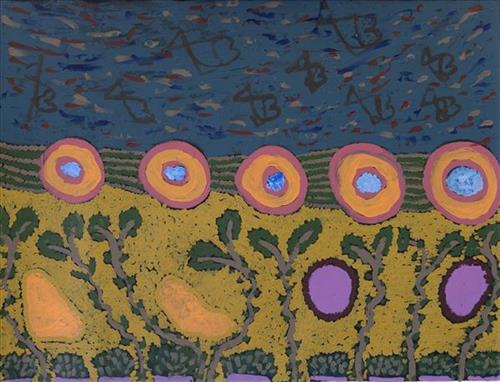
“When Martu paint, it’s like a map. Martu draw story on the ground and on the canvas, and all the circle and line there are the hunting areas and different waters and tracks where people used to walk, and [some you] can’t cross, like boundaries. So nowadays you see a colourful painting and wonder what it is, but that’s how Martu tell story long ago. It’s not just a lovely painting, it’s a story and a songline and a history and everything that goes with it.” 

– Ngalangka Nola Taylor and Joshua Booth

This work portrays an area of Country that can be interpreted in multiple ways. Firstly, the image may be read as an aerial representation of a particular location known to the artist- either land that they or their family travelled, from the pujiman (traditional, desert dwelling) era to now. During the pujiman period, Martu would traverse very large distances annually in small family groups, moving seasonally from water source to water source, and hunting and gathering bush tucker as they went. At this time, one’s survival depended on their intimate knowledge of the location of resources; thus physical elements of Country, such as sources of kapi (water), tali (sandhills), different varieties of warta (trees, vegetation), ngarrini (camps), and jina (tracks) are typically recorded with the use of a use of a system of iconographic forms universally shared across the desert. 

An additional layer of meaning in the work relates to more intangible concepts; life cycles based around kalyu (rain, water) and waru (fire) are also often evident. A thousands of year old practice, fire burning continues to be carried out as both an aid for hunting and a means of land management today. As the Martu travelled and hunted they would burn tracts of land, ensuring plant and animal biodiversity and reducing the risk of unmanageable, spontaneous bush fires. The patchwork nature of regrowth is evident in many landscape works, with each of the five distinctive phases of fire burning visually described with respect to the cycle of burning and regrowth.  

Finally, metaphysical information relating to a location may also be recorded; Jukurrpa (Dreaming) narratives chronicle the creation of physical landmarks, and can be referenced through depictions of ceremonial sites, songlines, and markers left in the land. Very often, however, information relating to Jukurrpa is censored by omission, or alternatively painted over with dotted patterns.