111582266186


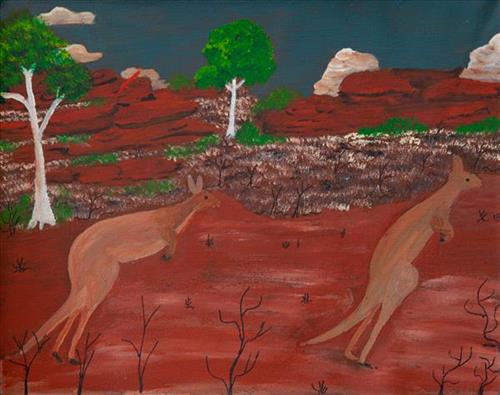
Two Kangaroos Hopping Away on the Plain

“When we shoot and kill the kangaroo, we cook it in the bush. We sit around [the fire] and wait for the kangaroo to get cooked.”

– Noreena Kadibil


Marlu (kangaroo) are one of the largest species that form part of the Martu diet, and are typically hunted by men on specific trips targeting major game. Marlu are prized not only for the high yield of meat which they represent, but also for the level of skill and stamina required to hunt them. When hunted, marlu are typically directed via fire and then tracked for a lengthy period of up to several hours. Effective hunting also relies on one’s knowledge of seasonal conditions and preferred foods and habitats. Traditionally, marlu were stalked and then speared. Today, marlu are generally hunted with rifles at the beginning of yalijarra (hot season), before the rains. 

During the pujiman (traditional, desert dwelling) period, Martu would traverse very large distances annually in small family groups, moving seasonally from water source to water source, and hunting and gathering bush tucker as they went. Whilst desert life has moved away from mobile hunter-gatherer subsistence throughout the course of the twentieth century, bush tucker continues to be a significant component of the modern Martu diet. Hunting and gathering bush tucker remains equally valuable as an important cultural practice that is passed on intergenerationally. Though hunting and gathering implements have been modernised, methods of harvesting, tracking and the use of fire burning to drive animals from their retreats are still commonly practiced today.
111582266185


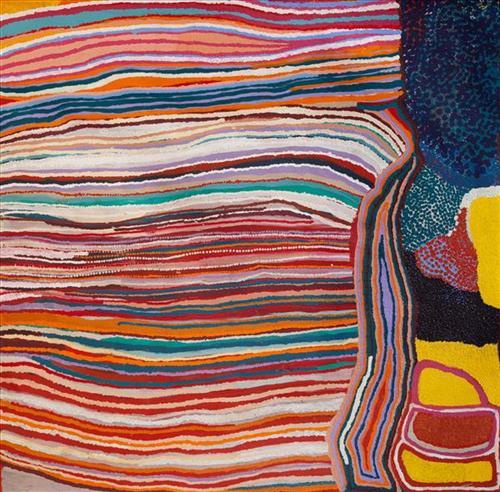
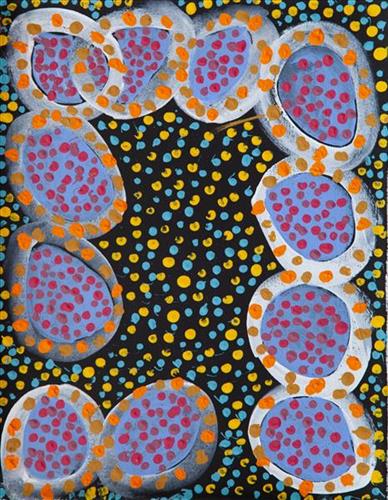
Untitled

“When Martu paint, it’s like a map. Martu draw story on the ground and on the canvas, and all the circle and line there are the hunting areas and different waters and tracks where people used to walk, and [some you] can’t cross, like boundaries. So nowadays you see a colourful painting and wonder what it is, but that’s how Martu tell story long ago. It’s not just a lovely painting, it’s a story and a songline and a history and everything that goes with it.” 

– Ngalangka Nola Taylor and Joshua Booth

This work portrays an area of Country that can be interpreted in multiple ways. Firstly, the image may be read as an aerial representation of a particular location known to the artist- either land that they or their family travelled, from the pujiman (traditional, desert dwelling) era to now. During the pujiman period, Martu would traverse very large distances annually in small family groups, moving seasonally from water source to water source, and hunting and gathering bush tucker as they went. At this time, one’s survival depended on their intimate knowledge of the location of resources; thus physical elements of Country, such as sources of kapi (water), tali (sandhills), different varieties of warta (trees, vegetation), ngarrini (camps), and jina (tracks) are typically recorded with the use of a use of a system of iconographic forms universally shared across the desert. 

An additional layer of meaning in the work relates to more intangible concepts; life cycles based around kalyu (rain, water) and waru (fire) are also often evident. A thousands of year old practice, fire burning continues to be carried out as both an aid for hunting and a means of land management today. As the Martu travelled and hunted they would burn tracts of land, ensuring plant and animal biodiversity and reducing the risk of unmanageable, spontaneous bush fires. The patchwork nature of regrowth is evident in many landscape works, with each of the five distinctive phases of fire burning visually described with respect to the cycle of burning and regrowth.  

Finally, metaphysical information relating to a location may also be recorded; Jukurrpa (Dreaming) narratives chronicle the creation of physical landmarks, and can be referenced through depictions of ceremonial sites, songlines, and markers left in the land. Very often, however, information relating to Jukurrpa is censored by omission, or alternatively painted over with dotted patterns.

111582266184


Kun Kun (Kuny-Kuny)

“My ngurra (home Country, camp) long, long time ago, Kun Kun! This is a big waterhole. In Kun Kun, my Country, all the animals are coming to drink here. Big and small kangaroos, snakes, goannas, emus, skinks – they all drinking here. Big tali (sandhills). Big ones, four of them near the waterhole.”

– Kumpaya Girgirba (Girgaba)

Kun Kun (Kuny-kuny) is a soak accessing a large body of underground water, located south east of Kunawarritji (Canning Stock Route Well 33). The site is sacred for its association with the marlu (kangaroo) Jukurrpa (Dreaming), and was an important ceremonial site during the pujiman (traditional, desert dwelling) period.

Kun Kun lies within Kumpaya’s ngurra (home Country, camp), the area which she knew intimately and travelled extensively with her family in her youth. The Western Desert term ‘ngurra’ is hugely versatile in application. Broadly denoting birthplace and belonging, ngurra can refer to a body of water, a camp site, a large area of Country, or even a modern house. People identify with their ngurra in terms of specific rights and responsibilities, and the possession of intimate knowledge of the physical and cultural properties of one’s Country. This knowledge is traditionally passed intergenerationally through family connections. Painting ngurra, and in so doing sharing the Jukurrpa stories and physical characteristics of that place, has today become an important means of cultural maintenance. Physical maintenance of one’s ngurra, like cultural maintenance, ensures a site’s wellbeing, and is a responsibility of the people belonging to that area. 

During the pujiman period, knowledge of water sources was critical for survival, and today Martu Country is still defined in terms of the location and type of water. Each of the hundreds of claypans, rockholes, waterholes, soaks and springs found in the Martu desert homelands is known by name, location, quality and seasonal availability through real life experience and the recounting of Jukurrpa narratives. 

110682121073


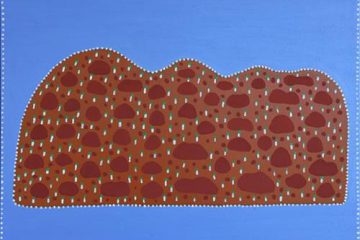
Warlbawoony Ngarranggarni

Warlbawoony Hill lies to the west of the Bow River community where Monica Cann Lives with her mum,Tracey Ramsey. The place takes its name from the Ngarranggarni (Dreaming) story of the Warlbawoony (River Kangaroo), who jumped and jumped over the land, carving out the many curves of the hill’s ridge as it went along. After traversing the ranges, the Warlbawoony ended up in the waterhole situated at its base.

110682259617


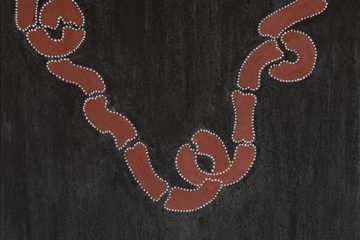
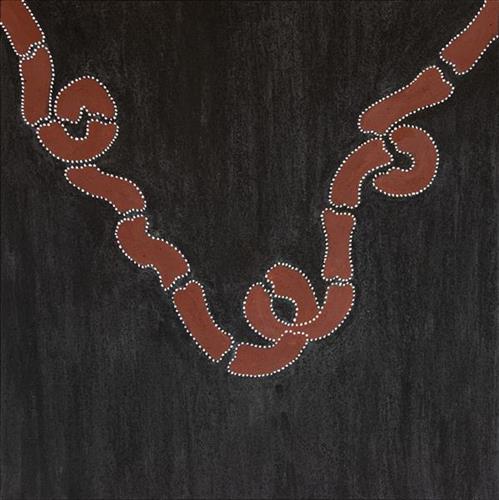
Goorlabal Ngarranggarni – Marlene Juli

This work is inspired by a Ngarranggarni (Dreaming) story about Goorlabal the Serpent.

In the Ngarranggarni, Goorlabal travelled from One Mile in search of water. He found water in the Springvale River. He rolled on his back in the water because he was over-heated. He turned into stone and is still there today.

Goorlabal protects the waterways near Warmun, and this work shows the waterways entwined with the vertebrae of Goorlabal.

110682262181


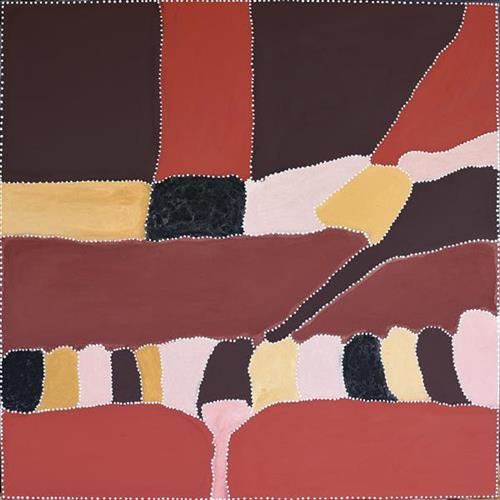
Bulunggard (Texas Country)

The painting I do is all about my mother’s country, Texas Downs Station – there’s Old Texas and New Texas, which is the one still standing today. Balunggar is the name of country, the place goes back a long way, from early ages. Our old people, ancestors survived and were living on this rough and beautiful landscape, as you see it today. This Country goes a long way before my grandparents and mother came along this country. 

110682262177


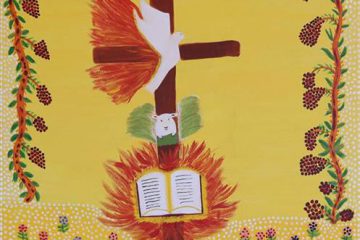
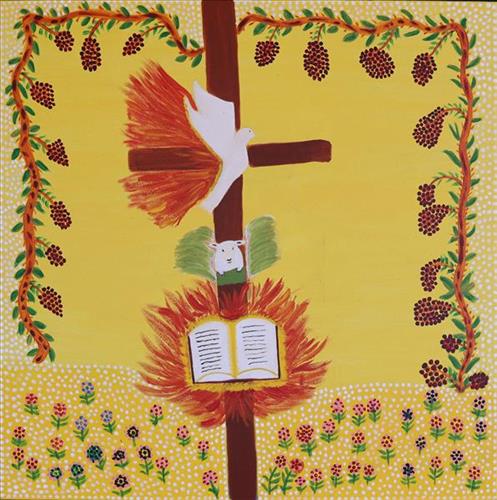
Fire & The Holy Spirit by Kathy Ramsay

This painting is about 3 in 1

1. The Bible is the word of God

2. The Cross is where Jesus suffered and died for our sins and rose again on the third day.

3. The Dove represents the Holy Spirit and Fire

110682263511


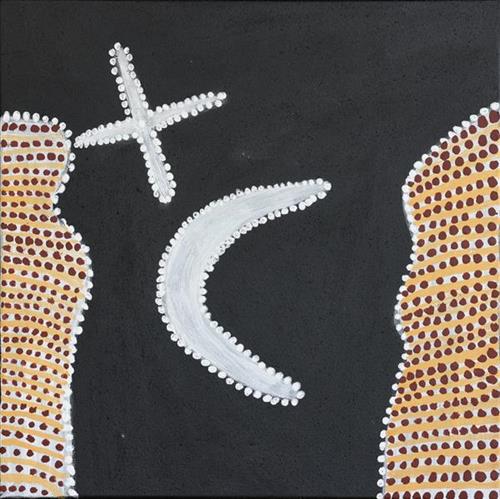
Garn’giny Ngarranggarni – Mabel Juli

Well this the dreamtime story about Wardal and Garn’giny (star and moon). That’s what my mother and dad told me about that Dreamtime thing.

“Garn’giny ngelmang roord-ngarri nginji.

The moon sits in the east.

Wardal dal gerloorr ngarrgalen.

The star sits on top of the hills.

Laarne berdij nginiyi danyi garn’giny.

The moon went and climbed that hill.

Wijige-ngarri ngoorramangbe-ngiyiwa thamboorroo-gal.

They made him run away because he loved his mother-in-law.

(That moon loved his mother in-law, but they told him he couldn’t love her and to go away.)

Ganybelgbe nginini.

He felt shame (and climbed up the hill).

Gerlewirring deg nginini.

He was looking from on top [of the hill].

Nginini-birri “Nanggayib barrroonnha.”

He told all the people “You will all die.”

Nginini-birri “Ngayimoowana mooliyinde ngenben’ge.

He told them “I will be the only one living”.

(He cursed those people.)

“Boora-boorab ngeliyande” wanemayi-birri melagawoom dam, woorrji-ngarri berrani yilag.

“I will keep coming back” he told them all, while they were sitting down below.

(You are all going to die and I will be still alive, coming out.)

“Daam merrgernbem boorarrgarr ngeliyande.”

“After three days camp I will rise from the dead.”

Nanggayibwa berrayin-gili namoowana ngininji.

They all died and he was the only one that stayed alive.

Merrgern daam nginji boorab ngidji, daam merrgernbem.”

He camps (sleeps ~ dies) for three days then appears (again as the moon), after three days.

This is Yarin country in Darrajayin (Springvale Station) which lies south of Warmun. This is Juli’s traditional country.

The star in the paintings is the promised wife of the moon, the straight skin to be his wife. He wanted dawool, the woman who became the black headed python who was the mother of wardal, the star, i.e. his mother-in-law.

377810582265483


man-kurdudjumuk – yellow colour x ashes

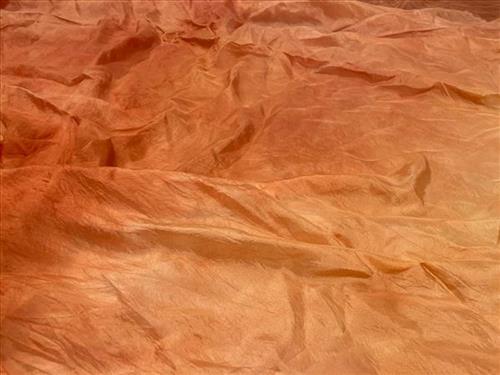
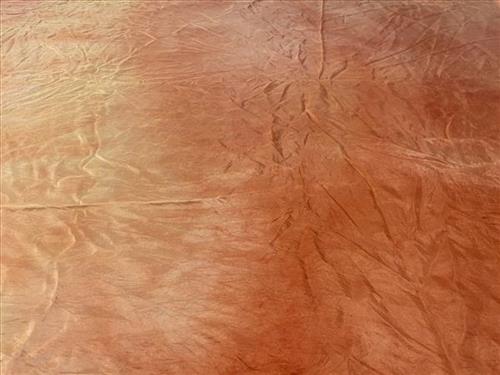
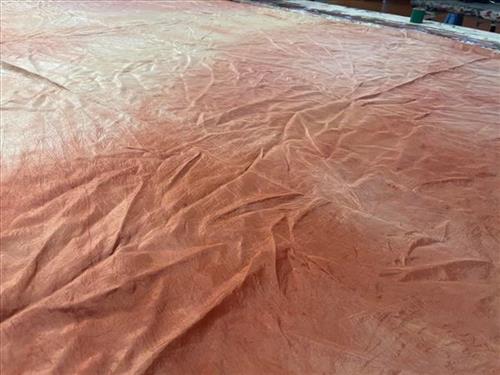
The striking yellow – gold hue comes from the root of the man-kurdudjumuk plant (coelospermum reticulatum) which has been harvested from the sandy country near the flood plains. This laborious and tiring process requires digging up the entire shrub. The root is shaven into a pot of water and the colour is released into water through the boiling process.