Stuck across the creek, No where to go.
This is my first Flood painting – Stuck across the creek, No where to go.
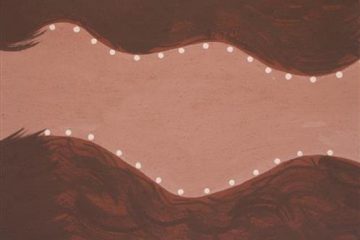
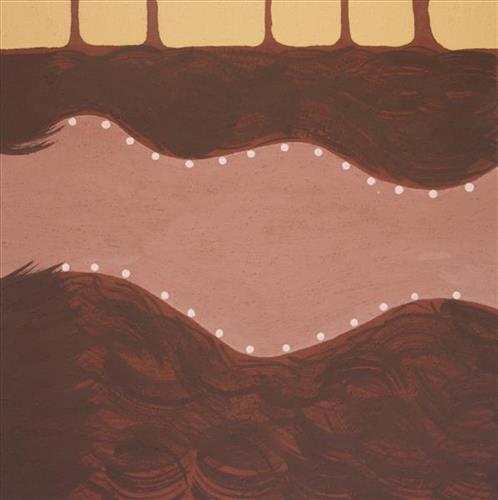
This is my first Flood painting – Stuck across the creek, No where to go.
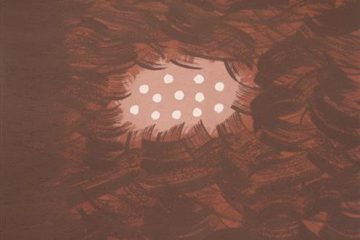

Stuck across the creek,No where to go.

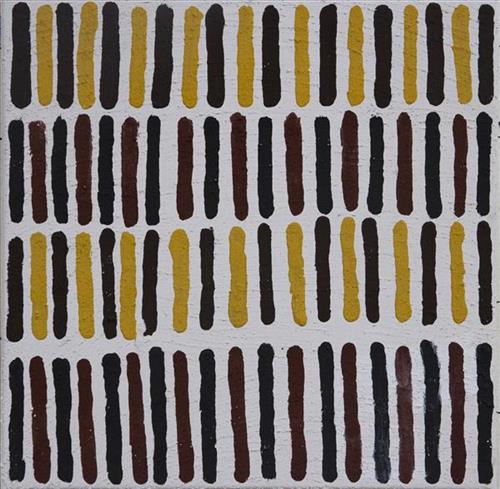
Jimbirla is Lena Nyadbi (Geraldine’s aunty’s) father’s country. The brush strokes represent the grass land of the area and feature in many of Geradine and Lena’s Dayiwul and Jimbirla Ngarranggarni paintings.

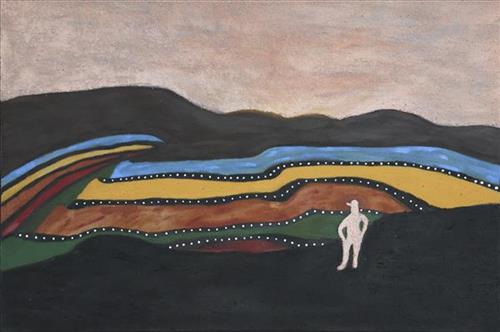


“This painting is about the Warlawoon Country my dad Rammey Ramsay country my beautiful old artist dad who left his memory with me to carry on after him.
Trees, camping areas, water holes, hills, and traditional stories of his mum and dad and their parents and so on he told me.” Kathy Ramsay
Kathy is one many children of the late senior Gija man of Jungoora skin, Rammay Ramsay, whose ancestral Country lies to the west of Bedford Downs near Elgee Cliffs. Following in her father’s foorsteps, her work is forever infused with the memory of Warlawoon Country. Together with a longing for Country, their work teases out the complexities of Gija world-views and the impact of pastoral occupation on their land.
Quincey creates stories from his Dhuwa homeland in northeast Arnhem Land. Stories are passed on either paternally or maternally, and Quincy would have learnt these stories from his ancestors. The cross-hatching style is a traditional painting style of this area and can represent elements such as water, air and wind.
This carving is a Jabiru, one of Quincey’s totems.
Quincey creates stories from his Dhuwa homeland in northeast Arnhem Land. Stories are passed on either paternally or maternally, and Quincy would have learnt these stories from his ancestors. The cross-hatching style is a traditional painting style of this area and can represent elements such as water, air and wind.
This carving is a Jabiru, one of Quincey’s totems.
Quincey creates stories from his Dhuwa homeland in northeast Arnhem Land. Stories are passed on either paternally or maternally, and Quincy would have learnt these stories from his ancestors. The cross-hatching style is a traditional painting style of this area and can represent elements such as water, air and wind.
This carving is a Jabiru, one of Quincey’s totems.
Traditionally, Nganiyal (conical mats) were used as an insect screen when erected, and as a sitting mat when folded. They are used in Ceremony as well as a functional item.
Nowadays, artists weave many different shapes including flat, round and oblong.
To make fish traps and fish net fences artists firstly get vine (mirlarl) from the jungle and they put it in water for one night to make it soft. Next they start weaving it; they make rings for the inside to keep the fish trap’s shape. Artists work for three or four weeks on the fish trap. They also make string from kurrajong (burdaga) to attach the hibiscus (bardainy) rings and to tie the conical end of the fish trap. This fish trap is used in saltwater and freshwater. People also use fish net fences called mun-dirra. A long time ago they would put the mun-dirra across rivers and creeks. In the middle they would place the an-gujechiya. They also used small things like sticks, rocks, mud and grass to block the fish from going through. People would then catch fish like saltwater barramundi rajarra, freshwater barramundi (janambal), small black freshwater catfish (buliya), bonefish (an-guwirrpiya), and sand bass (dalakan) in these fish traps.