359709482271961


untitled

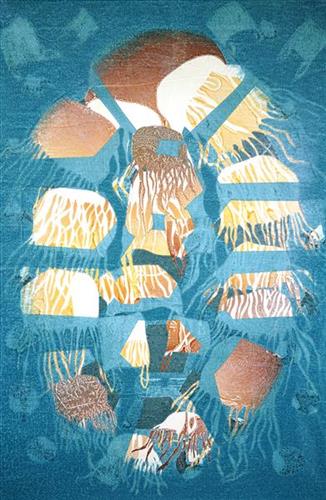
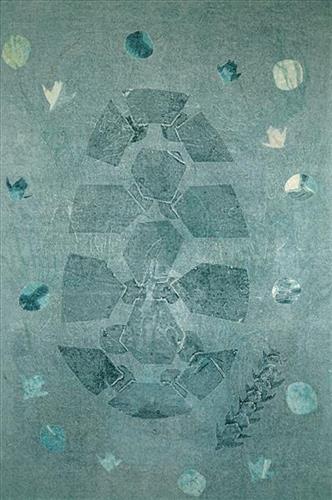
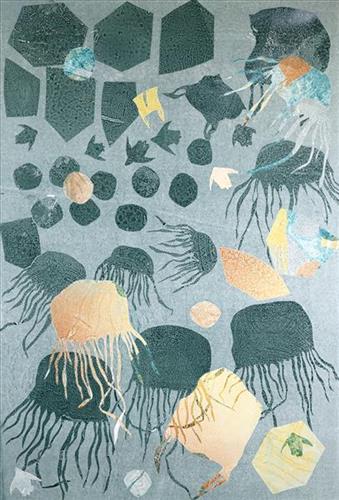
Modern times has shown that plastic bags are detrimental to the environment and may often be mistaken for jellyfish, which are a food source for marine predators such as the Waru (Green-Sea Turtle).

The Waru can be found throughout the waters of Zenadh Kes (Torres Strait Islands) and has been a part of our peoples diet for thousands of years and it is important why we should look after our environment, for the sustainability of our people and our future generations.

This artwork also serves as an analogy for us to be mindful of what we consume both physically and mentally but importantly in a spiritual state if we are to live a fruitful and productive life.

Art Centre notes:

Art Centre notes: The artwork is a unique state print, or monotype, printed on Belgian linen. Signed by the artist on the reverse. 

Artist: Solomon Booth

Printer: Dian Darmansjah

Printed at Northsite Print Studio, Cairns Sept 2023
359709482271960


Modern times has shown that plastic bags are detrimental to the environment and may often be mistaken for jellyfish, which are a food source for marine predators such as the Waru (Green-Sea Turtle).

The Waru can be found throughout the waters of Zenadh Kes (Torres Strait Islands) and has been a part of our peoples diet for thousands of years and it is important why we should look after our environment, for the sustainability of our people and our future generations.

This artwork also serves as an analogy for us to be mindful of what we consume both physically and mentally but importantly in a spiritual state if we are to live a fruitful and productive life.

Art Centre notes:

Art Centre notes: The artwork is a unique state print, or monotype, printed on Belgian linen. Signed by the artist on the reverse. 

Artist: Solomon Booth

Printer: Dian Darmansjah

Printed at Northsite Print Studio, Cairns Sept 2023
359709482271959


untitled

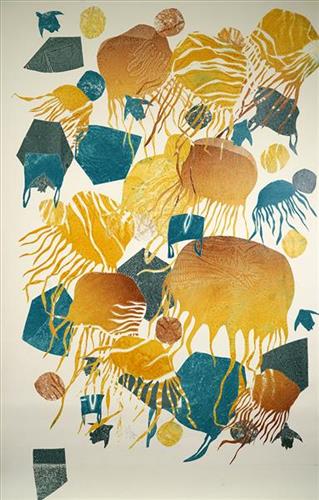
Modern times has shown that plastic bags are detrimental to the environment and may often be mistaken for jellyfish, which are a food source for marine predators such as the Waru (Green-Sea Turtle).

The Waru can be found throughout the waters of Zenadh Kes (Torres Strait Islands) and has been a part of our peoples diet for thousands of years and it is important why we should look after our environment, for the sustainability of our people and our future generations.

This artwork also serves as an analogy for us to be mindful of what we consume both physically and mentally but importantly in a spiritual state if we are to live a fruitful and productive life.

Art Centre notes:

Art Centre notes: The artwork is a unique state print, or monotype, printed on Belgian linen. Signed by the artist on the reverse. 

Artist: Solomon Booth

Printer: Dian Darmansjah

Printed at Northsite Print Studio, Cairns Sept 2023
359709482271958


untitled

Modern times has shown that plastic bags are detrimental to the environment and may often be mistaken for jellyfish, which are a food source for marine predators such as the Waru (Green-Sea Turtle).

The Waru can be found throughout the waters of Zenadh Kes (Torres Strait Islands) and has been a part of our peoples diet for thousands of years and it is important why we should look after our environment, for the sustainability of our people and our future generations.

This artwork also serves as an analogy for us to be mindful of what we consume both physically and mentally but importantly in a spiritual state if we are to live a fruitful and productive life.

Art Centre notes:

Art Centre notes: The artwork is a unique state print, or monotype, printed on Belgian linen. Signed by the artist on the reverse. 

Artist: Solomon Booth

Printer: Dian Darmansjah

Printed at Northsite Print Studio, Cairns Sept 2023
359709482271957


(Untitled)

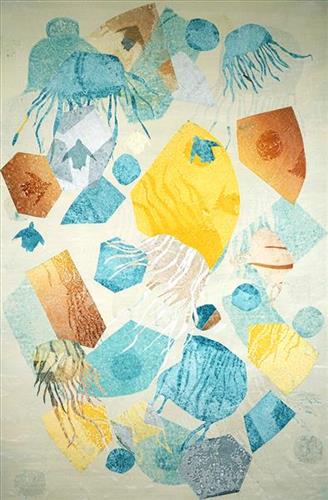
Modern times has shown that plastic bags are detrimental to the environment and may often be mistaken for jellyfish, which are a food source for marine predators such as the Waru (Green-Sea Turtle).

The Waru can be found throughout the waters of Zenadh Kes (Torres Strait Islands) and has been a part of our peoples diet for thousands of years and it is important why we should look after our environment, for the sustainability of our people and our future generations.

This artwork also serves as an analogy for us to be mindful of what we consume both physically and mentally but importantly in a spiritual state if we are to live a fruitful and productive life.

Art Centre notes:

Art Centre notes: The artwork is a unique state print, or monotype, printed on Belgian linen. Signed by the artist on the reverse. 

Artist: Solomon Booth

Printer: Dian Darmansjah

Printed at Northsite Print Studio, Cairns Sept 2023
377810582289156


Kundalk (Grasses) and Kunred (Country) – Woodblock

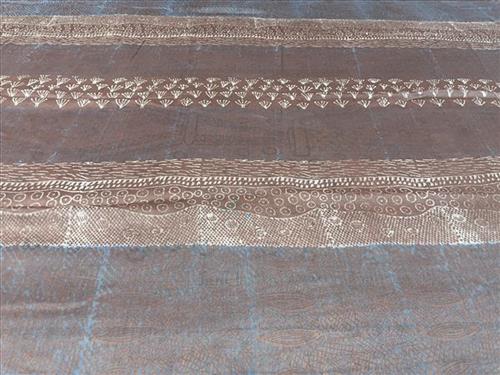
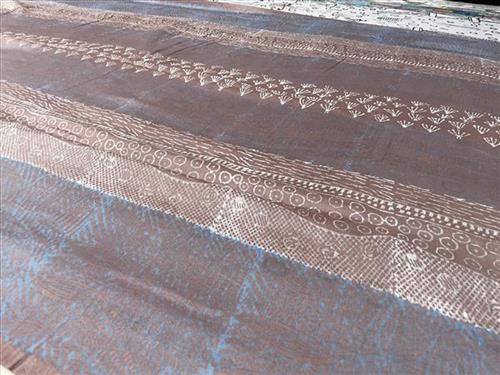
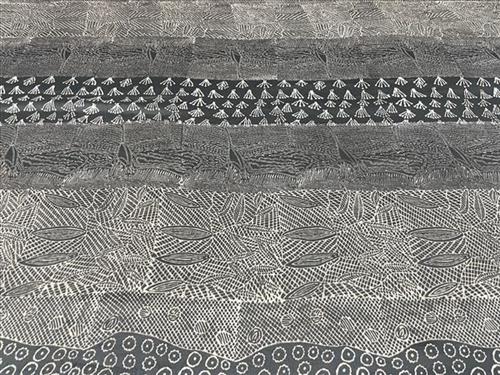
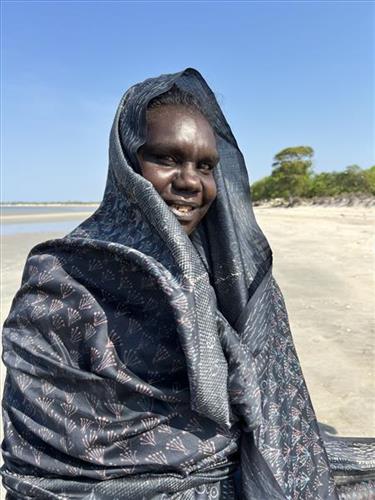
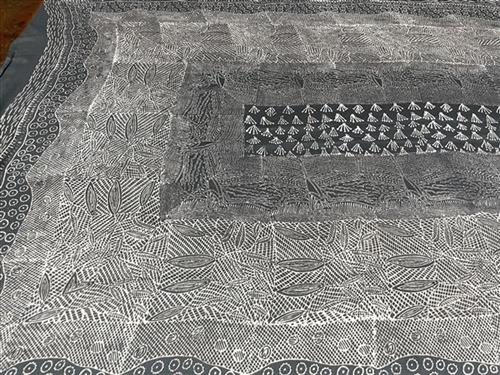
A beautiful indigo discharge dyed silk sari featuring woodblock designs created in 2023 during a special workshop with Tharangini Studio in Bangalore. This fabric features the following block designs:

Kunred (Country) by Janet Marawarr)

Kundalk (Grasses) by Deborah Wurrkidj 

Printed in India by Tharangini Studio – Bangalore. This is a limited edition cotton yardage created as a result of workshops in India in January 2023. As part of their visit to India to open their exhibition, Jarracharra (dry season wind), Janet Marawarr and Deborah Wurrkidj visited Tharangini Studio, Bangalore’s oldest heritage textile studio. Established in 1977, Tharangini is woman-owned and specialises in organic, sustainable woodblock printed textiles. Tharangini’s skilled artisans worked closely with Babbarra in 2022 to hand carve some of babbarra designs old, Lino cut designs into woodblock. This initiative was supported by Kinaway Chamber of Commerce, Victoria and Bawinanga Aboriginal Corporation.

‘I’m excited to see my Lino design made into woodblock. We are going to spend Saturday printing with Tharangini studio. We are going to learn woodblock printing. I’ve been working Bábbarra Women’s Centre for 37 years since it started. I’ve been printing Lino on fabric.’ Janet Marawarr 2023

‘Tomorrow we do printing Yawkyawk (mermaid spirit) and Ngalyod (rainbow serpent). My design is together with my sister. Together we started working at the Women’s Centre and Maningrida Arts and Culture, taught by our mother and grandmother. My sister is a sick one and she pass on her story to me – Ngalyod (rainbow serpent). I help my sister, I help carry the knowledge for her. That’s why we both have designs being made into woodblock.’ Deborah Wurrkidj 2022


377810582289150


Karrbarda, Ngalkordow and Kunred (Country) – Woodblock Sari

A beautiful indigo discharge print silk cotton Sari featuring woodblock designs created in 2023 during a workshop with Tharangini Studio in Bangalore. This fabric features the following block designs:

Karrbarda (Long Yam) by Deborah Wurrkidj

Kundalk (Grasses) by Deborah Wurrkidj

Kunred (Country) by Janet Marawarr)

Ngalkordow (Brolga) by Janet Marawarr

Printed in India by Tharangini Studio – Bangalore. This is a limited edition cotton yardage created as a result of workshops in India in January 2023. As part of their visit to India to open their exhibition, Jarracharra (dry season wind), Janet Marawarr and Deborah Wurrkidj visited Tharangini Studio, Bangalore’s oldest heritage textile studio. Established in 1977, Tharangini is woman-owned and specialises in organic, sustainable woodblock printed textiles. Tharangini’s skilled artisans worked closely with Babbarra in 2022 to hand carve some of babbarra designs old, Lino cut designs into woodblock. This initiative was supported by Kinaway Chamber of Commerce, Victoria and Bawinanga Aboriginal Corporation.

‘I’m excited to see my Lino design made into woodblock. We are going to spend Saturday printing with Tharangini studio. We are going to learn woodblock printing. I’ve been working Bábbarra Women’s Centre for 37 years since it started. I’ve been printing Lino on fabric.’ Janet Marawarr 2023

In conversation with reporter for Indian Link – Prutha Chakraborty, Janet Marawarr said:

‘I loved going to the village in the Sundarbans. I liked meeting the women and the little kids.

They were so excited to see us. They just started making things, they practicing [kantha]

stitch. We shared our Jarracharra book with them so they can see how we making our

designs.’

377810582289141


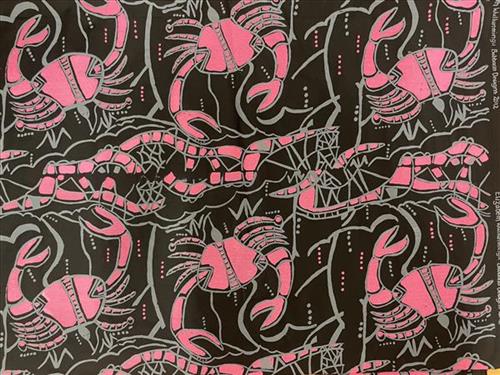
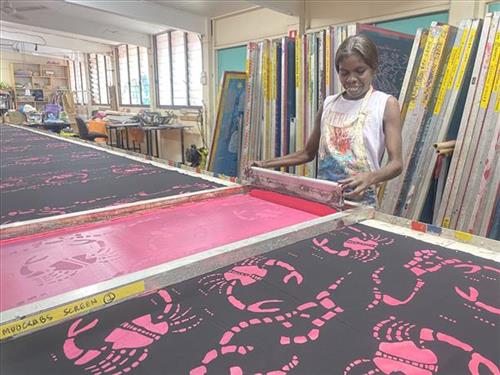
Rrugurrgurda (Mud Crab)

This design tells the story of Elizabeth’s homeland – a dreaming place, a good dreaming place with plentiful mud crabs. Elizabeth’s homeland lies east of Maningrida, at the mouth of Blyth river. This country is known for a large spiritual mud crab, which lives in the area.

Many families go and collect crabs to eat there with long sticks, or collect directly from the shores. Mud crabs hide in the muddy bottoms of estuaries and mangrove forests in areas surrounding Maningrida. After a king tide, a large cyclical tide that bring the crabs out from the mangroves, it is a good time to find crabs.

Rrugurrgurda (mud crabs) is pronounced Ahh-rewg-gurd-gurda in the Burarra language. Rrugurrgurda are good baladji (bush food in Burarra) and can be caught all year round. They are put on the fire to cook and they are ready when they turn a bright orange colour.

377810582289139


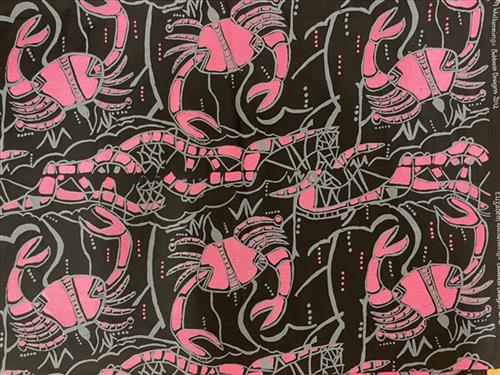
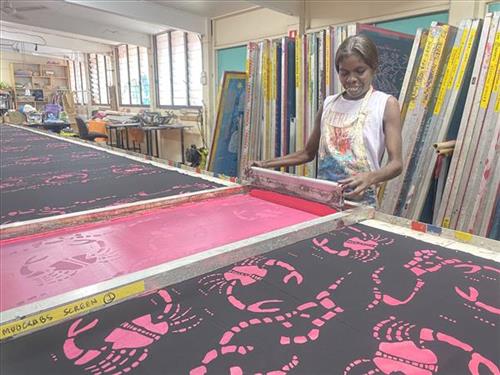
Rrugurrgurda (Mud Crab)

This design tells the story of Elizabeth’s homeland – a dreaming place, a good dreaming place with plentiful mud crabs. Elizabeth’s homeland lies east of Maningrida, at the mouth of Blyth river. This country is known for a large spiritual mud crab, which lives in the area.

Many families go and collect crabs to eat there with long sticks, or collect directly from the shores. Mud crabs hide in the muddy bottoms of estuaries and mangrove forests in areas surrounding Maningrida. After a king tide, a large cyclical tide that bring the crabs out from the mangroves, it is a good time to find crabs.

Rrugurrgurda (mud crabs) is pronounced Ahh-rewg-gurd-gurda in the Burarra language. Rrugurrgurda are good baladji (bush food in Burarra) and can be caught all year round. They are put on the fire to cook and they are ready when they turn a bright orange colour.

377810582289138


Morning Star

The ceremony known throughout Arnhem Land generically as Marradjiri is a ceremony of diplomacy given by one group to another to establish good relations and to strengthen kinship (for example by marriage) and economic ties (for example the sharing of clan estate resources).

The central object in the Marradjiri ceremony is a decorated polepainted with clan designs. The work on the pole is undertaken as part of the ceremony and is accompanied by the associated song series.

Often the ceremony commences when one group invites another and the people invited perform the Marradjiri. When a child finds their first bush food or object of value it is taken as a sign that the Marradjiri ceremony should be performed and an invitation is sent out sometimes in the form of a lock of hair from this child or in the form of some other token, sometimes encased in beeswax and wrapped in cloth. The token is delivered to the invited performers who then prepare to give the ceremony to their hosts at the residence of the host group.

Each evening before sunset the performance begins and continues for two or three hours. In the early stages of the ceremony the dancers perform with body clan designs which become progressively more elaborate as the time approaches the end of the ceremony. Usually this may take two or three weeks.

In the Marradjiri, the pole is said to represent a mast of a Makassan prau. There exists many loan words (over three hundred in total) in North Australian Aboriginal languages and one of these is the Makassan word for mast of a ship ‘palayarrang’ which has changed in some Maningrida languages to ‘bulayarrang’ and a few other variations.

It is possible that the name of this ceremony has its origins in the Makassan word for mast. The Marradjiri ceremony is influenced heavily by Makassan themes.

On the final night of the ceremony the pole appears out of the darkness on the edge of the camp decorated with feathered tassles and long ropes which represent the rigging of the prau. Dancers hold these ropes and move the pole back and forth in the fashion of a prau rolling in rough sea as depicted. The dancers bring the pole down and dance with it until it is finally presented to the host group with great ritual and the pole is set into the ground to the accompaniment of the head song man chanting through a long list of clan names associated with the travels of creation ancestors.

When the dancers part with the pole they break into mourning as they may have done at the end of each Makassan trepanging season when their Makassan visitors returned to Sulawesi on the new early dry season winds. The pole is then kept by the host group, often being hung from the roof of a dwelling. Text taken from Maningrida Arts and Culture