221382291119


Rolling Rock

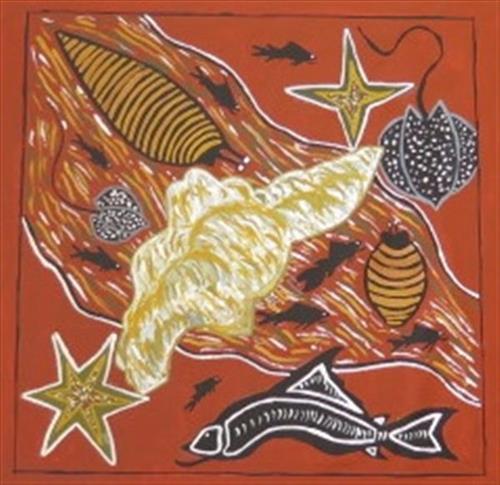
This painting depicts an Aboriginal saltwater country story called rolling rock. This rock can be found in creeks leading to the sea, continuously rolling, and be used to transport people. Visible in the picture are a series of saltwater animals and sea creatures including fish, starfish, shellfish and stingrays.

Painting has been completed using modern paintbrushes and acrylic paints.

221382299496


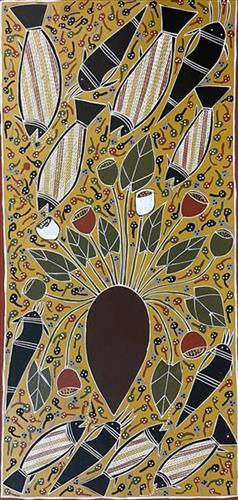
Hairy yams

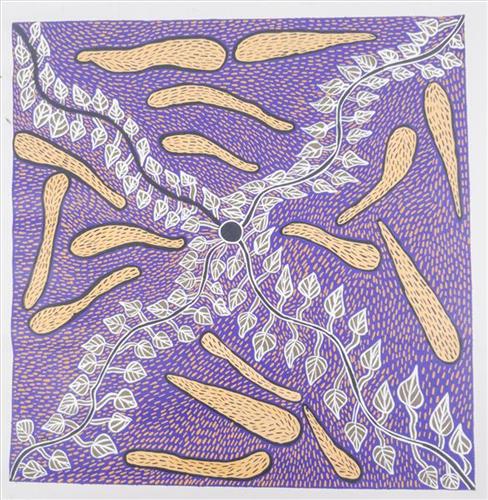
This painting depicts multiple hairy yams. Similar in taste to a commercial sweet potato, these are a highly prized bush tucker. Also visible is the yam plant, stretching along the ground with multiple leaves shown.

Painting has been completed in bright modern acrylic paint using a traditional handmade grass reed brush called Jarlk. Harvested from local billabongs and wet areas, Jarlk brushes are shaped until a fine line is obtained.

221382300607


Foot track

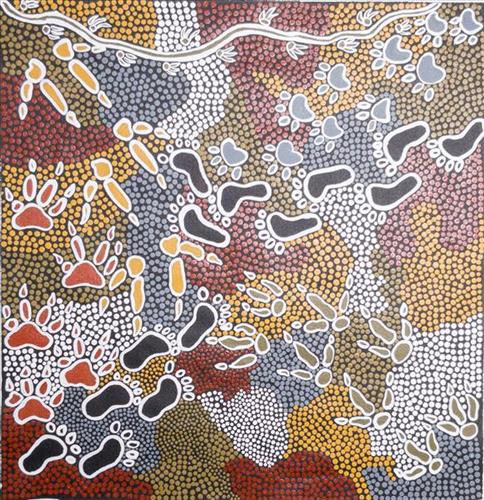
This painting depicts multiple foot tracks. Included are human tracks in black, emu tracks in green, dingo tracks in red, kangaroo tracks in yellow and cat tracks in grey. At the top of the piece a goanna track can be seen complete with a dragging tail mark.

Painting has been completed using modern acrylic paints.

359709482302371


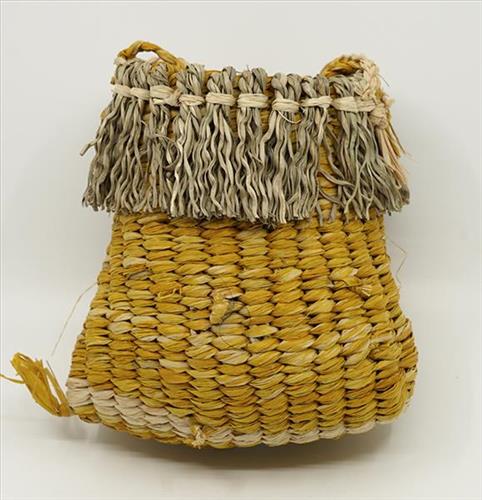
Bag

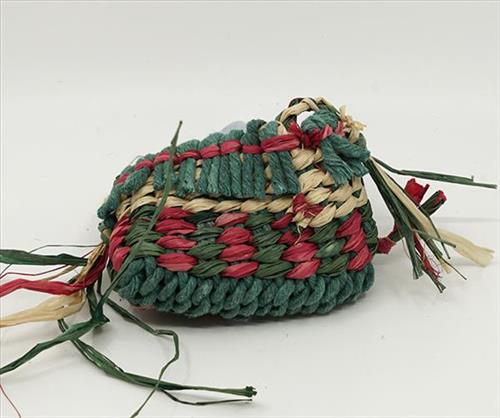
Art Centre notes: The bag is made of natural raffia / jute. It is made using a traditional ‘one twist’ method. The dyes are commercial and colour fast. 

359709482302329


Bag

Art Centre notes: The basket is made of natural raffia / sea chord. It is made using a traditional ‘one twist’ method. The dyes are commercial and colour fast. 

115682303126


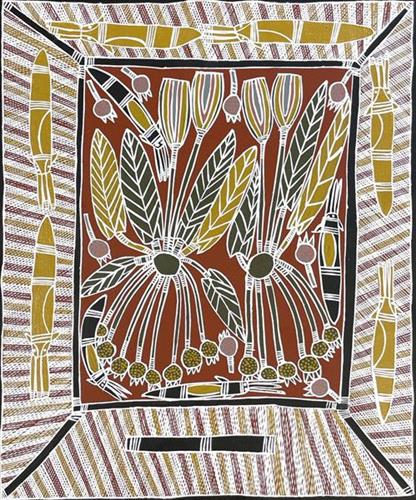
Dhulumburrk (Waterlily)

This painting depicts Dhulumburrk (Nymphaea violacea), a fresh waterlily. The flowers and lily pads of fresh waterlilies can be seen far and wide across the Arafura wetlands, providing coverage for many animal species including Banda (long-necked turtle) and Baru (crocodile). The flowers come in many beautiful colours, in particular a vibrant purple. 

115682303598


Raypiny Dhawu (Fresh Water Story)

All Aboriginal people originate from a spiritual source, fixed in a particular place in their land or the sea. These ‘spiritual reservoirs’ are often in the form of special waterholes made by Wangarr (creative spirits) that were created long ago close to the beginning of time. These creator beings moved across the countryside, shaping the land and implanting in each tract of country, the spiritual life force for the people who were to own it. These creative spirits took many forms and when they gave the land to each group, they also gave songs, dances, ceremony, the associated laws and language.


The creation story for Ganalbingu people took place near the middle section of the Glyde River where it becomes the Goyder River. Their land, Ngaliyindi, sits astride the Arafura Swamp in Central Arnhem Land. Many Ganalbingu artists paint totemic species significant to their clan. These can include baru (crocodile), banda (long necked turtle), buliya (catfish), yalman (waterlilies), gumang (magpie geese), dakawa (fresh water yabby), ratjuk (barramundi), warrnyu (flying fox) and more.


114182304125


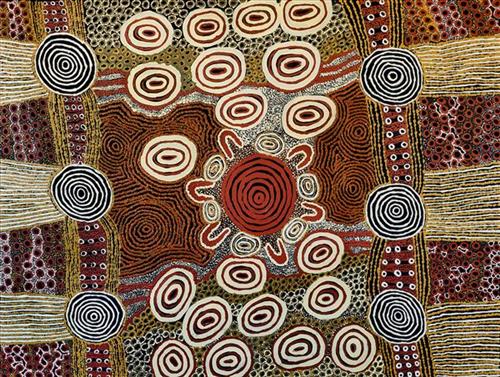
Kungkarrangkalpa Indulrungkalpa (seven sisters, Bush medicine)

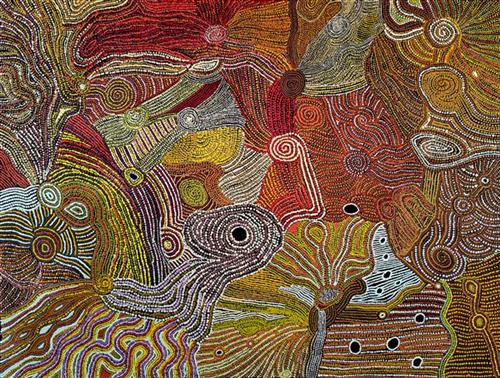
In “Kungkarrangkalpa, Indulrungkalpa” (Seven Sisters, Bush Medicine), Anawari intertwines the Seven Sisters narrative with the art of bush medicine. Depicting special leaves and shrubs with thre circular technique used to skillfully brewed into tea or crafted into ointment.

114182304124


Wati Kutjarra – Janet Forbes

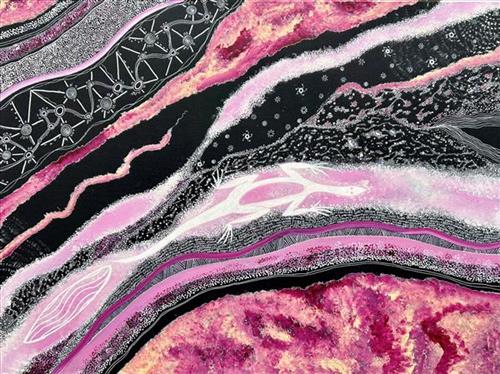
This is the story of two powerful magicians who came to the Ngaanyatjarra Lands from far away to the west;

‘These two men are always together, always camping together. They do all sorts of tricks when they travel across the lands as they stop from place to place. When they reached ‘Wirtapi Wara’ (Long Black or Blackstone Range) they argued about which way to go around. One went around the south side and the other the north side.

At a distance it seemed they didn’t recognise each other or perhaps they were just pretending not to recognise each other! It is also said that at Papulankutja they tricked each other by changing their appearance at the same time so they had no chance to recognise each other. The name Papulankutja comes from the Ngaanyatjarra word meaning, ‘to stare without recognising each other’.

‘They usually took the form of goanna but they could turn into other animals as well. Finally, when they got to Kaltukatjara (Docker River) they had become so arrogant that without realising they walked straight into some local men’s business even though they were warned by the local women. The goanna men led themselves blindly to their fate”.

222082304636


‘How Aboriginal Are You?’ Pt.2

On land of blood red sands and ancient lore,

Echoes linger of an ancient yore.

Questioned: my heritage, doubts arise,

A light skinned Indigenous, navigating ties.


Children torn from loving arms, stolen away,

Their laughter silenced; their spirits dismayed.

Taken from Mothers, Fathers and Kin,

In the name of a misguided, cruel sin.


Through shadowed valleys and whispering trees,

Wandering lost with shattered dreams.

Stripped of identity, culture denied,

Language forbidden and souls defied.


Yet within me, their blood flows strong,

A legacy endured, amidst the wrong.

In each heartbeat, their stories thrive,

Resilience, courage, against the strive.


With every step, I reclaim our past,

Despite the doubts, the questions cast.

I am the children you stole.

I am the water you poisoned.

My voice echoes, my spirit emboldened.