225182211783
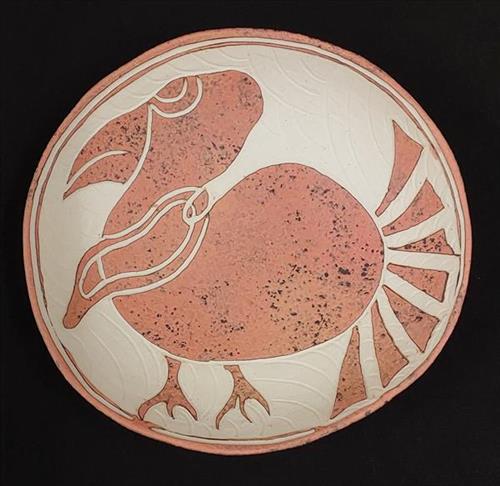
Diwan (Scrub Turkey)
Many years ago, our ancestors lived in harmony with the rainforest and other parts of the land, they learnt different ways of hunting and gathering for food. The women would collect Diwan (Scrub Turkey) eggs. Each Diwan can lay up to 15-20 eggs. The women gather the eggs by using their hands to dig deep into the nest, the eggs are found in the warmest area of the nest.
225182211756
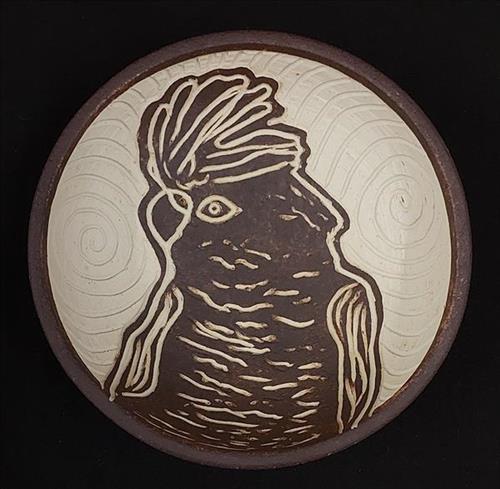
Kadanji (Black Cockatoo)
Kadanji (Black Cockatoo) is my mother’s mother’s totem from the Kuku Nyungkul clan. This totem is passed down generation after generation to your newborns.

221382213026

Goanna
This carving by Harry Malibirr is depicts a local source of bush tucker, the goanna. It is made from kurrajong wood and painted with acrylic paint. The paintwork is finished with traditional rarrk (fine line cross-hatching).
Wood carving has always been part of Aboriginal culture and Djilpin artists continue this tradition. Men carved wood for many purposes – tools for hunting or gathering food, axes and knives for building shelters, spears and clubs for protection of their lives and territory, objects for ceremony and to mark sacred sites.
Hunting implements include the boomerang, woomera and spear. The woomera is a lever which helps to increase the speed and distance the spear travels. Clapsticks are used as percussion instruments by the Songmen to accompany dancing along with the didgeridoo (mago).
As well as the more functional carvings, artists portray animals and birds in wood, and these carvings are often painted. Ceremonial carvings include spirit creatures including mukuy (devil devils) and mimi.
Some fine mimi figures have been cast in bronze.
225182214813
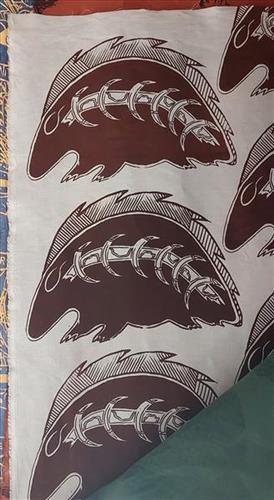
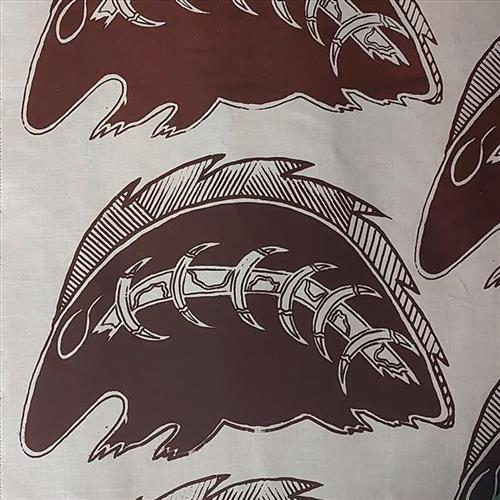
Ngangkin (Echidna)
Long time ago our ancestors used to hunt echidnas for their meat and fat. The fat was used as bush medicine. They rubbed it onto sore muscles to relieve pain.
The echidna also appears as part of a rock formation on one of the high mountains of Manjal Dimbi (Mossman Gorge). The rock formation represents a number of significant Ancestral Beings in their animal form and Kubirri, a man who came to help Kuku Yalanji when they were persecuted by the evil spirit, Wurrumbu.
225182214807
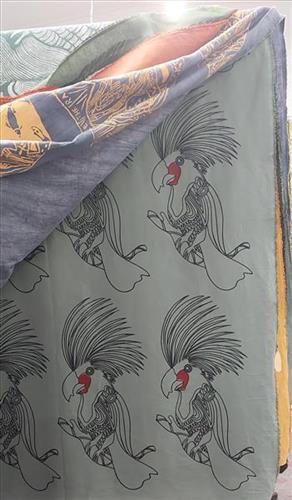
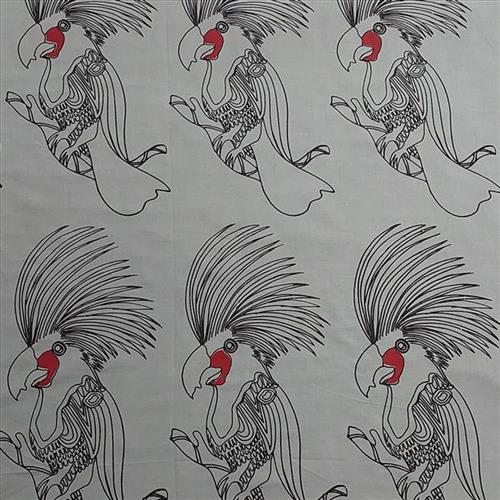
Kadanji (Palm Cockatoo)
Kadanji is the big name for Black Cockatoo and Palm Cockatoo.
The Palm Cockatoo is my Totem. It forms part of the Kuku Yalanji cland lands. I inherited it from my great grandfather’s side.
225182214815
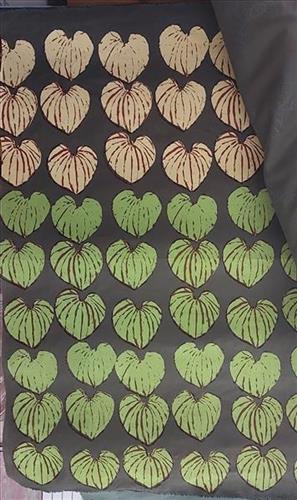
Bindi Bambayal (Yam Leaf)
This fabric shows my yam leaf design. Yams are bush tucker to all our families. We go out and dig for it when they are in season. When the leaves turn dark brown, we know that the tubers are ready for harvest. I personally like cooking yams on the coals of a camp fire.
I like drawing plants or parts of them because I work as a gardener and forester for Jabalbina, a cultural heritage body for our Kuku Yalanji Traditional Owners. We grow native plants from seeds or cuttings to help restore cleared land into a healthy rainforest.
225182214811
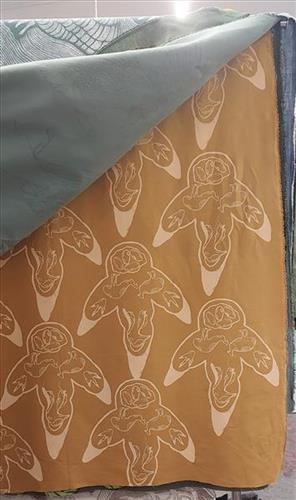
Kurranji (Cassowary)
The cassowary is my totem. My mother’s sister handed it down to me when I was a young boy. I perform the cassowary dance in public ceremonies. As a young men, I was part of the Yalanji Dance group and was invited to Hong Kong to perform our traditional dance cycles including the cassowary dance.
225182218052
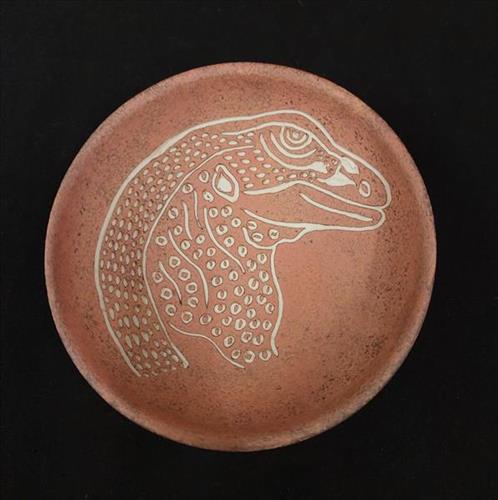
Walkarr (Bush Goanna)
Walkar (Bush Goanna) is found in eastern and western Yalanji land both in rainforest country and inland plains. Walkarr was an important food source to our Kuku Yalanji ancestors. Goannas are great tree climbers and sometimes hard to catch.
Walkarr was hunted with spears and brought back to prepare and cook in earth ovens or over a fire. Once it was cooked it was laid on paperbark and a mussel shell was used to scrape the outside of the skin and to cut up the meat to share. The oil from the Walkarr was also used as a liniment and to make cooking oil.
225182218051
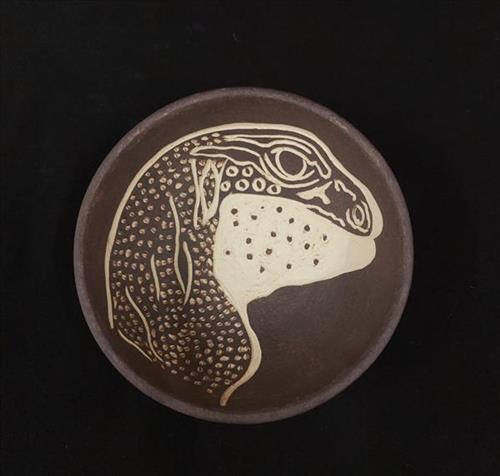
Walkarr (Bush Goanna)
Walkar (Bush Goanna) is found in eastern and western Yalanji land both in rainforest country and inland plains. Walkarr was an important food source to our Kuku Yalanji ancestors. Goannas are great tree climbers and sometimes hard to catch.
Walkarr was hunted with spears and brought back to prepare and cook in earth ovens or over a fire. Once it was cooked it was laid on paperbark and a mussel shell was used to scrape the outside of the skin and to cut up the meat to share. The oil from the Walkarr was also used as a liniment and to make cooking oil.