220982336702


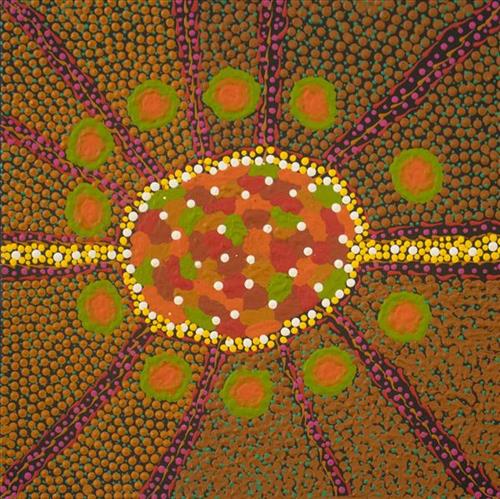
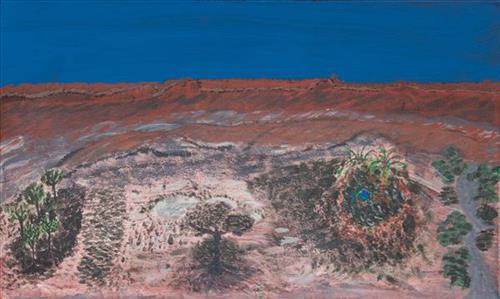
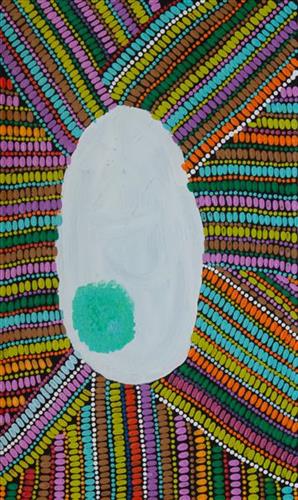
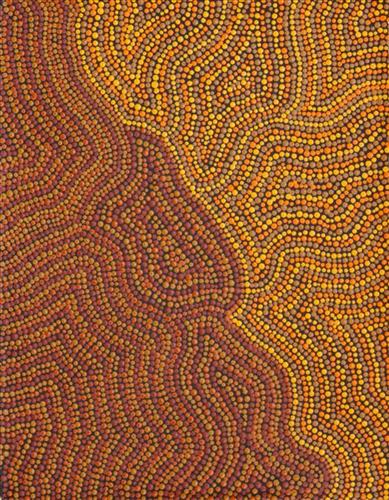
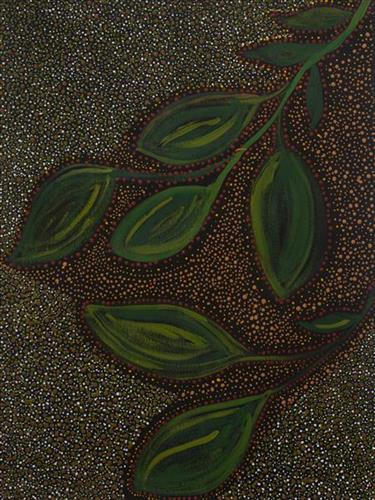
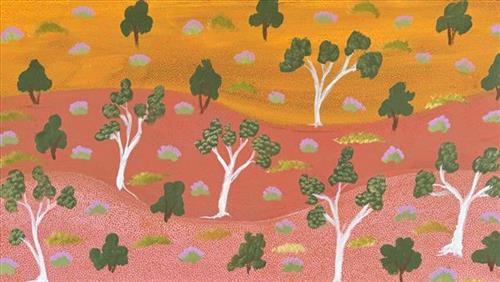
View of Country – Alec Pula Lewis

The community of Ampilatwatja made a conscious decision not to paint ‘altyerr’ dreaming stories, the artists paint their country where those stories sit.


Alec was born at McDonald Downs Station.  He grew up there with his family living traditionally on the land.  Alec did not attend school, he moved between different communities with his family. 


Knowing your country is an important part of living in a remote community like Ampilatwatja. Knowing when and where to go hunting and gathering, knowing where there is ‘soakage’ (where you can dig for water), travelling with family for ceremonies, and maintaining a connection with the land.

“This is my country, my view of country.”
377815582336993


Untitled


This artwork showcases the artist’s skillful use of color, texture, and technique, reflecting a deep connection to their environment and culture. Each detail embodies the unique identity of Bidyadanga Artists, where the desert meets the sea, and five language groups—Nyangumarta, Mangala, Yulparija, Juwaliny, and Karrajarri—come together to create art that speaks to the heart of Country. The artist captures the vibrant beauty of both desert and coastal landscapes, blending earthy reds, deep blues, and intricate patterns distinctive to their cultural heritage. The themes and composition invite viewers into the artist’s world, offering a glimpse of the rich, intertwined histories and the enduring connection to land and spirit that define the Bidyadanga community.

377815582336992


Untitled


This artwork showcases the artist’s skillful use of color, texture, and technique, reflecting a deep connection to their environment and culture. Each detail embodies the unique identity of Bidyadanga Artists, where the desert meets the sea, and five language groups—Nyangumarta, Mangala, Yulparija, Juwaliny, and Karrajarri—come together to create art that speaks to the heart of Country. The artist captures the vibrant beauty of both desert and coastal landscapes, blending earthy reds, deep blues, and intricate patterns distinctive to their cultural heritage. The themes and composition invite viewers into the artist’s world, offering a glimpse of the rich, intertwined histories and the enduring connection to land and spirit that define the Bidyadanga community.

111582336986


Institutional Groups

“This painting represents the different aboriginal groups placed or forced into the New Norcia Orphanage in the 1900’s.”

– Joan Lever

Martumili Artists work with over three hundred artists from remote Martu Aboriginal communities, including Punmu, Parnngurr, Kunawarritji, Jigalong, Irrungadji (Nullagine), and Warralong, as well as from the Parnpajinya (Newman) gallery and studio spaces. Known for their diverse, energetic, and unmediated painting styles, their works reflect the dramatic geography and scale of their homelands. Each artist, however, brings a unique approach to their craft.

Younger Martu artists often start painting alongside their parents, grandparents, and extended family, which fosters an organic learning process. This not only involves mastering painting techniques but also understanding specific locations, family histories, traditional ways of life, bush tucker, and Jukurrpa (Dreaming). Over time, with encouragement from their peers, they develop their own distinct styles and explore unique painting techniques and subject matter. In this work the artist brings a contemporary, evolving perspective to their work.

377815582337001


Two Skin Groups; Milangka & Panaka

Joanna Springs, my mother’s Country. People they used to come out from there, long time ago, bush people. It is a meeting place for different tribes. Then they get married there and move to a different place. On the right hand side is the fresh water spring; Joanna Spring. In the middle around the big tree is the meeting place. In the background is the McCleary Range

377815582337000


Yimiri

Yimiri (Lake Perceval) is my fathers Country. He was living there with 7 wives. My father was hunting and living on the land with his wives and kids. In the 1960’s the people from the mission came to get the people. My dad went with 4 wives to the Lagran mission which is now Bidyadanga community and the other 3 wives went to Jigalong. That’s where I was born in the 70’s in Bidyadanga.

377815582336999


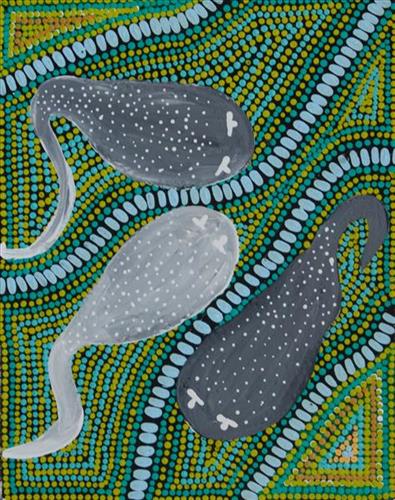
Hunting Pirntany (stingray) – Emma Nundi

When tide come in, they go out with their spear and hunt stingray (Pirntany) We cook on hot coals turning once by the tail and then place on leaves and everyone helps themselves.

377815582336998


Sand and Spinifex

This paining is about the sand and spinifex in the dry season time, when spinifex, the native plants and the country gets dry. When the rain comes it makes the country green again. Some animals love dry season for hunting. Some times we go hunting for animals for our families With the Paru (spinifex) we pull out the whole plant, roots and all and then we twist it around to make a flat basket (Jitatu) like a donut ring. Then this sits on the head and you can carry water for example. The water is in a Kapara like a shallow bowl which you make from the hard wood of a tree like Parntal (Owenia Reticulata)

377815582336997


Kutarrarra

Her family lived in this area with she was a little girl in the Percival Lakes region. There is warla (Lake) that was was sometimes to hot to walk on and burnt their feet. There are two rock holes there and after burning and the rains the green grass grows. “People used to drink and live there with my family, Lake Country- Warla. I asked my mother where I was born, Kurtararra Country next to Wirnpa side”

377815582336996


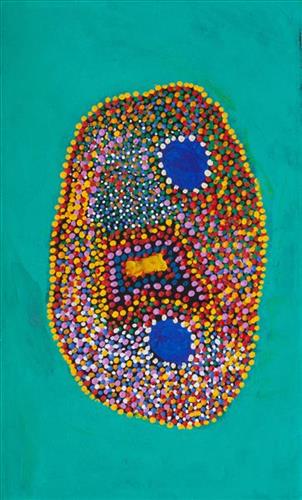
Untitled


This artwork showcases the artist’s skillful use of color, texture, and technique, reflecting a deep connection to their environment and culture. Each detail embodies the unique identity of Bidyadanga Artists, where the desert meets the sea, and five language groups—Nyangumarta, Mangala, Yulparija, Juwaliny, and Karrajarri—come together to create art that speaks to the heart of Country. The artist captures the vibrant beauty of both desert and coastal landscapes, blending earthy reds, deep blues, and intricate patterns distinctive to their cultural heritage. The themes and composition invite viewers into the artist’s world, offering a glimpse of the rich, intertwined histories and the enduring connection to land and spirit that define the Bidyadanga community.