377815582336995


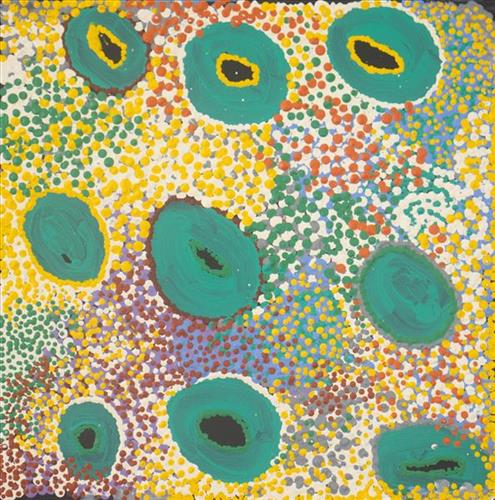
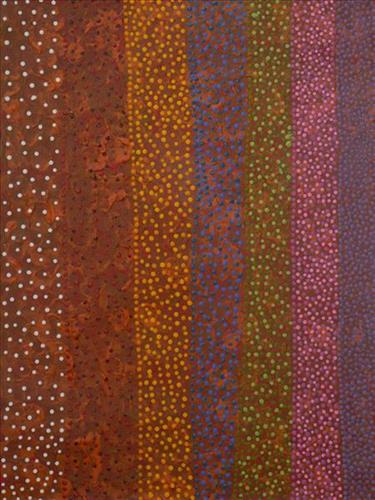
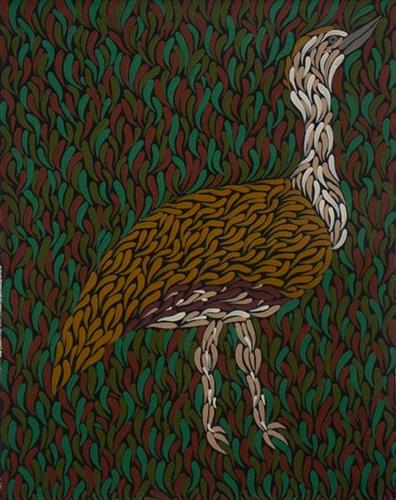
Binkitbaal (Bush Turkish)


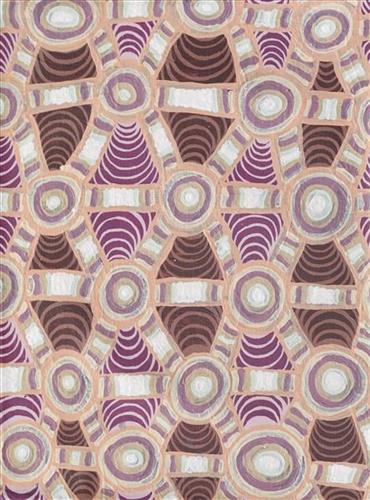
This artwork showcases the artist’s skillful use of color, texture, and technique, reflecting a deep connection to their environment and culture. Each detail embodies the unique identity of Bidyadanga Artists, where the desert meets the sea, and five language groups—Nyangumarta, Mangala, Yulparija, Juwaliny, and Karrajarri—come together to create art that speaks to the heart of Country. The artist captures the vibrant beauty of both desert and coastal landscapes, blending earthy reds, deep blues, and intricate patterns distinctive to their cultural heritage. The themes and composition invite viewers into the artist’s world, offering a glimpse of the rich, intertwined histories and the enduring connection to land and spirit that define the Bidyadanga community.
377815582336994


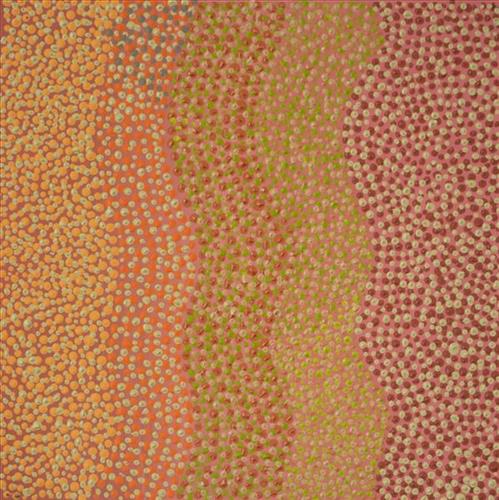
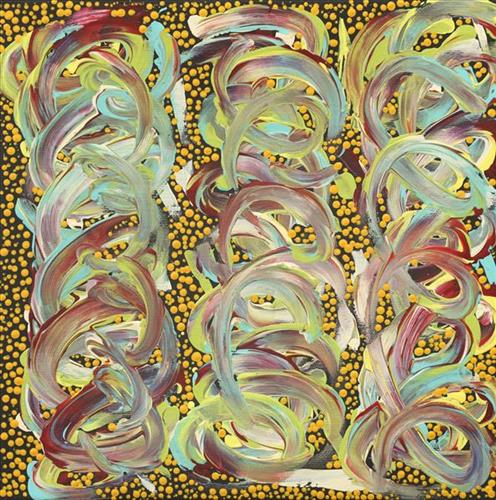
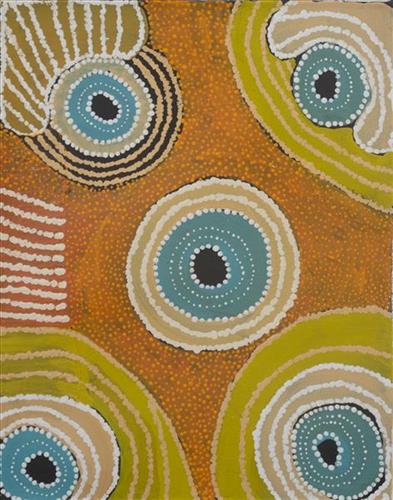
Dry waterhole

This painting is about the red desert sand in The Great Sandy Desert the hills and the mudflats. I love the colours of the desert.

This painting shows the Artists Grandfathers country where they used to walk around in circles searching for bush tucker and water from the waterholes. When our ancestors came out from the Canning Stock route, they used to see big mob of sand dunes and flowers.

377815582336991


Untitled


This artwork showcases the artist’s skillful use of color, texture, and technique, reflecting a deep connection to their environment and culture. Each detail embodies the unique identity of Bidyadanga Artists, where the desert meets the sea, and five language groups—Nyangumarta, Mangala, Yulparija, Juwaliny, and Karrajarri—come together to create art that speaks to the heart of Country. The artist captures the vibrant beauty of both desert and coastal landscapes, blending earthy reds, deep blues, and intricate patterns distinctive to their cultural heritage. The themes and composition invite viewers into the artist’s world, offering a glimpse of the rich, intertwined histories and the enduring connection to land and spirit that define the Bidyadanga community.
377815582336990


Untitled


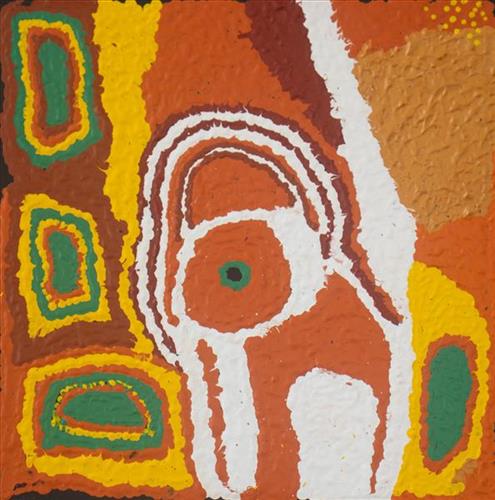
This artwork showcases the artist’s skillful use of color, texture, and technique, reflecting a deep connection to their environment and culture. Each detail embodies the unique identity of Bidyadanga Artists, where the desert meets the sea, and five language groups—Nyangumarta, Mangala, Yulparija, Juwaliny, and Karrajarri—come together to create art that speaks to the heart of Country. The artist captures the vibrant beauty of both desert and coastal landscapes, blending earthy reds, deep blues, and intricate patterns distinctive to their cultural heritage. The themes and composition invite viewers into the artist’s world, offering a glimpse of the rich, intertwined histories and the enduring connection to land and spirit that define the Bidyadanga community.
377815582336989


Untitled


This artwork showcases the artist’s skillful use of color, texture, and technique, reflecting a deep connection to their environment and culture. Each detail embodies the unique identity of Bidyadanga Artists, where the desert meets the sea, and five language groups—Nyangumarta, Mangala, Yulparija, Juwaliny, and Karrajarri—come together to create art that speaks to the heart of Country. The artist captures the vibrant beauty of both desert and coastal landscapes, blending earthy reds, deep blues, and intricate patterns distinctive to their cultural heritage. The themes and composition invite viewers into the artist’s world, offering a glimpse of the rich, intertwined histories and the enduring connection to land and spirit that define the Bidyadanga community.
377815582336988


Untitled


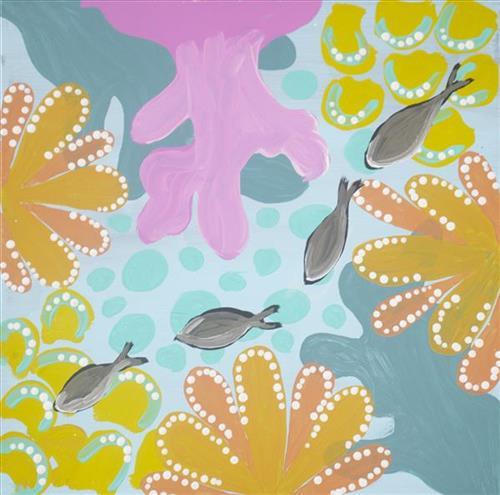
This artwork showcases the artist’s skillful use of color, texture, and technique, reflecting a deep connection to their environment and culture. Each detail embodies the unique identity of Bidyadanga Artists, where the desert meets the sea, and five language groups—Nyangumarta, Mangala, Yulparija, Juwaliny, and Karrajarri—come together to create art that speaks to the heart of Country. The artist captures the vibrant beauty of both desert and coastal landscapes, blending earthy reds, deep blues, and intricate patterns distinctive to their cultural heritage. The themes and composition invite viewers into the artist’s world, offering a glimpse of the rich, intertwined histories and the enduring connection to land and spirit that define the Bidyadanga community.
377815582336987


Untitled


This artwork showcases the artist’s skillful use of color, texture, and technique, reflecting a deep connection to their environment and culture. Each detail embodies the unique identity of Bidyadanga Artists, where the desert meets the sea, and five language groups—Nyangumarta, Mangala, Yulparija, Juwaliny, and Karrajarri—come together to create art that speaks to the heart of Country. The artist captures the vibrant beauty of both desert and coastal landscapes, blending earthy reds, deep blues, and intricate patterns distinctive to their cultural heritage. The themes and composition invite viewers into the artist’s world, offering a glimpse of the rich, intertwined histories and the enduring connection to land and spirit that define the Bidyadanga community.
111582336985


Palpirr / Parlpirr / Parlpinypa / Jiparri / Kumpulpija (Fitzroy Wattle, Pindan Wattle, Fish Hook Wattle, and Shiny Leaved Wattle)

Palpirr, otherwise known as parlpirr, parlpinypa, jiparri, and kumpulpija (fitzroy wattle, pindan wattle, fish hook wattle, and shiny leaved wattle), is an acacia shrub with long, narrow, olive coloured leaves. It produces soft, spiked golden flowers before giving way to slightly curved oblong seed pods. Once dried in hot ashes, the seeds can be ground to a paste and eaten with caution, as too much of the paste causes headaches. The plant also has medicinal properties; its leaves can be chewed and placed on burns to aid healing.

During the pujiman (traditional, desert dwelling) period, Martu would traverse very large distances annually in small family groups, moving seasonally from water source to water source, and hunting and gathering bush tucker as they went. Whilst desert life has moved away from mobile hunter-gatherer subsistence throughout the course of the twentieth century, bush tucker continues to be a significant component of the modern Martu diet. Hunting and gathering bush tucker remains equally valuable as an important cultural practice that is passed on intergenerationally. Though hunting and gathering implements have been modernised, methods of harvesting, tracking and the use of fire burning to drive animals from their retreats are still commonly practiced today.

111582336984


Tali, Tuwa (Sandhills)

The traditional lands of the Martu people encompass the Great Sandy Desert and Rudall River regions of Western Australia, an enormous tract dominated by distinctive red tali, or tuwa (sandhills). These sandhills present an unforgiving landscape; sparse vegetation covers a seemingly never ending expanse of dunes, and yet these lands and the location of resources within them was known intimately by its pujiman (traditional, desert dwelling) inhabitants. At this time, Martu traversed very large distances annually in small family groups, moving from water source to water source through the harsh desert landscape with incredible stamina and resourcefulness. Travel was often undertaken at night, and when travelling during the day, Martu wore yakipiri (woven bark sandals) to protect their feet from the hot desert sand.

111582336983


Wanti Yuu

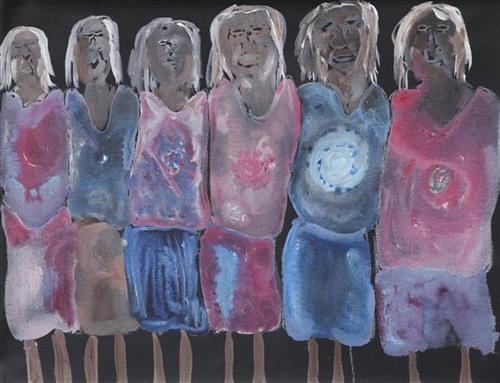
“It’s pretty much the line of thought of my family. So that’s my daughter and then my granny- ‘Nan Nan’ they call her- and then my mum, SW. And that’s my nanna Lorna. It’s pretty much the line of where I’m from. That connection and family tree.”

– Sylvia Wilson

This work is one of a series by Sylvia Wilson entitled ‘Mum, The Boss, My Daughter and the Wanti (Woman, Girl).’ As Sylvia explains, the work is both a depiction of, and attribute to, the women in her family heritage.

The Martu term for family, walytja, encapsulates a broader idea of relatedness that permeates every aspect of life. The Martu four-section kinship system determines a person as belonging to either the Purungu, Milangka, Panaka or Karrimarra skin group, and was created by the Jukurrpa (Dreaming) ancestors.

This system not only defines relationships, it also establishes a framework for expectations and obligations, and extends the importance of family far beyond mere blood or marriage ties. Family is not limited to blood connections; it encompasses all relationships within the entire community, forming a network of relationships that was crucial to survival during the pujiman (traditional, desert dwelling) era, and that remains fundamental to Martu life today. The kinship system allows everyone to know what expectations one person can have in relation to another, and means that familial terms and relationships are present between any two individuals, whether or not they are related by blood.