377815582354699


Claypan

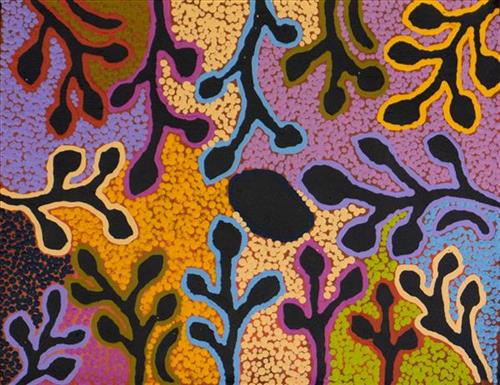
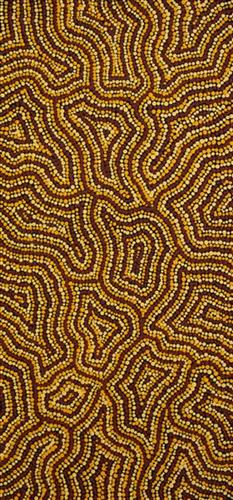
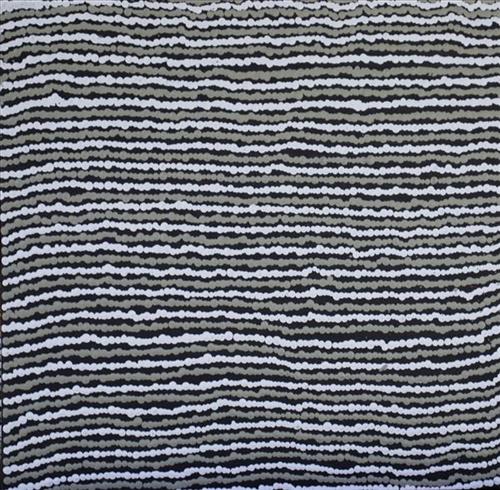
All about white claypan in dry season, lalga. I’m doing the dry claypan. We go out country from Bidgy (Bidyadanga abbr.) and go hunting for kangaroo and turkey, like that you know? Bush animals you know? Long time [ago] people used to go hunting by walking, but now we go with car. When we go dry time the jurnga (ground} all hard, [that’s when it’s] more easy to see the animal footprints. Not when it’s scrubby, not when it’s a marsh, that’s when the ground is too softened then, too boggy.


This is the one I’m painting now, I’m doing the colour of the dry season, I’m doing all the dots like the sand, claypan, marsh and the paru (spinifex), all the different Nyangumarta country. I’m doing all the station, I’m doing the white plain, the marsh and claypan area. That’s all in the pirla (desert, country). I’m doing different sort of area; Wallal, Mandoora, Anna Plains, Sandfire Marsh, Salt Creek. Bush name for Salt Creek is Wallyarra. We go hunting different places every day. That’s the hunting places.
377815582354697


Kulyakartu

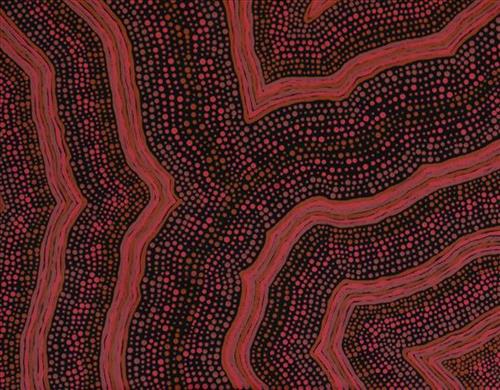
 This artwork showcases the artist’s skillful use of colour, texture, and technique, reflecting a deep connection to their environment and culture. Each detail embodies the unique identity of Bidyadanga Artists, where the original five language groups—Nyangumarta, Mangala, Yulparija, Juwaliny, and Karrajarri—come together to create art that speaks to the heart of Country. Over time, the community and Art Centre has grown to include people from other Kimberley tribes, fostering a space where diverse cultural knowledge and practices come together. Situated where the desert meets the sea, artists draw inspiration from their ancestral Country and personal journeys. The artist captures the vibrant beauty of both desert and coastal landscapes, blending earthy reds, deep blues, and intricate patterns distinctive to their cultural heritage. The themes and composition invite viewers into the artist’s world, offering a glimpse of the rich, intertwined histories and the enduring connection to land and spirit that define the Bidyadanga community.

377815582354696


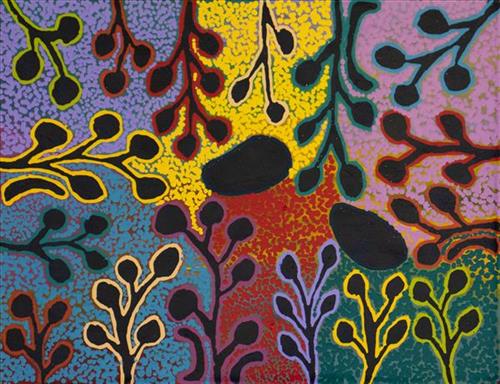
Papilija

Papilija is a yinta soak in Kulyakartu;

My grandmother and her sibling’s country.

They used to go there all the time.

Good kapi for drinking and yukarri (green) all around.

Lots of warta (trees).

Plenty bush tucker.

377815582354695


Untitled

 This artwork showcases the artist’s skillful use of colour, texture, and technique, reflecting a deep connection to their environment and culture. Each detail embodies the unique identity of Bidyadanga Artists, where the original five language groups—Nyangumarta, Mangala, Yulparija, Juwaliny, and Karrajarri—come together to create art that speaks to the heart of Country. Over time, the community and Art Centre has grown to include people from other Kimberley tribes, fostering a space where diverse cultural knowledge and practices come together. Situated where the desert meets the sea, artists draw inspiration from their ancestral Country and personal journeys. The artist captures the vibrant beauty of both desert and coastal landscapes, blending earthy reds, deep blues, and intricate patterns distinctive to their cultural heritage. The themes and composition invite viewers into the artist’s world, offering a glimpse of the rich, intertwined histories and the enduring connection to land and spirit that define the Bidyadanga community.

377815582354694


Untitled

 This artwork showcases the artist’s skillful use of colour, texture, and technique, reflecting a deep connection to their environment and culture. Each detail embodies the unique identity of Bidyadanga Artists, where the original five language groups—Nyangumarta, Mangala, Yulparija, Juwaliny, and Karrajarri—come together to create art that speaks to the heart of Country. Over time, the community and Art Centre has grown to include people from other Kimberley tribes, fostering a space where diverse cultural knowledge and practices come together. Situated where the desert meets the sea, artists draw inspiration from their ancestral Country and personal journeys. The artist captures the vibrant beauty of both desert and coastal landscapes, blending earthy reds, deep blues, and intricate patterns distinctive to their cultural heritage. The themes and composition invite viewers into the artist’s world, offering a glimpse of the rich, intertwined histories and the enduring connection to land and spirit that define the Bidyadanga community.

377815582354693


Untitled

 This artwork showcases the artist’s skillful use of colour, texture, and technique, reflecting a deep connection to their environment and culture. Each detail embodies the unique identity of Bidyadanga Artists, where the original five language groups—Nyangumarta, Mangala, Yulparija, Juwaliny, and Karrajarri—come together to create art that speaks to the heart of Country. Over time, the community and Art Centre has grown to include people from other Kimberley tribes, fostering a space where diverse cultural knowledge and practices come together. Situated where the desert meets the sea, artists draw inspiration from their ancestral Country and personal journeys. The artist captures the vibrant beauty of both desert and coastal landscapes, blending earthy reds, deep blues, and intricate patterns distinctive to their cultural heritage. The themes and composition invite viewers into the artist’s world, offering a glimpse of the rich, intertwined histories and the enduring connection to land and spirit that define the Bidyadanga community.

377815582354692


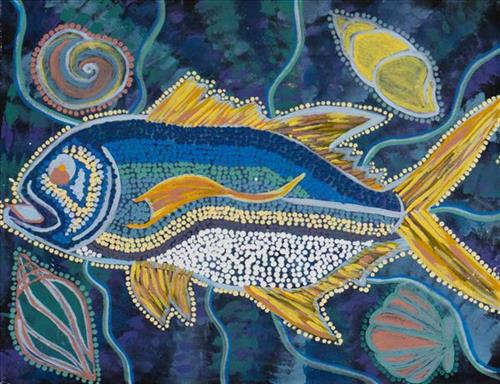
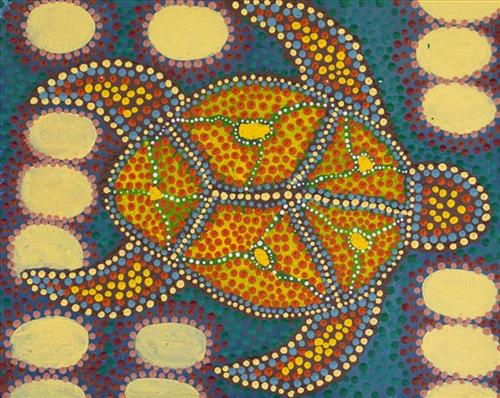
That’s the turtle laying egg

 This artwork showcases the artist’s skillful use of colour, texture, and technique, reflecting a deep connection to their environment and culture. Each detail embodies the unique identity of Bidyadanga Artists, where the original five language groups—Nyangumarta, Mangala, Yulparija, Juwaliny, and Karrajarri—come together to create art that speaks to the heart of Country. Over time, the community and Art Centre has grown to include people from other Kimberley tribes, fostering a space where diverse cultural knowledge and practices come together. Situated where the desert meets the sea, artists draw inspiration from their ancestral Country and personal journeys. The artist captures the vibrant beauty of both desert and coastal landscapes, blending earthy reds, deep blues, and intricate patterns distinctive to their cultural heritage. The themes and composition invite viewers into the artist’s world, offering a glimpse of the rich, intertwined histories and the enduring connection to land and spirit that define the Bidyadanga community.

377815582354655


Papilija

Papilija is a yinta soak in Kulyakartu;

My grandmother and her sibling’s country.

They used to go there all the time.

Good kapi for drinking and yukarri (green) all around.

Lots of warta (trees).

Plenty bush tucker.

377815582354654


Wika (fire)

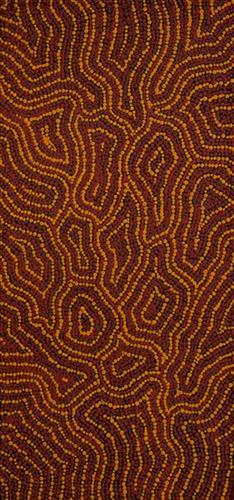
This paining is about the claypans, spinifex and waru (fire) in the dry season time, when spinifex, the native plants and the country gets dry. Its about how to burn the country the right way, not the wrong way. Like old people they used to burn the county right way, so we learn from them and keep country good for us and all the animals comes out of the bush. When the rain comes it makes the country green again. Some animals love dry season for hunting. Some times we go hunting for animals for our families

 With the Paru (spinifex) we pull out the whole plant, roots and all and then we twist it around to make a flat basket (Jitatu) like a donut ring. Then this sits on the head and you can carry water for example. The water is in a Kapara like a shallow bowl which you make from the hard wood of a tree like Parntal (Owenia Reticulata)

377815582354653


Wika (fire)

This paining is about the claypans, spinifex and waru (fire) in the dry season time, when spinifex, the native plants and the country gets dry. Its about how to burn the country the right way, not the wrong way. Like old people they used to burn the county right way, so we learn from them and keep country good for us and all the animals comes out of the bush. When the rain comes it makes the country green again. Some animals love dry season for hunting. Some times we go hunting for animals for our families

 With the Paru (spinifex) we pull out the whole plant, roots and all and then we twist it around to make a flat basket (Jitatu) like a donut ring. Then this sits on the head and you can carry water for example. The water is in a Kapara like a shallow bowl which you make from the hard wood of a tree like Parntal (Owenia Reticulata)