114182374906


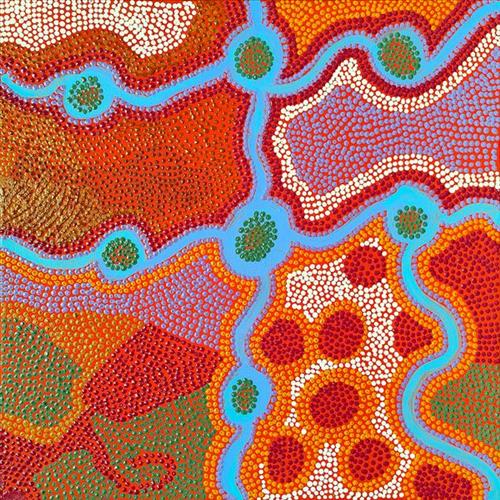
Kungkarrangkalpa (Seven Sisters)

‘Kungkarrangkalpa’ (The Seven Sisters or Pleaides) is significant Tjukurrpa (dreamtime). Its origins you may be familiar with in astronomy and its connection to ‘Wati Nyiru’ (Magic Man or Orion).  The roots of this dreaming stems across indigenous groups around the world. The Australian Aboriginal songline is one part to the whole dreaming which can be traced all around the world. The ladies of the Ngaanyatjarra Lands depict their significant chapter and understanding of the journey of the sisters. The different versions of this story depend on where you live and the significance’s of local Tjukurrpa places.

Nyiru fell in love with the sisters but he was of the wrong skin group to marry, but he still pursued them on their journey. The sisters travel across the land to escape Nyiru’s unwanted attentions, but he is persistent and always finds them. There are significant land forms which can be sited today that evidence this dreaming. As Nyiru is chasing the sisters he tries to catch them by using magic to turn into the most tempting kampurarrpa (bush tomato) and the most beautiful Yirli (wild fig tree), for them to eat and camp under. However, the sisters are knowledgeable of his magic and too clever for Nyiru who they outwit again and again. They go hungry and run through the night rather than be caught by him. As the journey continues, Nyiru gets so frustrated at the wit of the sisters that he uses his magic to make the oldest sister sick to try and get closer to her. The other sisters rescue the big sister and nurse her back to health. It is said he also captures the youngest sister, but with the help of the oldest sister, she escapes back to her sisters who are waiting for her. Eventually, the sisters fly into the sky to escape Nyiru, forming the constellation. Nyiru felt lonely, longing for the sisters who were so far away. Nyiru used his magic to go to the sky, forever in pursuit.
377810582374886


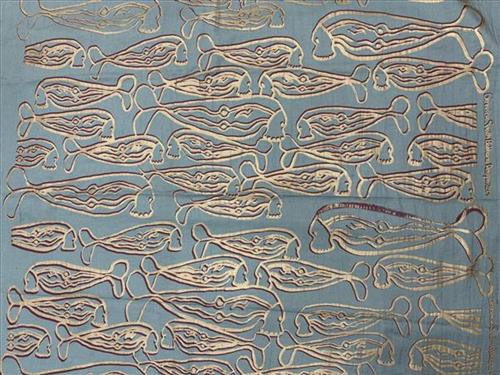
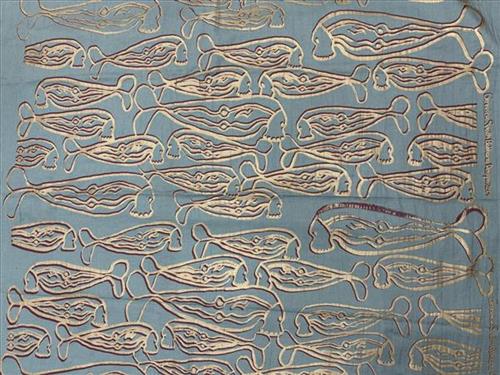
Murnun (Dugong)

Dugong can be found in the waters around Maningrida They are a protected species but do form part of a traditional manme (bushfood) diet for some saltwater communities.

377810582374884


Murnun (Dugong)

Dugong can be found in the waters around Maningrida They are a protected species but do form part of a traditional manme (bushfood) diet for some saltwater communities.

377810582374881


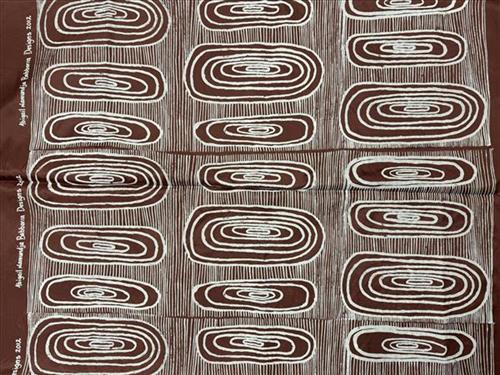
Kunwardde dja Kunronj (Rocks and Billabong)

Abigail has depicted the waterholes or Kunwardde dja Kunronj (Sacred Rocks and Billabong) that lie on the plains near Mankorlod, the country for which she is a traditional owner.

The waterholes remain wet throughout the year, even during dry season. This site is connected to the artist’s djang (dreaming), the ngalng (freshwater yabbie) and stone country. Mankorlod homeland is a three-hour drive from Maningrida in the kunwardde (stone country).

377810582374876


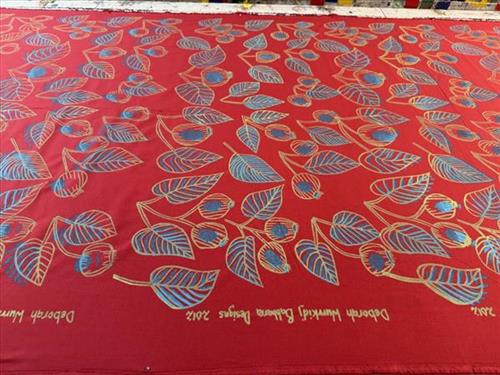
Man-djarduk (Red Bush Apples)

Deborah Wurrkidj is a Kuninjku artist from the Kurulk clan whose country lies around the outstation of Mumeka in central Arnhem Land.

In this design she has depicted man-djarduk (red bush apples) – a sweet, crisp bush food that is a favourite to collect.

Man-djarduk fruits in kurrung and kunumeleng seasons, the build-up and first rains seasons.

220982375199


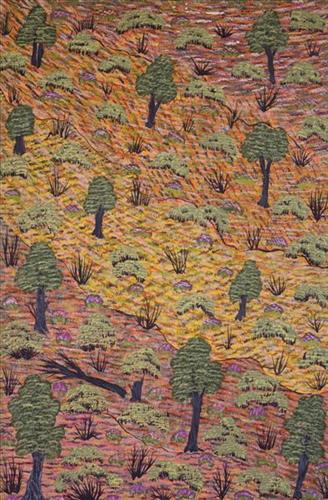
Yvonne Ngwarraye Bonney – My Hunting Country

Yvonne has painted her favourite hunting country after rain. “This is when the storm ants come and make the goannas nice and fat, the ground is soft for digging honey ants and it’s when the bush foods and grasses come up and grow strong. The country is normally bare with small stones and rocks everywhere, but after rain, everything comes alive.”

Yvonne is a tremendous hunter, she is skilled in reading tracks and reading the land. Painting hunting country is important and special to her. 

The community of Ampilatwatja made a conscious decision not to paint ‘altyerr’(dreaming stories). The artists paint their country where those stories sit.

115682375197


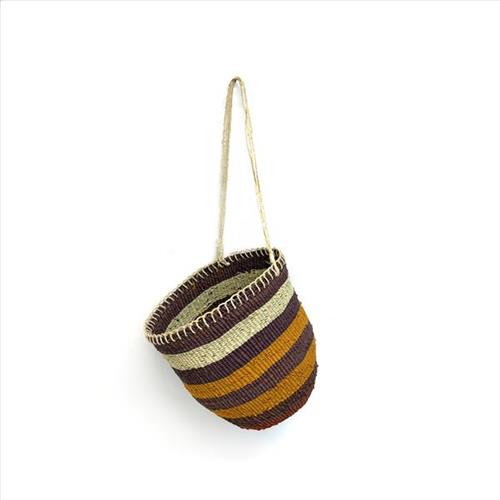
Mindirr (Pandanus Bag)

Miṉḏirr (dilly bags) are made from gunga (Pandanus spiralis), baḻgurr (kurrajong) and natural bush dyes. The body of the miṉḏirr is made from gunga, and the handles from baḻgurr. Once the gunga fronds and baḻgurr bark have been collected, they are stripped and prepared then boiled with the dyes.

Miṉḏirr were used traditionally for every day utilitarian purposes, particularly collecting bush foods such as bäḻtji (yam). Traditionally, the baḻgurr handles were worn across the forehead while the body of the miṉḏirr sat at the back, between the shoulder blades making it easily accessible when collecting ŋatha (food).

115682375187


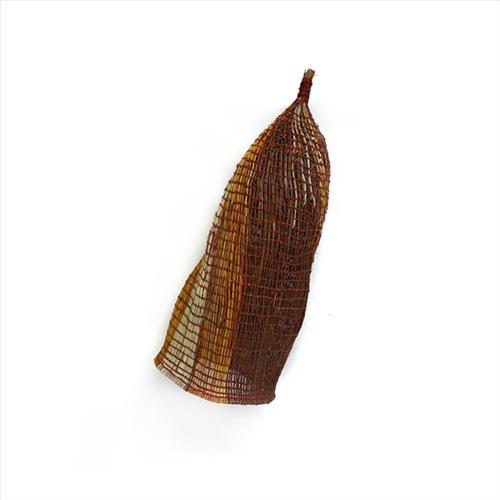
Dhawurr or Batjbarra (Fish Trap)

Dhawurr, or Batjbarra, is a traditional fishing method used by Indigenous people in the Arafura Swamp and surrounding wetlands of Arnhem Land. Yolŋu now prefer the modern fishing methods of reels and bait, however, weavers continue to make Batjbarra for cultural conservation and to be sold as decorative pieces.

When used for practical purposes, the Batjbarra was placed into the river with the opening facing oncoming fish. The woven tunnel trapped the fish with the weave tight enough to prevent escape but loose enough to allow water to freely flow through. The traps tapered so that when they were submerged, the water pressure wedged them into place.

The primary material used in this piece is the young, green leaves of the Pandanus spiralis tree, that were harvested using a long wooden hook. The leaves are stripped of their prickles, with the smaller fibres being dried to produce a strong, resilient material. These fibres are then twisted, coiled, or combined using various techniques to create the fish trap.

Bula’bula weavers exclusively use natural dyes, derived from locally sourced roots, leaves and grasses. These pigments are extracted and infused into pandanus fibres by boiling over an open fire, producing the rich, vibrant colours characteristic of contemporary Yolŋu weavings.

115682375184


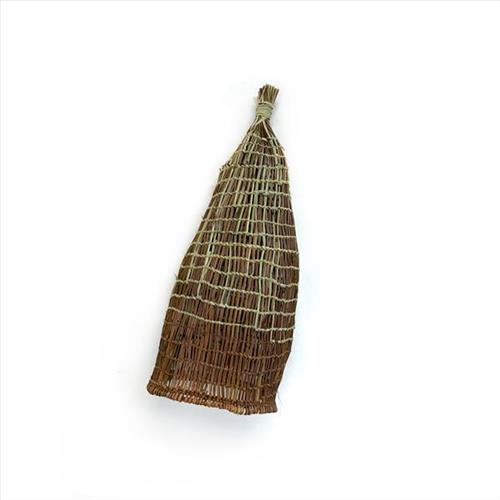
Dhawurr or Batjbarra (Fish Trap)

Dhawurr, or Batjbarra, is a traditional fishing method used by Indigenous people in the Arafura Swamp and surrounding wetlands of Arnhem Land. Yolŋu now prefer the modern fishing methods of reels and bait, however, weavers continue to make Batjbarra for cultural conservation and to be sold as decorative pieces.

When used for practical purposes, the Batjbarra was placed into the river with the opening facing oncoming fish. The woven tunnel trapped the fish with the weave tight enough to prevent escape but loose enough to allow water to freely flow through. The traps tapered so that when they were submerged, the water pressure wedged them into place.

The primary material used in this piece is the young, green leaves of the Pandanus spiralis tree, that were harvested using a long wooden hook. The leaves are stripped of their prickles, with the smaller fibres being dried to produce a strong, resilient material. These fibres are then twisted, coiled, or combined using various techniques to create the fish trap.

Bula’bula weavers exclusively use natural dyes, derived from locally sourced roots, leaves and grasses. These pigments are extracted and infused into pandanus fibres by boiling over an open fire, producing the rich, vibrant colours characteristic of contemporary Yolŋu weavings.