114182384114


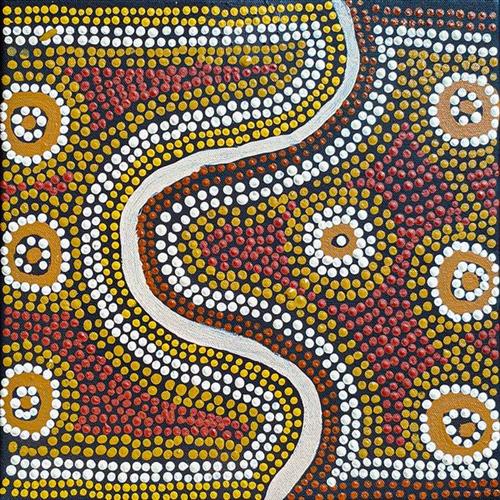
Kungkarrangkalpa (Seven Sisters)

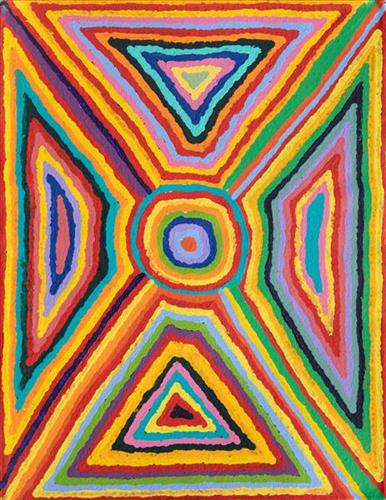
‘Kungkarrangkalpa’ (The Seven Sisters or Pleaides) is significant Tjukurrpa (dreamtime). Its origins you may be familiar with in astronomy and its connection to ‘Wati Nyiru’ (Magic Man or Orion).  The roots of this dreaming stems across indigenous groups around the world. The Australian Aboriginal songline is one part to the whole dreaming which can be traced all around the world. The ladies of the Ngaanyatjarra Lands depict their significant chapter and understanding of the journey of the sisters. The different versions of this story depend on where you live and the significance’s of local Tjukurrpa places.

Nyiru fell in love with the sisters but he was of the wrong skin group to marry, but he still pursued them on their journey. The sisters travel across the land to escape Nyiru’s unwanted attentions, but he is persistent and always finds them. There are significant land forms which can be sited today that evidence this dreaming. As Nyiru is chasing the sisters he tries to catch them by using magic to turn into the most tempting kampurarrpa (bush tomato) and the most beautiful Yirli (wild fig tree), for them to eat and camp under. However, the sisters are knowledgeable of his magic and too clever for Nyiru who they outwit again and again. They go hungry and run through the night rather than be caught by him. As the journey continues, Nyiru gets so frustrated at the wit of the sisters that he uses his magic to make the oldest sister sick to try and get closer to her. The other sisters rescue the big sister and nurse her back to health. It is said he also captures the youngest sister, but with the help of the oldest sister, she escapes back to her sisters who are waiting for her. Eventually, the sisters fly into the sky to escape Nyiru, forming the constellation. Nyiru felt lonely, longing for the sisters who were so far away. Nyiru used his magic to go to the sky, forever in pursuit.
116482384113


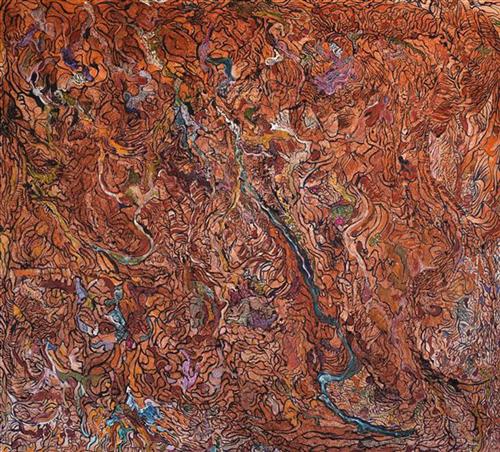
Rugged Country

During dry summer months our country looks so dry, but the beauty of the red earth, the spinifex and dry grass make it beautiful. Although it doesn’t rain, but during the cool weather, the wetness in the morning, the heavy dew waters it all down and the new growth comes.

114182384111


Kakalala and Kangka (White Cockatoo and Black Crow)

This is a dreamtime story about Kakalala (White Cockatoo) and Kangka (Black Crow). Cockatoo and Crow were the wives of Eagle. One day the wives went off to collect food. Crow was jealous of Cockatoo and she attacked her and broke her legs. Crow left her out bush and went back to Eagle. Crow said that Cockatoo was in the bush as she was expecting a baby. But after three days when Cockatoo did not return home, Eagle went out looking for her. He followed her tracks but could not find her. He decided that Crow had been lying and he punished her by burying her in a hole.

116482384103


Jirda Flour Increasing Site

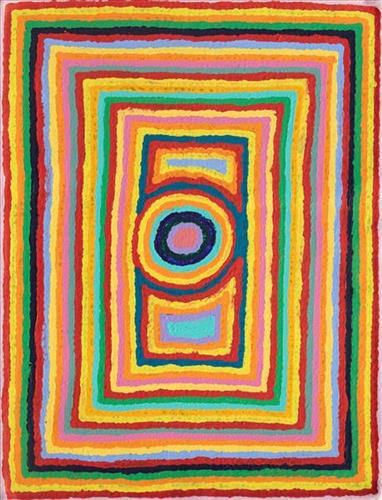
It is one of the sacred sites on the way to GG. It’s a place where Yindjibarndi ancestors walked the country gathering bush food, camping, staying close to main pools surroudning the area Wayumarri. Bilaa is a small seed that grows there. It is gathered and ground into a flour. Our ancestors used to make damper from that flour.

116482384097


Pilbara Landscape After the Raim

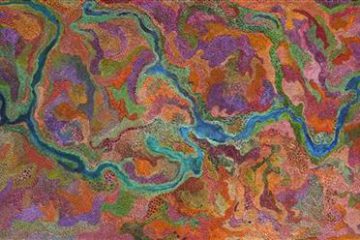
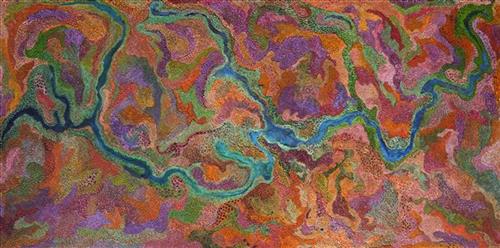
After the rain the rivers and creeks in our country come alive with a new growth of plants . The country is filled with beautiful colours. We rejoice looking at our rivers and creeks full of water, so that we can go fishing, kids can go swimming and we can picnic with our families and friends.

111582384017


Tuwa (Sandhills)

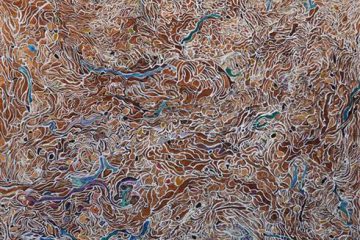
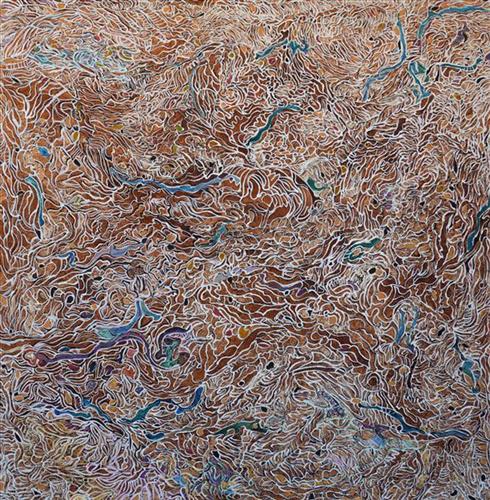
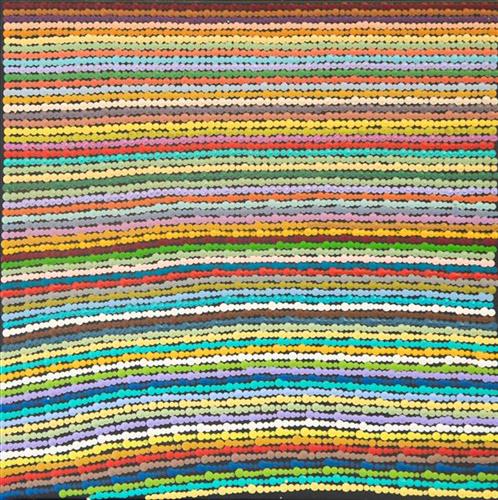
The traditional lands of the Martu people encompass the Great Sandy Desert and Rudall River regions of Western Australia, an enormous tract dominated by distinctive red tali, or tuwa (sandhills). These sandhills present an unforgiving landscape; sparse vegetation covers a seemingly never ending expanse of dunes, and yet these lands and the location of resources within them was known intimately by its pujiman (traditional, desert dwelling) inhabitants. At this time, Martu traversed very large distances annually in small family groups, moving from water source to water source through the harsh desert landscape with incredible stamina and resourcefulness. Travel was often undertaken at night, and when travelling during the day, Martu wore yakipiri (woven bark sandals) to protect their feet from the hot desert sand.

111582384002


Jartuti

“Jartuti water place east of Parnngurr. In pujiman (traditional, desert dwelling) days old people walked and hunted there, we went there recently with KJ (Kanyirninpa Jukurrpa) ranger mob, lovely place.” 

 – Beverley Rogers

Jartuti is a water source located close to Parnngurr Aboriginal Community (otherwise known as Cotton Creek), and is part of Beverley’s father’s ngurra (home Country, camp). The site is near to the home of the jangara (cannibal devil), spiritual beings from the Jukurrpa (Dreaming) era.

111582384000


Jartuti

“Jartuti water place east of Parnngurr. In pujiman (traditional, desert dwelling) days old people walked and hunted there, we went there recently with KJ (Kanyirninpa Jukurrpa) ranger mob, lovely place.” 

 – Beverley Rogers

Jartuti is a water source located close to Parnngurr Aboriginal Community (otherwise known as Cotton Creek), and is part of Beverley’s father’s ngurra (home Country, camp). The site is near to the home of the jangara (cannibal devil), spiritual beings from the Jukurrpa (Dreaming) era.

111582383998


Jinyjiwirrily

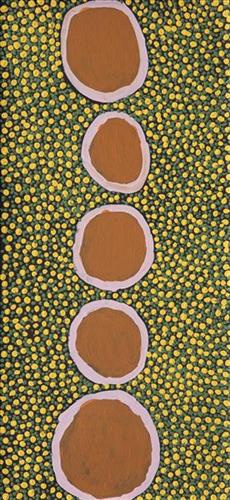
Jinjiwirrily (jinyjiwirrily), otherwise known as kanyjilyi (wild gooseberry, or desert raisin), is a small, prickly shrub that produces spherical yellow bush fruit. The plant occurs in the spinifex sandplains and sand dunes of Australia’s arid regions. Usually the year after fire or good rains, jinjiwirrily prolifically produces purple flowers before fruiting. The fruit is high in vitamin C content and has a taste akin to tamarillo and caramel.  It can be consumed raw when the fruit is yellow and ripe, but is generally preferred when dried like a raisin.

During the pujiman (traditional, desert dwelling) period, Martu would traverse very large distances annually in small family groups, moving seasonally from water source to water source, and hunting and gathering bush tucker as they went. Whilst desert life has moved away from mobile hunter-gatherer subsistence throughout the course of the twentieth century, bush tucker continues to be a significant component of the modern Martu diet. Hunting and gathering bush tucker remains equally valuable as an important cultural practice that is passed on intergenerationally. Though hunting and gathering implements have been modernised, methods of harvesting, tracking and the use of fire burning to drive animals from their retreats are still commonly practiced today.