111582383997


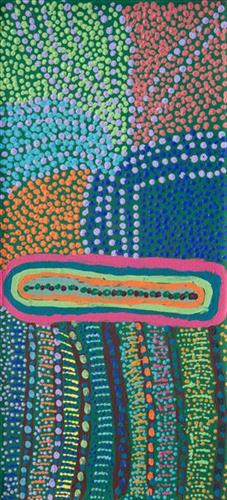
Minyarra

Minyarra (bush onion), otherwise known as jaliirpa or jurnta, are a favoured bush tucker amongst Martu, popular for their sweet, nutty taste and for the relative ease with which they are foraged. The minyarra plant is small and grass-like, with edible tubers at the root. Between January and June minyarra is typically collected in large quantities close to springs and salt lakes, and then shared and eaten over the following days. They can be eaten raw or cooked, and are harvested by first loosening the soil at their base with a pounding stone, and then pulling out the plant. The bulbs can also be stored for up to two years. 

During the pujiman (traditional, desert dwelling) period, Martu would traverse very large distances annually in small family groups, moving seasonally from water source to water source, and hunting and gathering bush tucker as they went. Whilst desert life has moved away from mobile hunter-gatherer subsistence throughout the course of the twentieth century, bush tucker continues to be a significant component of the modern Martu diet. Hunting and gathering bush tucker remains equally valuable as an important cultural practice that is passed on intergenerationally. Though hunting and gathering implements have been modernised, methods of harvesting, tracking and the use of fire burning to drive animals from their retreats are still commonly practiced today.
111582383995


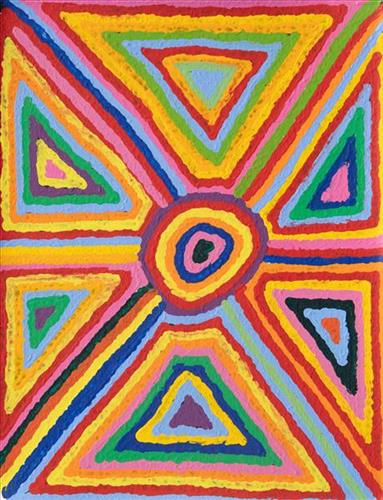
Jartuti

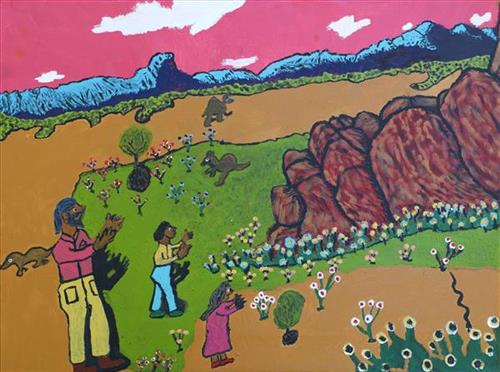
“Jartuti water place east of Parnngurr. In pujiman (traditional, desert dwelling) days old people walked and hunted there, we went there recently with KJ (Kanyirninpa Jukurrpa) ranger mob, lovely place.” 

 – Beverley Rogers

Jartuti is a water source located close to Parnngurr Aboriginal Community (otherwise known as Cotton Creek), and is part of Beverley’s father’s ngurra (home Country, camp). The site is near to the home of the jangara (cannibal devil), spiritual beings from the Jukurrpa (Dreaming) era.

111582383994


Jartuti

“Jartuti water place east of Parnngurr. In pujiman (traditional, desert dwelling) days old people walked and hunted there, we went there recently with KJ (Kanyirninpa Jukurrpa) ranger mob, lovely place.” 

 – Beverley Rogers

Jartuti is a water source located close to Parnngurr Aboriginal Community (otherwise known as Cotton Creek), and is part of Beverley’s father’s ngurra (home Country, camp). The site is near to the home of the jangara (cannibal devil), spiritual beings from the Jukurrpa (Dreaming) era.

377810582383988


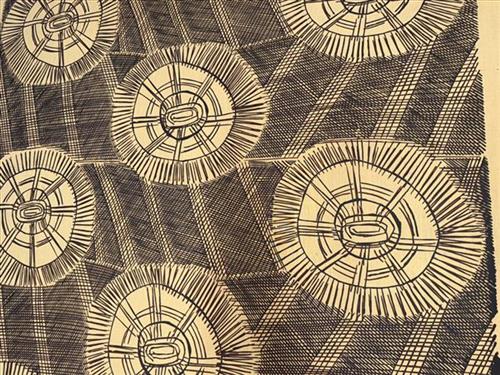
Marebu (Floor Mat)

Deborah Wurrkidj is a Kuninjku artist from the Kurulk clan.

Wurrkidj’ country lies around the outstation of Mumeka in central Arnhem Land. She is an accomplished artist working across mediums including painting, sculpture, weaving and textile design. In her later years, Deborah has focused her efforts on mentoring her niece, Temika Namundja.

Works in fibre from the Maningrida region are widely recognised as some of the finest in Australia. Artists confidently push the boundaries of fibre craft and cultural expression, adapting traditional techniques and forms to produce strikingly inventive and aesthetically exquisite artworks.

Artists weave many different kinds of mats. Conical mats were traditionally used to shield babies from mosquitoes. Long flat mats were used for blocking creeks so that fish would be diverted into fish traps. A small triangular mat made of pandanus fibre used to be worn by women during ceremonial gatherings, tied around their back and covering them at the front. Mats are also used for wrapping and rinsing food in water.

Artists usually use kundayarr, pandanus spiralis, to weave decorative round or oblong mats, as well as the less common triangular and conical shapes. Weaving is physically hard work, now done only by women. They colour the pandanus using natural dyes made from the roots, leaves or flowers of plants within the weaver’s clan estate.

The radial woven patterns of the finest round mats appear to vibrate with colour, sometimes regarded as an aesthetic manifestation of deep cultural meaning, as there is a significant spiritual dimension to pandanus mats.

111582383987


Wirlarra (Wilarra)

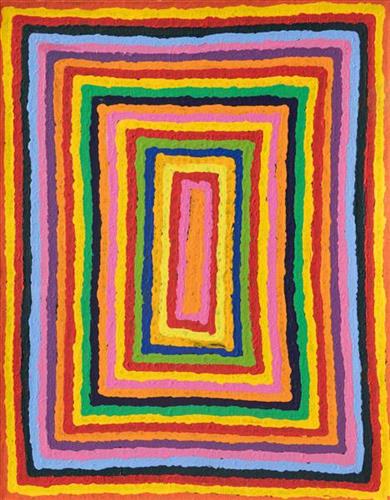
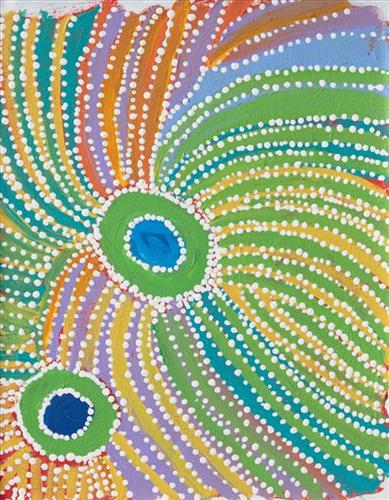
Wirlarra, the site depicted in this painting, lies on the eastern edge of a large salt lake, Nyayartakujarra (Lake Dora), near Punmu Aboriginal community. A distinctive group of small salt water pools are clustered together here. The water from these pools is known for its’ powerful healing properties, and the pools are still visited today by Martu to bathe cuts and sores. 

Wirlarra is also a term for ‘moon’ in Manyjilyjarra, and through the site’s Jukurrpa (Dreaming) narrative, the site is united with the moon in significance. It is said that at Wirlarra, the moon called to a family of dingoes; a mother, father and their large litter of dingo pups. The dingoes gathered at Wirlarra, where the moon cared for them and created a windbreak for the family to shelter. Here the dingoes scratched at the surface of the salt lake and created the cluster of salt water pools located there today. They lay down there. After a time, the dingoes continued travelling eastward toward the rising moon until they reached Kinyu (Well 35 on the Canning Stock Route), where they remained until all of the dingo pups had grown up. From Kinyu the family travelled further east with the moon.

22024008590


Status: Stock


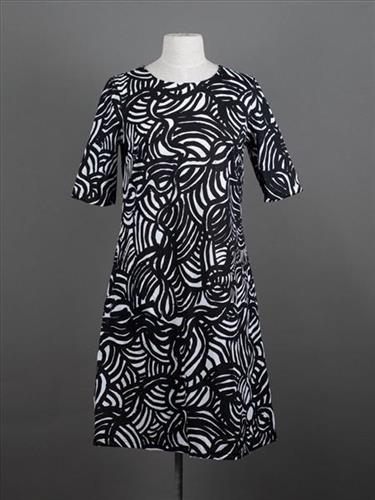
Doris Day Dress in Papa Tjukurrpa by Leonie Kamutu, black on white jersey cotton

This 1960s inspired shift dress is an easy to wear, comfortable every day dress featuring ‘Papa Tjukurrpa’ design by Leonie Kamutu.

The story of this design is Papa Tjukurrpa – Dog Dreaming. The country for this Tjukurrpa is at Nyuman, three hours south-west of Kintore. It is a little outstation. The dog lives at this place and can be seen as a rock.  The story was handed down to the artist by her grandfather and it’s a men’s story. She paints the sandhills surrounding this country. 

This flattering A-line shape finishes just above the knee and features mid length sleeves and two scoop side pockets.

Treat this handmade garment with love and it will love you back! Cold machine wash, drip dry in shade, warm iron. Avoid the tumble dryer and dry cleaner.

Fabric – Jersey cotton screen-printed by hand at Publisher Textiles in Sydney.

Sizing: Refer to chart below.


Being handmade there may be some print variations, making each garment unique.


22024004788


Status: Stock


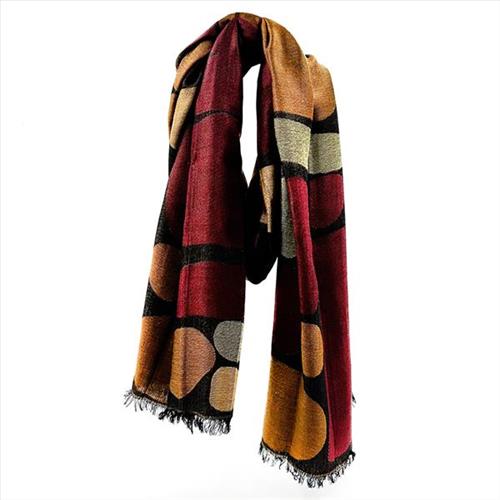
Puli Puli Modal Scarf – 200 x 70cm

This exquisite Lenzing Modal scarf is the result of a fair trade project between Better World Arts, Ikuntji Artists, and artisans in India. Beautifully made in fine modal – a fibre derived from nature, LENZING™ Modal fiber types have been certified as compostable and biodegradable under industrial, home, soil and marine conditions, thus they can fully revert back to nature. This scarf features Keturah Zimran’s artwork, Puli Puli.

Artwork Story:

Keturah depicts the puli puli (rocks) at two different sites: the landscapes at Haasts Bluff and also Karrkurrutintja (Lake McDonald). Keturah depicts her childhood memories of both places.
“The sand hills I paint are my mother’s story and the rocks I paint are my own story. My paintings are about my story and my mother’s. When I look at my paintings I feel happy. My Grandmother used to say to me when I was younger: “One day you will paint.”

Better World Arts are endorsed members of the Fair Traders Association of Australia and New Zealand and have been operating for over two decades. They work with traditional artisans from remote regions in Kashmir, Peru, West Bengal, Uttar Pradesh and Nepal (Tibetan refugees); and with Australian Aboriginal artists from remote communities across Australia, from Arnhem Land to Central and the Western Desert regions, rural locations and cities.