111582374404


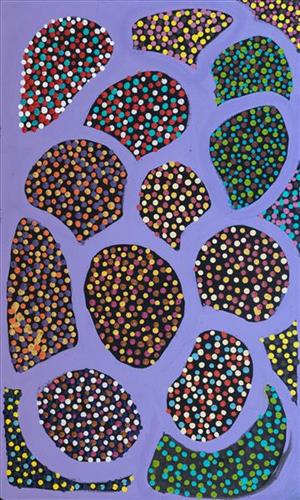
Linyji

“This linyji (claypan) story, it’s about when the old people used to be living in the desert, a long, long time ago- thousands of years ago. They used to make a hole in the linyjii for the wilyki (seed), using the wind to separate the seed [from the husk; winnowing]. Also, when we used to be sick, old people used to wet the parna (sand/soil/earth) with the kapi (water), [then] mix it and use on burns. For headaches, they put it on the kata (head). Like a Band-Aid, or Panadol – pujiman (traditional, desert dwelling) way!“

– Kuru Gladys Bidu

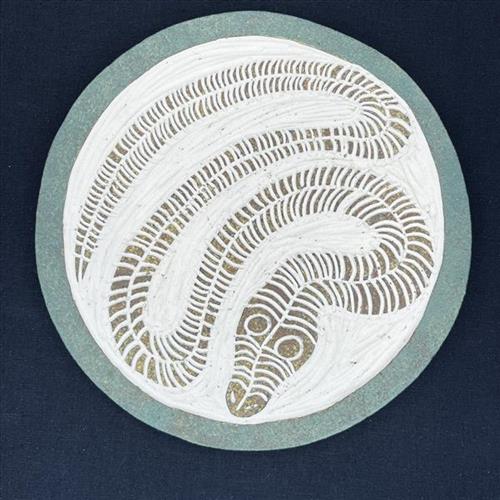
This work depicts a linyji (claypan) within the artists’ ngurra (home Country, camp), typically represented with circular forms. Claypans were visited more often during the wet seasons as they filled with water. As Kuru here describes, besides being a valuable water source, claypans were also ingeniously utilized for the removal of husks from seeds before consumption. Additionally, the clay itself was applied topically for its healing properties, aiding in the treatment of burns and soothing headaches.

During the pujiman (traditional, desert dwelling) period, knowledge of water sources was critical for survival, and today Martu Country is still defined in terms of the location and type of water. Each of the hundreds of claypans, rockholes, waterholes, soaks and springs found in the Martu desert homelands is known through real life experience and the recounting of Jukurrpa (Dreaming) narratives by name, location, quality and seasonal availability. This encyclopedic knowledge extends even to the nature and movement of arterial waterways, and sustained Martu as they travelled across their Country, hunting and gathering, visiting family, and fulfilling ceremonial obligations. They would traverse very large distances annually, visiting specific areas in the dry and wet season depending on the availability of water and the corresponding cycles of plant and animal life on which hunting and gathering bush tucker was reliant.
225182374403


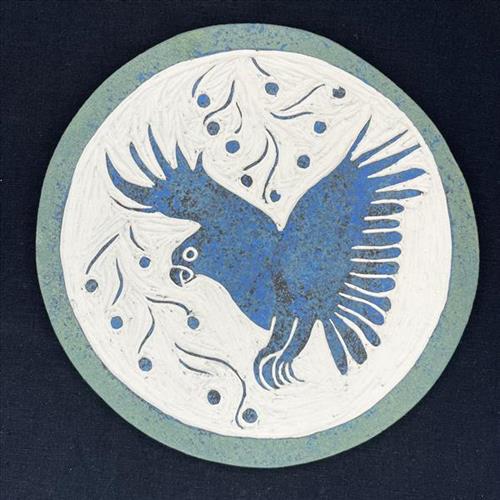
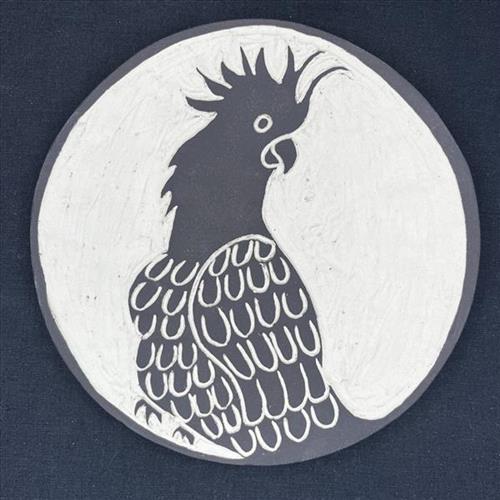
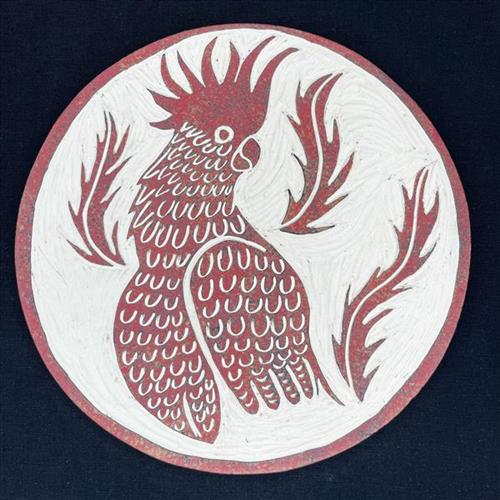
Birmba (White Cockatoo)

Birmba (White Cockatoo) is my family totem. It has been passed down from generation to generation. They always remind me of my grandfather, my sister and other family members who have passed on. White Cockatoos are like protective spirits for me and my family. They will give you signs. Good signs and signs of danger. They will let you know when to move on.
When I’m out with my grandchildren and there is a white cockatoo, I might say, “that is your grandmother, my sister who is watching us”.

At other times, the spirits of other family members visit us in form of white cockatoos. The White Cockatoo keeps our living and past family connected to each other and to our country. When I’m alone, I know they are around. I speak to their spirit and they give me strength.

225182374395


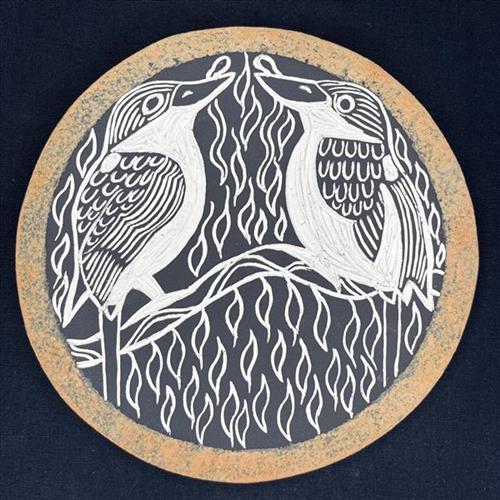
Yindili (Kingfisher)

The Kingfisher, known as Yindili in Kuku Yalanji language, is according to our culture one of the significant messenger birds.  The Kingfisher will let us know when to expect a visit from families living in another community, And when we see a Kingfisher close by, we know that something good will soon happen in our personal life.

225182374393


Kurriyala (Carpet Snake)

The carpet snake used to be an important food animal for our ancestors. They wrapped the meat in native ginger leaves and cooked it on the hot coals of the ground oven. They also used the skin to make head bands or skillfully sewed blankets to keep the families warm and dry at night.

The carpet snake also has spiritual significance for me.  I inherited the carpet snake Totem and related cultural knowledge from my father’s side. According to our Kuku Yalanji creation stories, the carpet snake was an Ancestral Being that travelled in its human form across the country creating waterways wherever it went, including on my father’s clan lands.

In my upbringing I was taught to respect our elders who prepared me for my future role as carrier of cultural knowledge and spiritual traditions. I was also taught the values of taking responsibility for caring for our traditional clan country and help maintain it for the younger generations so they can become strong leaders.

Art is my way of keeping the cultural knowledge of my ancestors alive and passing it down to my children and grandchildren. Sharing this body of knowledge creates strong family ties and gives me my strength.

377810582374392


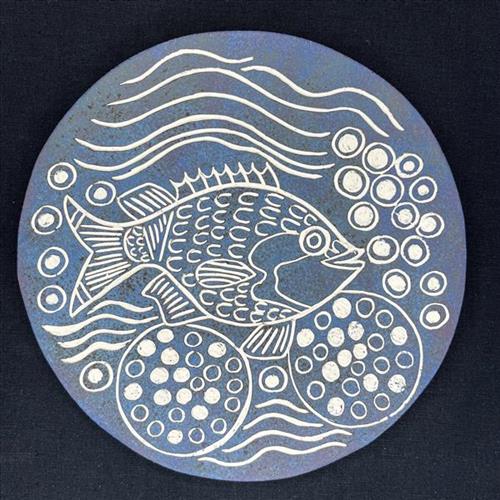
Djenj (fish)

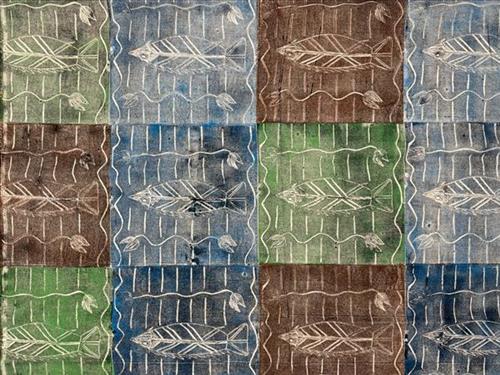
This fabric was created using the linocut fabric printing technique, which has been refined at Bábbarra Women’s Centre since it was introduced in the early mid 1990’s

The Lino tile is carved by the artist at Bábbarra Designs. It is printed on fabric by hand using a variety of colours and layers. The linocut technique ensures each textile is a one-off, limited edition piece.

The fabric is colour-safe and can be thrown into a washing machine. Repeated use will soften the fabric and some fading will occur over time. 

Bábbarra Women’s Centre supports the economic independence of Indigenous women in the Arnhem Land community of Maningrida, Northern Territory, Australia. Designs created by the women at Bábbarra reflect strong cultural knowledge, which is passed down to younger generations through their textile design practice.

‘Themes in our artwork almost exclusively come from our Country and cultural connection. Our deep relationship with the land and seas of our customary clan estates strongly defines and governs the social, cultural, spiritual and territorial aspects of our lives.’

Bábbarra Designs Artist Statement

225182374391


Birmba (White Cockatoo)

Birmba (White Cockatoo) is my family totem. It has been passed down from generation to generation. They always remind me of my grandfather, my sister and other family members who have passed on. White Cockatoos are like protective spirits for me and my family. They will give you signs. Good signs and signs of danger. They will let you know when to move on.
When I’m out with my grandchildren and there is a white cockatoo, I might say, “that is your grandmother, my sister who is watching us”.

At other times, the spirits of other family members visit us in form of white cockatoos. The White Cockatoo keeps our living and past family connected to each other and to our country. When I’m alone, I know they are around. I speak to their spirit and they give me strength.

225182374390


Dijarr (Jungle Perch)

Traditionally men hunted Dijarr (Jungle Perch), they used berries to attract the fish to the surface and caught them either with a line or with traps made from lawyer vine.

225182374383


Birmba (White Cockatoo)

Birmba (White Cockatoo) is my family totem. It has been passed down from generation to generation. They always remind me of my grandfather, my sister and other family members who have passed on. White Cockatoos are like protective spirits for me and my family. They will give you signs. Good signs and signs of danger. They will let you know when to move on.
When I’m out with my grandchildren and there is a white cockatoo, I might say, “that is your grandmother, my sister who is watching us”.

At other times, the spirits of other family members visit us in form of white cockatoos. The White Cockatoo keeps our living and past family connected to each other and to our country. When I’m alone, I know they are around. I speak to their spirit and they give me strength.