111982143196


Galabarrbarr

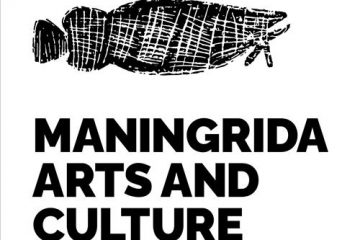
In Burarra and Gun-nartpa languages the figure represented in this artwork is generally known as a wangarra ‘ghost spirit’. For the Warrawarra clan ghost spirits have their own particular characteristics and their own name – Warraburnburn.

The Warraburnburn and the closely related Galabarrbarr spirit (owned by the Balkarranga clan) are also manikaysong topics.  The spirits are related to each other as maternal grandparent and grandchild, just as the people of Warrawarra and Balkarranga are. The dancing of the two ghost spirit figures forms the finale performance for funerals, and is the final goodbye to a deceased family member.

In many ways the Warraburnburn and Galabarrbarr ghost spirits are like people. They emerge from the patches of jungle on Warrawarra and Balkarranga country in the late afternoon and go hunting in family groups of men, women and children. They stay in contact with each other by calling out as the men hunt for fish and the women walk with their dillybags looking for vegetable food. 

The ghost spirits are associated closely with white ochre and artists commonly paint the bodies of carved figures in white. Different types of ghost spirit wear different patterns. Warraburnburn is decorated with uniform white dots while others are painted white all over. Some ghost spirits are shown with a design painted on their chest infilled with rarrk ‘cross-hatching’, the same designs that are painted onto japi an-guyinda ‘male initiations’. 

They also have supernatural characteristics including superhuman size (jarra anbaykarda ‘super tall’). They know the country intimately – some are malevolent towards humans and will lead people astray, taking them to unfamiliar and dangerous places. These malevolent spirits are likened to an-muburda ‘sorcerers’ and can conduct dangerous rituals that cause harm to people. Others are benign and will lead humans back to familiar paths and their own camps.
 

377810582143177


Man-ngarre (Native Grasses)

Elizabeth had a distinctive artistic style, depicting the natural world with loose, organic strokes. Her style was evident in her key designs Kun-ngol (clouds), showing the cloud formations over her floodplain country after the wet season, and the fine detail of Kun-kirh (mud ripples) depicting cracked mud in the sun during dry season. Elizabeth was close family with Janet Marawarr, Lucy Yarawanga and Raylene Bonson, leading artists at Bábbarra.

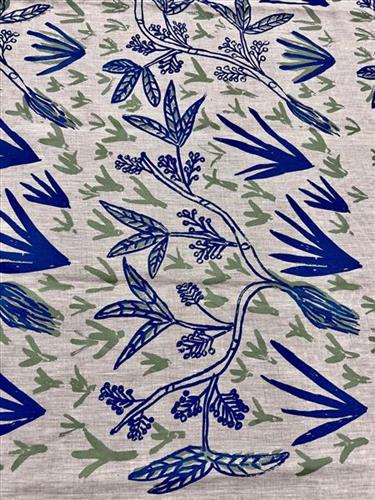
This design celebrates the grasses of Arnhem land, the spear grass, Sorghum intransthat grows in the wet season and dies off or is burnt during the dry season.

377810582143146


Man-ngarre (Native Grasses)

Elizabeth had a distinctive artistic style, depicting the natural world with loose, organic strokes. Her style was evident in her key designs Kun-ngol (clouds), showing the cloud formations over her floodplain country after the wet season, and the fine detail of Kun-kirh (mud ripples) depicting cracked mud in the sun during dry season. Elizabeth was close family with Janet Marawarr, Lucy Yarawanga and Raylene Bonson, leading artists at Bábbarra.

This design celebrates the grasses of Arnhem land, the spear grass, Sorghum intransthat grows in the wet season and dies off or is burnt during the dry season.

1106931562


Coolamon

‘I bin just do them bush coolamon,’ Jane Yalunga says. ‘Like they carry one for water, bush medicine you know and bush food. Early days eh, old people used to carry that thing.’ Gija people used to carve coolamons out of jarlalu wood.

1106927151


GAWULUMBULU – BAINES RIVER

‘ This one down in Baines River near Kildirk,’ Mungnari says. ‘They bin leave im one old man there, long time. He was crippled, when they had that leprosy here. Naralyangen Gap further up. Not far from Kildirk Station. Used to have a [cattle] yard right down there near Bottle Tree Hole.’

1106930382


WOOLRWYN, TEXAS COUNTRY

Roberta Daylight’s grandfather was Hector Jandany, an important artist and spiritual leader in Warmun community. Hector Jandany passed away in 2006 and his legacy is very strong. In this painting Roberta is painting one of Hector’s stories. Woolrwyn lies on Texas Downs Station. This is Ngarrgoorroon Country. Hector says ” I can’t draw anyone else’s country, only mine for my mummy. ”Darm ngargimba (this is my country). I come from hill country.”

11061037715


Marlam, Marlam

Respected Warmun elder Peggy Patrick says, “Marlam that one, Finger painting. When we paint our bodies, that’s the one, our body painting. I made that, it’s my story. When we have corroboree, that’s the body painting. I wanted to try it and it’s a good one, he’s all right.”

Peggy has painted this work in the same style that she paints the body with her fingers (marlam) during corroboree and ceremony.

110664980321


ORD RIVER, MOON DREAMING

In this works Phyllis is painting the Ord River (down the middle). This is where the Moon bathe in the Dreamtime. In the Dreamtime the Moon was a man, he was very handsome and all the women in the camp was in love with him. They would also follow him down to the river when he bathed and would call out to him trying to woo him. But he was in love with Dawool (the black headed snake), but Dawool was his mother-inlaw through skin kinship and it was taboo for him to love her. 

If you go there today you can find a large flat rock in the middle where he would kneel down to bathe, in this rock is the imprint of his hands, feet and knees.