Murnun (Dugong)
Dugong can be found in the waters around Maningrida They are a protected species but do form part of a traditional manme (bushfood) diet for some saltwater communities.


Dugong can be found in the waters around Maningrida They are a protected species but do form part of a traditional manme (bushfood) diet for some saltwater communities.

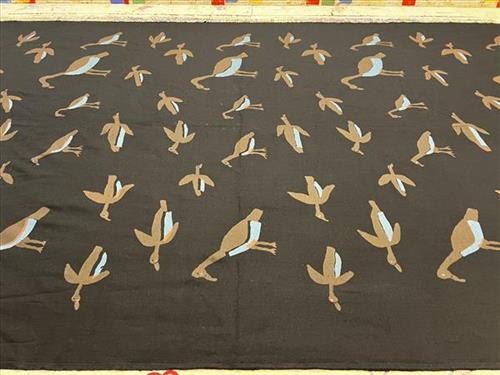
Murnubbarr (magpie geese) are a waterbird found in abundance in the wetland areas of Kakadu and western Arnhem Land. Murnubbarr are a sustainably hunted and enjoyed manme (bush food). They are known to fly long distances, particularly in the wet season.


“I want to tell you about my design, that Eiffel tower one.
This year it was my first time going to Paris. I didn’t know that place, nothing. We travelled around the world to get there, we flew underneath the world in an aeroplane.
Paris was a big, crowded city. They speak a different language there, just like here in Maningrida with all our different languages.
The Bábbarra artists and Ingrid, we were all walking around, like tourists. We went on the boat in the Paris river. There was a film crew taking videos of us. We saw so many beautiful buildings covered with black string (iron balconies) and big statues. We’d never seen things like that before.
I remember when we got off that boat and I looked up and saw that tower. When I first looked up at that tower, it made me happy- it’s so long up into the sky. We walked towards it. I was standing there watching that tower and thinking, ‘wow, first time for me seeing a tower like that’.
Then I was thinking, and I said to myself, when I go back to my own country, I’m going to paint that tower.
We came to Maningrida, I started to draw. I drew that tower from France, but also I drew maladj (stone country orphan spirit), women’s sacred woven mat, fish traps and rolk (insects). I also put round kunngol (clouds) in the design, those circles. That maladj spirit, it’s standing there next to the Eiffel tower, looking at the dancing lights at night. The tower is from Paris, but everything else in my design I took from my mother’s country and my father’s country.
Maybe one day I’ll travel back to France, and take my design with me to show them, all the French mob.” Janet Marawarr

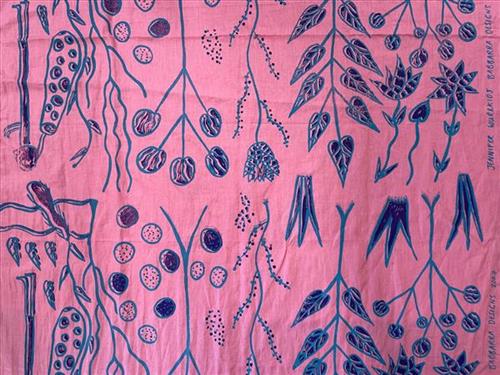
‘All that jungle around Mumeka, on the other side of the river.. that’s where we go looking for manme (bush food) like manyawok (cheeky yam) and karrbarda (long yam). The yawk yawk (young woman spirit) is holding a kunkaninj (digging stick), kun-madj (dilly bag) and all that manme.’ Jennifer Wurrkidj 2021


‘All that jungle around Mumeka, on the other side of the river.. that’s where we go looking for manme (bush food) like manyawok (cheeky yam) and karrbarda (long yam). The yawk yawk (young woman spirit) is holding a kunkaninj (digging stick), kun-madj (dilly bag) and all that manme.’ Jennifer Wurrkidj 2021


‘All that jungle around Mumeka, on the other side of the river.. that’s where we go looking for manme (bush food) like manyawok (cheeky yam) and karrbarda (long yam). The yawk yawk (young woman spirit) is holding a kunkaninj (digging stick), kun-madj (dilly bag) and all that manme.’ Jennifer Wurrkidj 2021

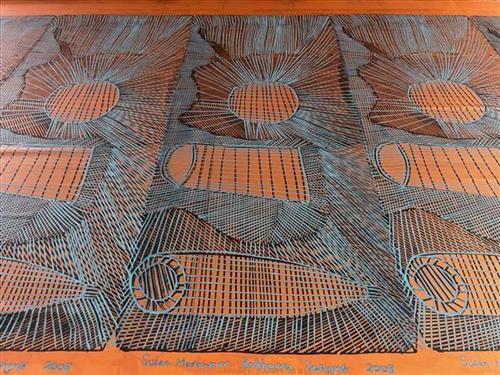
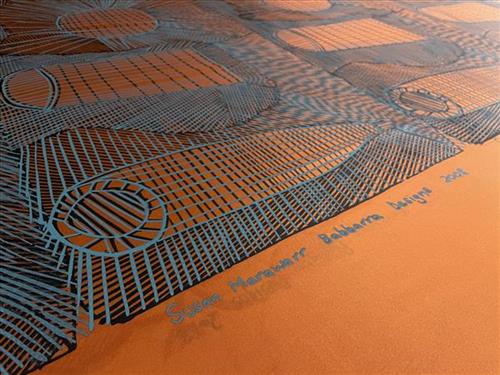
The Kuninjku term ka-milemarnbun refers to the weaving and production of goods from pandanus leaves and natural fibres. This design specifically depicts the fish trap, basket and pandanus mat.
These three objects and ancestral spirits are significant to the artist as together they relate to her djang (dreaming). Fish traps are woven by hand using the milirl (burney vine, Trophis scandens) from the jungle, which is soaked overnight to make it soft. Fish traps are used by both saltwater and freshwater hunters.
Baskets and pandanus mats are made from pandanus leaves, which are collected using long hooks, stripped, dried, boiled in natural dye, then woven.

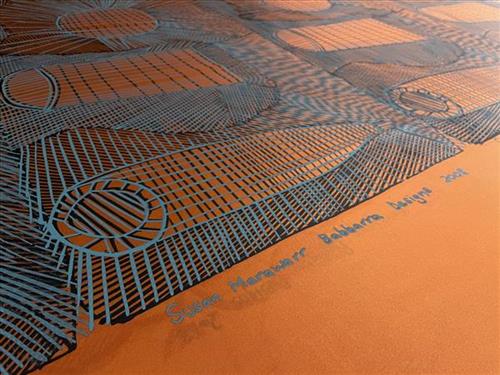
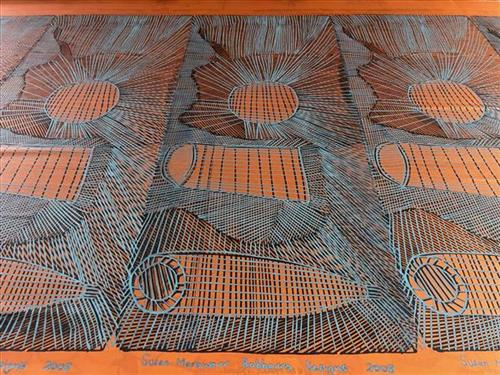
The Kuninjku term ka-milemarnbun refers to the weaving and production of goods from pandanus leaves and natural fibres. This design specifically depicts the fish trap, basket and pandanus mat.
These three objects and ancestral spirits are significant to the artist as together they relate to her djang (dreaming). Fish traps are woven by hand using the milirl (burney vine, Trophis scandens) from the jungle, which is soaked overnight to make it soft. Fish traps are used by both saltwater and freshwater hunters.
Baskets and pandanus mats are made from pandanus leaves, which are collected using long hooks, stripped, dried, boiled in natural dye, then woven.

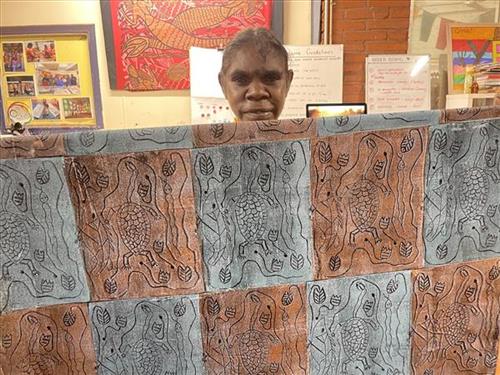
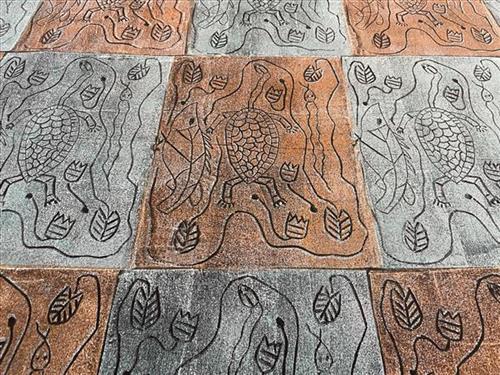
This fabric was created using the linocut printing technique. The lino tile has been carved by the artist in Maningrida, and has been printed by hand using a variety of colours and layers. The linocut technique ensures each textile piece is a one-off, limited edition piece. Bábbarra Women’s Centre supports the economic independence of Indigenous women in the Arnhem Land community of Maningrida, Northern Territory, Australia. Designs created by the women at Bábbarra reflect strong cultural knowledge, which is passed down to younger generations through their textile design practice.

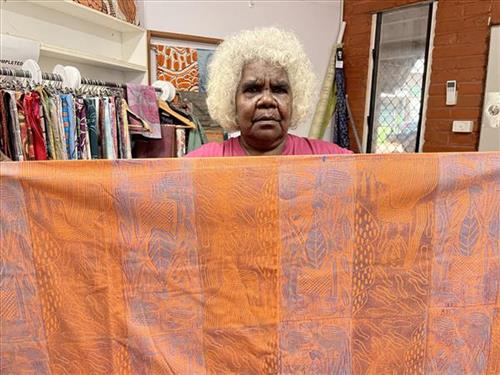
‘Sometimes yawkyawk sit inside the rock. Sometimes they go out to find the food manme and the mankung (sugarbag). Also they can sing inside the rock cave. Sometimes yawkyawk will see the big rain. When the big rain comes they start looking and when the rain comes they go inside and hide themselves. Some yawkyawk stay on the dry land in a special place inland from Bardijolhwang.’ Janet Marawarr
Mythical creatures of a malevolent nature, namorrorddo are shooting star spirits. They have long claws and trails of white light coming from their heads. They also carry a long club called miyarrurl which they use to beat victims.Yiman kabenerohrok nakidjkidj ya nakka wanjh kabenerohrok namorrorddo. Namorrorddo kabirlikan, bidngalnjkuyeng yoh.
Namorrorddo is similar to the spirit called ‘Nakidjkidj’, the same as Nakidjkidj. Namorrorddo however carries light (ie. the shooting star) and has really long claws, yes.
Source: https://www.njamed.com/