377810582275936


Marebu and Bush Dye

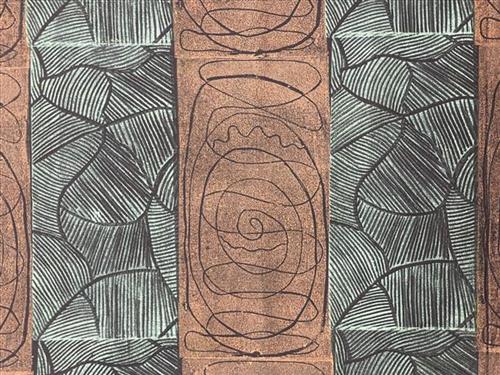
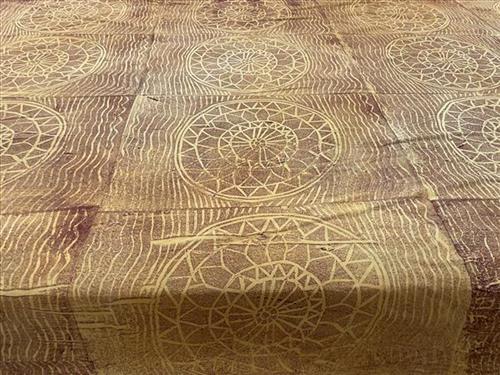
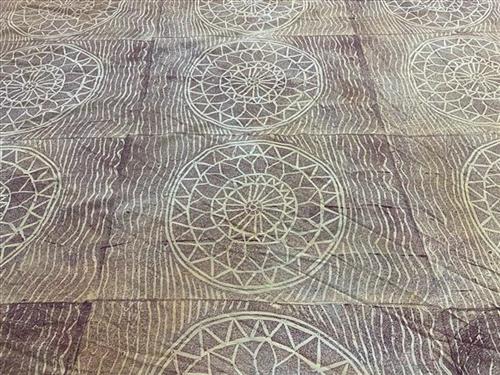
The print design is Marebu (woven pandanus mats).

Artists usually use kundayarr, pandanus spiralis, to weave decorative round or oblong mats, as well as the less common triangular and conical shapes. Weaving is physically hard work, now done only by women. They colour the pandanus using natural dyes made from the roots, leaves or flowers of plants within the weaver’s clan estate.

The radial woven patterns of the finest round mats appear to vibrate with colour, sometimes regarded as an aesthetic manifestation of deep cultural meaning, as there is a significant spiritual dimension to pandanus mats.

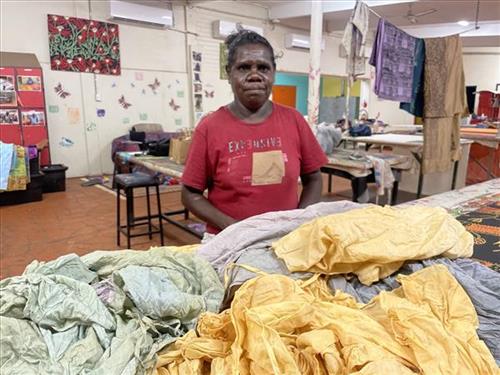
Jocelyn has dyed this silk at Bolkjam Outstation where she was residing over the dry season for ceremony. She has used yellow colour from the root of the man-kurdudjumuk plant (coelospermum reticulatum) which grows in sandy country near the flood plains. Jocelyn had to shave the root in a llaborious process before boiling the fabric in water over hours of boiling. The silk is left with a slightly rough texture. 
377810582275923


Buluwana (Kuninjku Spirit Woman) 2022

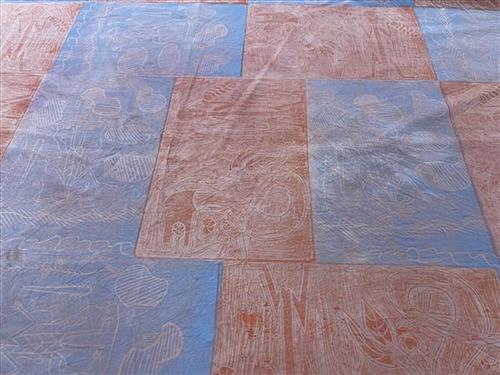
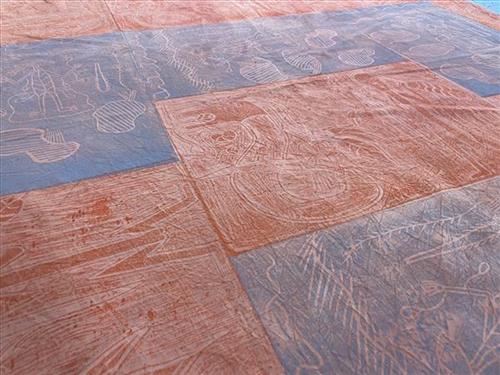
Abigail and her late mother, the renowned Kuninjku fibre and textile artist Jennifer Wurrkidj created this design together. Ruth said her mum was telling the story of Buluwana while they were sitting and drawing.

“She’s an old lady from our ancestor creation time, before mimih spirits roamed the land. Her skin name is Wamutjan– she is from the Dhuwa moiety. When the mimih came to our country, she turned into stone out Yikarrakkal and Manmoyi way.

She lives in a sacred place, where she turned to stone she lives there now forever. She is an important woman for my people.

I draw her because she my dreaming. I can’t tell the full story about Buluwana, because it’s a little bit secret, but it’s okay for me to paint her and share these parts. My people can know the full Buluwana story, and the djungkay (caretaker) can tell the full Buluwana story too.” J. Wurrkidj

This is a collaborative work with Abigail Namundja. Abigail has printed her mother’s Lino designs on a soft bush dyed cotton. 

377810582275920


Buluwana (Kuninjku Spirit Woman) 2022

Abigail and her late mother, the renowned Kuninjku fibre and textile artist Jennifer Wurrkidj created this design together. Ruth said her mum was telling the story of Buluwana while they were sitting and drawing.

“She’s an old lady from our ancestor creation time, before mimih spirits roamed the land. Her skin name is Wamutjan– she is from the Dhuwa moiety. When the mimih came to our country, she turned into stone out Yikarrakkal and Manmoyi way.

She lives in a sacred place, where she turned to stone she lives there now forever. She is an important woman for my people.

I draw her because she my dreaming. I can’t tell the full story about Buluwana, because it’s a little bit secret, but it’s okay for me to paint her and share these parts. My people can know the full Buluwana story, and the djungkay (caretaker) can tell the full Buluwana story too.” J. Wurrkidj

This is a collaborative work with Jocelyn Koyole. Abigail has printed her mothers Lino design on a soft cotton bush dye fabric. 

377810582275917


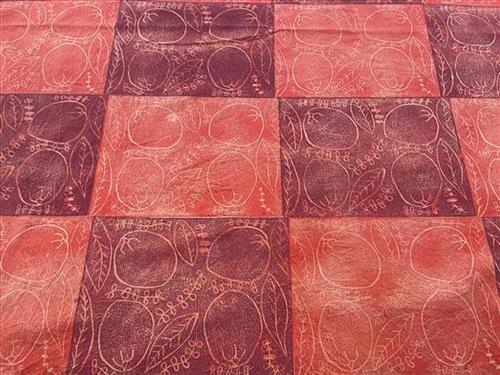
Red Bush Apple

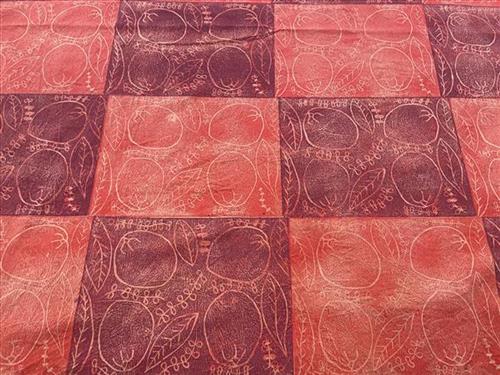
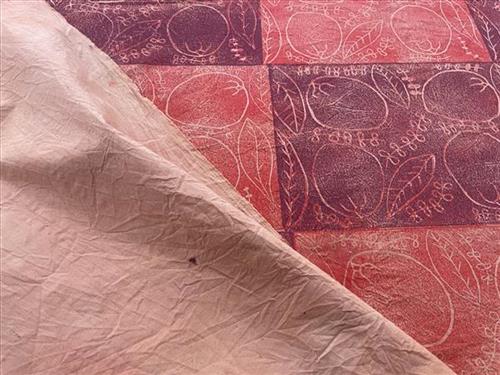
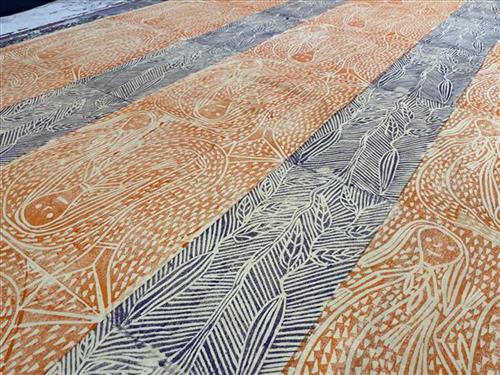
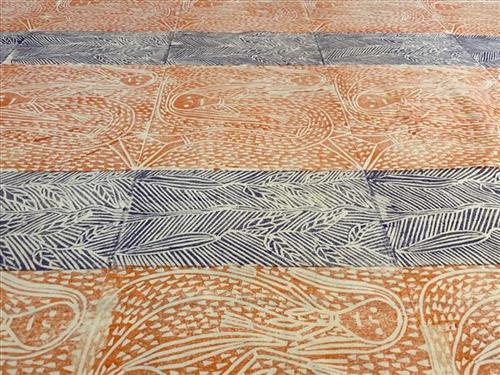
This fabric has been dyed by hand by Jocelyn Koyole at Bolkjam Outstation. She has used yellow colour and ashes to make a warm orange tone. 

Genevieve printed her bush apple design at the Bábbarra Designs studio. She has placed layers of colour on this fabric to create the Lino print texture. 

377810582275916


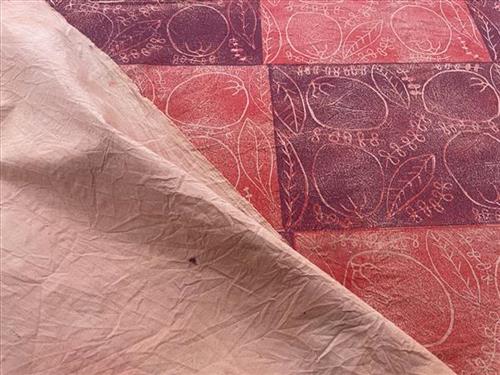
Red Bush Apple

This fabric has been dyed by hand by Jocelyn Koyole at Bolkjam Outstation. She has used yellow colour and ashes to make a warm orange tone. 

Genevieve printed her bush apple design at the Bábbarra Designs studio. She has placed layers of colour on this fabric to create the Lino print texture. 

377810582275914


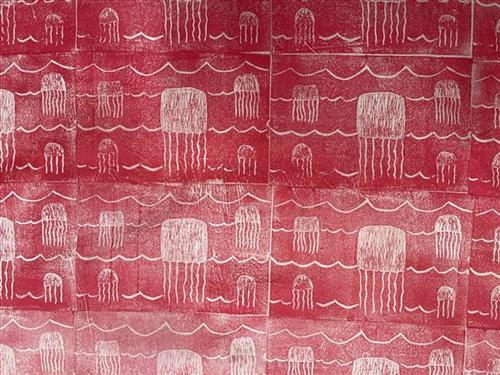
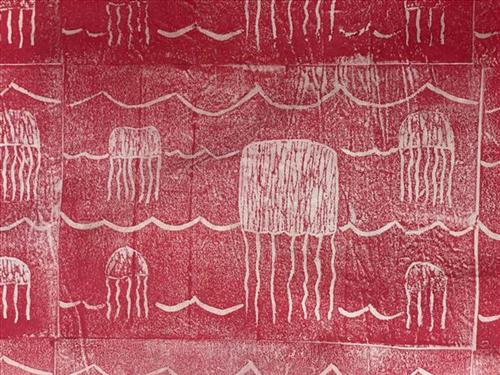
Mábbarla (Jelly Fish)

Mábbarla means Jelly Fish in Ndjébbana.

‘My homeland is Entrance island, Haulround island and Juda point. I really like Haulround island and that’s where we collect barruar (seagull egg). Entrance island is my favourite camping area, I go across with boat. Balanda (non-Aboriginal or European people) can’t go into those islands or Juda point without permission from me. We have a sacred totem ngaduma (palm tree) at those places and if people destroy it, we will have a strong wind and maybe a cyclone.’ Marilyn James 2021

Soft cotton hand dyed by Jocelyn Koyole using yellow colour and ashes. the cotton is a peach colour. 

377810582275881


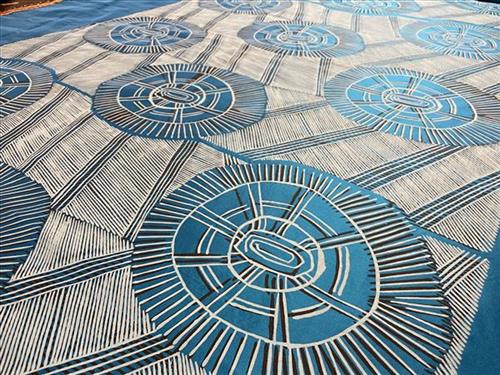
Marebu

Deborah Wurrkidj is a Kuninjku artist from the Kurulk clan whose country lies around the outstation of Mumeka in central Arnhem Land. She is an accomplished artist working across mediums including painting, sculpture, weaving and textile design. For this design, Deborah Wurrkidj has depicted Marebu (woven pandanus mats).

Works in fibre from the Maningrida region are widely recognised as some of the finest in Australia. Artists confidently push the boundaries of fibre craft and cultural expression, adapting traditional techniques and forms to produce strikingly inventive and aesthetically exquisite artworks.

Artists weave many different kinds of mats. Conical mats were traditionally used to shield babies from mosquitoes. Long flat mats were used for blocking creeks so that fish would be diverted into fish traps. A small triangular mat made of pandanus fibre used to be worn by women during ceremonial gatherings, tied around their back and covering them at the front. Mats are also used for wrapping and rinsing food in water.

Artists usually use kundayarr, pandanus spiralis, to weave decorative round or oblong mats, as well as the less common triangular and conical shapes. Weaving is physically hard work, now done only by women. They colour the pandanus using natural dyes made from the roots, leaves or flowers of plants within the weaver’s clan estate.

The radial woven patterns of the finest round mats appear to vibrate with colour, sometimes regarded as an aesthetic manifestation of deep cultural meaning, as there is a significant spiritual dimension to pandanus mats.

377810582276137


Kunkurra (Spiral Wind)

‘My designs, they are all alive living up in my head’- Janet Marawarr

Janet Marawarr has depicted kunkurra, the spiralling wind associated with several sites in the Kardbam clan. On one level, this design can be interpreted as a depiction of the kinds of mini-cyclones common during the wet season in Arnhem Land, where the artist lives. Kunkurra also relates specifically to a site called Bilwoyinj, near Mankorlod, on the artist’s clan estate.

At this site, two of the most important Kuninjku creation beings, a father and son known as na-korrkko, are believed to have hunted and eaten a goanna. They left some of the goanna fat behind at the site, which turned into the rock that still stands there today.

Bilwoyinj site is also a ceremonial ground for a ceremony called Yabbaduruwa, a major ceremony owned by the Yirridja patrimoiety. The Yabbaduruwa ceremony is primarily concerned with initiation, land ownership and promoting the cyclical regeneration of the human and natural worlds.

377810582276100


Yawkyawk (young woman spirit)

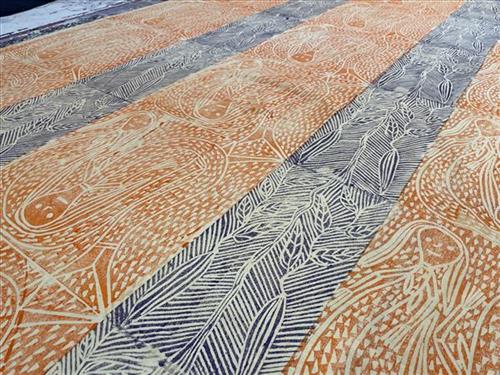
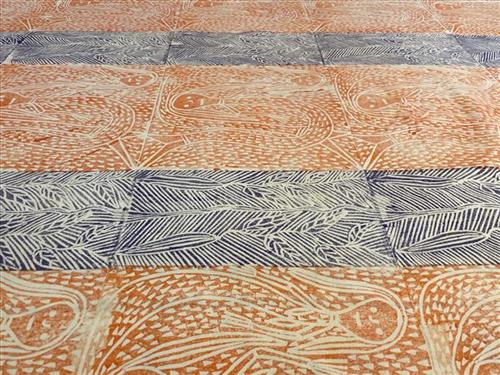
Yawkyawk is a word from the Aboriginal Kunwinjku language, meaning ‘young woman’ and ‘young woman spirit being’.

Sometimes compared to the European notion of mermaids, yawkyawks are usually depicted with the tails of fish. They have long hair, associated with trailing blooms of algae, typically found in Arnhem Land streams and rock pools.

The striking yellow – gold hue comes from the root of the man-kurdudjumuk plant (coelospermum reticulatum) which has been harvested from the sandy country near the flood plains. This laborious and tiring process requires digging up the entire shrub. The root is shaven into a pot of water and the colour is released into water through the boiling process. 

377810582276099


Yawkyawk (young woman spirit)

Yawkyawk is a word from the Aboriginal Kunwinjku language, meaning ‘young woman’ and ‘young woman spirit being’.

Sometimes compared to the European notion of mermaids, yawkyawks are usually depicted with the tails of fish. They have long hair, associated with trailing blooms of algae, typically found in Arnhem Land streams and rock pools.

The striking yellow – gold hue comes from the root of the man-kurdudjumuk plant (coelospermum reticulatum) which has been harvested from the sandy country near the flood plains. This laborious and tiring process requires digging up the entire shrub. The root is shaven into a pot of water and the colour is released into water through the boiling process.