377810582222310


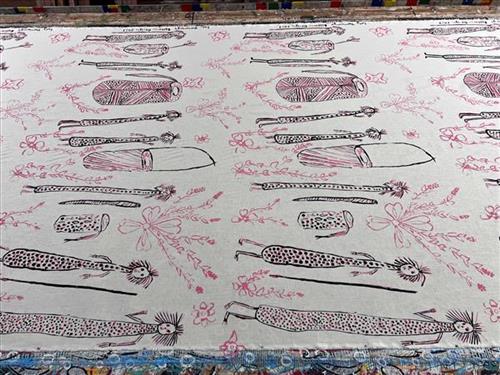
Bawaliba & Bush Flower

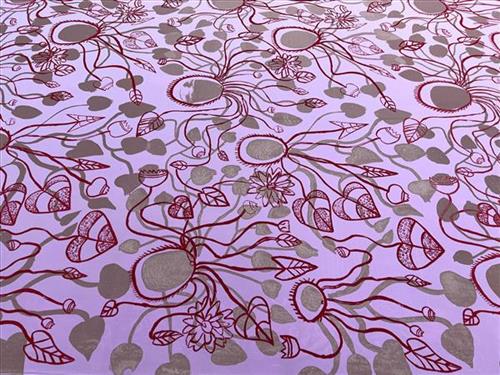
‘Starting back in the caves, before humans, in that place, my country Djinkarr, spirits lived. When Bawaliba (stone country spirit) were hungry, they picked up their dilly bags and went walking to collect food. They found fresh bush flowers and dug them up to plant back home and ate the fruit growing beneath them. On their way home, the Bawaliba came across a big rainbow serpent. Some Bawaliba ran back to the cave, the rest of them tried to fight the serpent with spears and distract it with their loud clap sticks and singing, but the rainbow serpent won and ate them.

When we go there to my country, we see the Bawaliba peeping at us every time. They are so cheeky and trick us. Sometimes I tell them ‘Hey leave us alone! We’re busy working on our country!’. They are good spirits they don’t make trouble.’ – Lucy Yarawanga 2023

377810582222300


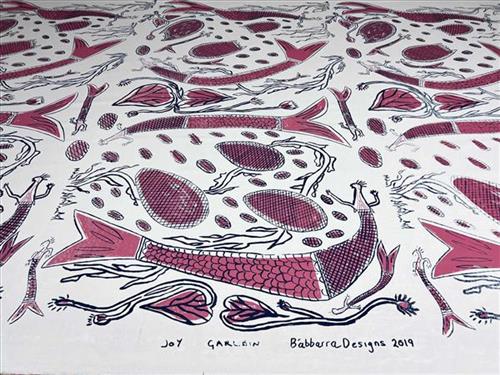
Djomi

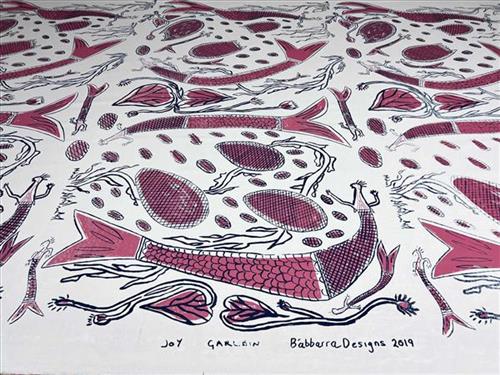
This design depicts the story of the artist’s ancestral dreaming, the Djomi fresh water spirit mermaid.

The Djomi figure is a mermaid like spirit with fish tail that lives in the fresh water stream that flows out to the sea cliff near Maningrida. Djomi is a known to be a very powerful fertility symbol.

‘If you go there you can get pregnant easily. Djomi has babies, and they can give others babies too. The Djomi spirit is so powerful, that women can end up with multiple babies at once, twins or sometimes even more. The Djomi spirits lay eggs near the sacred freshwater stream in Maningrida. Inside the eggs are human babies as well as young Djomi.

Men do not go near that swamp, because Djomi is so powerful that men might get pregnant there too. So men, they are too scared of that Djomi. When we visit the Djomi freshwater spring, we can hear young Djomi crying. They sound like normal babies crying, those Djomi spirits. They are looking for a mother.

This Djomi is my dreaming, I got permission from my djunguys to paint this Djomi design. For me I always ask my djunguy permission to paint, because that is our cultural way.

This design also depicts the fresh water lily leaves, and seaweed from the base of the sea floor.

377810582222299


Djomi

This design depicts the story of the artist’s ancestral dreaming, the Djomi fresh water spirit mermaid.

The Djomi figure is a mermaid like spirit with fish tail that lives in the fresh water stream that flows out to the sea cliff near Maningrida. Djomi is a known to be a very powerful fertility symbol.

‘If you go there you can get pregnant easily. Djomi has babies, and they can give others babies too. The Djomi spirit is so powerful, that women can end up with multiple babies at once, twins or sometimes even more. The Djomi spirits lay eggs near the sacred freshwater stream in Maningrida. Inside the eggs are human babies as well as young Djomi.

Men do not go near that swamp, because Djomi is so powerful that men might get pregnant there too. So men, they are too scared of that Djomi. When we visit the Djomi freshwater spring, we can hear young Djomi crying. They sound like normal babies crying, those Djomi spirits. They are looking for a mother.

This Djomi is my dreaming, I got permission from my djunguys to paint this Djomi design. For me I always ask my djunguy permission to paint, because that is our cultural way.

This design also depicts the fresh water lily leaves, and seaweed from the base of the sea floor.

377810582222274


Barnkabarra (Mud Crabs)

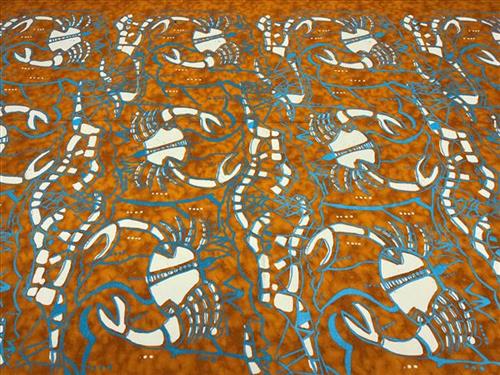
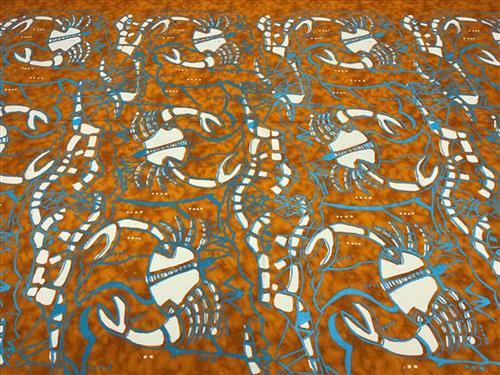
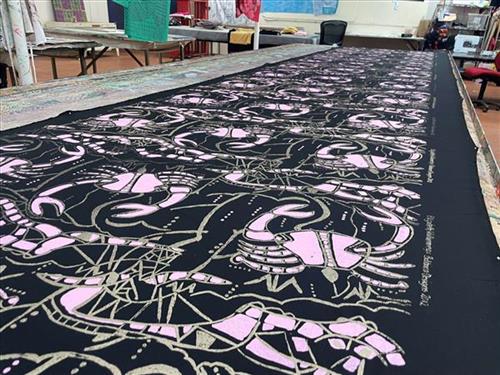
This design tells the story of Elizabeth’s homeland – a dreaming place, a good dreaming place with plenty of Barnkabarra (Mud Crabs). Elizabeth’s homeland lies east of Maningrida, at the mouth of Blyth river. This country is known for a large spiritual mud crab, which lives in the area.

Many families go and collect crabs to eat there with long sticks, or collect directly from the shores. Mud crabs hide in the muddy bottoms of estuaries and mangrove forests in areas surrounding Maningrida. After a king tide, a large cyclical tide which bring the crabs out from the mangroves, it is a good time to find crabs.

Barnkabarra (mud crabs) in Kuninjku language, or Rrugurrgurda (mud crabs) in the Burarra language, are good baladji (bush food in Burarra) and can be caught all year round. They are put on the fire to cook and they are ready when they turn a bright orange colour.

377810582222272


Barnkabarra (Mud Crabs)

This design tells the story of Elizabeth’s homeland – a dreaming place, a good dreaming place with plenty of Barnkabarra (Mud Crabs). Elizabeth’s homeland lies east of Maningrida, at the mouth of Blyth river. This country is known for a large spiritual mud crab, which lives in the area.

Many families go and collect crabs to eat there with long sticks, or collect directly from the shores. Mud crabs hide in the muddy bottoms of estuaries and mangrove forests in areas surrounding Maningrida. After a king tide, a large cyclical tide which bring the crabs out from the mangroves, it is a good time to find crabs.

Barnkabarra (mud crabs) in Kuninjku language, or Rrugurrgurda (mud crabs) in the Burarra language, are good baladji (bush food in Burarra) and can be caught all year round. They are put on the fire to cook and they are ready when they turn a bright orange colour.

377810582222270


Bah-je (hunting bag)

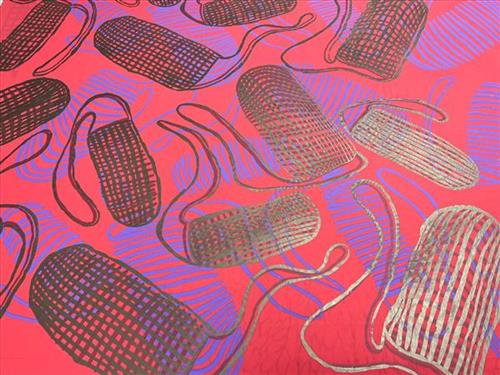
Linda Gurawana is a Djinang speaker and she calls hunting bag or dilly bag bah-je.

This design was created in 2007 however Babbarra printers keep experimenting with colours and layers to make it fresh. 

377810582222806


Wayuk

‘I always follow the footpath of my grandmother. I have too many stories of my grandmother. We went to the bush and ate bushtucker like yam, yabbie, barra, catfish and magpie goose. We didn’t come into town often, we were staying at Barrihdjowkkeng outstation. I learned how the old people used to live. I always think about my family out there and I keep going. My grandmother asked me to work with her for many years. I watched her making lino and screen printing. That’s why I stay in this job and I’m for the women’s centre’.  Roseanna Bonson 2021

Roseanna’s first design is a 2 colour waterlily design. Wayuk (waterlily) *kuninjki grow in the swamps around Barrihdjowkkeng.

‘The flowers of the waterlily are white and yellow and I like that kind of colour.’ Roseanna Bonson 2021

377810582222976


Barnkabarra (Mud Crabs)

This design tells the story of Elizabeth’s homeland – a dreaming place, a good dreaming place with plenty of Barnkabarra (Mud Crabs). Elizabeth’s homeland lies east of Maningrida, at the mouth of Blyth river. This country is known for a large spiritual mud crab, which lives in the area.

Many families go and collect crabs to eat there with long sticks, or collect directly from the shores. Mud crabs hide in the muddy bottoms of estuaries and mangrove forests in areas surrounding Maningrida. After a king tide, a large cyclical tide which bring the crabs out from the mangroves, it is a good time to find crabs.

Barnkabarra (mud crabs) in Kuninjku language, or Rrugurrgurda (mud crabs) in the Burarra language, are good baladji (bush food in Burarra) and can be caught all year round. They are put on the fire to cook and they are ready when they turn a bright orange colour.

377810582222803


Lorrkkon

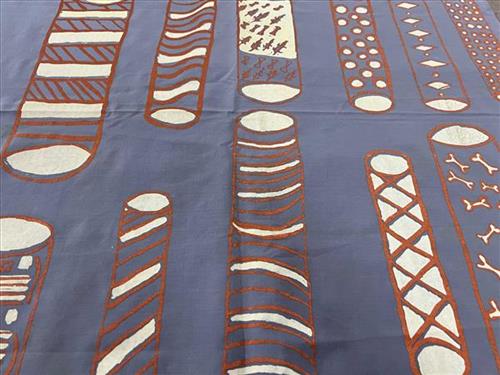
Marilyn’s first screen print design depicts the story of lorrkkon (hollow funeral logs). This the story of her great, great grandfather and grandmother who were bark painters, as well as also sacred lorrkkon painters.

When designing this screen print, Marilyn was remembering her childhood living in a small house on Liverpool river Ngar-wunja (Thompson hole) with other families.

Through the painting process, Marilyn remembered and relived the times when people still lived permanently on remote homelands, living off the land before balanda (non-indigenous people) arrived.

Marilyn recalls “it makes me think back, we did lots of things, some people was hunting, some was weaving, some was painting barks and lorrkkon. As my great, great grandfather and grandmother was painters, I painted this my story for them.”

377810582222802


Lorrkkon

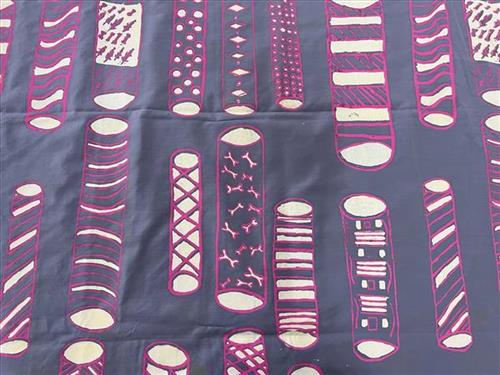
Marilyn’s first screen print design depicts the story of lorrkkon (hollow funeral logs). This the story of her great, great grandfather and grandmother who were bark painters, as well as also sacred lorrkkon painters.

When designing this screen print, Marilyn was remembering her childhood living in a small house on Liverpool river Ngar-wunja (Thompson hole) with other families.

Through the painting process, Marilyn remembered and relived the times when people still lived permanently on remote homelands, living off the land before balanda (non-indigenous people) arrived.

Marilyn recalls “it makes me think back, we did lots of things, some people was hunting, some was weaving, some was painting barks and lorrkkon. As my great, great grandfather and grandmother was painters, I painted this my story for them.”