377810582222791


Bawáliba (Stone Country Mimih)

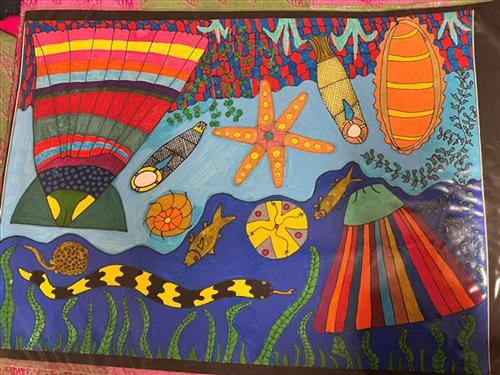
‘Bawáliba is the djang (Dreaming) of my mother and my uncles. They are good spirits, they protect us and they recognise families. They are really tall- just like human beings, like us. They dance late at night and have a lot of hair.

In olden times, long long long time ago Bawáliba were here, before people were on the land. Bawáliba used to go out hunting and care for country. They hunt carrying fish traps and digging sticks, near the homeland Djinkarr. They go out hunting on the floodplains with dilly bags and digging sticks. They collect a lot of bush foods, and sleep together with one bark shelter.
Sometimes now they still come alive when we sleep, they might come to our houses and peep through the window. At night, they cover themselves with white clay and red cloth tied around their waist. If we hear them, we jump out of bed and get up to look -but they have disappeared, they’re just too quick. Bawáliba might knock on the window to remind us they are there looking out for us.If you listen deeply you can hear them whisper, sometimes they talk about us and might say, ‘why are those people making camp here?’ then they realise ‘Oh they are family from here, it’s ok, they are just sleeping here for the night’.

During the day they always turn into stone and they sleep. We still know that green rock covered in moss near Djinkarr, that’s Bawáliba sleeping.
Some of my ancestors used to speak the same language as the Bawaliba, but all those old people are passed away now. It’s a little bit sad for us, because no one now can speak that Bawaliba language anymore.’ Lucy Yarawanga 2019

377810582223145


Ngarndúma (palm tree)

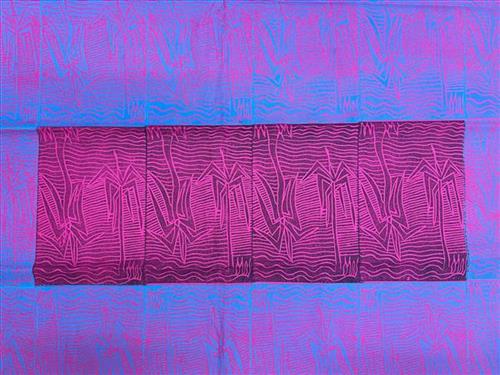
ngarndúma   1) a kind of tall palm tree with one straight trunk; Kentia palm. Gronophyllum ramsayi; Carpentaria acuminata. Gender: djíya; Moiety: Yírriddjanga. N A. Karlakkalóddjarra márdba ka-rénjdjeya. The new shoot is sweet. The growing tip of young palms eaten raw; large palms are not eaten. The fruits are toxic to people but eaten by fruit pigeons. 

377810582223064


Wayuk

‘I always follow the footpath of my grandmother. I have too many stories of my grandmother. We went to the bush and ate bushtucker like yam, yabbie, barra, catfish and magpie goose. We didn’t come into town often, we were staying at Barrihdjowkkeng outstation. I learned how the old people used to live. I always think about my family out there and I keep going. My grandmother asked me to work with her for many years. I watched her making lino and screen printing. That’s why I stay in this job and I’m for the women’s centre’.  Roseanna Bonson 2021

Roseanna’s first design is a 2 colour waterlily design. Wayuk (waterlily) *kuninjki grow in the swamps around Barrihdjowkkeng.

‘The flowers of the waterlily are white and yellow and I like that kind of colour.’ Roseanna Bonson 2021

377810582223556


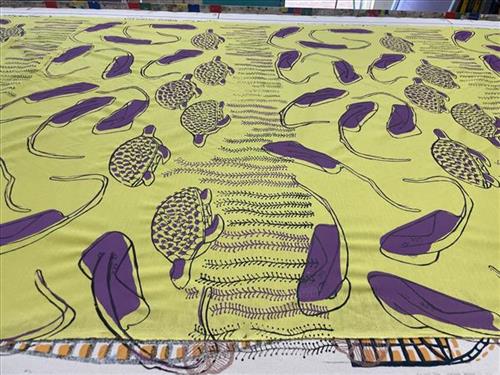
Mabbúlarr

Mabbúlarr is the Ndjébbana word describing calm and stillness – both regarding people and the ocean.

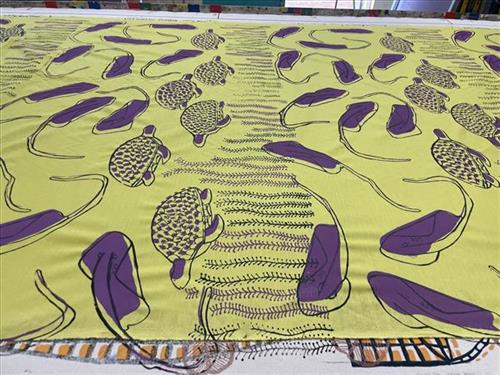
This design tells the story of underwater life in the shallows. The turtle we call marláddja (green turtle, Chelonia mydas) and the stingray we call marnandjúbba (Cowtail Stingray, Pastinachus sephen).

‘When strong wind blows the sea is rough, when there’s no wind the sea is calm. We call that mábbularr. You can see through the water and look at the turtle and stingray eating karlómerr (sea grass) and dancing underwater to find their mate. When we go on the boat hunting, we go at times of mábbularr.

In the old days men used to hunt with a canoe and with traditional made harpoon.  Guided by our ancestors’ spirits they would paddle all day to find sea turtle and dugongs in the right places. The men had to be smart for the tide and know the weather to balance their canoes. They would go at times of mábbularr (calm), early morning in daytime or at night-time when there is no moon and the water glows. We call the night-time glimmer of phosphorescence mílarrng-milarrng. Today people still go hunting, it brings a lot of families together and they share eating down the beach.

We have songline for sea turtle, also men paint turtle on their back and dance turtle in the Míddjarn the same way turtle dance underwater. It is very important we look after our country and songline passed on from many generations’. Josephine James 2021

377810582223555


Mabbúlarr

Mabbúlarr is the Ndjébbana word describing calm and stillness – both regarding people and the ocean.

This design tells the story of underwater life in the shallows. The turtle we call marláddja (green turtle, Chelonia mydas) and the stingray we call marnandjúbba (Cowtail Stingray, Pastinachus sephen).

‘When strong wind blows the sea is rough, when there’s no wind the sea is calm. We call that mábbularr. You can see through the water and look at the turtle and stingray eating karlómerr (sea grass) and dancing underwater to find their mate. When we go on the boat hunting, we go at times of mábbularr.

In the old days men used to hunt with a canoe and with traditional made harpoon.  Guided by our ancestors’ spirits they would paddle all day to find sea turtle and dugongs in the right places. The men had to be smart for the tide and know the weather to balance their canoes. They would go at times of mábbularr (calm), early morning in daytime or at night-time when there is no moon and the water glows. We call the night-time glimmer of phosphorescence mílarrng-milarrng. Today people still go hunting, it brings a lot of families together and they share eating down the beach.

We have songline for sea turtle, also men paint turtle on their back and dance turtle in the Míddjarn the same way turtle dance underwater. It is very important we look after our country and songline passed on from many generations’. Josephine James 2021

377810582223939


Lorrkkon – Marilyn James

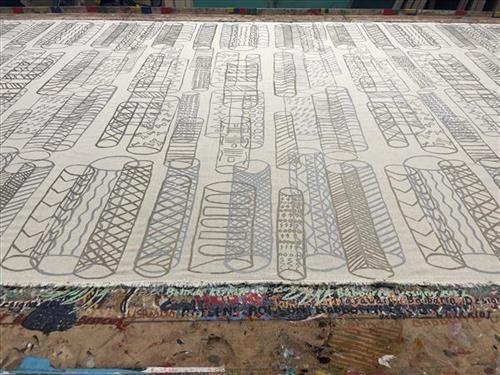
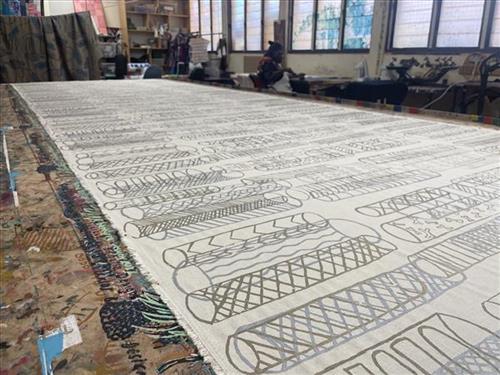
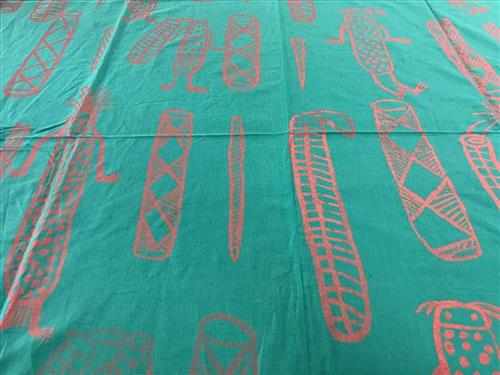
Marilyn’s first screen print design depicts the story of lorrkkon (hollow funeral logs). This the story of her great, great grandfather and grandmother who were bark painters, as well as also sacred lorrkkon painters.

When designing this screen print, Marilyn was remembering her childhood living in a small house on Liverpool river Ngar-wunja (Thompson hole) with other families.

Through the painting process, Marilyn remembered and relived the times when people still lived permanently on remote homelands, living off the land before balanda (non-indigenous people) arrived.

Marilyn recalls “it makes me think back, we did lots of things, some people was hunting, some was weaving, some was painting barks and lorrkkon. As my great, great grandfather and grandmother was painters, I painted this my story for them.”

377810582223938


Lorrkkon – Marilyn James

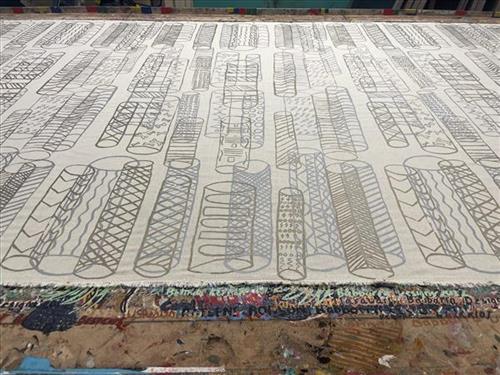
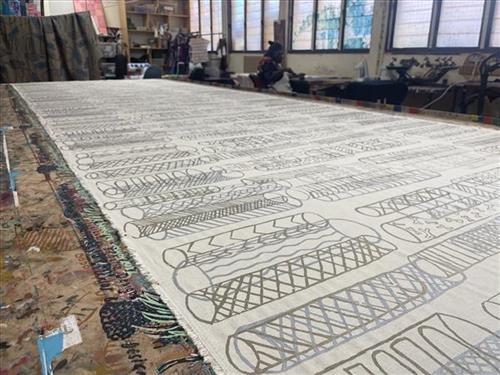
Marilyn’s first screen print design depicts the story of lorrkkon (hollow funeral logs). This the story of her great, great grandfather and grandmother who were bark painters, as well as also sacred lorrkkon painters.

When designing this screen print, Marilyn was remembering her childhood living in a small house on Liverpool river Ngar-wunja (Thompson hole) with other families.

Through the painting process, Marilyn remembered and relived the times when people still lived permanently on remote homelands, living off the land before balanda (non-indigenous people) arrived.

Marilyn recalls “it makes me think back, we did lots of things, some people was hunting, some was weaving, some was painting barks and lorrkkon. As my great, great grandfather and grandmother was painters, I painted this my story for them.”

377810582223656


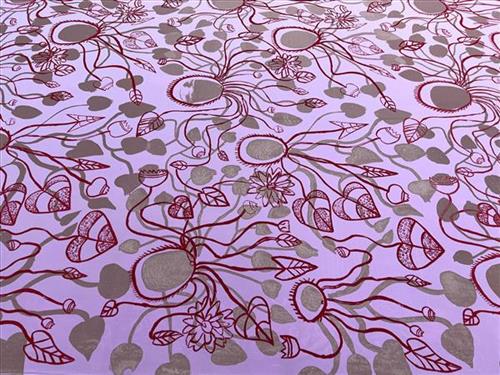
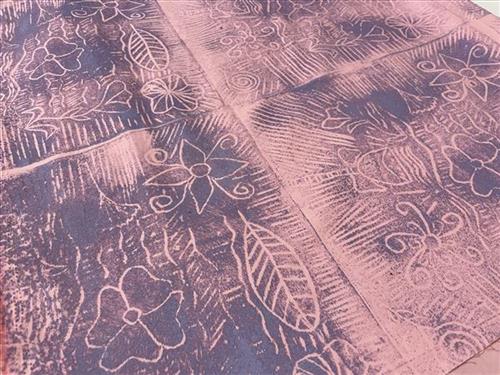
Kakárra (bush flowers)


This design features lost of flowers and bush food from around the coastal areas of Entrance Island and Maningrida.

‘There are the leaves of the black plum – we call that karranganjónganja vita glabrata. There are also jungle flowers that we find when we are looking for yam, I don’t know what they call them but that’s the curly one. The small one in the middle is the flowers of the warakkála (flowers of the long yam). These flowers grow all over this region, you can find them when you walk around the bush. Marilyn James

377810582223818


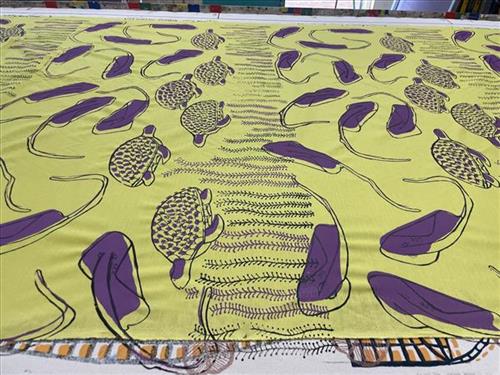
Mabbúlarr

Mabbúlarr is the Ndjébbana word describing calm and stillness – both regarding people and the ocean.

This design tells the story of underwater life in the shallows. The turtle we call marláddja (green turtle, Chelonia mydas) and the stingray we call marnandjúbba (Cowtail Stingray, Pastinachus sephen).

‘When strong wind blows the sea is rough, when there’s no wind the sea is calm. We call that mábbularr. You can see through the water and look at the turtle and stingray eating karlómerr (sea grass) and dancing underwater to find their mate. When we go on the boat hunting, we go at times of mábbularr.

In the old days men used to hunt with a canoe and with traditional made harpoon.  Guided by our ancestors’ spirits they would paddle all day to find sea turtle and dugongs in the right places. The men had to be smart for the tide and know the weather to balance their canoes. They would go at times of mábbularr (calm), early morning in daytime or at night-time when there is no moon and the water glows. We call the night-time glimmer of phosphorescence mílarrng-milarrng. Today people still go hunting, it brings a lot of families together and they share eating down the beach.

We have songline for sea turtle, also men paint turtle on their back and dance turtle in the Míddjarn the same way turtle dance underwater. It is very important we look after our country and songline passed on from many generations’. Josephine James 2021