377810582374948


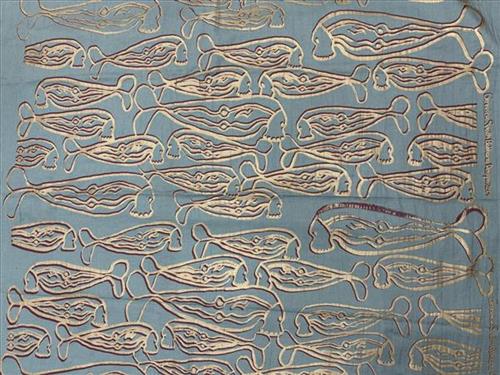
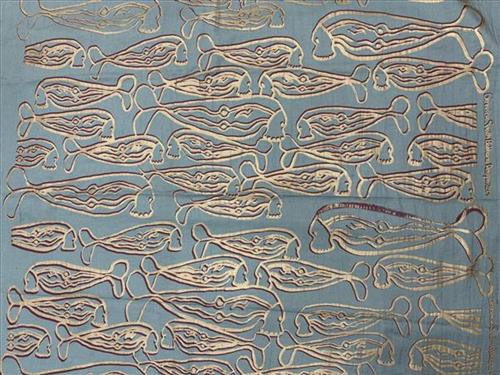
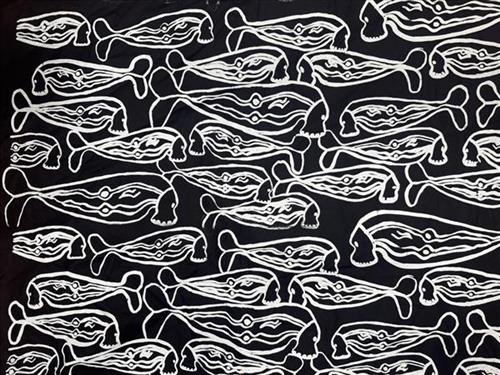
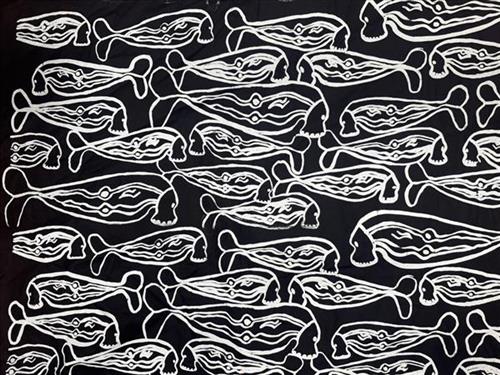
Murnun (dugong)

This design is murnun (dugong). Josephine grew up on the coastal area of Maningrida. She is a Kunibidji woman, a Gurgoni and Ndjébbana language speaker. 

‘In the olden times they used to go on canoe to look for murnun (dungong), fish (yokkara) ,turtle (makéddja) and stingray (marnan djupa (sp?)). They used a spear and net during the day and sometimes at night. The fishermen were mostly men. I remember my grandfather used to go hunting, that’s Joy’s (Garlbin)  father. HIs name was Jimmy. We used to go out with him on the boat to kill makéddja (turtle) and murnun (dugong) for yalaba (bush tucker). 


377810582374933


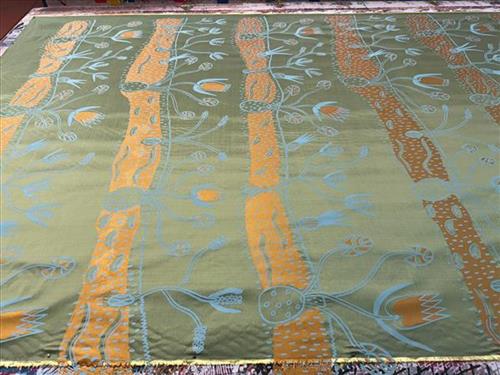
Djomi (Fresh Water Spirit)

This design depicts the story of the artist’s ancestral dreaming, the Djómi (Fresh Water Spirit).

The Djómi figure is a mermaid-like spirit with fish tail that lives in the freshwater stream that flows out to the sea cliff near Maningrida. Djómi is known to be a very powerful fertility symbol.

“If you go there, you can get pregnant easily. Djómi has babies, and they can give other babies too. The Djómi spirit is so powerful, that women can end up with multiple babies at once, twins or sometimes even more. The Djómi spirits lay eggs near the sacred freshwater stream in Maningrida. Inside the eggs are human babies as well as young Djómi. Men do not go near that swamp, because Djomi is so powerful that men might get pregnant there too. So men are too scared of that Djómi. When we visit the Djómi freshwater spring, we can hear young Djómi  crying. They sound like normal babies crying, those Djómi spirits. They are looking for a mother. This Djómi is my dreaming, I got permission from my djungkay (ritual manager) to paint this Djómi design. For me I always ask my djunguy permission to paint, because that is our cultural way. This design also depicts the freshwater lily leaves and seaweed from the base of the sea floor.” Joy Galrbin

377810582374923


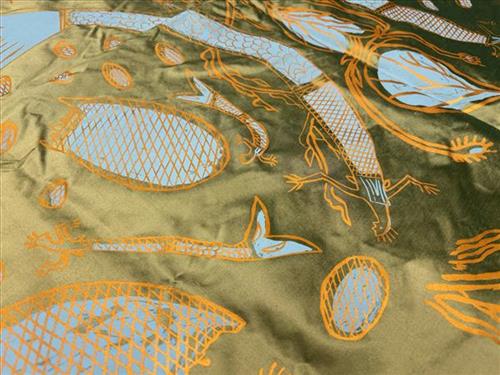
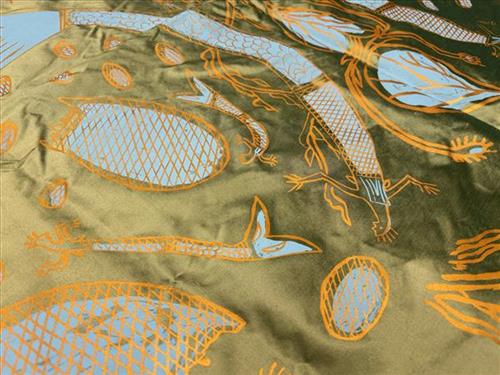
Kukurlk Kare (Going Underground)

Karrinung kukurlk kare, karrijare manme (we are going underground looking for food).

“This is my country. In this painting, I’m looking at her little bit different way. This is what we see when we’re kukurlk kare (going underground)

Man-kurndalh (Black plum) I call mother. It is my mother’s Djang/Dreaming. The bush onion (kulumuduk) is white, the same as onions you buy at the store. We don’t eat this one though, it’s poison.

Wayuk is the water lily, with the big root growing in the earth. This is when that water is drying up a bit. There are worms and beetles- this is what we see underground, when we are digging for manme.”

-Jennifer Wurrkidj


377810582374907


Djomi (Fresh Water Spirit)

This design depicts the story of the artist’s ancestral dreaming, the Djómi (Fresh Water Spirit).

The Djómi figure is a mermaid-like spirit with fish tail that lives in the freshwater stream that flows out to the sea cliff near Maningrida. Djómi is known to be a very powerful fertility symbol.

“If you go there, you can get pregnant easily. Djómi has babies, and they can give other babies too. The Djómi spirit is so powerful, that women can end up with multiple babies at once, twins or sometimes even more. The Djómi spirits lay eggs near the sacred freshwater stream in Maningrida. Inside the eggs are human babies as well as young Djómi. Men do not go near that swamp, because Djomi is so powerful that men might get pregnant there too. So men are too scared of that Djómi. When we visit the Djómi freshwater spring, we can hear young Djómi  crying. They sound like normal babies crying, those Djómi spirits. They are looking for a mother. This Djómi is my dreaming, I got permission from my djungkay (ritual manager) to paint this Djómi design. For me I always ask my djunguy permission to paint, because that is our cultural way. This design also depicts the freshwater lily leaves and seaweed from the base of the sea floor.” Joy Galrbin

377810582374886


Murnun (Dugong)

Dugong can be found in the waters around Maningrida They are a protected species but do form part of a traditional manme (bushfood) diet for some saltwater communities.

377810582374884


Murnun (Dugong)

Dugong can be found in the waters around Maningrida They are a protected species but do form part of a traditional manme (bushfood) diet for some saltwater communities.

377810582374881


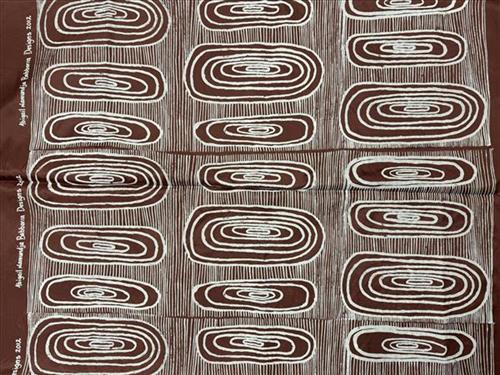
Kunwardde dja Kunronj (Rocks and Billabong)

Abigail has depicted the waterholes or Kunwardde dja Kunronj (Sacred Rocks and Billabong) that lie on the plains near Mankorlod, the country for which she is a traditional owner.

The waterholes remain wet throughout the year, even during dry season. This site is connected to the artist’s djang (dreaming), the ngalng (freshwater yabbie) and stone country. Mankorlod homeland is a three-hour drive from Maningrida in the kunwardde (stone country).

377810582374876


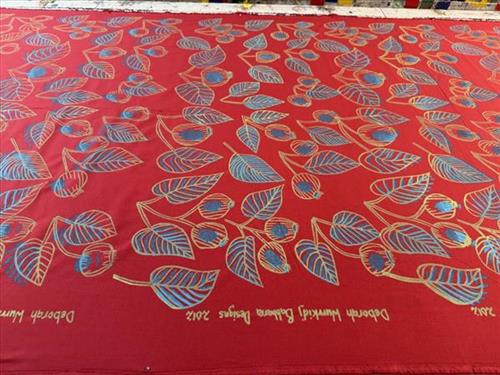
Man-djarduk (Red Bush Apples)

Deborah Wurrkidj is a Kuninjku artist from the Kurulk clan whose country lies around the outstation of Mumeka in central Arnhem Land.

In this design she has depicted man-djarduk (red bush apples) – a sweet, crisp bush food that is a favourite to collect.

Man-djarduk fruits in kurrung and kunumeleng seasons, the build-up and first rains seasons.

377810582375772


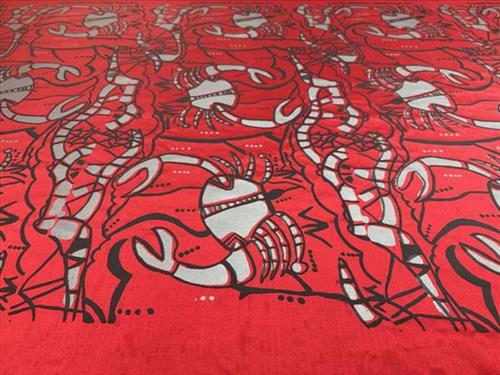
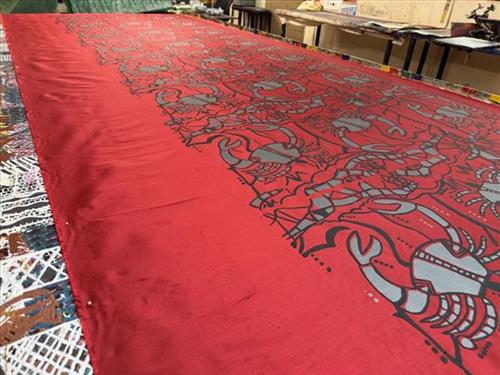
Rrugurrgurda (mud crab) * Burarra

This design tells the story of Elizabeth’s homeland – a dreaming place, a good dreaming place with plenty of mud crabs. Elizabeth’s homeland lies east of Maningrida, at the mouth of the Blyth river. This country is known for a large spiritual mud crab, which lives in the area.

Many families collect crabs to eat there with long sticks, or collect directly from the shores. Mud crabs hide in the muddy bottoms of estuaries and mangrove forests surrounding Maningrida. After a king tide, a large cyclical tide that brings the crabs out from the mangroves, it is a good time to find crabs.

Rrugurrgurda (mud crabs) is pronounced Ahh-rewg-gurd-gurda in the Burarra language. Rrugurrgurda are good baladji (bush food in Burarra) and can be caught all year round. They are put on the fire to cook, and they are ready when they turn a bright orange colour.
 

377810582375788


Murnun (Dugong)

Dugong can be found in the waters around Maningrida They are a protected species but do form part of a traditional manme (bushfood) diet for some saltwater communities.