377810582375787


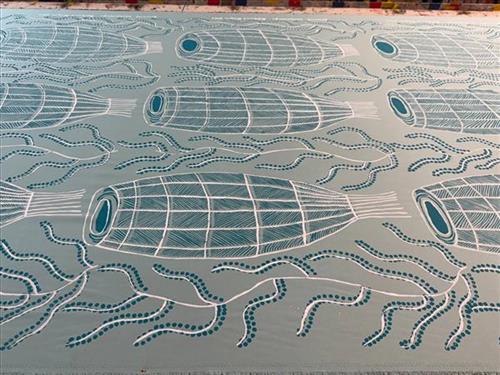
An-gujechiya (fishtrap)

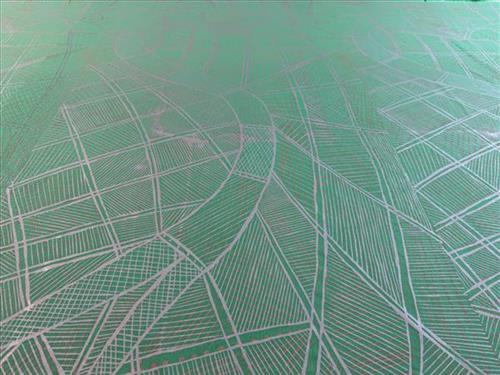
An-gujechiya is the word for fish trap in the Burarra language, which is one of the languages that continue to be spoken in the Djelk Indigenous Protected Region. Wullunmingu’s childhood home in Gupanga, Arnhem Land, is a saltwater estuary that is a great place for collecting crabs and edible shellfish such as the delicacy mud mussel.

In the early wet season, fish swim upstream to breed in creeks and billabongs, then downstream to spend the dry season in larger rivers. An-gujechiya (fish trap) would be set to face the oncoming fish, with woven fencing either side. Within the mouth of the trap is a woven funnel that guides the fish inside and prevents their escape. The clever design ensures that only adult fish are caught as smaller fish can escape through the weaving or even through the funnel. The fish that are caught can survive in the trap for up to two months. Once the trap is removed, the end is untied to remove the fish.

Wullunmingu’s eye for detail runs in her family. Her mother, Doris Gingingara, was an illustrator for the iconic Desert Designs label in the 1980s. In addition to designing outfits for the 2018 Commonwealth Games, Wullunmingu’s work has been featured in high-profile fashion and homeware licensing collaborations, including with Kip&Co x Bábbarra in 2020 and a stunning collaboration with ethical milliner, Helen Kaminski 2024.


377810582375952


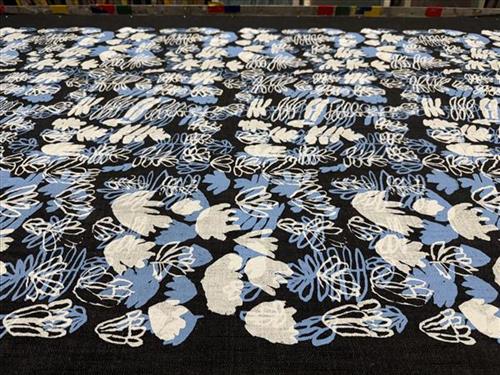
Kunngol (cloud)

This design depicts certain Kunngol (cloud) that signal to people of central Arnhem Land that the end of the wet season is approaching. After months of daily monsoonal rain in Arnhem Land, these clouds are light and fluffy, not like the dark, heavy clouds of the monsoonal sky. At the time of the kunngol clouds, people know the country will soon dry up and the cold season (dry season) will arrive. When the kunngol clouds appear, all of the billabongs are already filled, the rivers are high and the country is brimming with life and fresh new growth after months of fresh water pouring from the sky.

377810582370947


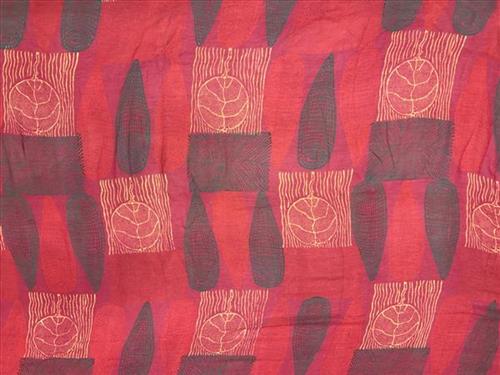
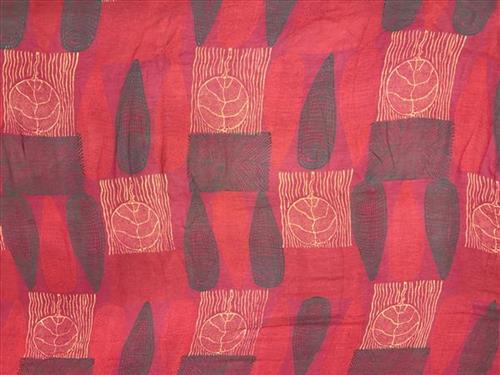
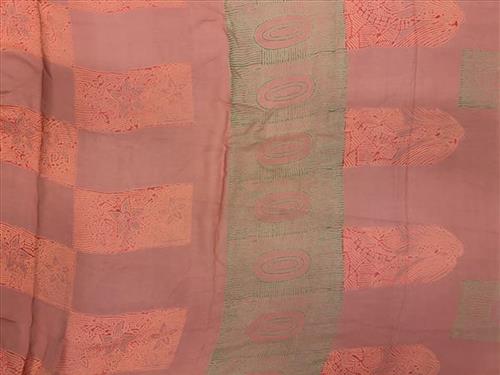
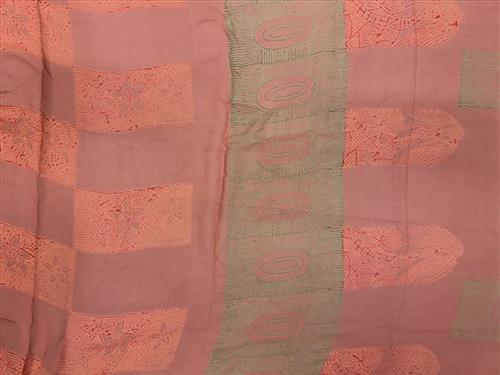
Woodblock Sari by Bábbarra X Tharangini 2025

Woodblock print on handwoven silk, extract print with organic dyes, 100% Silk

Co-created by Bábbarra Women’s Centre, Maningrida and Tharangini Studio, India

Printed by artisans at Tharangini Studio 

Design brief by Bábbarra Women’s Centre Artists

Woodblock carving by Shri C.H. Sreeram and Shri S.K. Rajak

This fabric features the following woodblock designs. 

  • NGALDADMURRNG (SARATOGA) by Carol Kamanj Liyawanga-Campion
  • MERLE MERLE (BUTTERFLY) by Carol Kamanj Liyawanga-Campion
  • BOLUNG (RAINBOW SERPENT) by Jay Belinj Jurrupula-Rostron

“I’m excited to see my Lino design made into a woodblock. We are going to spend Saturday printing with Tharangini Studio. We are going to learn woodblock printing. I’ve been working Bábbarra Women’s Centre for 37 years since it started. I’ve been printing Lino on fabric.” Janet Marawarr 2023

“Tomorrow we do printing Yawkyawk (mermaid spirit) and Ngalyod (rainbow serpent). My design is together with my sister. Together, we started working at the Women’s Centre and Maningrida Arts and Culture, taught by our mother and grandmother. My sister is a sick one, and she passed on her story to me – Ngalyod (rainbow serpent). I help my sister, I help carry the knowledge for her. That’s why we both have designs being made into woodblock.” Deborah Wurrkidj 2024

BACKGROUND

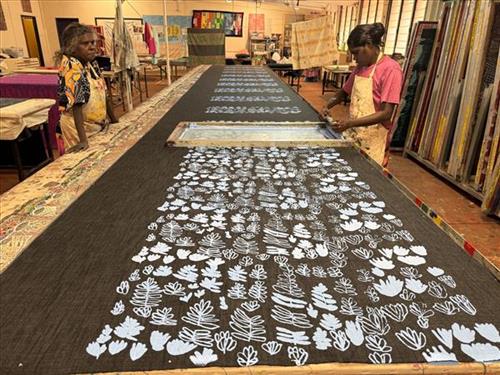
Bábbarra Women’s Centre is located in the Djelk area of Arnhem Land, in a town known as Maningrida and was established in 1987. We represent over 50 women artists from 12 languages and operate under the First Nations-owned Bawinanga Homelands Aboriginal Corporation. The artists at Bábbarra Women’s Centre design screen printed and lino print textiles that illustrate the djang or rich cultural narratives, histories and powerful creation stories of West Arnhem Land. The tradition of lino printing began in the mid-1990s as a way for women to become economically empowered.

Tharangini Studio was established in 1977 in Bangalore by artist and textile enthusiast Lakshmi Srivathsa. Today, it is managed by Srivathsa’s daughter, Padmini Govind, whose global corporate career in technology and defence has led to ingenious eco-friendly printing practices within the lush tropical locale. Under Padmini’s leadership, Tharangini is the only artisan studio with a NEST Ethical Seal of Compliance (fair trade). As the last surviving heritage block print studio in Bangalore, Tharangini is home to one of the largest private archives of vintage woodblocks in India

“Karri-djarrk-durrkmirri means “We work together” in the Kuninjku language of West Arnhem Land and its more than cultural exchange with India, its is two way learning.

Tharangini’s skilled artisans worked closely with Babbarra in 2023-2025 to hand-carve some of Babbarra’s old linocut designs into woodblocks. This initiative was supported by the Centre for Australia-India Relations, Kinaway Chamber of Commerce, Victoria and Bawinanga Aboriginal Corporation.

The creative relationship not only serves art but it also informs a practical and critical archival outcome for Babbarra Women’s Centre. The walls of Tharangini Studio were neatly lined with boxes of durable woodblocks and many over 200 years old and still being printed. At Bábbarra, we house cupboards and shelves of historic and vulnerable lino tiles, some 30 years old but no longer able to be printed.Tharangini Studio specialises in woodblocks carved out of teak by master artisans, creating a solid medium for textile printing. For Bábbarra Women’s Centre artists, this had the added benefit of preserving the original lino designs. Many lino sheets are crumbling and decaying, a process hastened by the kudjewk (wet season) and humid kurrung (build up).

Combining the cultural authority to share djang and print-making practices at Bábbarra Women’s Centre with the tradition of woodblock printing in India, the project exchanges many thousands of years of knowledge across the globe. The Bábbarra artists, as custodians of these designs, must receive permission from their djungkays (ritual manager through the maternal line) to share their stories.

This connection will undoubtedly sustain a lasting and significant impact on the legacy and longevity of Bábbarra Women’s Centre. The story doesn’t end here in honour of the generosity shown by Tharangini Studio, Padmini Govind will join Babbarra Women’s Centre artists in Maningrida for a workshop in June 2025.” 

Extract taken from karri-djarrk–durrkmirri catalogue essay, Jessica Stalenberg 2025
377810582370940


Woodblock Sari by Bábbarra X Tharangini 2025

Woodblock print on handwoven silk, extract print with organic dyes, 100% Silk

Co-created by Bábbarra Women’s Centre, Maningrida and Tharangini Studio, India

Printed by artisans at Tharangini Studio 

Design brief by Bábbarra Women’s Centre Artists

Woodblock carving by Shri C.H. Sreeram and Shri S.K. Rajak

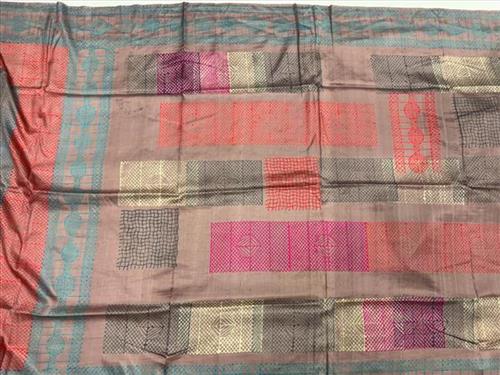
This fabric may feature the following woodblock designs.

  • RARRK (CROSS HATCH) by Susan Belinj Marawarr
  • WAK WAK (BLACK CROW DREAMING) A Susan Belinj Marawarr
  • WAK WAK (BLACK CROW DREAMING) B Susan Belinj Marawarr

“I’m excited to see my Lino design made into a woodblock. We are going to spend Saturday printing with Tharangini Studio. We are going to learn woodblock printing. I’ve been working Bábbarra Women’s Centre for 37 years since it started. I’ve been printing Lino on fabric.” Janet Marawarr 2023

“Tomorrow we do printing Yawkyawk (mermaid spirit) and Ngalyod (rainbow serpent). My design is together with my sister. Together, we started working at the Women’s Centre and Maningrida Arts and Culture, taught by our mother and grandmother. My sister is a sick one and she passed on her story to me – Ngalyod (rainbow serpent). I help my sister, I help carry the knowledge for her. That’s why we both have designs being made into woodblock.” Deborah Wurrkidj 2024

BACKGROUND

Bábbarra Women’s Centre is located in the Djelk area of Arnhem Land, in a town known as Maningrida and was established in 1987. We represent over 50 women artists from 12 languages and operate under the First Nations-owned Bawinanga Homelands Aboriginal Corporation. The artists at Bábbarra Women’s Centre design screen printed and lino print textiles that illustrate the djang or rich cultural narratives, histories and powerful creation stories of West Arnhem Land. The tradition of lino printing began in the mid-1990s as a way for women to become economically empowered.

Tharangini Studio was established in 1977 in Bangalore by artist and textile enthusiast Lakshmi Srivathsa. Today, it is managed by Srivathsa’s daughter, Padmini Govind, whose global corporate career in technology and defence has led to ingenious eco-friendly printing practices within the lush tropical locale. Under Padmini’s leadership, Tharangini is the only artisan studio with a NEST Ethical Seal of Compliance (fair trade). As the last surviving heritage block print studio in Bangalore, Tharangini is home to one of the largest private archives of vintage woodblocks in India

“Karri-djarrk-durrkmirri means “We work together” in the Kuninjku language of West Arnhem Land and its more than cultural exchange with India, its is two way learning.

Tharangini’s skilled artisans worked closely with Babbarra in 2023-2025 to hand-carve some of Babbarra’s old linocut designs into woodblocks. This initiative was supported by the Centre for Australia-India Relations, Kinaway Chamber of Commerce, Victoria and Bawinanga Aboriginal Corporation.

The creative relationship not only serves art but it also informs a practical and critical archival outcome for Babbarra Women’s Centre. The walls of Tharangini Studio were neatly lined with boxes of durable woodblocks and many over 200 years old and still being printed. At Bábbarra, we house cupboards and shelves of historic and vulnerable lino tiles, some 30 years old but no longer able to be printed.Tharangini Studio specialises in woodblocks carved out of teak by master artisans, creating a solid medium for textile printing. For Bábbarra Women’s Centre artists, this had the added benefit of preserving the original lino designs. Many lino sheets are crumbling and decaying, a process hastened by the kudjewk (wet season) and humid kurrung (build up).

Combining the cultural authority to share djang and print-making practices at Bábbarra Women’s Centre with the tradition of woodblock printing in India, the project exchanges many thousands of years of knowledge across the globe. The Bábbarra artists, as custodians of these designs, must receive permission from their djungkays (ritual manager through the maternal line) to share their stories.

This connection will undoubtedly sustain a lasting and significant impact on the legacy and longevity of Bábbarra Women’s Centre. The story doesn’t end here in honour of the generosity shown by Tharangini Studio, Padmini Govind will join Babbarra Women’s Centre artists in Maningrida for a workshop in June 2025.” 

Extract taken from karri-djarrk–durrkmirri catalogue essay, Jessica Stalenberg 2025
377810582370939


Woodblock Sari by Bábbarra X Tharangini 2025

Woodblock print on handwoven silk, extract print with organic dyes, 100% Silk

Printed by artisans at Tharangini Studio

Design brief by Bábbarra women’s Centre and Artists

Woodblock carving by Shri C.H. Sreeram and Shri S.K. Rajak

Co-created by Bábbarra Women’s Centre, Maningrida and Tharangini Studio, India

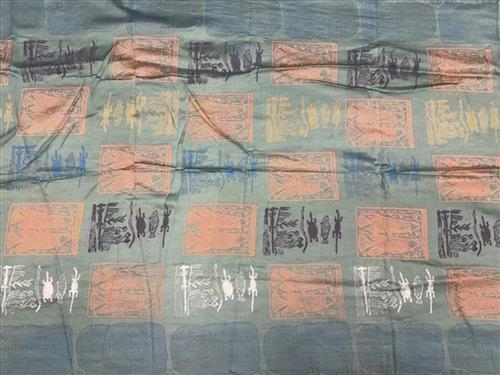
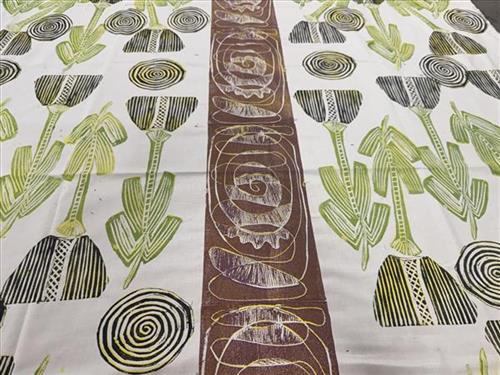
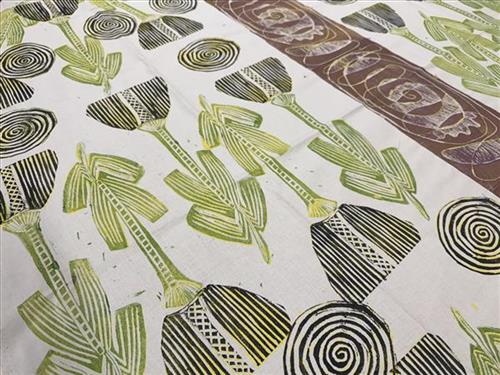
This fabric features the following woodblock designs:

  • MANDJABU (FISHTRAP) by Raylene Bonson
  • STINGRAY by Jocelyn Bangardijan Koyole


“I’m excited to see my Lino design made into a woodblock. We are going to spend Saturday printing with Tharangini Studio. We are going to learn woodblock printing. I’ve been working Bábbarra Women’s Centre for 37 years since it started. I’ve been printing Lino on fabric.” Janet Marawarr 2023

“Tomorrow we do printing Yawkyawk (mermaid spirit) and Ngalyod (rainbow serpent). My design is together with my sister. Together, we started working at the Women’s Centre and Maningrida Arts and Culture, taught by our mother and grandmother. My sister is a sick one and she passed on her story to me – Ngalyod (rainbow serpent). I help my sister, I help carry the knowledge for her. That’s why we both have designs being made into woodblock.”

Deborah Wurrkidj 2024

BACKGROUND

Bábbarra Women’s Centre is located in the Djelk area of Arnhem Land, in a town known as Maningrida and was established in 1987. We represent over 50 women artists from 12 languages and operate under the First Nations-owned Bawinanga Homelands Aboriginal Corporation. The artists at Bábbarra Women’s Centre design screen printed and lino print textiles that illustrate the djang or rich cultural narratives, histories and powerful creation stories of West Arnhem Land. The tradition of lino printing began in the mid-1990s as a way for women to become economically empowered.

Tharangini Studio was established in 1977 in Bangalore by artist and textile enthusiast Lakshmi Srivathsa. Today, it is managed by Srivathsa’s daughter, Padmini Govind, whose global corporate career in technology and defence has led to ingenious eco-friendly printing practices within the lush tropical locale. Under Padmini’s leadership, Tharangini is the only artisan studio with a NEST Ethical Seal of Compliance (fair trade). As the last surviving heritage block print studio in Bangalore, Tharangini is home to one of the largest private archives of vintage woodblocks in India

“Karri-djarrk-durrkmirri means “We work together” in the Kuninjku language of West Arnhem Land and its more than cultural exchange with India, its is two way learning.

Tharangini’s skilled artisans worked closely with Babbarra in 2023-2025 to hand-carve some of Babbarra’s old linocut designs into woodblocks. This initiative was supported by the Centre for Australia-India Relations, Kinaway Chamber of Commerce, Victoria and Bawinanga Aboriginal Corporation.

The creative relationship not only serves art but it also informs a practical and critical archival outcome for Babbarra Women’s Centre. The walls of Tharangini Studio were neatly lined with boxes of durable woodblocks and many over 200 years old and still being printed. At Bábbarra, we house cupboards and shelves of historic and vulnerable lino tiles, some 30 years old but no longer able to be printed.Tharangini Studio specialises in woodblocks carved out of teak by master artisans, creating a solid medium for textile printing. For Bábbarra Women’s Centre artists, this had the added benefit of preserving the original lino designs. Many lino sheets are crumbling and decaying, a process hastened by the kudjewk (wet season) and humid kurrung (build up).

Combining the cultural authority to share djang and print-making practices at Bábbarra Women’s Centre with the tradition of woodblock printing in India, the project exchanges many thousands of years of knowledge across the globe. The Bábbarra artists, as custodians of these designs, must receive permission from their djungkays (ritual manager through the maternal line) to share their stories.

This connection will undoubtedly sustain a lasting and significant impact on the legacy and longevity of Bábbarra Women’s Centre. The story doesn’t end here in honour of the generosity shown by Tharangini Studio, Padmini Govind will join Babbarra Women’s Centre artists in Maningrida for a workshop in June 2025.” 

Extract taken from karri-djarrk–durrkmirri catalogue essay, Jessica Stalenberg 2025
377810582370938


Woodblock Sari by Bábbarra X Tharangini 2025

Woodblock print on handwoven silk, extract print with organic dyes, 100% Silk

Printed by artisans at Tharangini Studio

Design brief by Bábbarra Women’s Centre and Artists

Woodblock carving by Shri C.H. Sreeram and Shri S.K. Rajak

Co-created by Bábbarra Women’s Centre, Maningrida and Tharangini Studio, India

This fabric features the following woodblock designs:

  • MANDJABU (FISHTRAP) by Raylene Bonson
  • STINGRAY by Jocelyn Koyole

“Tomorrow we do printing Yawkyawk (mermaid spirit) and Ngalyod (rainbow serpent). My design is together with my sister. Together, we started working at the Women’s Centre and Maningrida Arts and Culture, taught by our mother and grandmother. My sister is a sick one and she passed on her story to me – Ngalyod (rainbow serpent). I help my sister, I help carry the knowledge for her. That’s why we both have designs being made into woodblock.”

Deborah Wurrkidj 2024

BACKGROUND

Bábbarra Women’s Centre is located in the Djelk area of Arnhem Land, in a town known as Maningrida and was established in 1987. We represent over 50 women artists from 12 languages and operate under the First Nations-owned Bawinanga Homelands Aboriginal Corporation. The artists at Bábbarra Women’s Centre design screen printed and lino print textiles that illustrate the djang or rich cultural narratives, histories and powerful creation stories of West Arnhem Land. The tradition of lino printing began in the mid-1990s as a way for women to become economically empowered.

Tharangini Studio was established in 1977 in Bangalore by artist and textile enthusiast Lakshmi Srivathsa. Today, it is managed by Srivathsa’s daughter, Padmini Govind, whose global corporate career in technology and defence has led to ingenious eco-friendly printing practices within the lush tropical locale. Under Padmini’s leadership, Tharangini is the only artisan studio with a NEST Ethical Seal of Compliance (fair trade). As the last surviving heritage block print studio in Bangalore, Tharangini is home to one of the largest private archives of vintage woodblocks in India

“Karri-djarrk-durrkmirri means “We work together” in the Kuninjku language of West Arnhem Land and its more than cultural exchange with India, its is two way learning.

Tharangini’s skilled artisans worked closely with Babbarra in 2023-2025 to hand-carve some of Babbarra’s old linocut designs into woodblocks. This initiative was supported by the Centre for Australia-India Relations, Kinaway Chamber of Commerce, Victoria and Bawinanga Aboriginal Corporation.

The creative relationship not only serves art but it also informs a practical and critical archival outcome for Babbarra Women’s Centre. The walls of Tharangini Studio were neatly lined with boxes of durable woodblocks and many over 200 years old and still being printed. At Bábbarra, we house cupboards and shelves of historic and vulnerable lino tiles, some 30 years old but no longer able to be printed.Tharangini Studio specialises in woodblocks carved out of teak by master artisans, creating a solid medium for textile printing. For Bábbarra Women’s Centre artists, this had the added benefit of preserving the original lino designs. Many lino sheets are crumbling and decaying, a process hastened by the kudjewk (wet season) and humid kurrung (build up).

Combining the cultural authority to share djang and print-making practices at Bábbarra Women’s Centre with the tradition of woodblock printing in India, the project exchanges many thousands of years of knowledge across the globe. The Bábbarra artists, as custodians of these designs, must receive permission from their djungkays (ritual manager through the maternal line) to share their stories.

This connection will undoubtedly sustain a lasting and significant impact on the legacy and longevity of Bábbarra Women’s Centre. The story doesn’t end here in honour of the generosity shown by Tharangini Studio, Padmini Govind will join Babbarra Women’s Centre artists in Maningrida for a workshop in June 2025.” 

Extract taken from karri-djarrk–durrkmirri catalogue essay, Jessica Stalenberg 2025
377810582370943


Woodblock Sari by Bábbarra X Tharangini 2025

Woodblock print on handwoven silk, extract print with organic dyes, 100% Silk

Co-created by Bábbarra Women’s Centre, Maningrida and Tharangini Studio, India

Printed by artisans at Tharangini Studio 

Design brief by Bábbarra Women’s Centre Artists

Woodblock carving by Shri C.H. Sreeram and Shri S.K. Rajak

This fabric may feature the following woodblock designs. 

  • Kunred (Country) byJanet Kalidjan Marawarr 
  • Kundalk (Grasses) by Deborah Wurrkidj
  • Ngaldjorlhbo (Mother of Everything) by Janet Kalidjan Marawarr 
  • Yawyyawk (young woman spirit) by Deborah Wurrkidj
  • MANDJABU (FISHTRAP) byJanet Kalidjan Marawarr 
  • MAREBU (PANDANUS MAT) byJanet Kalidjan Marawarr 
  • KUNRED MANKORLOD (MANKORLOD COUNTRY) byJanet Kalidjan Marawarr 
  • ROLK (MAGGOT) KUNWARDDE(ROCKS) by Janet Kalidjan Marawarr 
  • NGALDJORLHBO (MOTHER OF EVERYTHING) by Janet Kalidjan Marawarr 
  • KUNRONJ (FRESH WATER) by Janet Kalidjan Marawarr 
  • NGALYOD (RAINBOW SERPENT) by Janet Kalidjan Marawarr 
  • MANDJABU (FISH TRAP) by Raylene Bonson
  • STINGRAY by Jocelyn Bangardijan Koyole
  • RARRK (CROSS HATCH) by Susan Belinj Marawarr
  • WAK WAK (BLACK CROW DREAMING) A Susan Belinj Marawarr
  • WAK WAK (BLACK CROW DREAMING) B Susan Belinj Marawarr

“I’m excited to see my Lino design made into a woodblock. We are going to spend Saturday printing with Tharangini Studio. We are going to learn woodblock printing. I’ve been working Bábbarra Women’s Centre for 37 years since it started. I’ve been printing Lino on fabric.” Janet Marawarr 2023

“Tomorrow we do printing Yawkyawk (mermaid spirit) and Ngalyod (rainbow serpent). My design is together with my sister. Together, we started working at the Women’s Centre and Maningrida Arts and Culture, taught by our mother and grandmother. My sister is a sick one, and she passed on her story to me – Ngalyod (rainbow serpent). I help my sister, I help carry the knowledge for her. That’s why we both have designs being made into woodblock.” Deborah Wurrkidj 2024

BACKGROUND

Bábbarra Women’s Centre is located in the Djelk area of Arnhem Land, in a town known as Maningrida and was established in 1987. We represent over 50 women artists from 12 languages and operate under the First Nations-owned Bawinanga Homelands Aboriginal Corporation. The artists at Bábbarra Women’s Centre design screen printed and lino print textiles that illustrate the djang or rich cultural narratives, histories and powerful creation stories of West Arnhem Land. The tradition of lino printing began in the mid-1990s as a way for women to become economically empowered.

Tharangini Studio was established in 1977 in Bangalore by artist and textile enthusiast Lakshmi Srivathsa. Today, it is managed by Srivathsa’s daughter, Padmini Govind, whose global corporate career in technology and defence has led to ingenious eco-friendly printing practices within the lush tropical locale. Under Padmini’s leadership, Tharangini is the only artisan studio with a NEST Ethical Seal of Compliance (fair trade). As the last surviving heritage block print studio in Bangalore, Tharangini is home to one of the largest private archives of vintage woodblocks in India

“Karri-djarrk-durrkmirri means “We work together” in the Kuninjku language of West Arnhem Land and its more than cultural exchange with India, its is two way learning.

Tharangini’s skilled artisans worked closely with Babbarra in 2023-2025 to hand-carve some of Babbarra’s old linocut designs into woodblocks. This initiative was supported by the Centre for Australia-India Relations, Kinaway Chamber of Commerce, Victoria and Bawinanga Aboriginal Corporation.

The creative relationship not only serves art but it also informs a practical and critical archival outcome for Babbarra Women’s Centre. The walls of Tharangini Studio were neatly lined with boxes of durable woodblocks and many over 200 years old and still being printed. At Bábbarra, we house cupboards and shelves of historic and vulnerable lino tiles, some 30 years old but no longer able to be printed.Tharangini Studio specialises in woodblocks carved out of teak by master artisans, creating a solid medium for textile printing. For Bábbarra Women’s Centre artists, this had the added benefit of preserving the original lino designs. Many lino sheets are crumbling and decaying, a process hastened by the kudjewk (wet season) and humid kurrung (build up).

Combining the cultural authority to share djang and print-making practices at Bábbarra Women’s Centre with the tradition of woodblock printing in India, the project exchanges many thousands of years of knowledge across the globe. The Bábbarra artists, as custodians of these designs, must receive permission from their djungkays (ritual manager through the maternal line) to share their stories.

This connection will undoubtedly sustain a lasting and significant impact on the legacy and longevity of Bábbarra Women’s Centre. The story doesn’t end here in honour of the generosity shown by Tharangini Studio, Padmini Govind will join Babbarra Women’s Centre artists in Maningrida for a workshop in June 2025.” 

Extract taken from karri-djarrk–durrkmirri catalogue essay, Jessica Stalenberg 2025
377810582370942


Woodblock Sari by Bábbarra X Tharangini 2025

Woodblock print on handwoven silk, extract print with organic dyes, 100% Silk

Co-created by Bábbarra Women’s Centre, Maningrida and Tharangini Studio, India

Printed by artisans at Tharangini Studio 

Design brief by Bábbarra Women’s Centre Artists

Woodblock carving by Shri C.H. Sreeram and Shri S.K. Rajak

This fabric may feature the following woodblock designs. 

  • Kunred (Country) byJanet Kalidjan Marawarr 
  • Kundalk (Grasses) by Deborah Wurrkidj
  • Ngaldjorlhbo (Mother of Everything) by Janet Kalidjan Marawarr 
  • Yawyyawk (young woman spirit) by Deborah Wurrkidj
  • MANDJABU (FISHTRAP) byJanet Kalidjan Marawarr 
  • MAREBU (PANDANUS MAT) byJanet Kalidjan Marawarr 
  • KUNRED MANKORLOD (MANKORLOD COUNTRY) byJanet Kalidjan Marawarr 
  • ROLK (MAGGOT) KUNWARDDE(ROCKS) by Janet Kalidjan Marawarr 
  • NGALDJORLHBO (MOTHER OF EVERYTHING) by Janet Kalidjan Marawarr 
  • KUNRONJ (FRESH WATER) by Janet Kalidjan Marawarr 
  • NGALYOD (RAINBOW SERPENT) by Janet Kalidjan Marawarr 
  • MANDJABU (FISH TRAP) by Raylene Bonson
  • STINGRAY by Jocelyn Bangardijan Koyole
  • RARRK (CROSS HATCH) by Susan Belinj Marawarr
  • WAK WAK (BLACK CROW DREAMING) A Susan Belinj Marawarr
  • WAK WAK (BLACK CROW DREAMING) B Susan Belinj Marawarr

“I’m excited to see my Lino design made into a woodblock. We are going to spend Saturday printing with Tharangini Studio. We are going to learn woodblock printing. I’ve been working Bábbarra Women’s Centre for 37 years since it started. I’ve been printing Lino on fabric.” Janet Marawarr 2023

“Tomorrow we do printing Yawkyawk (mermaid spirit) and Ngalyod (rainbow serpent). My design is together with my sister. Together, we started working at the Women’s Centre and Maningrida Arts and Culture, taught by our mother and grandmother. My sister is a sick one, and she passed on her story to me – Ngalyod (rainbow serpent). I help my sister, I help carry the knowledge for her. That’s why we both have designs being made into woodblock.” Deborah Wurrkidj 2024

BACKGROUND

Bábbarra Women’s Centre is located in the Djelk area of Arnhem Land, in a town known as Maningrida and was established in 1987. We represent over 50 women artists from 12 languages and operate under the First Nations-owned Bawinanga Homelands Aboriginal Corporation. The artists at Bábbarra Women’s Centre design screen printed and lino print textiles that illustrate the djang or rich cultural narratives, histories and powerful creation stories of West Arnhem Land. The tradition of lino printing began in the mid-1990s as a way for women to become economically empowered.

Tharangini Studio was established in 1977 in Bangalore by artist and textile enthusiast Lakshmi Srivathsa. Today, it is managed by Srivathsa’s daughter, Padmini Govind, whose global corporate career in technology and defence has led to ingenious eco-friendly printing practices within the lush tropical locale. Under Padmini’s leadership, Tharangini is the only artisan studio with a NEST Ethical Seal of Compliance (fair trade). As the last surviving heritage block print studio in Bangalore, Tharangini is home to one of the largest private archives of vintage woodblocks in India

“Karri-djarrk-durrkmirri means “We work together” in the Kuninjku language of West Arnhem Land and its more than cultural exchange with India, its is two way learning.

Tharangini’s skilled artisans worked closely with Babbarra in 2023-2025 to hand-carve some of Babbarra’s old linocut designs into woodblocks. This initiative was supported by the Centre for Australia-India Relations, Kinaway Chamber of Commerce, Victoria and Bawinanga Aboriginal Corporation.

The creative relationship not only serves art but it also informs a practical and critical archival outcome for Babbarra Women’s Centre. The walls of Tharangini Studio were neatly lined with boxes of durable woodblocks and many over 200 years old and still being printed. At Bábbarra, we house cupboards and shelves of historic and vulnerable lino tiles, some 30 years old but no longer able to be printed.Tharangini Studio specialises in woodblocks carved out of teak by master artisans, creating a solid medium for textile printing. For Bábbarra Women’s Centre artists, this had the added benefit of preserving the original lino designs. Many lino sheets are crumbling and decaying, a process hastened by the kudjewk (wet season) and humid kurrung (build up).

Combining the cultural authority to share djang and print-making practices at Bábbarra Women’s Centre with the tradition of woodblock printing in India, the project exchanges many thousands of years of knowledge across the globe. The Bábbarra artists, as custodians of these designs, must receive permission from their djungkays (ritual manager through the maternal line) to share their stories.

This connection will undoubtedly sustain a lasting and significant impact on the legacy and longevity of Bábbarra Women’s Centre. The story doesn’t end here in honour of the generosity shown by Tharangini Studio, Padmini Govind will join Babbarra Women’s Centre artists in Maningrida for a workshop in June 2025.” 

Extract taken from karri-djarrk–durrkmirri catalogue essay, Jessica Stalenberg 2025
377810582371047


Yawkyawk in Stone Country

Yawkyawk is a word from the Aboriginal Kunwinjku/Kunwok language, meaning ‘young woman’ and ‘young woman spirit being’.

Sometimes compared to the European notion of mermaids, yawkyawks are usually depicted with the tails of fish. They have long hair, associated with trailing blooms of algae, typically found in Arnhem Land streams and rock pools. There can be wet season yawkyawk and dry season yawkyawk. It is said that when men go out hunting, they sometimes hear the song of the yawkyawk and become confused, loosing their way back to country.


377810582371041


Kundayarr (pandanus)

This fabric was created using the linocut fabric printing technique, which has been refined at Bábbarra Women’s Centre since it was introduced in the early mid 1990’s

The Lino tile is carved by the artist at Bábbarra Designs. It is printed on fabric by hand using a variety of colours and layers. The linocut technique ensures each textile is a one-off, limited edition piece.

The fabric is colour-safe and can be thrown into a washing machine. Repeated use will soften the fabric and some fading will occur over time. 

Bábbarra Women’s Centre supports the economic independence of Indigenous women in the Arnhem Land community of Maningrida, Northern Territory, Australia. Designs created by the women at Bábbarra reflect strong cultural knowledge, which is passed down to younger generations through their textile design practice.

‘Themes in our artwork almost exclusively come from our Country and cultural connection. Our deep relationship with the land and seas of our customary clan estates strongly defines and governs the social, cultural, spiritual and territorial aspects of our lives.’

Bábbarra Designs Artist Statement