111981717244


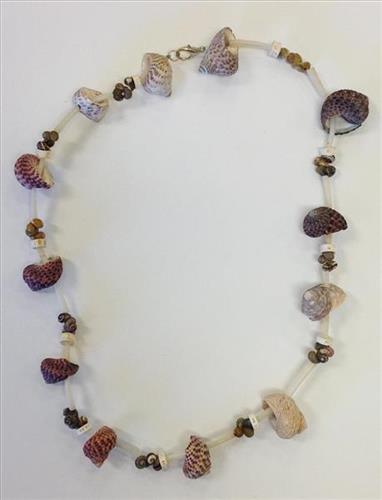
Bush Jewellery – Necklace

The women of Maningrida and surrounding homelands use a combination of locally found seeds, bone and shells to make a variety of jewellery including necklaces. earrings and bracelets.  Many of the artists use complex patterns and designs to make their beautiful creations.

111981717203


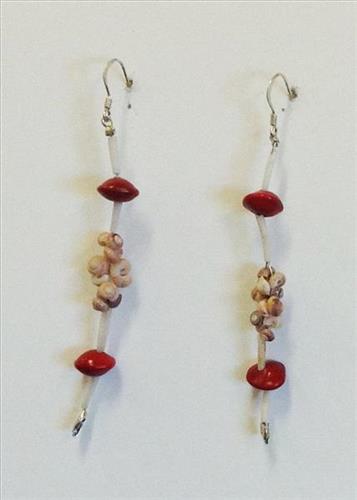
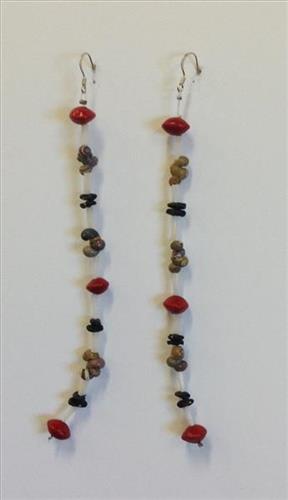
Bush Jewellery – Earrings

The women of Maningrida and surrounding homelands use a combination of locally found seeds, bone and shells to make a variety of jewellery including necklaces. earrings and bracelets.  Many of the artists use complex patterns and designs to make their beautiful creations.

111981717200


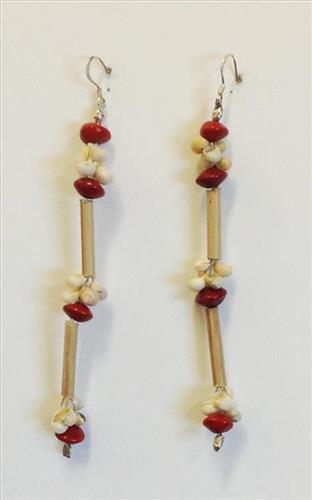
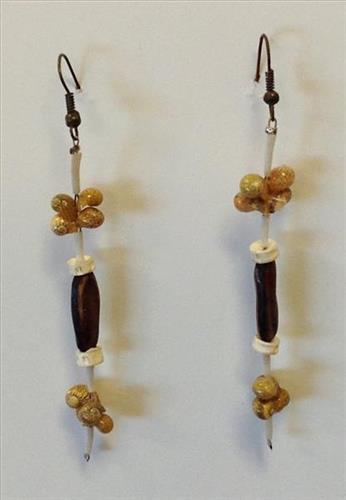
Bush Jewellery – Earrings

The women of Maningrida and surrounding homelands use a combination of locally found seeds, bone and shells to make a variety of jewellery including necklaces. earrings and bracelets.  Many of the artists use complex patterns and designs to make their beautiful creations.

111981717553


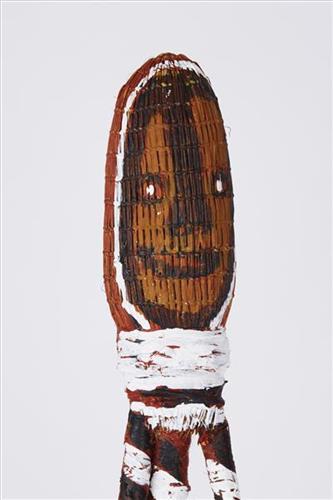
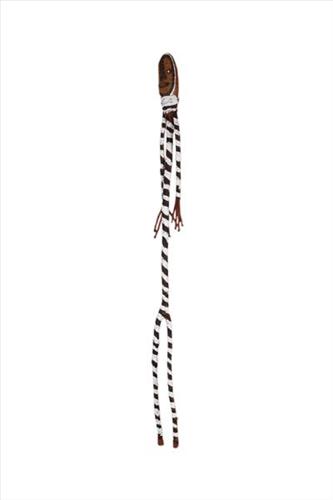
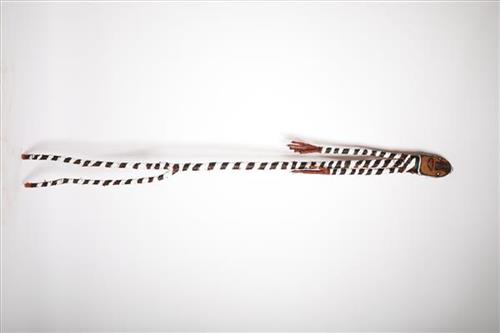
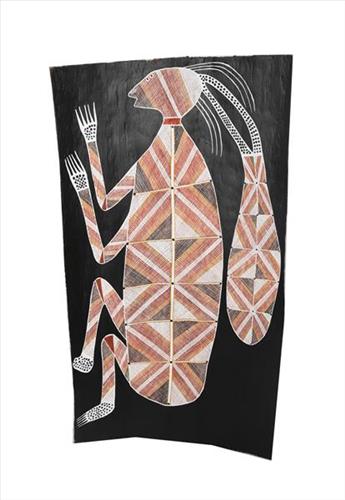
Wyarra

Wayarra/Wyarra is a spirit in the darkness that makes people very frightened. It is unseen but you feel scared when he is near you. It is something that you can’t normally see; but you can see skeleton shapes of the Wayarra/Wyarra if you are a witch doctor. It floats around at night and can appear as a floating white skeleton. They take their skin off to wash. These spirits can be frightening in appearance, however they usually stay away from humans.
A result of being a ‘clever man’ or a traditional healer, is they can commune with the Wayarra/Wyarra. It is also believed that the Wayarra/Wyarra can endow humans with the power to heal.

The ghost-like spirits are an integral part of Aboriginal cosmology in the western and central parts of Arnhem land. Some of the clans have the Wayarra/Wyarra as their clan totem and there are also dreaming sites for Wayarra/Wyarras and if you break or move rocks on those sites, there will be Wayarra/Wyarras everywhere. Wayarra/Wyarras prefer darkness.
Arnhem land is divided into clans or moieties. All living things, lands, clans, people, the natural and supernatural are classed as either one or the other of two moieties in Kununjku. duwa or yirridjdja. The duwa patrimony Wayarra cant walk around if the moon is shining. If they see the thin crescent just after the new moon, they have to put their heads down so they cant see the moon or their necks break. The yirridjdja patrimoiety Wayarra behave differently, they can walk about anytime.

You can hear them calling at night sometimes, they sound like the Curlew or they may even visit you! They look after you if you are lost by yourself. They can even follow you home until you are close to your home before they let you go.
111981731512


Bush Jewellery – Earrings

The women of Maningrida and surrounding homelands use a combination of locally found seeds, bone and shells to make a variety of jewellery including necklaces. earrings and bracelets.  Many of the artists use complex patterns and designs to make their beautiful creations.

111981731487


Bush Jewellery – Earrings

The women of Maningrida and surrounding homelands use a combination of locally found seeds, bone and shells to make a variety of jewellery including necklaces. earrings and bracelets.  Many of the artists use complex patterns and designs to make their beautiful creations.

111981731400


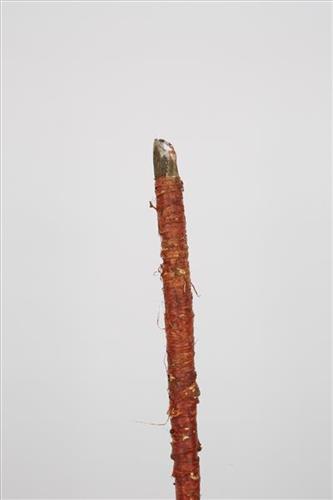
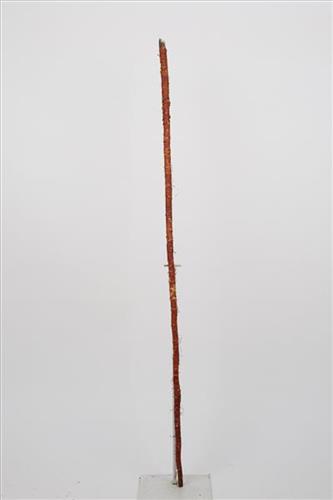
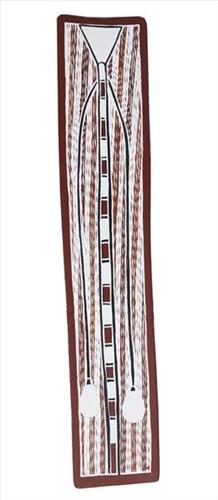
Morning Star Pole

The ceremony known throughout Arnhem Land generically as Marradjiri is a ceremony of diplomacy given by one group to another to establish good relations and to strengthen kinship (for example by marriage) and economic ties (for example the sharing of clan estate resources).

The central object in the Marradjiri ceremony is a decorated polepainted with clan designs. The work on the pole is undertaken as part of the ceremony and is accompanied by the associated song series.

Often the ceremony commences when one group invites another and the people invited perform the Marradjiri. When a child finds their first bush food or object of value it is taken as a sign that the Marradjiri ceremony should be performed and an invitation is sent out sometimes in the form of a lock of hair from this child or in the form of some other token, sometimes encased in beeswax and wrapped in cloth. The token is delivered to the invited performers who then prepare to give the ceremony to their hosts at the residence of the host group.

Each evening before sunset the performance begins and continues for two or three hours. In the early stages of the ceremony the dancers perform with body clan designs which become progressively more elaborate as the time approaches the end of the ceremony. Usually this may take two or three weeks.

In the Marradjiri

, the pole is said to represent a mast of a Makassan prau. There exists many loan words (over three hundred in total) in North Australian Aboriginal languages and one of these is the Makassan word for mast of a ship ‘palayarrang’ which has changed in some Maningrida languages to ‘bulayarrang’ and a few other variations.

It is possible that the name of this ceremony has its origins in the Makassan word for mast. The Marradjiri ceremony is influenced heavily by Makassan themes.

On the final night of the ceremony the pole appears out of the darkness on the edge of the camp decorated with feathered tassles and long ropes which represent the rigging of the prau. Dancers hold these ropes and move the pole back and forth in the fashion of a prau rolling in rough sea as depicted. The dancers bring the pole down and dance with it until it is finally presented to the host group with great ritual and the pole is set into the ground to the accompaniment of the head song man chanting through a long list of clan names associated with the travels of creation ancestors.

When the dancers part with the pole they break into mourning as they may have done at the end of each Makassan trepanging season when their Makassan visitors returned to Sulawesi on the new early dry season winds. The pole is then kept by the host group, often being hung from the roof of a dwelling.