111981987769


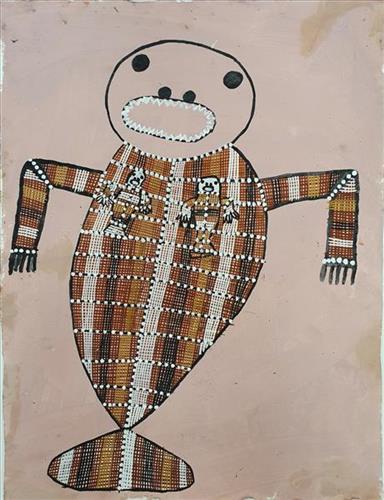
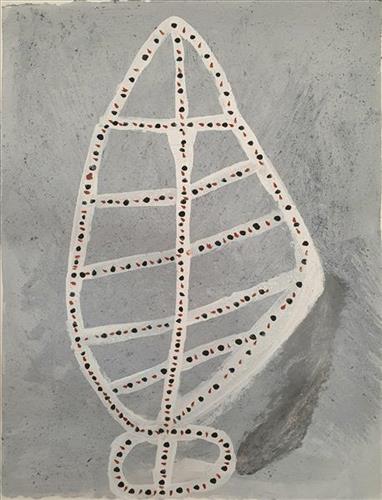
Birlmu or Namarnkorl (Barramundi)

It is well known that Aboriginal art often depicts images of sacred totems or dreamings of Aboriginal culture. However, the world of the non-sacred also provides a rich source of subject matter for Aboriginal art. Much of the rock art of western Arnhem Land for example features secular topics such as common food animals and plants, depicted because of their economic importance but also merely because of their existence in the environment. The artist has painted ‘birlmu’ or ‘namarnkorl’ (Barramundi [Lates calcarifer]). During the dry season the barramundi is an important food source for inland Aboriginal people. These fish are caught throughout the artist’s clan estate, either in fishtraps woven from pandanus or sedge grass, or else hunted with spears and fishing lines in billabongs and streams where they shelter from the sun under fallen logs or amongst the leaves of water plants.
111981987768


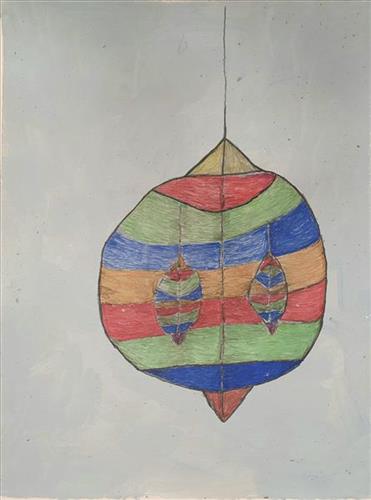
Nawarlah – Brown River Stingray

We hunt the Nawarlah (Brown River Stingray) during the wet season.  There is a plant with a yellow flower that tells us that it is the right time.  We know it will be fat. 

It is well known that Aboriginal art often depicts images of sacred totems or dreamings of Aboriginal culture. However, the world of the non-sacred also provides a rich source of subject matter for Aboriginal art. Much of the rock art of western Arnhem Land for example features secular topics such as common food animals and plants, depicted because of their economic importance but also merely because of their existence in the environment.

111981988029


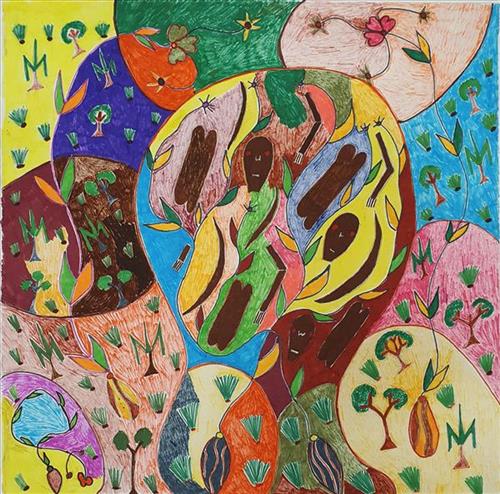
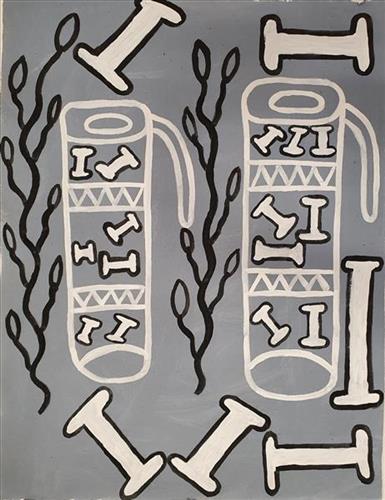
Bone Bag

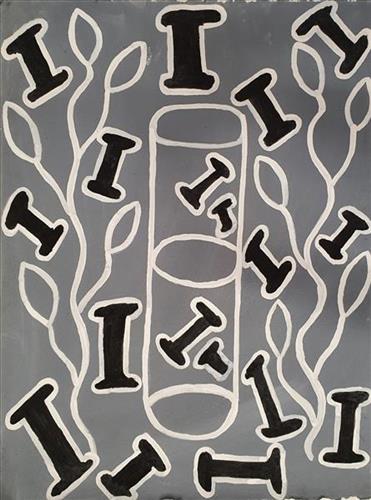
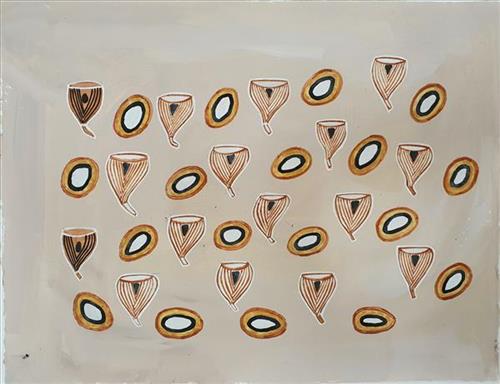
This is my story about the dreaming at the rock country. There used to be my grandfather tell story about dead people, all the bones. Our dreaming from grandfather.

All that pandanus, all them trees, all them flowers and grass, make sack (dilly bags) with them. We’re inside the rock country.

111981988028


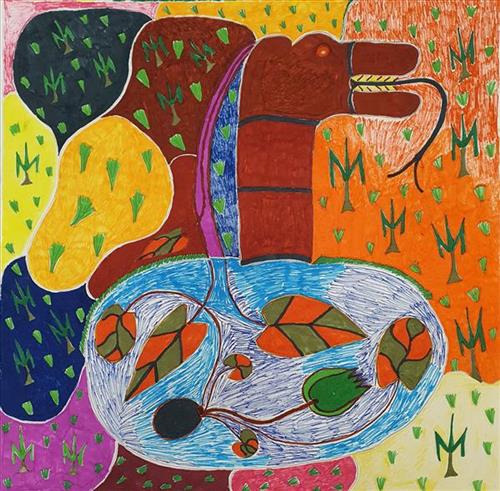
Kuniyor Ngalyod (Rainbow serpent)

Rainbow spirit coming from billabong.

Rainbow serpent dreaming. Coming from billabong, that place we call billabong where that ngalyod (rainbow serpent).

All that wayuk (waterlily), all them kundalk (grass) and pandanus, making skirt (??)

That’s the story now.

111981987823


Lorrkon

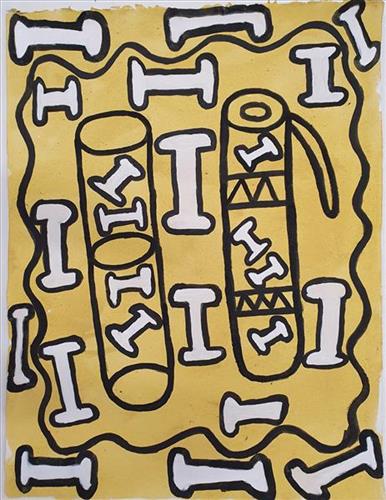
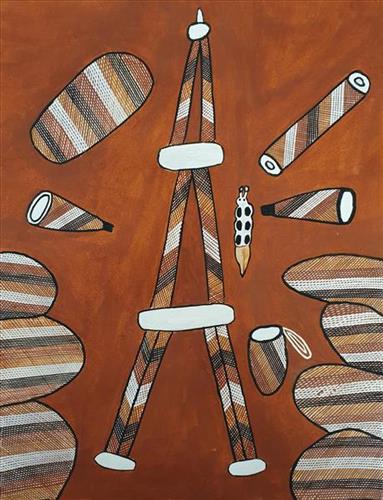
Raylene Bonson is a talented multi-disciplinary artist, and is especially well-known for her beautiful linocut fabric printing . She has been working with Bábbarra Designs since 2012 and  recently participated in a drawing workshop at Maningrida Arts & Culture.

Raylene was mentored by her late mother, Nancy Gununwanga, a senior textile artist at Bábbarra Designs and a founding member of Bábbarra Women’s Centre.

Raylene is well known for her designs depicting ancestral stories and ceremonial objects, in particular lorrkkon (hollow log for burial ceremony) as depicted in this drawing.

111981987822


Lorrkon

Raylene Bonson is a talented multi-disciplinary artist, and is especially well-known for her beautiful linocut fabric printing . She has been working with Bábbarra Designs since 2012 and  recently participated in a drawing workshop at Maningrida Arts & Culture.

Raylene was mentored by her late mother, Nancy Gununwanga, a senior textile artist at Bábbarra Designs and a founding member of Bábbarra Women’s Centre.

Raylene is well known for her designs depicting ancestral stories and ceremonial objects, in particular lorrkkon (hollow log for burial ceremony) as depicted in this drawing.

111981987820


Lorrokon

Raylene Bonson is a talented multi-disciplinary artist, and is especially well-known for her beautiful linocut fabric printing . She has been working with Bábbarra Designs since 2012 and  recently participated in a drawing workshop at Maningrida Arts & Culture.

Raylene was mentored by her late mother, Nancy Gununwanga, a senior textile artist at Bábbarra Designs and a founding member of Bábbarra Women’s Centre.

Raylene is well known for her designs depicting ancestral stories and ceremonial objects, in particular lorrkkon (hollow log for burial ceremony) as depicted in this drawing.

111981987811


Yawkyawk

Yawkyawk is a word in the Kunwinjku/Kunwok language of Western Arnhem Land meaning ‘young woman’ and ‘young woman spirit being’. The different groups of Kunwinjku people (one of the Eastern dialect groups call themselves Kuninjku) each have Yawkyawk mythologies, which relate to specific locations in clan estates. These mythologies are represented in bark paintings and sculptures of Yawkyawk beings. There are also a few examples of rock art images of these beings.
The female water spirits Yawkyawk or Ngalkunburriyaymi are perhaps the most enigmatic of mythological themes. Sometimes compared to the European notion of mermaids, they exist as spiritual beings living in freshwater streams and rock pools, particularly those in the stone country. The spirit Yawkyawk is usually described and depicted with the tail of a fish. Thus the Kuninjku people sometimes call them ngalberddjenj which literally means ‘the young woman who has a tail like a fish’. They have long hair, which is associated with trailing blooms of green algae (called man-bak in Kuninjku). At times they leave their aquatic homes to walk about on dry land, particularly at night.
Aboriginal people believe that in the beginning most animals were humans. During the time of the creation of landscapes and plants and animals, these ancestral heroes in human form transmutated into their animal forms via a series of various significant events now recorded as oral mythologies. The creation ancestor Yawkyawk travelled the country in human form and changed into the form of Ngalkunburriyaymi as a result of various ancestral adventures. Today the Kuninjku believe that Ngalkunburriyaymi are alive and well and living in freshwater sites in a number of sacred locations.
Some features of a respective country are equated with body parts of Yawkyawk. For example a bend in a river or creek may be said to be ‘the tail of the Yawkyawk, a billabong may be ‘the head of the Yawkyawk and so on. Thus different groups can be linked together by means of a shared mythology featured in the landscape, which crosscuts clan and language group boundaries.