111582143408


Waru (fire)

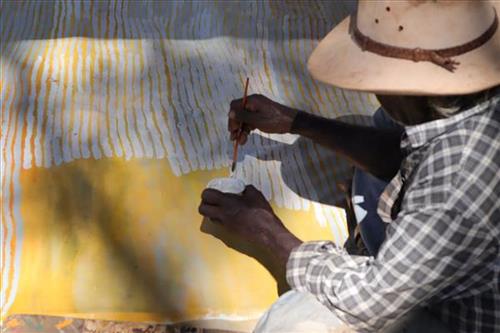
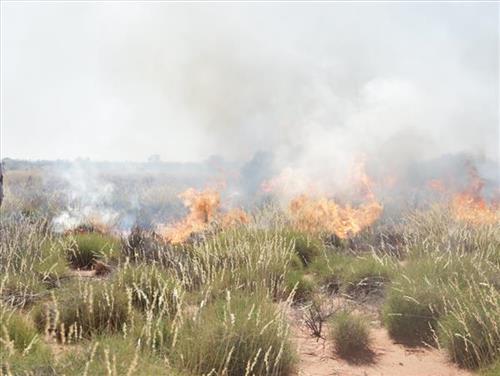
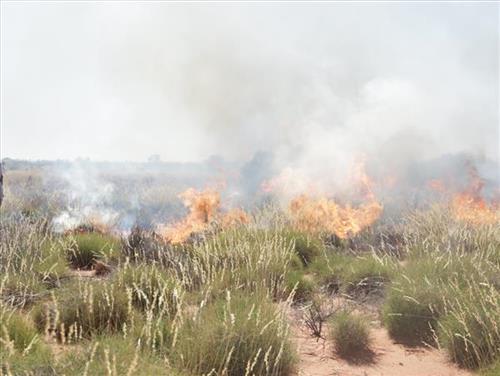
This work depicts the practice of fire burning as it continues to be used today through the Martu homelands. Over thousands of years, as Martu travelled and hunted on foot they would burn tracts of land, using waru (fire) as a means to assist with hunting and to encourage regenerative growth. Whilst fire burning practices have modernised in recent times, with Martu burning areas close to Aboriginal communities and along roads, or else further afield using helicopters and 4WDs with Indigenous ranger group Karnyirninpa Jukurrpa (KJ), the same objectives are met as those during pujiman (traditional, desert dwelling) times.

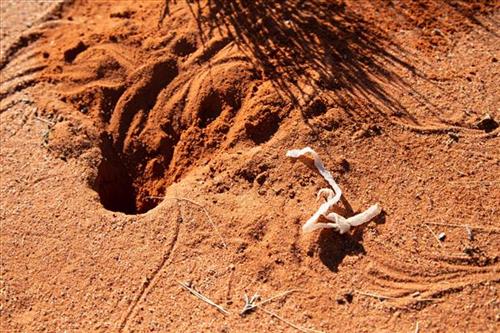
Targeted waru is an important tool in animal tracking. Small burns are lit to clear vegetation, expose burrows, and to allow for access to walk and track readily in exposed sands. Fires are typically burnt during cooler weather in small, controlled areas, reducing the risk of unmanageable, spontaneous bush fires whilst simultaneously providing diverse regenerating habitats. Remaining is a defined mosaic fire scar pattern in the land, across tali (sand dunes), linyji (clay pans), parulyukurru (spinifex country) and pila (sandy plains). This patterning is clearly visible from an aerial perspective, and becomes even more defined as new growth emerges. 

The patchwork nature of regrowth is aligned with the Martu cycle of burning and regrowth and its five distinct phases. First is nyurnma (freshly burnt Country), followed after the rains by waru-waru, when young, bright green plants start to grow. Nyukura occurs between one and three years after burning, when plants have matured and are fruiting and seeding. Manguu is four to six years post burning, when spinifex has matured to the point that it can be burned once again. Finally, kunarka signifies the time when spinifex and other plant species have become old growth, and pose a risk of destructive bushfires.

111582143407


Waru (fire)

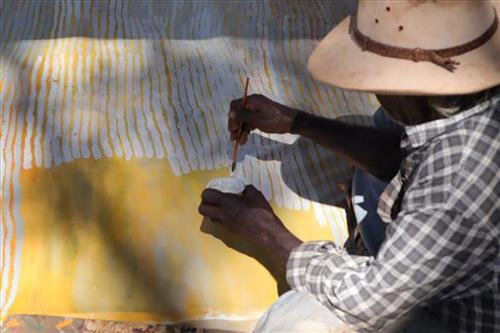
This work depicts the practice of fire burning as it continues to be used today through the Martu homelands. Over thousands of years, as Martu travelled and hunted on foot they would burn tracts of land, using waru (fire) as a means to assist with hunting and to encourage regenerative growth. Whilst fire burning practices have modernised in recent times, with Martu burning areas close to Aboriginal communities and along roads, or else further afield using helicopters and 4WDs with Indigenous ranger group Karnyirninpa Jukurrpa (KJ), the same objectives are met as those during pujiman (traditional, desert dwelling) times.

Targeted waru is an important tool in animal tracking. Small burns are lit to clear vegetation, expose burrows, and to allow for access to walk and track readily in exposed sands. Fires are typically burnt during cooler weather in small, controlled areas, reducing the risk of unmanageable, spontaneous bush fires whilst simultaneously providing diverse regenerating habitats. Remaining is a defined mosaic fire scar pattern in the land, across tali (sand dunes), linyji (clay pans), parulyukurru (spinifex country) and pila (sandy plains). This patterning is clearly visible from an aerial perspective, and becomes even more defined as new growth emerges. 

The patchwork nature of regrowth is aligned with the Martu cycle of burning and regrowth and its five distinct phases. First is nyurnma (freshly burnt Country), followed after the rains by waru-waru, when young, bright green plants start to grow. Nyukura occurs between one and three years after burning, when plants have matured and are fruiting and seeding. Manguu is four to six years post burning, when spinifex has matured to the point that it can be burned once again. Finally, kunarka signifies the time when spinifex and other plant species have become old growth, and pose a risk of destructive bushfires.

111582143406


Waru (fire)

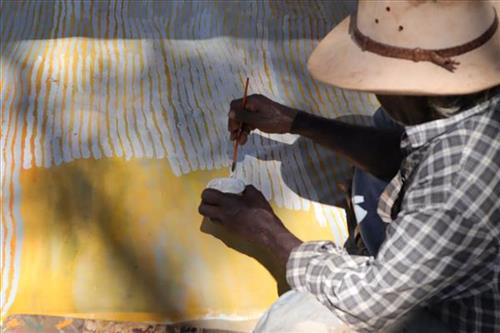
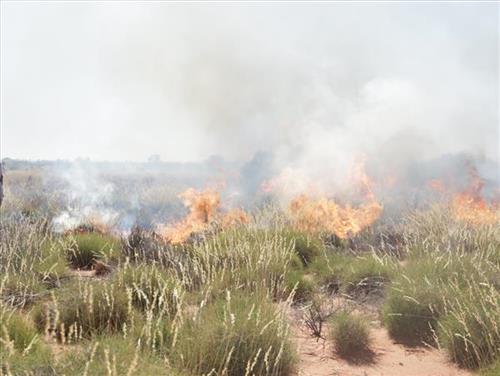
This work depicts the practice of fire burning as it continues to be used today through the Martu homelands. Over thousands of years, as Martu travelled and hunted on foot they would burn tracts of land, using waru (fire) as a means to assist with hunting and to encourage regenerative growth. Whilst fire burning practices have modernised in recent times, with Martu burning areas close to Aboriginal communities and along roads, or else further afield using helicopters and 4WDs with Indigenous ranger group Karnyirninpa Jukurrpa (KJ), the same objectives are met as those during pujiman (traditional, desert dwelling) times.

Targeted waru is an important tool in animal tracking. Small burns are lit to clear vegetation, expose burrows, and to allow for access to walk and track readily in exposed sands. Fires are typically burnt during cooler weather in small, controlled areas, reducing the risk of unmanageable, spontaneous bush fires whilst simultaneously providing diverse regenerating habitats. Remaining is a defined mosaic fire scar pattern in the land, across tali (sand dunes), linyji (clay pans), parulyukurru (spinifex country) and pila (sandy plains). This patterning is clearly visible from an aerial perspective, and becomes even more defined as new growth emerges. 

The patchwork nature of regrowth is aligned with the Martu cycle of burning and regrowth and its five distinct phases. First is nyurnma (freshly burnt Country), followed after the rains by waru-waru, when young, bright green plants start to grow. Nyukura occurs between one and three years after burning, when plants have matured and are fruiting and seeding. Manguu is four to six years post burning, when spinifex has matured to the point that it can be burned once again. Finally, kunarka signifies the time when spinifex and other plant species have become old growth, and pose a risk of destructive bushfires.
111582143398


Nyurnma (Freshly Burnt Country) near Punmu (2018)

“Nyurnma (freshly burnt Country), burnt area north from Punmu [in]sandhill Country.

One big one, no yukuri (green grass, vegetation) left. Last year [2018], no rain yet. Big area. From lighting did it, it started that waru (fire). It kept burning from the westerly wind turning it kakarra (east) [moves hands around gesturing the fire moving around]. That burning was moving around. No rocks, only tuwa (sandhills) tuwa, tuwa and waru (fire).

I went up in the helicopter from Punmu and saw that Country. That time the waru finished. The country was clear- good for hunting, you can easily see the tracks. Plenty parnajarrpa (sand goanna) there, big one. Nyurnma only. It was a no good feeling- really big one, out of control [The fire was burning a large area of Country and became out of control].

Long time ago in pujiman (traditional, desert dwelling) times same way- big fires would start from lighting. Here is the red dirt, marked little bit like the colours left after a camp fire, but from lighting here now.”

– Wokka Taylor

This work depicts Country around Punmu following a large and uncontrolled fire that resulted from a lightning storm in 2018. This type of fire differs to the controlled fire burning as it continues to be practiced through the Martu homelands. Over thousands of years, as Martu travelled and hunted on foot they would burn tracts of land, using waru as a means to assist with hunting, to encourage regenerative growth, and to increase biodiversity.

Targeted waru is an important tool in animal tracking. Small burns are lit to clear vegetation, expose burrows, and to allow for access to walk and track readily in exposed sands. Fires are typically burnt during cooler weather in small, controlled areas, reducing the risk of unmanageable, spontaneous bush fires like that depicted in this work. Remaining is a defined mosaic fire scar pattern in the land, across tali (sand dunes), linyji (claypans), parulyukurru (spinifex country) and pila (sandy plains).

111582143397


Nyurnma (Freshly Burnt Country) near Punmu (2018)

“Nyurnma (freshly burnt Country), burnt area north from Punmu [in]sandhill Country.

One big one, no yukuri (green grass, vegetation) left. Last year [2018], no rain yet. Big area. From lighting did it, it started that waru (fire). It kept burning from the westerly wind turning it kakarra (east) [moves hands around gesturing the fire moving around]. That burning was moving around. No rocks, only tuwa (sandhills) tuwa, tuwa and waru (fire).

I went up in the helicopter from Punmu and saw that Country. That time the waru finished. The country was clear- good for hunting, you can easily see the tracks. Plenty parnajarrpa (sand goanna) there, big one. Nyurnma only. It was a no good feeling- really big one, out of control [The fire was burning a large area of Country and became out of control].

Long time ago in pujiman (traditional, desert dwelling) times same way- big fires would start from lighting. Here is the red dirt, marked little bit like the colours left after a camp fire, but from lighting here now.”

– Wokka Taylor

This work depicts Country around Punmu following a large and uncontrolled fire that resulted from a lightning storm in 2018. This type of fire differs to the controlled fire burning as it continues to be practiced through the Martu homelands. Over thousands of years, as Martu travelled and hunted on foot they would burn tracts of land, using waru as a means to assist with hunting, to encourage regenerative growth, and to increase biodiversity.

Targeted waru is an important tool in animal tracking. Small burns are lit to clear vegetation, expose burrows, and to allow for access to walk and track readily in exposed sands. Fires are typically burnt during cooler weather in small, controlled areas, reducing the risk of unmanageable, spontaneous bush fires like that depicted in this work. Remaining is a defined mosaic fire scar pattern in the land, across tali (sand dunes), linyji (claypans), parulyukurru (spinifex country) and pila (sandy plains).

111582143396


Nyurnma (Freshly Burnt Country) near Punmu (2018)

“Nyurnma (freshly burnt Country), burnt area north from Punmu [in]sandhill Country.

One big one, no yukuri (green grass, vegetation) left. Last year [2018], no rain yet. Big area. From lighting did it, it started that waru (fire). It kept burning from the westerly wind turning it kakarra (east) [moves hands around gesturing the fire moving around]. That burning was moving around. No rocks, only tuwa (sandhills) tuwa, tuwa and waru (fire).

I went up in the helicopter from Punmu and saw that Country. That time the waru finished. The country was clear- good for hunting, you can easily see the tracks. Plenty parnajarrpa (sand goanna) there, big one. Nyurnma only. It was a no good feeling- really big one, out of control [The fire was burning a large area of Country and became out of control].

Long time ago in pujiman (traditional, desert dwelling) times same way- big fires would start from lighting. Here is the red dirt, marked little bit like the colours left after a camp fire, but from lighting here now.”

– Wokka Taylor

This work depicts Country around Punmu following a large and uncontrolled fire that resulted from a lightning storm in 2018. This type of fire differs to the controlled fire burning as it continues to be practiced through the Martu homelands. Over thousands of years, as Martu travelled and hunted on foot they would burn tracts of land, using waru as a means to assist with hunting, to encourage regenerative growth, and to increase biodiversity.

Targeted waru is an important tool in animal tracking. Small burns are lit to clear vegetation, expose burrows, and to allow for access to walk and track readily in exposed sands. Fires are typically burnt during cooler weather in small, controlled areas, reducing the risk of unmanageable, spontaneous bush fires like that depicted in this work. Remaining is a defined mosaic fire scar pattern in the land, across tali (sand dunes), linyji (claypans), parulyukurru (spinifex country) and pila (sandy plains).

111582143394


Parnajarrpa (sand goanna) Ngurra

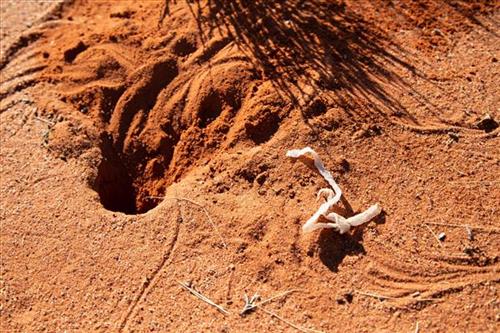
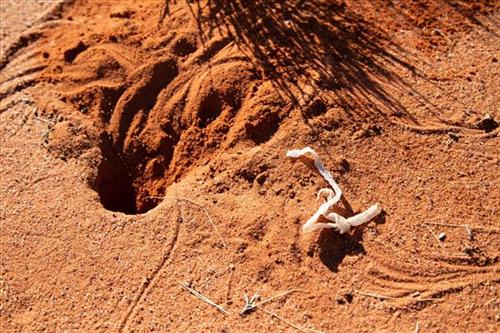
Parnajarrpa (sand goanna) are one of the most prized and reliable food sources hunted by Martu, found throughout Australia in sand plain and dune habitats. They are hunted by both men and women, though more often women working either alone or in pairs. Parnajarrpa hibernate in the cool months, emerging seasonally as temperatures warm in tuulparra (spring). When parnajarrpa are active they are tracked and dug from their burrows. When they are hibernating their burrows are ‘sounded’ by tapping wana (digging-sticks) on the ground, and then excavated. Traditional carved wana have been replaced with metal bars, though burning and tracking techniques continue to be practiced in the hunting of parnajarrpa.  Targeted waru (fire) clears vegetation and exposes burrows, whilst simultaneously providing diverse regenerating habitats for future parnajarrpa. When consumed, they are singed and then cooked in a coal and ash bed. 

During the pujiman (traditional, desert dwelling) period, Martu would traverse very large distances annually in small family groups, moving seasonally from water source to water source, and hunting and gathering bush tucker as they went. Whilst desert life has moved away from mobile hunter-gatherer subsistence throughout the course of the twentieth century, bush tucker continues to be a significant component of the modern Martu diet. Hunting and gathering bush tucker remains equally valuable as an important cultural practice that is passed on intergenerationally. Though hunting and gathering implements have been modernised, methods of harvesting, tracking and the use of fire burning to drive animals from their retreats are still commonly practiced today.

111582143393


Parnajarrpa (sand goanna) Ngurra

Parnajarrpa (sand goanna) are one of the most prized and reliable food sources hunted by Martu, found throughout Australia in sand plain and dune habitats. They are hunted by both men and women, though more often women working either alone or in pairs. Parnajarrpa hibernate in the cool months, emerging seasonally as temperatures warm in tuulparra (spring). When parnajarrpa are active they are tracked and dug from their burrows. When they are hibernating their burrows are ‘sounded’ by tapping wana (digging-sticks) on the ground, and then excavated. Traditional carved wana have been replaced with metal bars, though burning and tracking techniques continue to be practiced in the hunting of parnajarrpa.  Targeted waru (fire) clears vegetation and exposes burrows, whilst simultaneously providing diverse regenerating habitats for future parnajarrpa. When consumed, they are singed and then cooked in a coal and ash bed. 

During the pujiman (traditional, desert dwelling) period, Martu would traverse very large distances annually in small family groups, moving seasonally from water source to water source, and hunting and gathering bush tucker as they went. Whilst desert life has moved away from mobile hunter-gatherer subsistence throughout the course of the twentieth century, bush tucker continues to be a significant component of the modern Martu diet. Hunting and gathering bush tucker remains equally valuable as an important cultural practice that is passed on intergenerationally. Though hunting and gathering implements have been modernised, methods of harvesting, tracking and the use of fire burning to drive animals from their retreats are still commonly practiced today.

111582143392


Parnajarrpa (sand goanna) Ngurra

Parnajarrpa (sand goanna) are one of the most prized and reliable food sources hunted by Martu, found throughout Australia in sand plain and dune habitats. They are hunted by both men and women, though more often women working either alone or in pairs. Parnajarrpa hibernate in the cool months, emerging seasonally as temperatures warm in tuulparra (spring). When parnajarrpa are active they are tracked and dug from their burrows. When they are hibernating their burrows are ‘sounded’ by tapping wana (digging-sticks) on the ground, and then excavated. Traditional carved wana have been replaced with metal bars, though burning and tracking techniques continue to be practiced in the hunting of parnajarrpa.  Targeted waru (fire) clears vegetation and exposes burrows, whilst simultaneously providing diverse regenerating habitats for future parnajarrpa. When consumed, they are singed and then cooked in a coal and ash bed. 

During the pujiman (traditional, desert dwelling) period, Martu would traverse very large distances annually in small family groups, moving seasonally from water source to water source, and hunting and gathering bush tucker as they went. Whilst desert life has moved away from mobile hunter-gatherer subsistence throughout the course of the twentieth century, bush tucker continues to be a significant component of the modern Martu diet. Hunting and gathering bush tucker remains equally valuable as an important cultural practice that is passed on intergenerationally. Though hunting and gathering implements have been modernised, methods of harvesting, tracking and the use of fire burning to drive animals from their retreats are still commonly practiced today.