Bag
Art Centre notes: The Bag is made of natural raffia / jute / cotton.
It is made using a traditional ‘one twist’ method. It has a thin strap.
The dyes are commercial and colour fast.
Size of bowl: 10cm x 7cm
Length of strap: 40cm
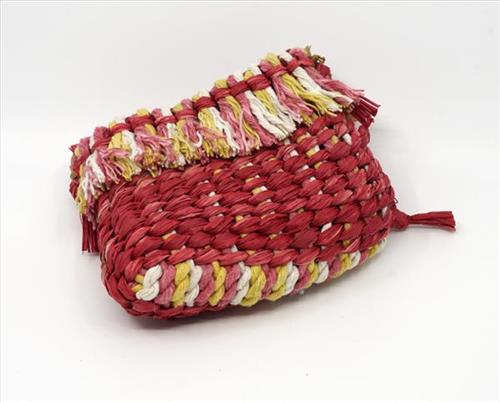
Art Centre notes: The Bag is made of natural raffia / jute / cotton.
It is made using a traditional ‘one twist’ method. It has a thin strap.
The dyes are commercial and colour fast.
Size of bowl: 10cm x 7cm
Length of strap: 40cm
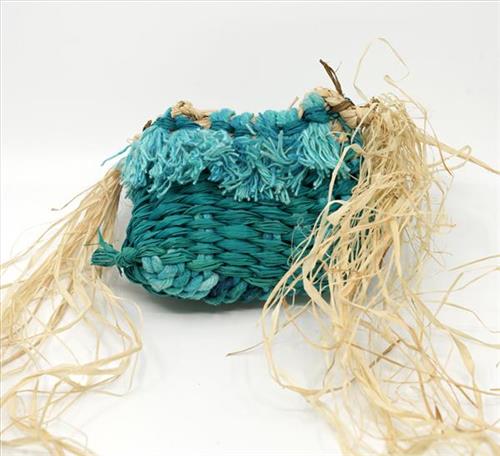
Art Centre notes: The Bag is made of natural raffia / jute/ cotton.
It is made using a traditional ‘one twist’ method. It has a thin strap. The strap is adjustable.
The dyes are commercial and colour fast.
Size of bowl: 7cm x 4cm
Length of strap: 50cm
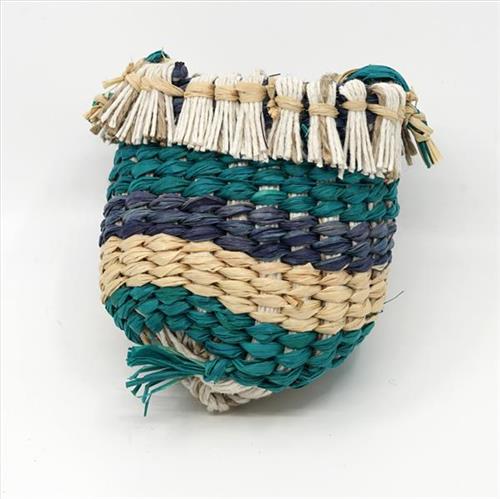
Art Centre notes: The Bag is made of natural raffia / jute.
It is made using a traditional ‘one twist’ method. It has a thin strap.
The dyes are commercial and colour fast.
Size of bowl: 9cm x 5cm
Length of strap: 36cm
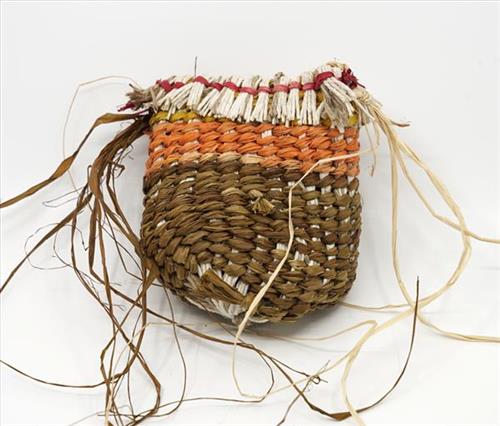
Art Centre notes: The Bag is made of natural raffia / jute.
It is made using a traditional ‘one twist’ method. It has a thin strap. The strap is adjustable.
The dyes are commercial and colour fast.
Size of bowl: 9cm x 5cm
Length of strap: 57cm
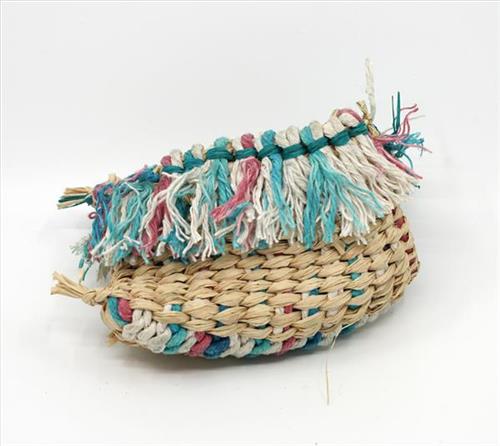
Art Centre notes: The Bag is made of natural raffia / jute.
It is made using a traditional ‘one twist’ method. It has a thin strap. The strap is adjustable.
The dyes are commercial and colour fast.
Size of bowl: 7cm x 5cm
Length of strap: 50cm
“It’s their home for them, real ngurra (home Country, camp). Real ngurra is where they been born and grow up.”
– Corban Clause Williams
The Western Desert term ‘ngurra’ is hugely versatile in application. Broadly denoting birthplace and belonging, ngurra can refer to a body of water, a camp site, a large area of Country, or even a modern house. People identify with their ngurra in terms of specific rights and responsibilities, and the possession of intimate knowledge of the physical and cultural properties of one’s Country. This knowledge is traditionally passed intergenerationally through family connections. Country for Martu is full of memory; not just the memory of their own movement through it, but also of their family. As summarised by Ngalangka Nola Taylor, “painting the ngurra, they do it to remember their connections.”
Painting ngurra, and in so doing sharing the Jukurrpa (Dreaming) stories and physical characteristics of that place, has today become an important means of cultural maintenance. Physical maintenance of one’s ngurra, like cultural maintenance, ensures a site’s wellbeing, and is a responsibility of the people belonging to that area.
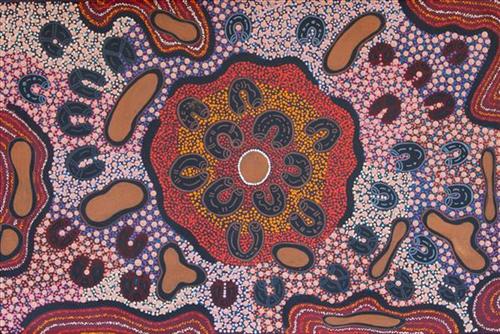
“When Martu paint, it’s like a map. Martu draw story on the ground and on the canvas, and all the circle and line there are the hunting areas and different waters and tracks where people used to walk, and [some you] can’t cross, like boundaries. So nowadays you see a colourful painting and wonder what it is, but that’s how Martu tell story long ago. It’s not just a lovely painting, it’s a story and a songline and a history and everything that goes with it.”
– Ngalangka Nola Taylor and Joshua Booth
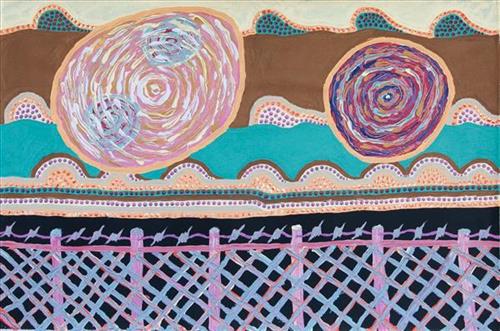
This work portrays an area of Country that can be interpreted in multiple ways. Firstly, the image may be read as an aerial representation of a particular location known to the artist- either land that they or their family travelled, from the pujiman (traditional, desert dwelling) era to now. During the pujiman period, Martu would traverse very large distances annually in small family groups, moving seasonally from water source to water source, and hunting and gathering bush tucker as they went. At this time, one’s survival depended on their intimate knowledge of the location of resources; thus physical elements of Country, such as sources of kapi (water), tali (sandhills), different varieties of warta (trees, vegetation), ngarrini (camps), and jina (tracks) are typically recorded with the use of a use of a system of iconographic forms universally shared across the desert.
An additional layer of meaning in the work relates to more intangible concepts; life cycles based around kalyu (rain, water) and waru (fire) are also often evident. A thousands of year old practice, fire burning continues to be carried out as both an aid for hunting and a means of land management today. As the Martu travelled and hunted they would burn tracts of land, ensuring plant and animal biodiversity and reducing the risk of unmanageable, spontaneous bush fires. The patchwork nature of regrowth is evident in many landscape works, with each of the five distinctive phases of fire burning visually described with respect to the cycle of burning and regrowth.
Finally, metaphysical information relating to a location may also be recorded; Jukurrpa (Dreaming) narratives chronicle the creation of physical landmarks, and can be referenced through depictions of ceremonial sites, songlines, and markers left in the land. Very often, however, information relating to Jukurrpa is censored by omission, or alternatively painted over with dotted patterns.
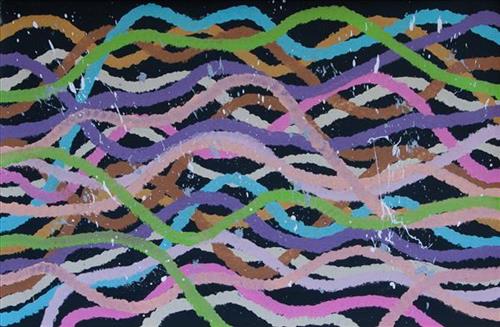
The traditional lands of the Martu people encompass the Great Sandy Desert and Rudall River regions of Western Australia, an enormous tract dominated by distinctive red tali, or tuwa (sandhills). These sandhills present an unforgiving landscape; sparse vegetation covers a seemingly never ending expanse of dunes, and yet these lands and the location of resources within them was known intimately by its pujiman (traditional, desert dwelling) inhabitants. At this time, Martu traversed very large distances annually in small family groups, moving from water source to water source through the harsh desert landscape with incredible stamina and resourcefulness. Travel was often undertaken at night, and when travelling during the day, Martu wore yakipiri (woven bark sandals) to protect their feet from the hot desert sand.
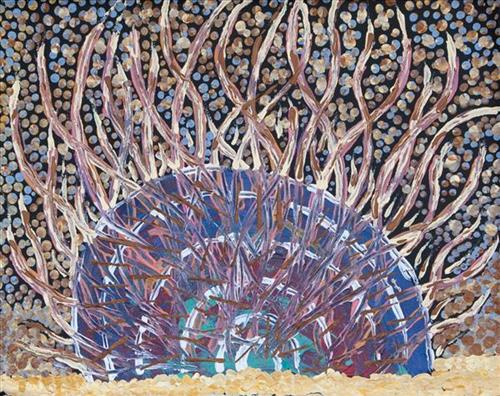
“When I went back to County, I thought how beautiful the spinifex was. How the sun glazed against the spinifex. The County that I speak of is Jilukurru, my grandfather’s country.”
– Kathleen Maree Sorenson
Martu Country is dominated by striking permanent tali (sandhills) covered with spinifex, gums, and other trees and shrubs. Spinifex is a pale green, spiky grass that grows in clumps throughout the Central and Western Deserts of Australia. Some varieties yield edible seeds and another contains a resin.
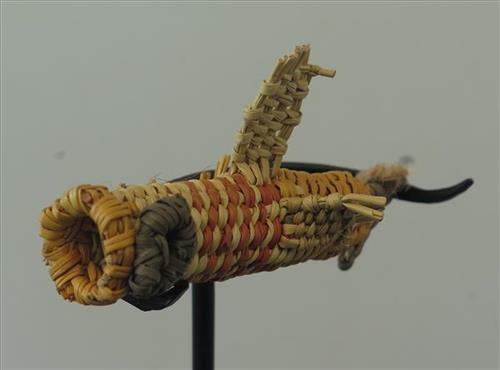
This finely crafted hand woven fish represents species found both in blue water and local billabongs surrounding Beswick / Wugularr.
Djilpin’s super talented pandanus artists have been busy pushing their skills and techniques. This fun little fish is a prime example of this and a step away from traditional baskets, mats and dilly bags. Each fish is unique, hand woven and feature natural bush dye colouring.
Pandanus fibre art is labour intensive requiring a high level of care and fine needlework. Finished works are both functional and beautiful. Women collect pandanus by pulling from the top of a pandanus tree, stripping then dying the leaves using natural bush colour.